
Wood engraving
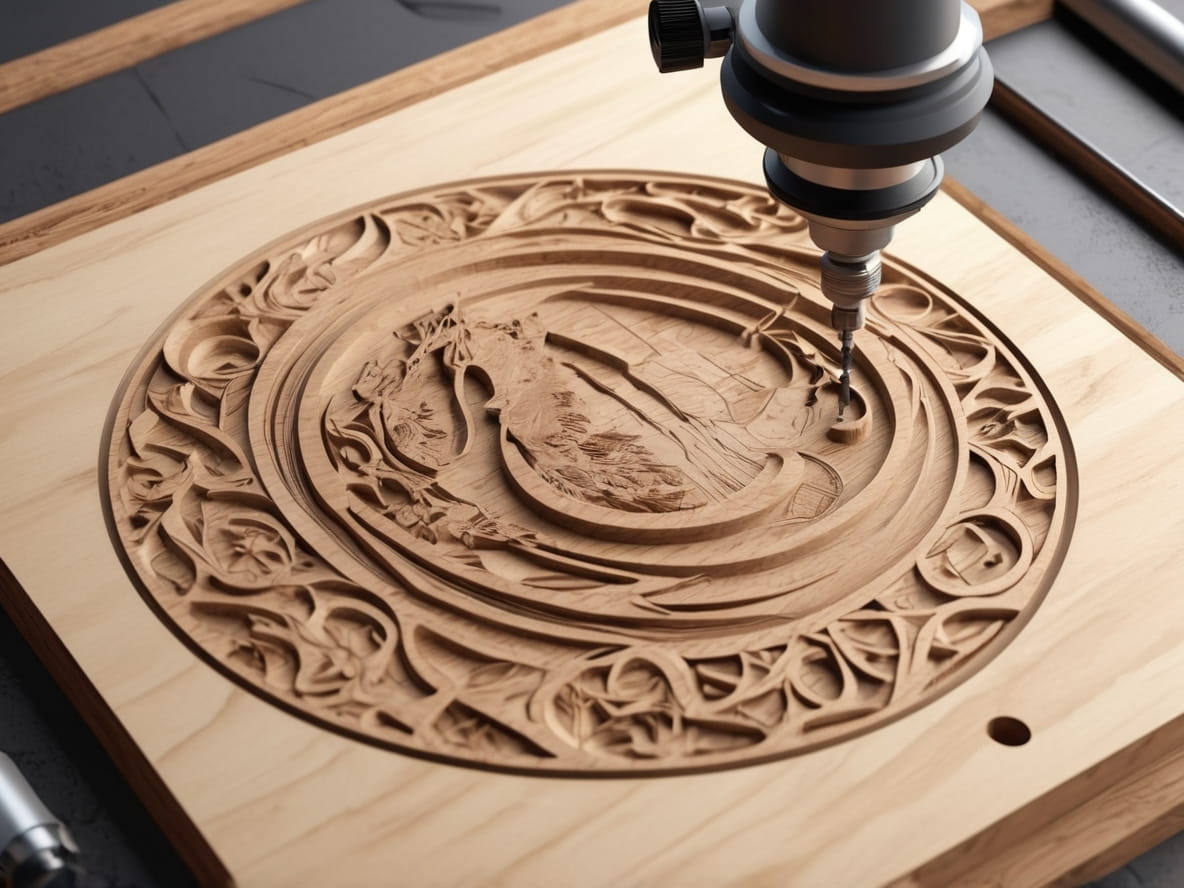
Wood engraving is the process of applying an image, text, logo or pattern to timber and sheet materials with a cutter on a CNC machine. Every line is cut with an accuracy of fractions of a millimetre, so a plain blank turns into a striking piece for advertising, decor, souvenirs or furniture. We work with plywood, particleboard, MFC, MDF and glued wood panel. Below you will find the types of engraving, the materials it holds on, the stages an order goes through, how long it takes and who needs this service most often.
Engraving on wood and sheet materials with a cutter
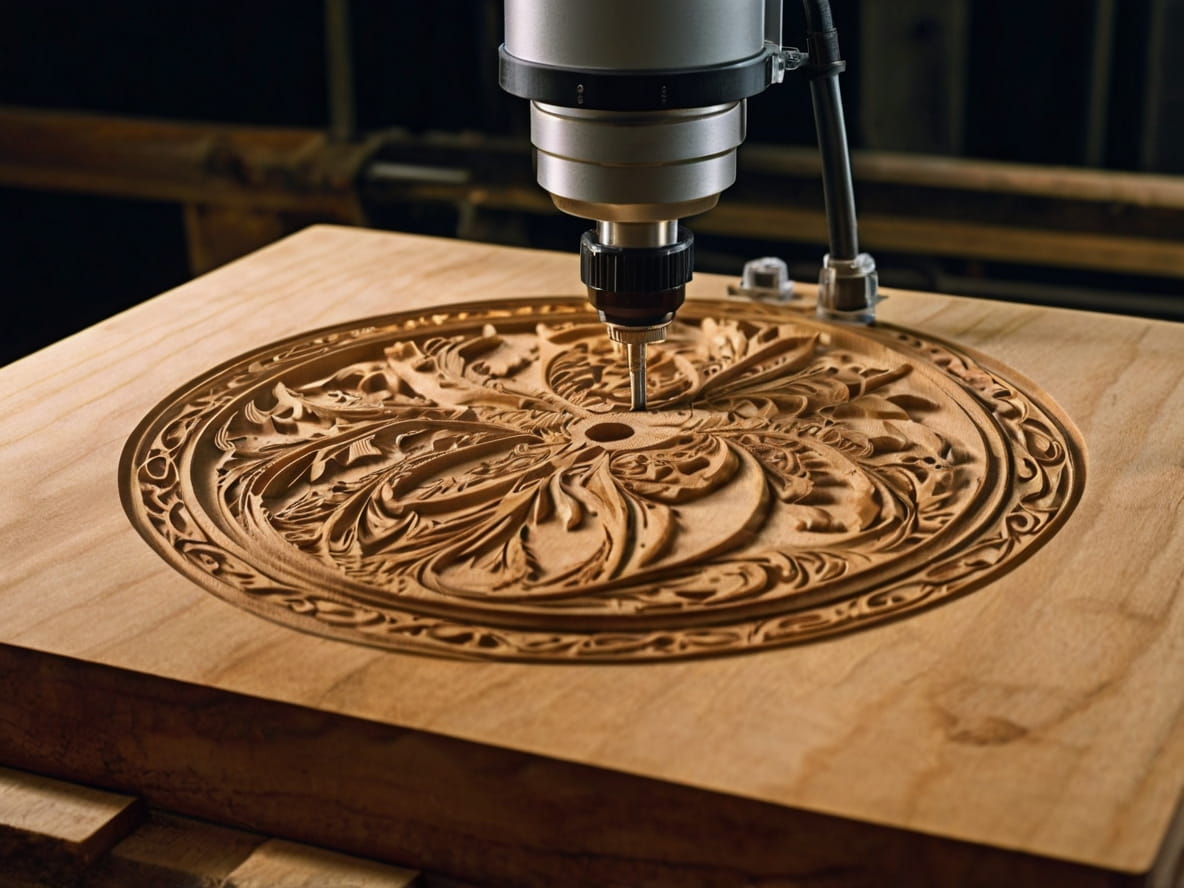
Engraving on wood and boards — MDF, particleboard, MFC, plywood, glued wood panel — has long stopped being an exotic novelty and turned into a working tool for dozens of tasks: from furniture fronts to signs and gifts. The idea is simple: a cutter on a CNC machine cuts an image, logo, text or pattern into the material following a prepared layout. Thanks to numerical control the line lands exactly where intended, and the same ornament can be repeated on a hundred blanks without any variation.
The method’s strength is that it takes on almost any material. Wood, its derivatives, board with a decorative coating — the cutter handles all of it, which means the range of applications is huge. The image is applied both across the whole surface and locally in the right spot, playing with depth to create volume and shading. That is exactly why engraving suits one-off items so well: a personalised gift, a promotional item with a logo, a decorative panel, a front with a family monogram.
The equipment handles both a plain inscription and a fine ornament with small details. A CNC machine holds the path without the tremor of a human hand, so a complex design comes out crisp rather than “roughly similar”. And milling is not only about beauty: the same tool also does the utilitarian part where a detail needs it — technological holes, grooves, recesses for assembly. Beauty and function coexist in a single operation.
Another advantage is durability. An engraved image is not printed on top but cut into the body of the material, so it does not fade or wear away like a sticker or paint. A logo on branded products, an inscription on furniture, a pattern on an advertising panel stay legible for years. For branded items that must still look dignified five years on, this is the decisive argument.
The benefits of working with professionals
Modern equipment
Panel saws, CNC and milling machines — precision, speed and quality guaranteed

Extensive experience and expertise
We know how to handle wood and sheet materials — reliably, precisely, professionally

Fast order fulfilment
Fast and without compromising quality. We value your time and our commitments
A full range of services in one place
Cutting to size, sawing, milling, sanding, painting, assembly — all in-house, with no middlemen
Trusted materials and consumables
We work only with quality materials, so you can be confident in the result
An individual approach to every client
We work to your drawings, create a machining program for the task and account for every detail
Features of wood engraving with a cutter
Wood engraving has several traits that make people choose it. The first is precision. The cutter follows a program and repeats the contour to fractions of a millimetre, so even a small typeface or a fine monogram comes out legible. Where a hand tool would inevitably “drift”, the machine holds the line steady from start to finish.
The second trait is flexibility with the material. Thickness, density and board type do not play a decisive role: for MDF, MFC, plywood or glued wood panel a suitable cutter, speed and depth are chosen. This is convenient for the client because there is no need to fit the project to “what they happen to be able to work with” here — on the contrary, the settings are tuned to the specific blank and task.
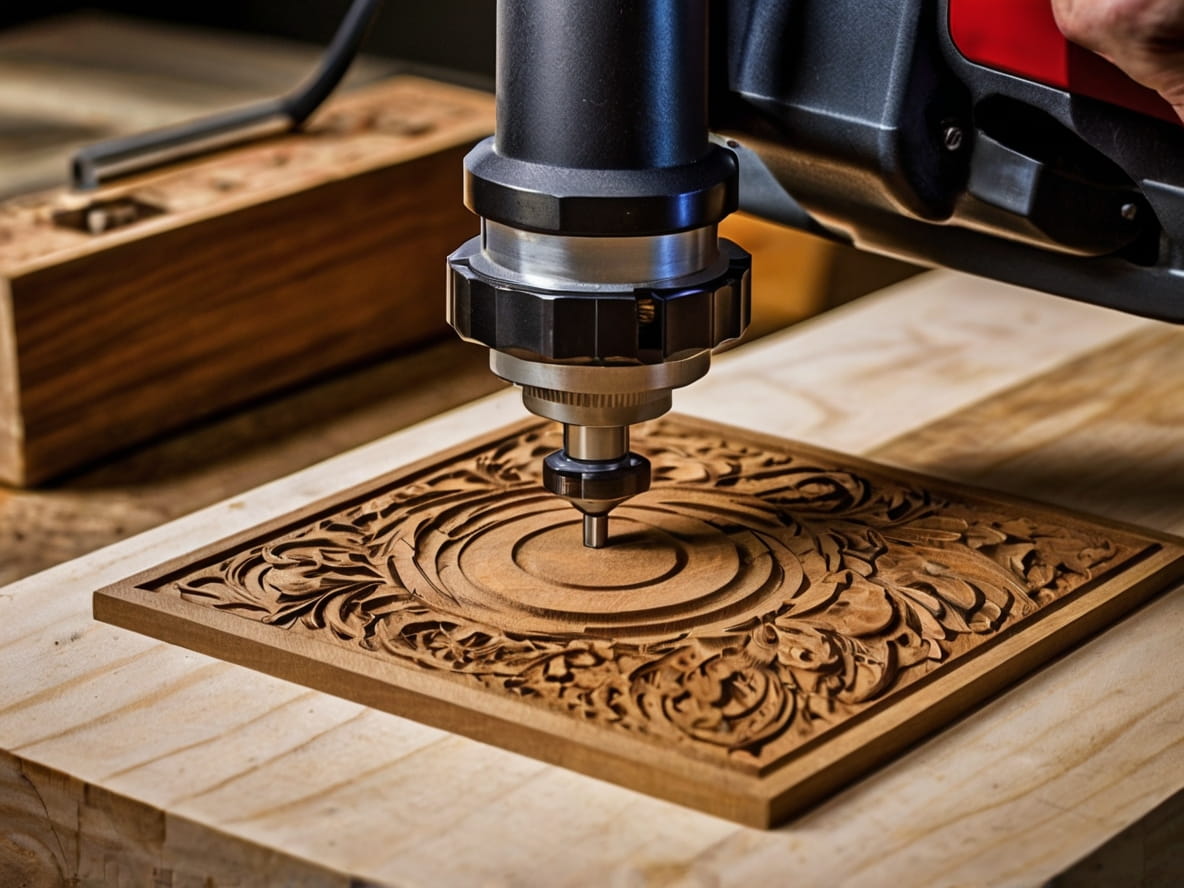
The third is a cutting depth that can be controlled. Shallow, surface engraving is good for text, a logo, marking: it is neat and fast. Deep engraving comes into play when a pronounced relief, a three-dimensional pattern or a play of shadows on a panel is needed. In essence, one and the same service covers both a strict utilitarian task and pure decor — it is only a matter of adjusting the depth and choosing the cutter.
A separate story is materials with a decorative coating. Laminate on MFC or veneer on plywood is easily damaged by careless machining: a chip, a tear, and the part is ruined. With the right settings the cutter removes exactly as much as needed, without fraying the coating around the cut. That is why wood engraving works calmly where crude methods would leave untidy edges.
Stages of milling engraving
Consultation
Receiving drawings or developing a plan
Agreeing lead times and cost
Launch into production
Quality control at every stage
Finishing
Packaging and preparation for shipment
Delivery or pickup
Carrying out milling engraving on timber and sheet materials
The path from idea to finished part is made up of several steps, and each one solves its own task. Skipping or rushing any of them means risking the result, so the order is usually followed strictly.
It all starts with the material. MDF, MFC, plywood, glued wood panel — each has its own character, and the choice determines how the image will lie. MDF is uniform and holds fine detail perfectly, plywood is strong but its layers tend to tear up, MFC calls for delicacy because of its fragile laminate. The material is chosen to suit the task: in some cases strength matters more, in others a smooth surface for fine engraving.
Next comes the layout. This is where what ends up on the part is born: an inscription, a logo, an ornament. It is prepared in vector editors such as CorelDRAW or AutoCAD, building in the technical subtleties right away: the minimum radius for the cutter diameter, line thickness, depth. A good layout takes into account both the material and the machine’s capabilities, so that the intended fine element does not turn out to be physically impossible to cut.
Once the layout is ready, the machine is set up for it: a cutter of the right type and diameter is selected, and the depth and feed speed are set. This step is invisible to the client, but it is precisely what determines the outcome. An error in the setup — and fine type will blur, while a deep relief will come out with ragged edges. That is why the parameters are verified in advance rather than adjusted on the fly during cutting.
Then comes the engraving itself. The cutter passes through the material along a set path, cutting the image layer by layer. On fine work the process is watched especially closely: there is only one blank, and there is almost no room for a crude mistake — a ruined part would have to be made anew. On a series, a tuned program churns out identical items one after another without loss of quality.
The finish is the last step. The engraved part is, if needed, sanded, painted, coated with varnish or oil to both protect the cut from moisture and emphasise the image. Sometimes the cut is tinted in contrast so that the pattern reads more vividly. After that the item is ready — it can be handed to the client or sent on for further production.
Advantages of milling engraving on timber and sheet materials
Why do people turn to wood engraving so often? There are several reasons, and together they explain the method’s popularity both for decor and for purely functional tasks.
It is worth starting with precision — here it is on the level of fractions of a millimetre. This is what you cannot do without, whether making a neat logo on furniture or a fine ornament with many small elements. On branded products the cost of an error is high: a smudged mark hits the reputation harder than its absence. And on coated boards precision matters twice over — it lets you cut the image without damaging the laminate or veneer around it.
The second point is versatility with materials. Soft MDF and dense glued wood panel call for different approaches, but the machine can handle both: the cutter and the settings change, the result stays high-quality. The client does not need to look for a separate contractor for each type of board — one and the same workshop copes with both plywood and a laminated panel.
The third is scope for design thanks to controllable depth. A surface cut gives light graphics, a deep one — expressive volume with shadows and transitions. For a designer this is flexibility: a single idea can be presented restrained or, conversely, made an accent of the interior. Three-dimensional engraving gives an item that very individuality for the sake of which it is ordered one by one rather than bought ready-made.
And finally — durability. Print fades, film peels off, paint wears away, but an image cut by a cutter lives together with the material itself. It fears neither the sun, nor everyday friction, nor time. That is why engraving is chosen for things that must serve for a long time without losing their look: signs, memorial plaques, branded furniture, keepsake gifts.
Advantages of cooperation for carrying out engraving on timber and sheet materials
When engraving is handed to a proven contractor rather than attempted in-house, the business wins on several counts at once. The first is predictable quality. An experienced contractor knows how one material or another will behave, where to build in a radius, at what depth to bring out a relief. Where precise design and functional requirements matter, this experience saves nerves and batches of material.
The second is everything in one place. Engraving is rarely needed on its own: the blank still has to be cut to size, sanded, painted, coated with a protective compound. When these operations are available under one roof, there is no need to assemble the order from five different contractors and reconcile their deadlines. The part goes through its whole journey without being shipped around, and the result can be demanded from a single contractor.
The third is equipment and materials. A modern CNC machine and quality cutters directly affect the precision and durability of the cut. For a business this is a guarantee that the batch will come out even and the finished products will match the stated standards — be it a hundred identical souvenirs or a single front with a family crest.
And the fourth is flexibility on deadlines. Someone who runs a flow of orders has planning in place: an urgent small batch is often taken outside the general queue, while a large run is calculated in advance and delivered by the required date. For a client who has their own logistics and obligations to buyers, timely delivery is sometimes more important than a couple of per cent on the price.






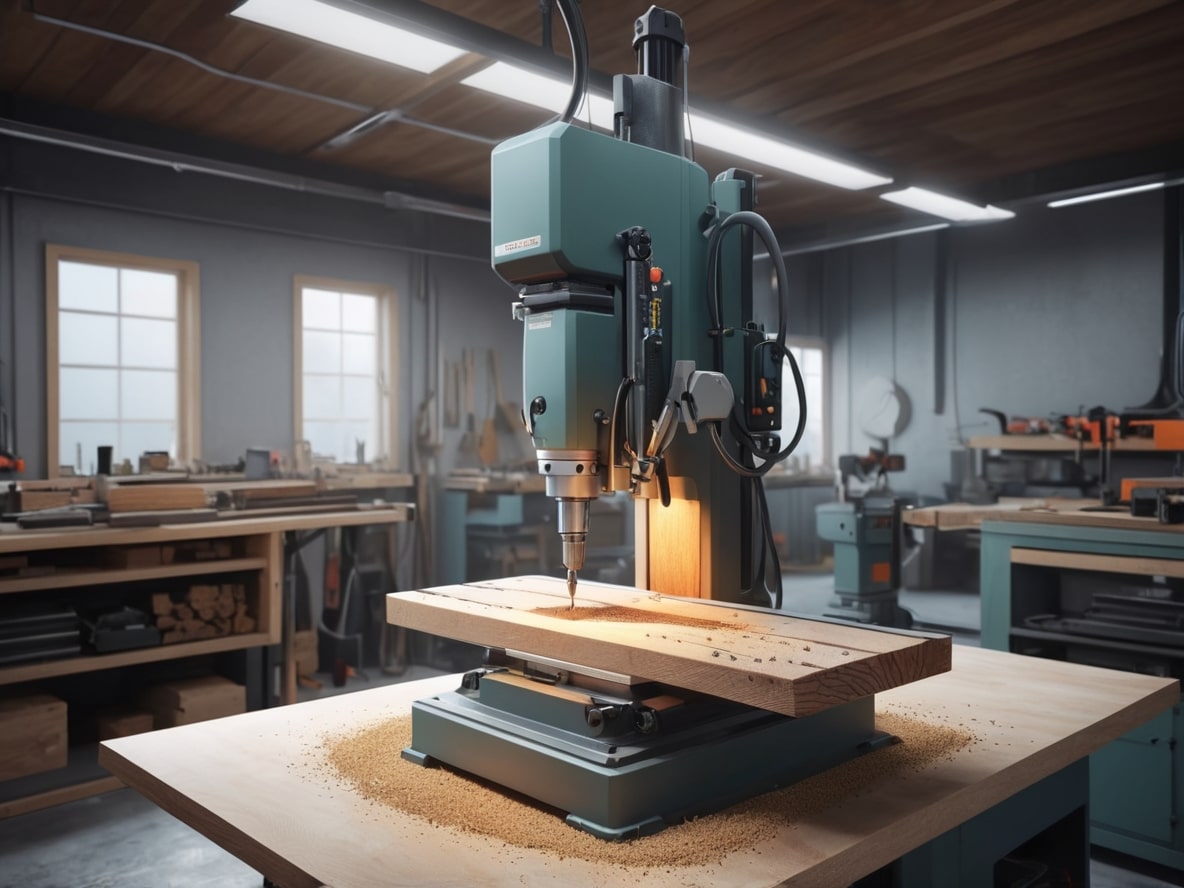


Types of woodworking and sheet-material services
The possibilities are not limited to engraving — alongside it goes a full set of woodworking operations, and this is convenient when an item needs not merely decorating but making in full. Cutting and sizing, drilling, sanding, painting — all of this is available at the same site. A part can be both cut to contour, engraved, and brought to a finish without hauling it between different workshops.
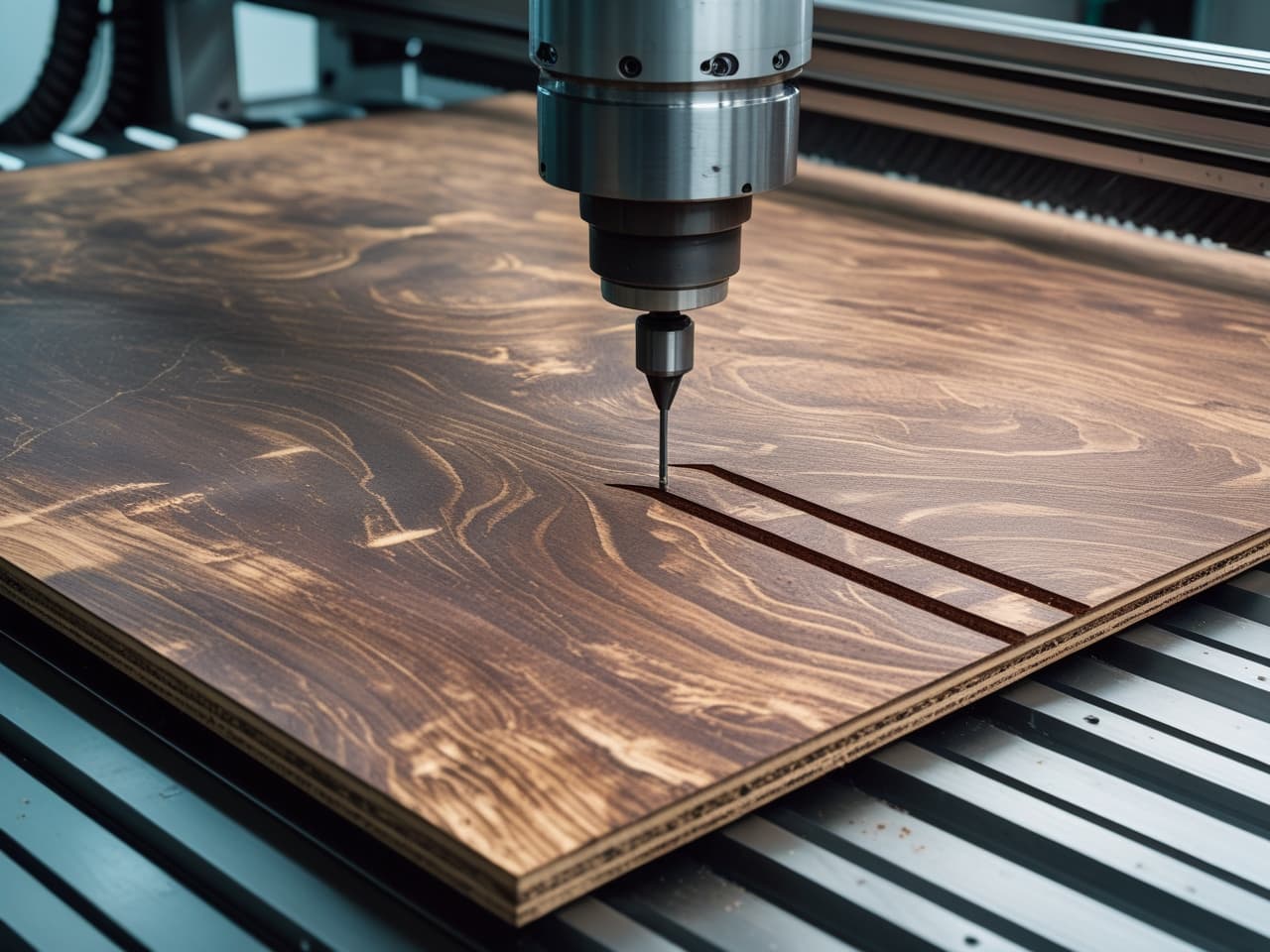
Cutting is done on the same CNC, which gives a clean edge and an exact size. It comes in handy for furniture parts, interior elements, any structures where hitting the size without gaps matters. Cutting and engraving are often ordered together: first the part is cut to contour, then the image is applied to it — all in one pass.
Drilling covers the technological part — holes for assembly, hardware, fasteners. Diameter and depth are chosen to suit the task, whether it is boring for furniture hinges or mounting holes in an advertising panel. Together with engraving this is convenient: on a single part both the decor and the functional holes are made in a coordinated way, from a single drawing.
Sanding brings the surface to smoothness — both as preparation for painting and as a finish in its own right. Before engraving it is especially handy: on an even, sanded plane the image reads more clearly, and after the cut a light sanding removes small burrs along the edges of the groove. A smooth part both looks more expensive and is more pleasant to the touch.
Paint-and-varnish treatment closes the chain. Varnish, paint or oil not only refresh the look but also protect the wood from moisture and wear, extending its service life. For engraved items the coating is doubly useful: it closes the open cut and, if desired, also emphasises the image by tinting the groove in a contrasting tone.
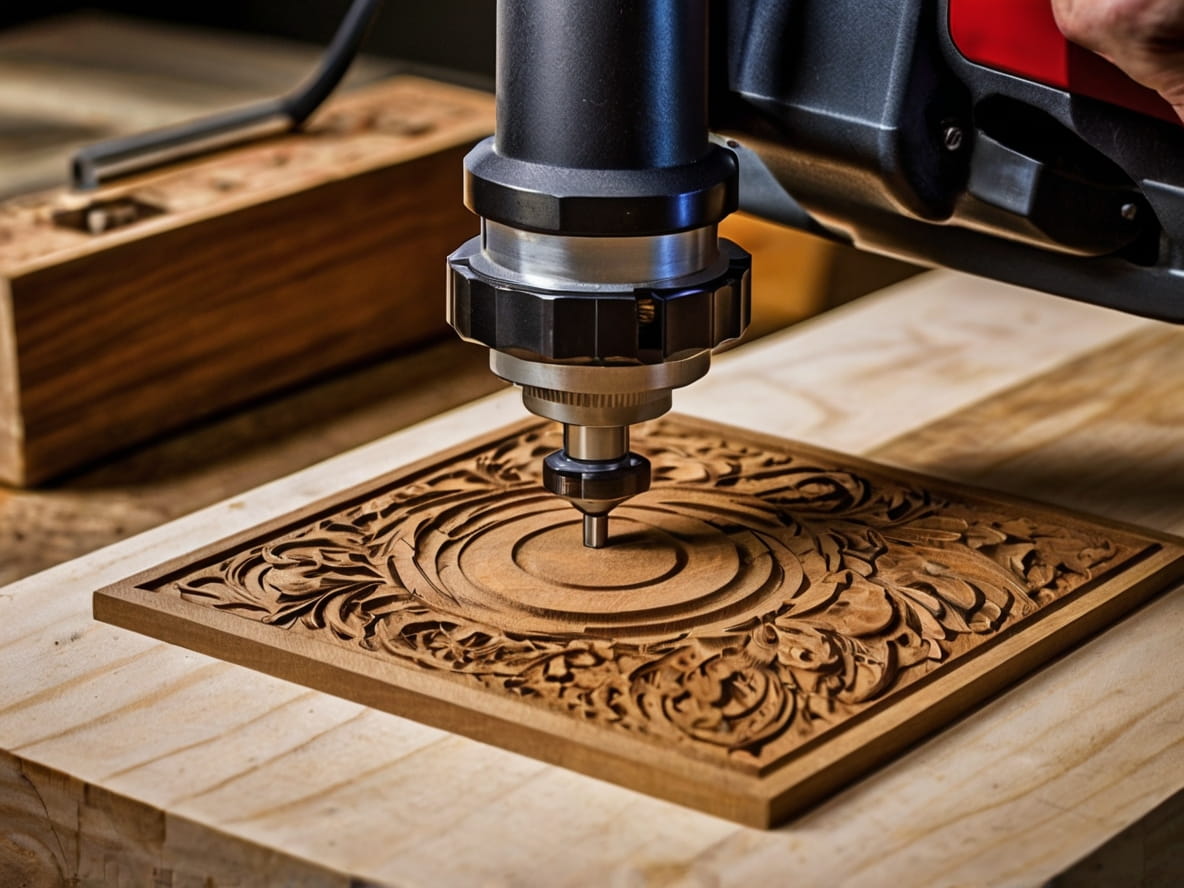
Our portfolio — finished products
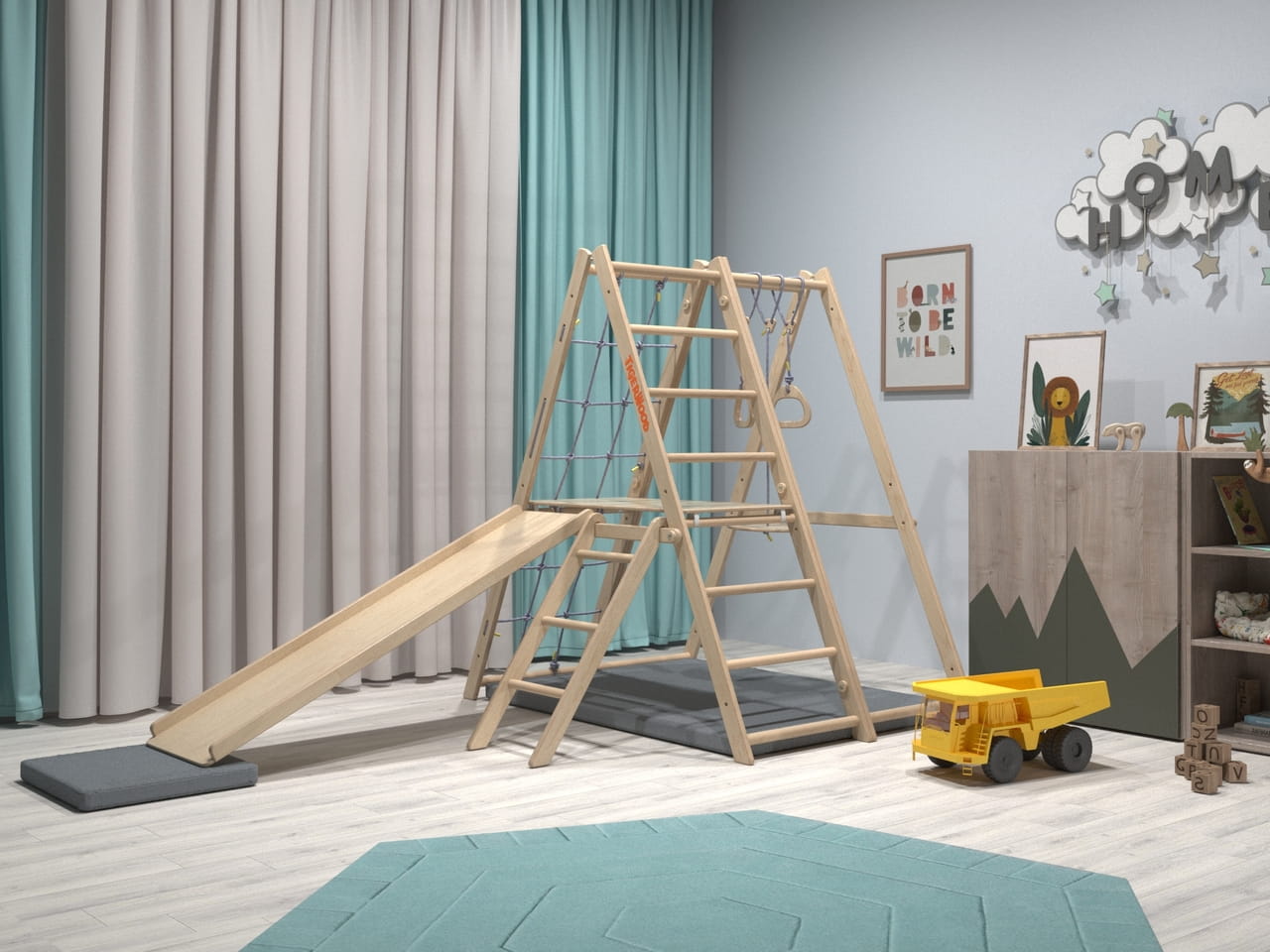
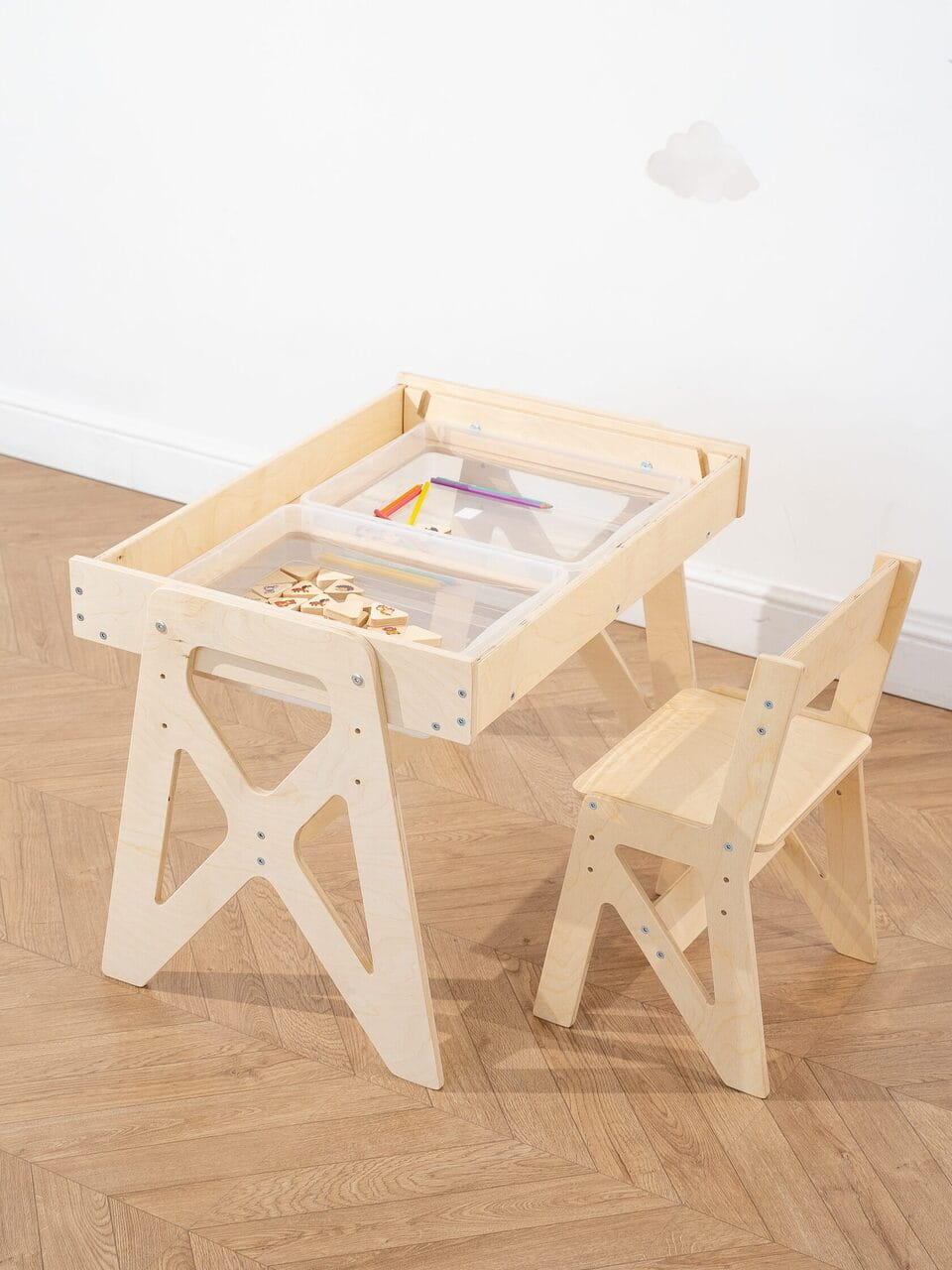


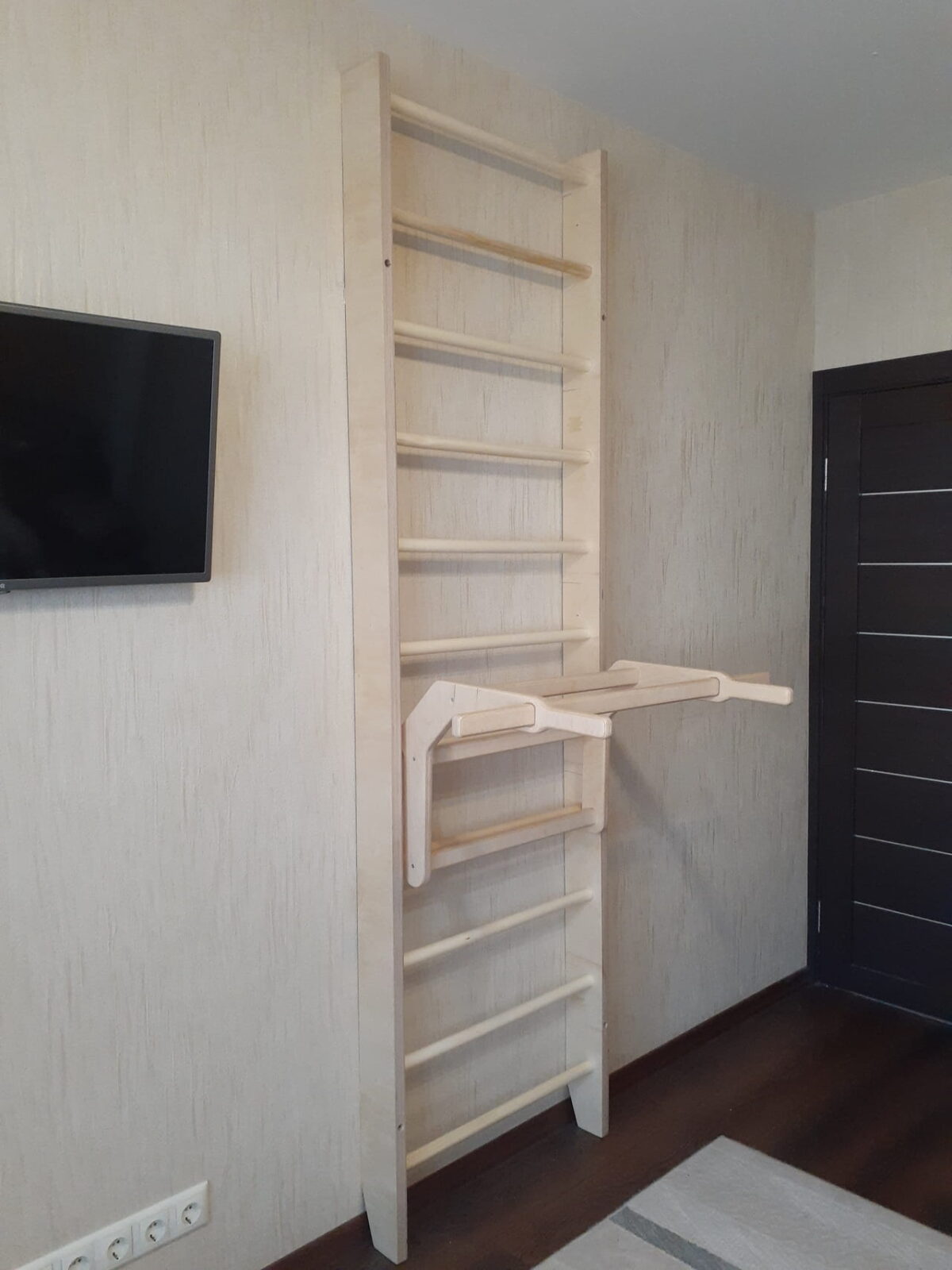
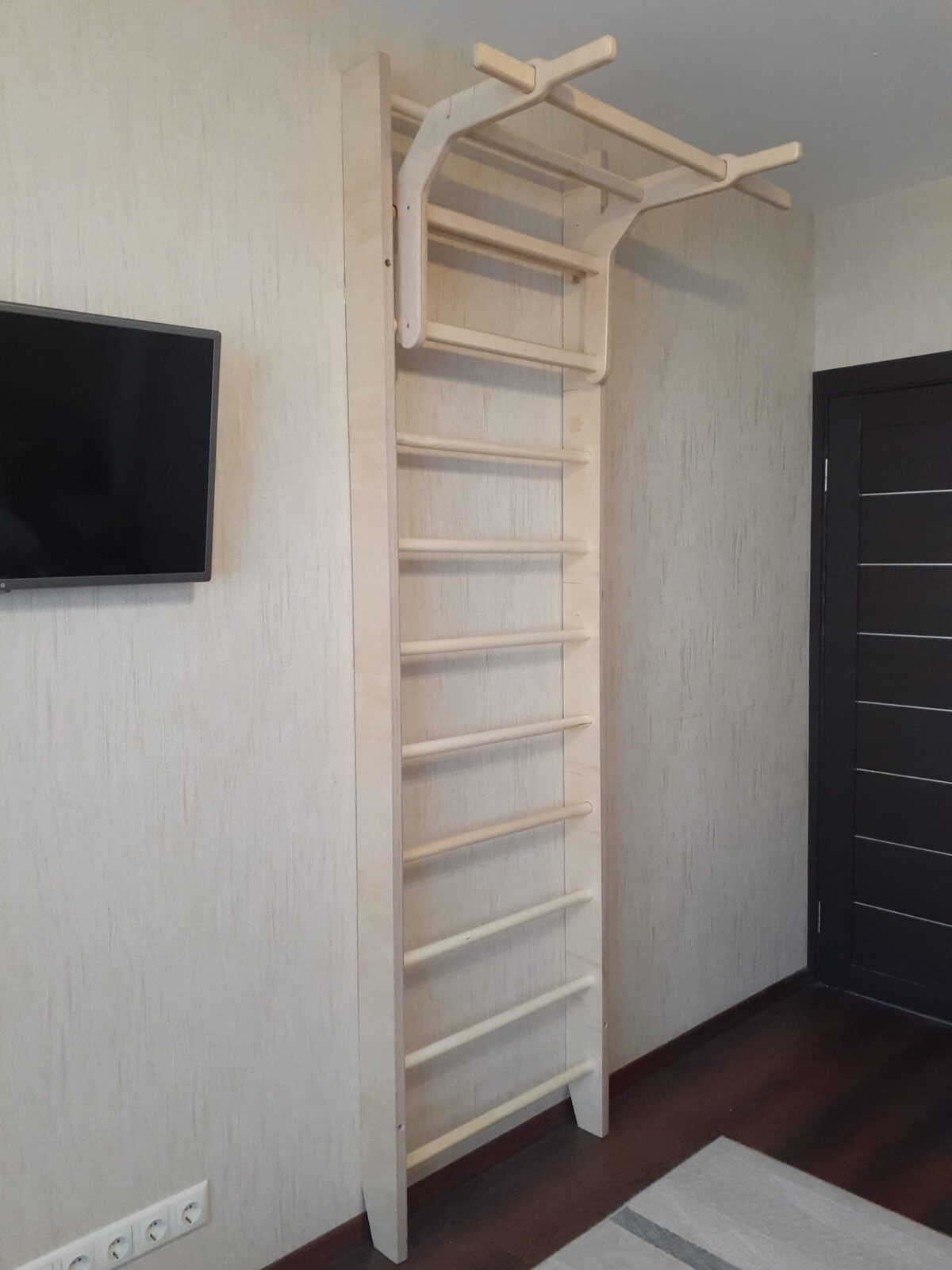
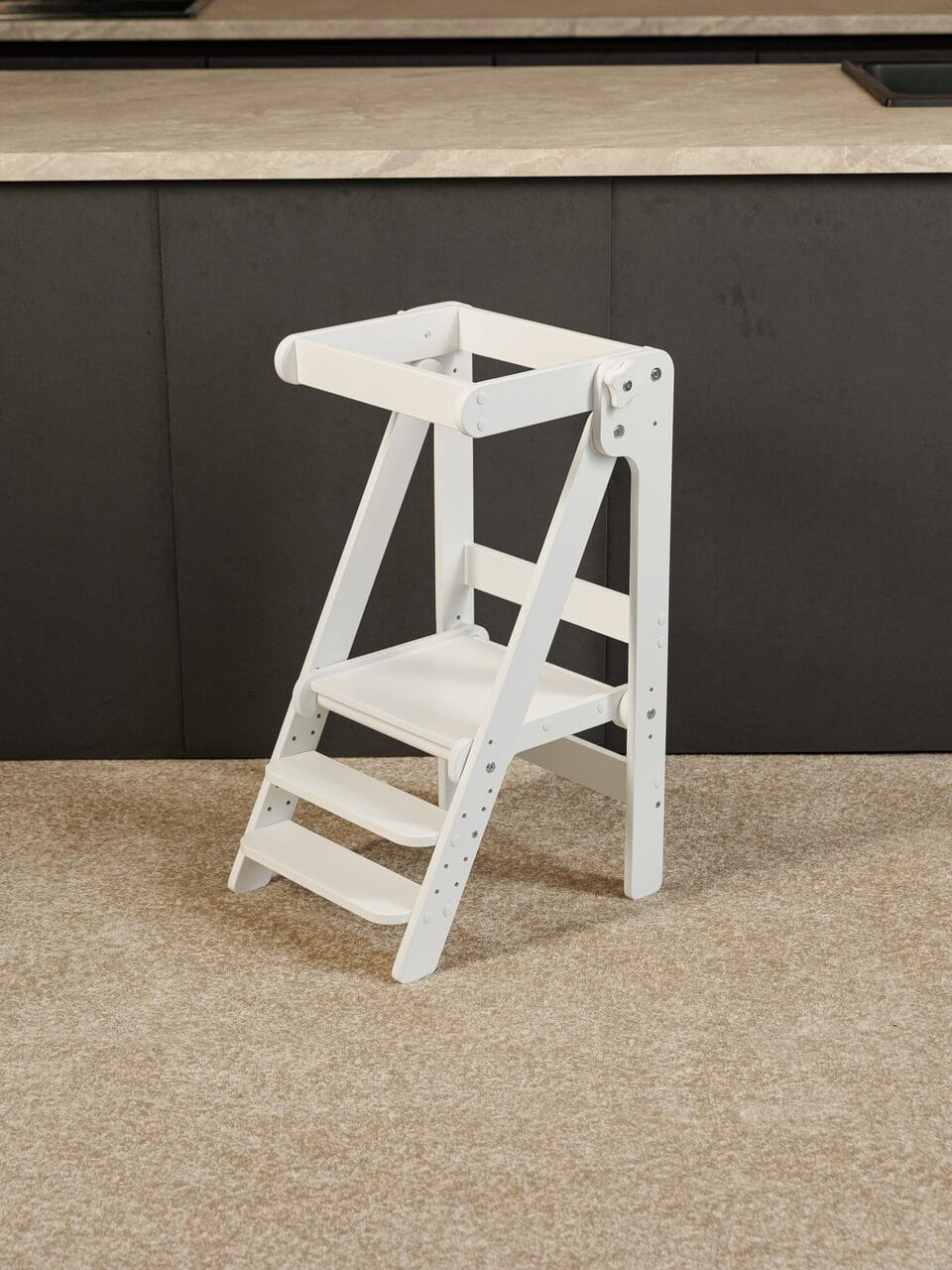
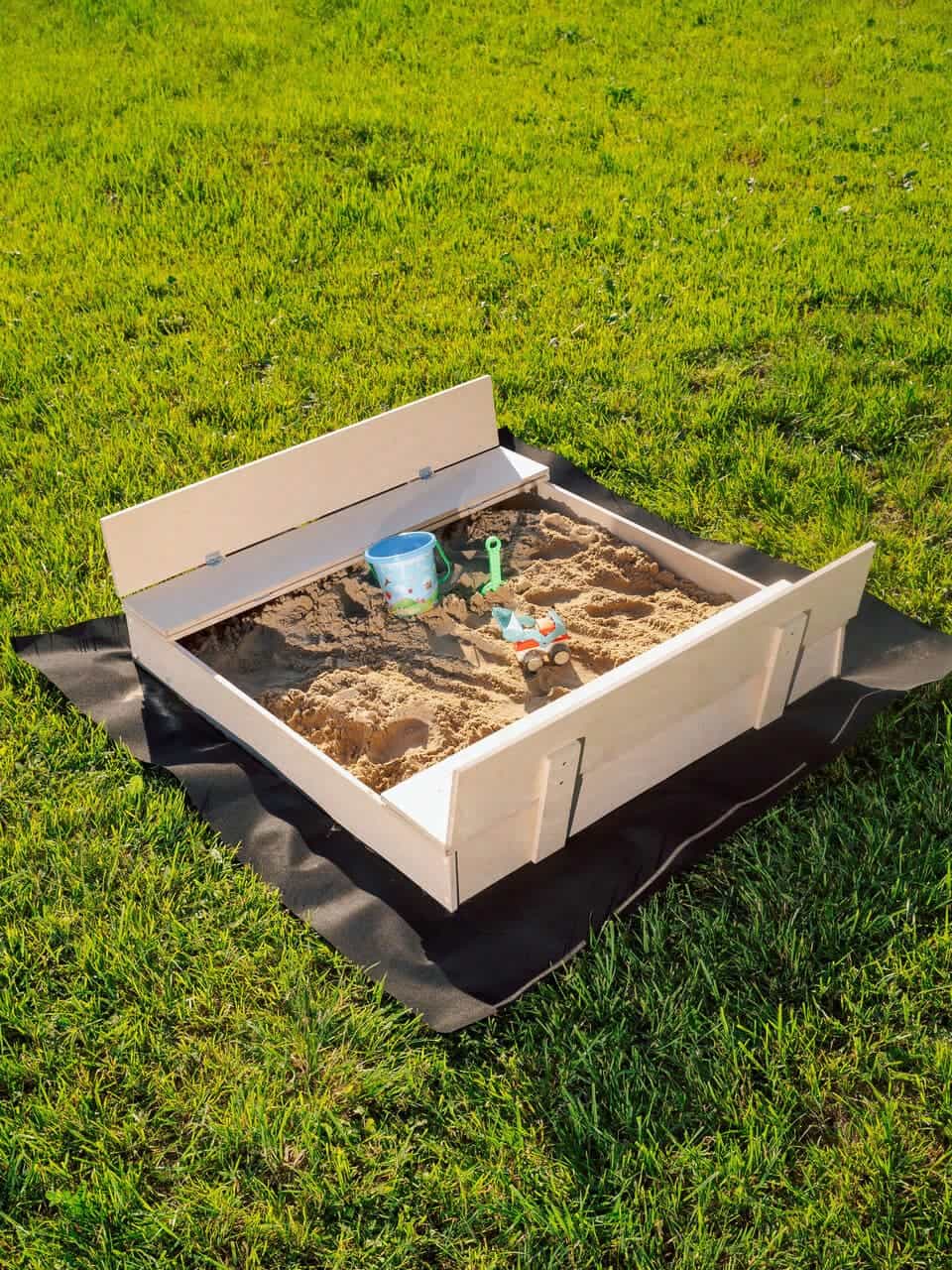



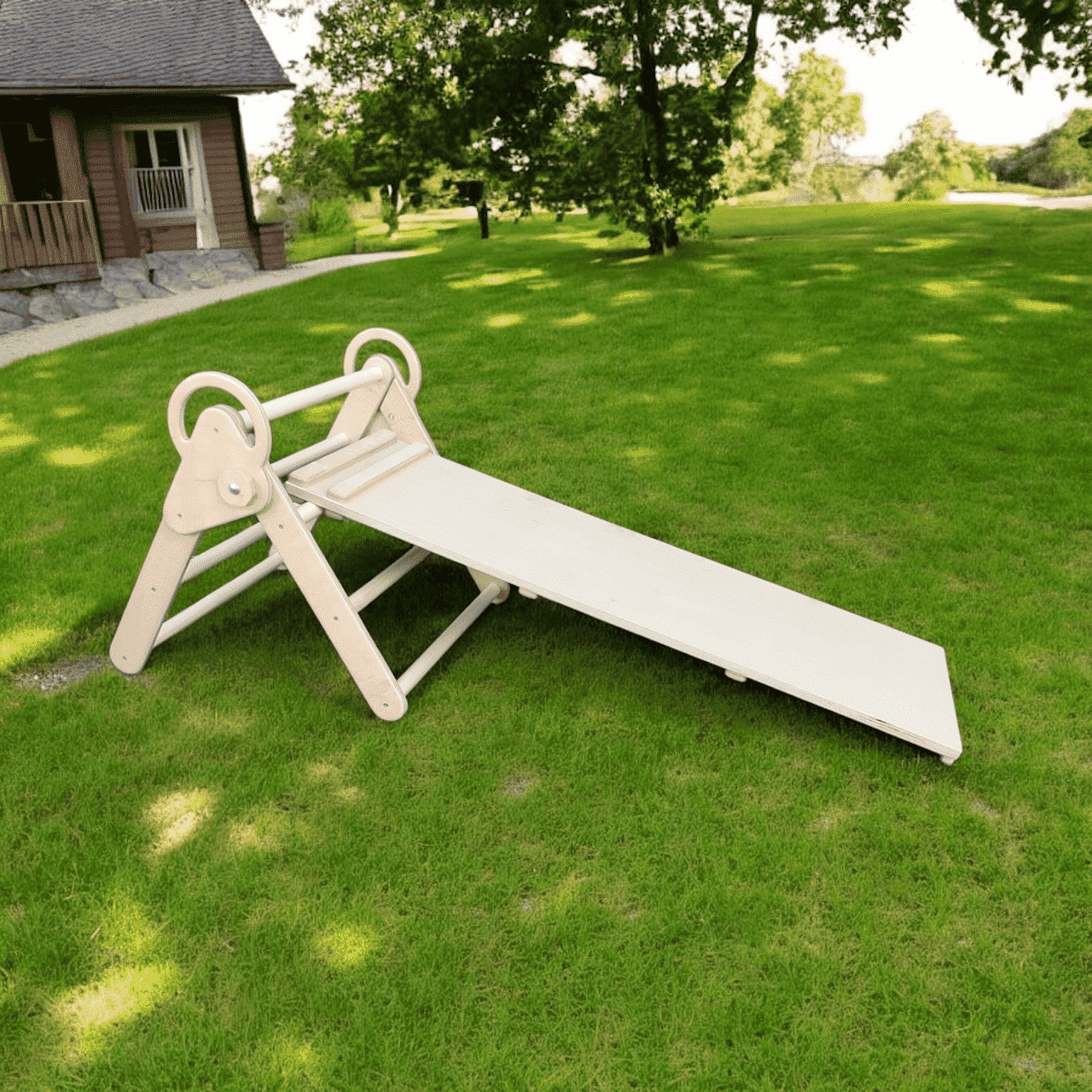

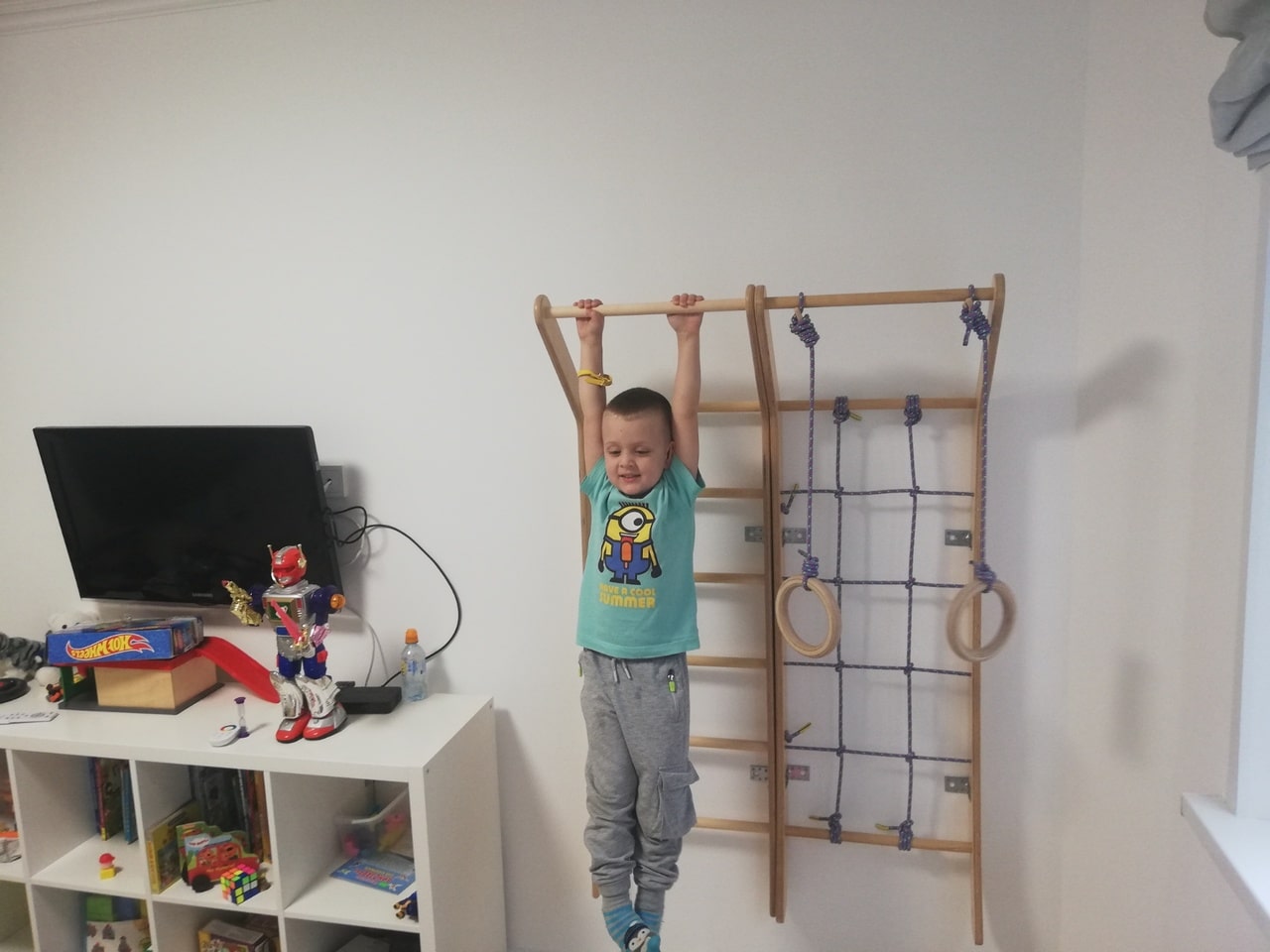


Examples of work done using milling engraving
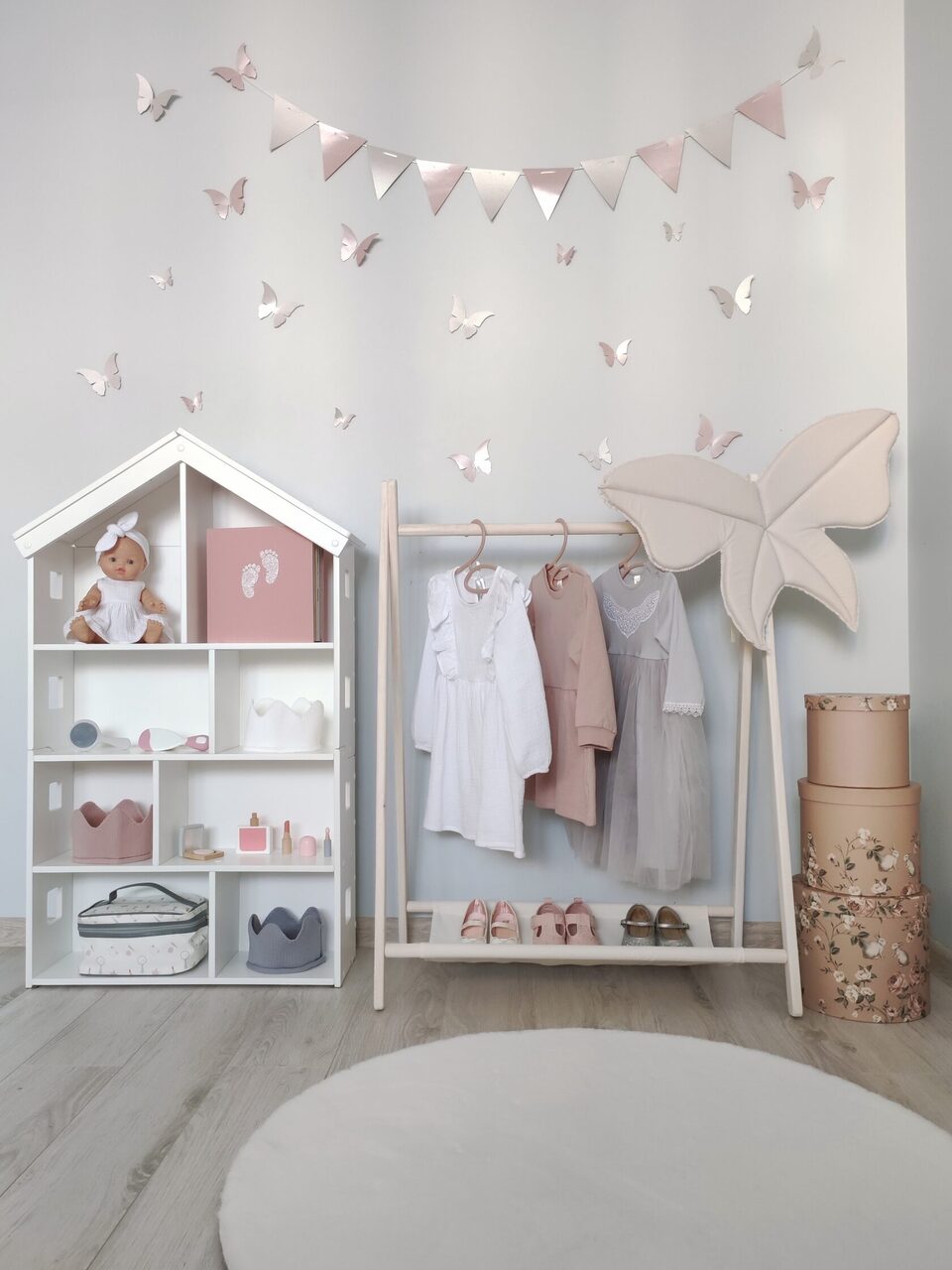
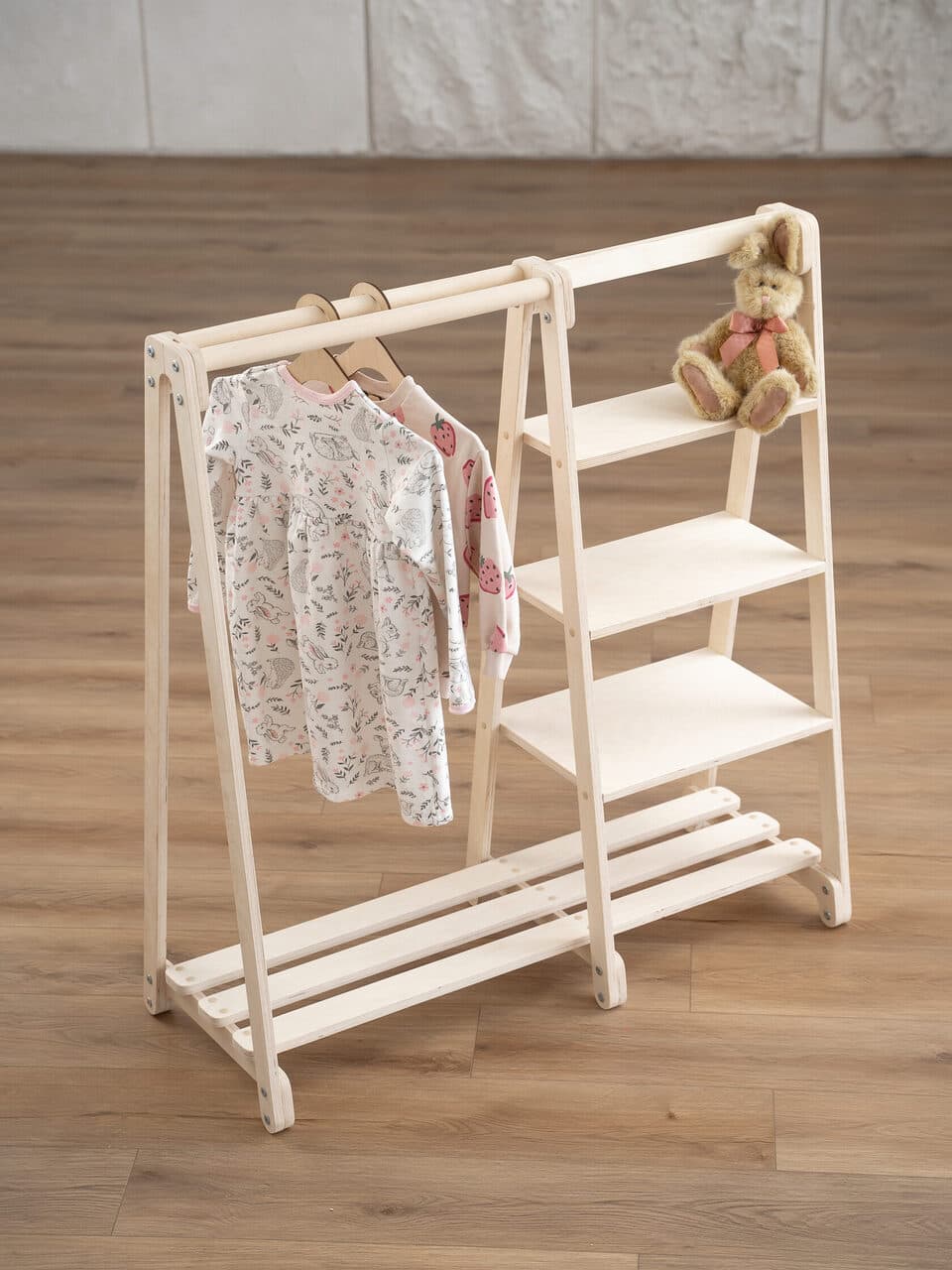
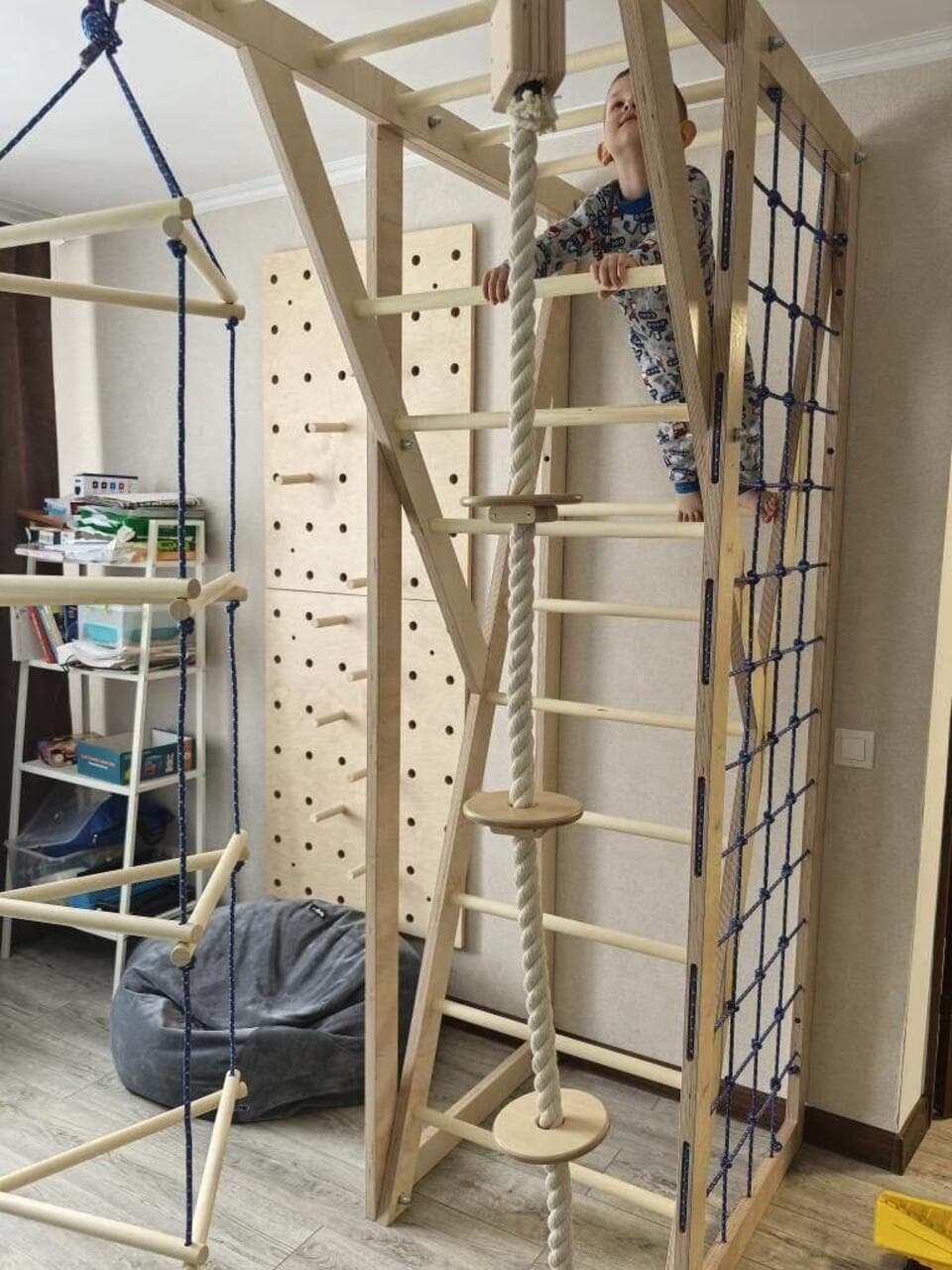
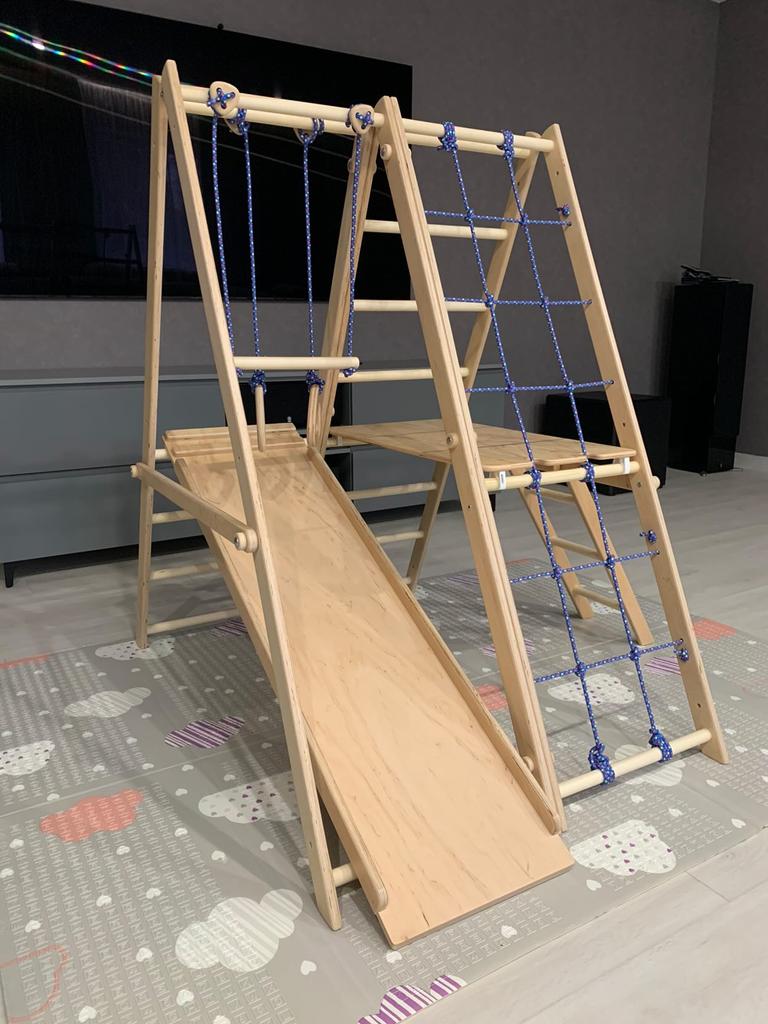
If you go through the actual jobs, the range turns out to be wide, and almost every item is made for a specific request. Here you have interior decor, functional furniture parts, and one-off gifts. The latter are perhaps the most rewarding genre: a cutting board with a name, a panel with a wedding date, a box with an engraved wish — things you cannot buy ready-made and that are valued precisely for being personal.
A separate big topic is furniture. A pattern on a cabinet door, an ornament on a tabletop, a carved decorative panel instantly turn a mass-produced object into a bespoke one. Advertising does not lag behind either: signs, stands, plaques with a cut-out logo or name look more solid than printed ones and last longer. Wood with engraving is perceived as a mark of quality rather than a cheap run.
There is also a purely industrial application far removed from aesthetics. Marking of parts, applying article numbers and tags, service notches for assembly — here engraving is valued for durability: such a mark will not rub off in the warehouse or peel off in transit, unlike a sticker or a paint stamp. For production this is a reliable way to mark products once and for all.
Behind every such job stands one and the same combination: a tuned machine, verified parameters and attention to what the client wants. Materials, images and scale change, but the approach remains — to make exactly what the client needs, not something “broadly similar”. Hence the result that you are not ashamed to put in a display window or give as a gift.
Who uses a carpentry workshop’s services

Furniture makers

Interior designers

Advertising companies

Exhibition stand builders

Art studios

Cafés and restaurants

Construction firms

Retail equipment manufacturers
Furniture factories

Private craftsmen

Custom orders

Manufacturing companies

Museums and exhibition halls

Architects

Theatres and film studios

Educational organizations
Children’s products manufacturing

Repair specialists

Online stores

Sole proprietors
Who usually orders the milling engraving service
Who orders wood engraving? The circle is noticeably wider than it seems at first glance. The core is furniture makers, producers of interior elements and building structures. For them both the precision of the image and the ability to work with different boards matter: today a pattern on an MDF front, tomorrow marking on a plywood part. One site covers both tasks.
A large segment is advertising agencies and souvenir makers. For them engraving is a way to stand out: a wooden plaque or a branded souvenir with a cut-out logo catches the eye more than plastic mass-market goods and lasts longer. Such a medium works for an image of solidity, and that is exactly what the agency sells to its client.
Makers of accessories, home goods and decor come too — for those who put a logo or ornament on their products, engraving gives recognisability. A separate category is wood artists and designers: for them the machine is a tool for realising an idea when an intended fine pattern simply cannot be reproduced by hand. It is out of such orders that one-off, stylish things are born.
Finally, workshops making commemorative and memorial wooden items turn to engraving. Here durability and neatness of the inscription come first: cut text is preserved for decades without fading or crumbling. In such work the cost of an error is especially high, so precision and cleanliness of the cut matter most of all.
Woodworking and wood engraving services
Looking more broadly, wood engraving is only one of the services in the overall set of work with MDF, plywood, particleboard, MFC and glued wood panel. These materials carry furniture, construction and interiors, and each has its own habits under the tool. Cutting, drilling, sanding, engraving, painting — together they make it possible not merely to machine a part neatly but to assemble for the client a finished item with the required decor and in the required size.
Engraving here works on two planes at once — aesthetic and functional. On the one hand it is decor and personalisation: a personalised design, a logo, a corporate ornament. On the other — information and marking: article numbers, tags, service designations. One service covers both “beautiful” and “to the point”, and often both on the same part.
If we boil the advantages of working with an experienced contractor down to a couple of lines, it comes to this: precision on the level of fractions of a millimetre, readiness to take on any of the common materials, a durable result that does not wear off for years, and attention to the details of every project. It is for the sake of this set that engraving is entrusted to professionals rather than attempted in an amateur way.
The field of application here is huge — from furniture workshops to the advertising industry, from one-off decor to serial marking. And almost always the outcome comes down to the contractor: an experienced one will meet the deadline, take the wishes into account and not waste material. It is enough to describe the task — and how best to solve it with a cutter will be suggested already at the discussion stage.
Types of wood engraving
The word “engraving” conceals several different techniques, and it is useful to understand the difference before ordering — the look of the result, the price and the deadline all depend on it. Contour engraving follows lines: letters, a line-art logo, the outline of a pattern. It is fast and reads well, which is why it is chosen for text, marking and concise graphics. Raster engraving, by contrast, fills an area with dots or strokes of varying density, conveying halftones — this is how a photograph or a complex image with transitions can be reproduced on wood. And three-dimensional engraving removes material to varying depths, creating a real relief with shadows: panels, bas-reliefs, textured panels.
The choice of technique is dictated by the task itself. For a plain plaque with a name, contour engraving is enough — it is cheaper and done faster. For a portrait on wood or a fine halftone picture, raster engraving is needed, and it is noticeably more labour-intensive. Three-dimensional relief is the most striking but also the slowest option; it is taken when an item is meant to become an accent of the interior. Techniques are often combined in a single project: contour text plus a raster background, for example. What exactly suits your idea is easier to determine by showing a reference — then it is immediately clear where to head.
A glossary of terms that will come in handy when ordering
When discussing engraving, words come up that are familiar to the workshop and hazy to the client. A small glossary will remove any misunderstandings before the start — when both sides understand the terms in the same way, there are fewer grounds for “I thought it would be different”.
| Term | What it means |
|---|---|
| 🖋️ Contour engraving | A cut along lines — text, a line-art logo, an outline |
| 🌫️ Raster engraving | Filling an area with halftones, a “photograph on wood” |
| ⛰️ 3D relief | Removal of material to varying depths, a three-dimensional pattern |
| 🗺️ Layout | A vector file with the contours of the future engraving |
| 🪚 Cutter | The cutting tool; its diameter sets the minimum radius |
| 📏 Cutting depth | How deep the cutter removes material |
| 🎯 Repeatability | The ability to produce a series of identical items |
Equipment and what precision depends on
Fine words about quality are worth nothing without a machine that ensures that quality. The basis of wood engraving is a CNC milling machine. It guides the tool along a set path, knowing neither fatigue nor the tremor of a hand, so the hundredth part comes out as neat as the first. But the machine is only half the story. No less important are a sharp cutter of the right diameter, correctly chosen feed speed and depth, and rigid fixing of the blank: if the part wanders even slightly under the tool, the image will smear.
There is a nuance worth knowing in advance: the minimum size of an element is limited by the cutter’s diameter. Too sharp an inner corner physically rounds off to its radius, and a very fine line is cut with a fine cutter more slowly and carefully. This is not a whim or a defect but the physics of the tool. A good contractor builds these limitations into the layout already, so that an intended fine monogram does not come out “blurred”. It is precisely the combination of a tuned machine, a suitable cutter and a competent layout that gives the cleanness for which engraving is entrusted to professionals.
Materials for engraving: what to look at
Each material behaves in its own way under the cutter, and the choice determines how the image will lie and how long the craftsman will spend on it. MDF is the favourite for fine engraving: it is uniform, without knots or voids, cuts evenly and holds fine detail perfectly, and afterwards paints beautifully. Plywood is strong and handsome in texture, but its layers tend to tear up on the cut, so a sharp tool and careful feed are needed. MFC calls for delicacy because of its fragile laminate — but on it the contrast between the coating and the cut-out light wood looks striking.
Solid wood and glued wood panel give the most noble look, but with them the grain direction is reckoned with: wood cuts differently along and across, and this is taken into account when laying out the image. If the material raises doubts, it is easier to describe the task and the conditions where the item will stand — a suitable option will be suggested. It often turns out that expensive solid wood is excessive in a particular case, and painted MDF will render the same picture no worse and more cheaply. Such sensible selection is what distinguishes a well-thought-out order from work done at random.
How to prepare a layout for engraving
Engraving follows a vector layout, and the result depends directly on its quality. Ideally there is a ready-made vector in a format the machine understands without reworking — then work starts right away. But it is no problem without one either: a sketch, a photo of a logo, a scan of a hand-drawn image will do. What is missing will be drawn on the spot, converted to vector and agreed with you before cutting. The main thing at this stage is to understand what the result should be and at what size.
- 🗺️ Vector, not a picture: the cutting lines must be solid contours.
- 📏 Real scale: dimensions in millimetres, so the image sits on the part.
- ✍️ Legible typeface: serifs that are too thin get lost on wood — better to check in advance.
- 🎯 Minimum elements with an eye on the cutter diameter.
- 🧱 Material and part size specified — the settings and cutter depend on them.
The fuller the source data, the shorter the path to a finished item and the fewer corrections along the way. But no one will demand a perfect technical package from the client — half the orders begin with the words “I want something like this, help me make it”. Translating an everyday description into the language of a layout and a cutter is precisely the contractor’s job.
Where wood engraving is used
The field of application for engraving is unexpectedly wide, and it is easier to show it through concrete areas. In souvenir products these are personalised boards, magnets, keyrings, boxes, trivets — things where personalisation turns a trifle into a gift with a story. In advertising, engraving goes onto signs, plaques, reception stands, award diplomas and cups on a wooden base: a cut-out logo looks more prestigious than print and does not wear off with time. In interiors — carved panels, decorative inserts, fronts with an ornament, door numbers that set the tone for the whole space.
There are less obvious niches too. Award and gift products for companies: anniversary plaquettes, honour boards, corporate souvenirs with an engraved crest. HoReCa orders menu boards, table numbers, plaques with dish names — wooden, warm, unlike plastic ones. Workshops working with commemorative products apply inscriptions that must survive for decades. And, of course, private orders “for the soul” — from wedding panels to star-sky maps on wood. All these tasks are covered by one and the same machine; only the layout and the material change.
What an order looks like in practice
So that all of the above does not remain theory, here is a typical scenario. A company orders a batch of award plaquettes for a corporate event: a hundred wooden blanks with an engraved logo and a space for a name. From the sent vector a layout is prepared, the blanks are cut to size, the logo is engraved identically across the whole batch, and the names are applied individually from a list. Then — a light sanding of the edges, an oil coating for a noble look, and packaging. The result is a ready set of awards where each item is both identically branded and personal.
Another example is a one-off gift. The client brings a photograph and wants a portrait on wood. Here raster engraving comes into play: the image is converted into a halftone layout, the wood species and shade of the blank are chosen, the settings are tested on an offcut to catch the right contrast, and only then is the finished part cut. The task is one-off, there is no point repeating it, but the cost of an error is high — so a test run here is not a luxury but a necessity. Two completely different orders, yet the logic in both is the same: layout, selection of material and settings, control, finish.
Finishing and tinting the engraving
An engraved part rarely stays “as is” — more often it is brought to completion with a finish, and there are quite a few possibilities hidden here. A simple coating of varnish or oil protects both the cut and the material from moisture, emphasising the natural texture of the wood. But the option of tinting the groove is more interesting: if the image is darkened or, on the contrary, filled with colour, it begins to read far more vividly and with more contrast against a light surface. This is how modest engraving becomes an accent, noticeable from afar.
The choice of finish depends on where the item will live. A street sign needs durable protection from moisture and sun, an interior panel — a pleasant matte or glossy surface, a gift — a delicate oil that preserves the warmth of the wood. Sometimes, on the contrary, a part is left uncoated if it is precisely the live, untreated texture that matters. All of this is discussed in advance: the finish is planned together with the engraving, so that the part goes through its whole journey without unnecessary transport and pauses.
What the price of engraving is made up of
The question “how much does it cost” without details remains without an exact answer — and that is honest, not an excuse. The price is made up of several components, and each one can be estimated in advance. Understanding this arithmetic helps you not be surprised by the quote and see where you can really save.
- 🖼️ Complexity of the image. A simple contour logo is cheaper than a halftone raster picture or a three-dimensional relief.
- 📐 Area and depth. The larger the engraving field and the deeper the cut, the longer the machine works.
- 🔁 Run size. A single part is dearer per unit, a series works out cheaper thanks to the setup.
- 🧱 Material. Its cost plus consumption, taking the blanks into account.
- ✨ Finish. Bare engraving, varnish, tinting the groove — different budgets.
- ⏱️ Urgency. Work outside the general queue is calculated separately.
The simplest way to save without losing quality is to send a clean vector layout and not to rush the deadlines. Reworks due to an inaccurate file and work in emergency mode are precisely what add to the quote those percentages you wanted to avoid. A transparent calculation in advance is in the interests of both sides: both the cost and the deadline are fixed before work begins, without surprises along the way.
Deadlines: what they depend on
The engraving deadline is calculated for the specific order, but there are clear guidelines. A simple inscription or logo on a single blank is a matter of a few hours, and such a small job is often done the same day. A fine ornament, a halftone raster picture or a three-dimensional relief take more time: both for working out the layout and for the cut itself, because the cutter goes more slowly and in several passes. A series adds time to production but saves on setup per unit. If the order is tied to a date — an anniversary, an exhibition, a corporate event — it is sensible to get in touch in advance and allow a small margin rather than bring in a layout “for the day after tomorrow”.
Milling engraving or laser
People often ask how milling engraving differs from laser engraving and which is better. There is no single answer — the methods have different strengths. A laser gives a very fine line and is good for small surface graphics, but it leaves a dark burnt trace on the wood and does not create real volume. A cutter removes material physically, so deep relief, pronounced volume and a clean light cut without scorching are accessible to it. Where a three-dimensional pattern, deep decorative engraving or a natural cut colour is needed, the cutter wins.
Another argument in favour of milling is work with coated boards. On MFC the cutter neatly opens up the light wood under the laminate, giving a beautiful contrast, whereas a laser often leaves a melted edge along the borders. In the end the task dictates the choice: for strict fine marking a laser may be enough, while for three-dimensional decor and deep wood engraving a cutter is used. If you are in doubt about which method suits your idea, that is exactly the question worth discussing before ordering.
Common client mistakes
Most hitches happen not at the machine but at the task-setting stage. Here is what most often gets in the way of a first-time result — and what is easy to foresee.
- ❌ A raster picture instead of a vector. From a pixel picture the cutting contour has to be drawn anew, and small details get lost.
- ❌ Too thin a typeface. Thin serifs crumble on wood — better to choose a denser typeface.
- ❌ An unconsidered size. An image beautiful on screen turns into a mess on a small part.
- ❌ “I’ll coat it myself later”. Without a finish, an open cut darkens over time and draws in moisture.
- ❌ Last-minute urgency. A complex relief and a test run cannot be sped up with a snap of the fingers.
It is no problem if you did not take some of this into account — that is exactly what the discussion before launch is for. A good contractor asks these questions himself before cutting, not after, when fixing things is already expensive.
Quality control and a guarantee of the result
Control is built into the process, not tacked on for show. At the input the layout, dimensions and material are checked. On critical or serial orders the image is first run on a test blank to catch flaws before the finished part. At the output the item is checked in full: crispness of lines, depth, cleanness of the cut, match with the layout, and uniformity across the series. The client gets what was agreed, without “by eye” discrepancies.
If a contentious moment arises, it is easier to resolve precisely because the order went through a single pair of hands. There is no need to find out at whose stage the error occurred — responsibility for the result is not spread around. For the client this is the real guarantee: it is clear who to hold accountable, and clear that the finished item will match what was drawn on the layout.
A one-off order or ongoing cooperation
Wood engraving is equally open both to those who came for a single item and to those looking for a contractor for the long term. A one-off order is simple: showed the idea, agreed the layout, collected the finished item. No commitments for the future — just the work and the result. This is how personalised gifts, one-off panels, trial samples before a run are made.
Ongoing cooperation is another level of convenience, and it is valued by companies that need engraving regularly. Advertising agencies, souvenir makers, furniture brands become convinced over time that it is easier to keep one proven source than to look for a new contractor every time and explain the requirements for logo and quality anew. When the client’s specifics are already known, the work goes faster: fewer approvals, a predictable result, priority in the queue in high season. Many arrive that way — with a single trial order — and stay for years.
Industries and typical tasks
To make it easier to try the possibilities on your own field, here is a table of typical requests by industry. It is not exhaustive — rather it shows how varied the tasks are that one and the same machine covers.
| Industry | What is ordered | Material |
|---|---|---|
| 🎁 Souvenirs and gifts | Personalised boards, boxes, magnets, panels | Plywood, solid wood, MDF |
| 📢 Advertising | Signs, plaques, stands, logos | MDF, MFC, plywood |
| 🪑 Furniture | Patterns on fronts, decor, numbers | MDF, solid wood |
| 🏆 Awards | Plaquettes, diplomas, cups on a base | Solid wood, plywood |
| 🍽️ HoReCa | Menu boards, table numbers, plaques | Solid wood, plywood |
| 🏭 Production | Marking, article numbers, service tags | Plywood, MDF |
If your task is not in the table, that does not mean it will not be taken on. Rather the opposite: a non-standard request is the most interesting one. It is enough to describe what you need to get, and a solution will be assembled from the same operations, just in a different combination.
Combined items and a chain of operations
Engraving rarely lives on its own — more often it is part of a larger item. A plaque first has to be cut to contour, drilled with holes for fasteners, its edges sanded, engraved and coated with varnish. When all these operations are available at one site, the part goes through its whole journey without being shipped between contractors, and the dimensions and image stay coordinated. There is no need to take the blank to one place for cutting, to another for engraving, to a third for painting and then bring it all together.
For the client this means predictability and time savings. A single route rules out the situation where something “did not come together” at the junction of contractors: the image turned out off-centre on the cut-out part or the holes landed on the pattern. That is why engraving is often ordered not as a separate service but straight away in combination with cutting, drilling and finishing — this way the whole job comes together as one neat process rather than a set of disjointed stages.
Delivery and repeat orders
Finished items are shipped across the whole of Europe. Engraved parts are packed carefully so that the image and corners do not suffer in transit, and the conditions are agreed to suit the dimensions and address. For a client in another region everything looks just as simple as for a neighbouring city: the layout is agreed remotely, the item is made and leaves with a transport company.
A repeat order is simpler than the first. If the layout has already gone through production, it is saved, and a new batch will be delivered exactly the same — the same logo, the same depth, the same material. This helps those who order branded products or souvenirs in series and top up an already finished set from time to time. There is no need to prepare the file and agree a sample anew — it is enough to say how many more are needed.
More questions about engraving
Can a photograph be engraved? Yes, via the raster technique: the shot is converted into a halftone layout and reproduced on wood with dots and strokes of varying density. The result depends on the contrast of the source — a sharp photo with good light comes out more expressive.
How small a typeface can actually be read? The limit is set by the cutter diameter and the material. Too-small serifs get lost or crumble on wood, so very fine text is either enlarged or the typeface is simplified. The real minimum for your layout will be suggested at the preparation stage.
Will you engrave from my ready-made design? Of course. If there is a vector layout — work starts right away. If there is only an idea or a picture — a vector will be drawn and agreed with you before cutting.
To sum it all up briefly: wood engraving is a precise and durable way to apply an image, text or three-dimensional pattern to timber or board. It is enough to describe the task and attach a layout or reference — the rest will be broken down into stages, the material and settings chosen, and brought to a finished item within the agreed deadline.
Myths that make clients hesitate
A few stereotypes have built up around engraving that stop people from seeking help in time. Let us take apart the most persistent ones.
- 💭 “No one will take on a single item”. They will. A personalised gift or a one-off panel is an ordinary order, not a favour.
- 💭 “Engraving is expensive”. A simple contour logo costs modestly; the price only rises on complex relief and halftones.
- 💭 “You need a ready drawing in a special program”. An idea, a photo or a sketch is enough — the vector will be drawn for you.
- 💭 “The image will wear off over time”. On the contrary: it is cut into the material, not printed on top, and holds for years.
- 💭 “Ordering from another city is unrealistic”. It is realistic: the layout is agreed remotely, the item is shipped by a transport company.
How to choose a contractor for engraving
If you are choosing whom to entrust the order to, here are simple guidelines. A good contractor names the deadline and price in advance, not “after the fact”. He asks questions about the layout before cutting: clarifies size, typeface, depth, material. He honestly says where which technique is more appropriate and does not push expensive relief where contour engraving is enough. He shows examples of work and, if needed, makes a test sample. And he takes on both a single item and a series, not brushing off a “trifle”. By these signs it is clear that before you stands a master, not a lottery.
How to care for engraved items
An engraved item will serve longer if a couple of simple rules are followed. Wood reacts to humidity and temperature, so sharp fluctuations are best avoided — they make the material dry out or swell, and a fine image can suffer. The surface is wiped with a soft cloth without aggressive chemicals, especially if it is oil-coated. Direct sun is avoided where possible: it fades the groove tint and dries out the solid wood. Outdoor items need a durable finish, which is renewed as needed.
These trifles are rarely spelled out when ordering, but they are precisely what determine whether the item will please years later just as on the first day. If desired, care instructions will be suggested tailored to your item and coating — for example, how to renew the oil on a cutting board or how to protect a panel over a fireplace. A little attention — and the engraving will keep its crispness and look for a long time.
And a final practical point: discussing an order commits you to nothing. You can simply describe the idea, attach a photo or reference — and get a guideline on technique, material, price and deadline. It is at this stage that useful details come up: which typeface reads better on wood, whether to tint the groove, which species to take for the concept. Such a conversation saves both money and time and removes half the questions the client came with.
Personalisation: why people come for it
It is worth mentioning personalisation separately, because it is exactly what makes engraving so sought-after in the gift sphere. A mass-market souvenir is easily forgotten, but an item with a name, a date or a personal wish is kept for years. A cutting board with the mistress’s name, a sauna set with a family name, a globe-organiser with an engraved travel map — all of these stop being merely objects and become a story. For the giver this is a way to invest meaning in a gift rather than just cover the occasion.
The same principle works in business too. A corporate gift with a company crest, an award plaquette with an employee’s name, a branded souvenir for a partner — engraving turns a standard item into a token of attention. And, importantly, personalisation is easy to scale: a common corporate element is engraved identically across the whole batch, and the names are applied individually from a list. This way the series stays both recognisably branded and personal for each recipient.
Seasonality and planning an order
Gift and souvenir engraving has a pronounced seasonality. Before major holidays, corporate events and the wedding season, demand for personalised items naturally rises, and with it the queue. In quiet periods a simple order goes through almost without waiting. Knowing this seasonality helps with planning: if engraving is needed by a specific date in high season, it is more sensible to order in advance and book time than to count on getting everything done in the last week. Regular clients are at an advantage in this sense — they usually find it easier to get priority because their layouts and requirements are already familiar to production.
A test sample before the run
When it comes to a series, a sensible step is to make a trial sample before launching the whole batch. On it you can see how the image lies on the chosen material, whether there is enough contrast, whether the typeface reads at the real size, whether the cutting depth is satisfactory. It is far cheaper to catch a correction on one blank than to discover it on a hundred finished items. The client looks at the sample, makes adjustments if needed — shifting the logo, enlarging the text, changing the tint — and only after approval does the engraving go into the run. This approach saves material, time and nerves, and the result comes out predictable from the first part to the last.
For one-off critical orders a sample is not superfluous either — especially on raster portraits and complex halftones, where a lot is decided by matching the settings to the specific wood species. A couple of trial passes on an offcut of the same material help catch the right contrast before the cutter touches the finished blank. This does not raise the order’s cost substantially, yet it almost rules out the risk of ruining an expensive part with an unlucky setting.
It is worth remembering the material margin too. On a one-off complex part some of the blank goes on trials and setup, and on a batch a small reserve is set aside in case of a defect during feed or non-uniformity of the solid wood. This is normal insurance, not overpaying: it is better to have a margin than to halt work over a shortage of a couple of blanks and wait for a new delivery. Sensible material consumption is planned in advance, together with the layout of the parts, so that the usable area of the sheet or board is worked to the maximum and nothing extra is bought.
What is milling engraving on timber and sheet materials?
It is the application of an image, text or pattern to wood and sheet materials with a cutter on a CNC machine. The tool cuts the image straight into the body of the material following a prepared layout, so the result comes out precise and detailed rather than “roughly similar”.
Which materials are suitable for milling engraving?
MDF, particleboard, MFC, plywood and glued wood panel are suitable — that is, all the common timber and sheet materials. It is precisely on them that furniture, construction and interior finishing rest, so engraving lands exactly where these materials are used.
What are the advantages of milling engraving over other methods?
The main pluses are precision to fractions of a millimetre, durability of the image (it is cut, not printed on top, so it does not wear off) and versatility with materials. Plus neatness: with the right settings the cutter does not tear the coating around the cut, a flaw of cruder methods.
How long does the milling engraving process take?
It depends on the complexity of the image, the size of the part and the run. A simple inscription or logo on a single blank is a matter of a few hours. A fine ornament, a deep relief or a series of items are calculated separately and can take several days. The exact date is named for the specific layout.
Can engraving be ordered on ready-made items?
Yes, engraving is applied to ready-made items too — furniture, decor, advertising media. The main thing is that the surface and shape allow the part to be reliably fixed under the cutter and reached in the required spot. Such points are assessed in advance, before work begins.
How to choose a suitable material for engraving?
You start from the purpose of the part, the conditions where it will stand, and the desired look. MDF is good for interiors and furniture and holds fine engraving perfectly. Plywood and MFC are taken where strength and wear resistance are needed. If you are in doubt — describe the task, and a suitable material will be suggested.
What types of engraving can be done?
There are surface and deep engraving. Surface engraving is neat and fast, suited to text, logos, marking. Deep engraving gives a pronounced relief and volume and is chosen for decorative patterns and panels. In essence, one service covers both a strict inscription and an artistic relief — the difference is in the depth and the cutter.
How is the quality of engraving guaranteed?
By three things: a tuned CNC machine, a carefully worked-out layout and a check before launch. On critical orders the image is first run on a test blank or in test mode to catch flaws before the cutter touches the finished part.
What is a protective coating and why is it needed?
It is a finishing layer — varnish, oil or paint — with which the finished part is covered. It protects the wood and the cut itself from moisture, abrasion and minor damage, extending the service life. At the same time the coating emphasises the image, and when the groove is tinted it makes the pattern more contrasting and expressive.
What additional services are offered as part of material processing?
Besides engraving itself — cutting and sizing, drilling, sanding and painting. Thanks to this a part can be taken through the whole cycle in one place: cut, engraved, drilled for assembly and finished, coming out as a finished item rather than a semi-finished one.
Reach us in whatever way suits you best
Call us, message us on a messenger app or reach out via social media — choose whichever way suits you
🗺️ We accept orders from clients across all of Europe
💬 Useful information and articles
Eco-friendly and safe materials for modern wood production
Eco-friendly and safe materials for modern wood production In recent years we increasingly think about what the things around us are made of. A home, furniture, a floor, a kitchen, a

How to Correctly Choose Between Plywood, MDF, Particleboard, and MFC for Different Tasks
How to Correctly Choose Between Plywood, MDF, Particleboard, and MFC for Different Tasks In the world of woodworking and furniture making, every material has its own story. Plywood, MDF, particleboard, and

Cutting sheet wood materials at different angles: why and how it is done
Cutting sheet wood materials at different angles: why and how it is done Working with wood materials is not just sawing. To get a truly high-quality and durable product, you have

Recommendations for choosing sheet materials for indoor and outdoor projects
Recommendations for choosing sheet materials for indoor and outdoor projects In woodworking, choosing the right sheet material is like laying a foundation for a builder. What you pick at the very