Eco-friendly and safe materials for modern wood production
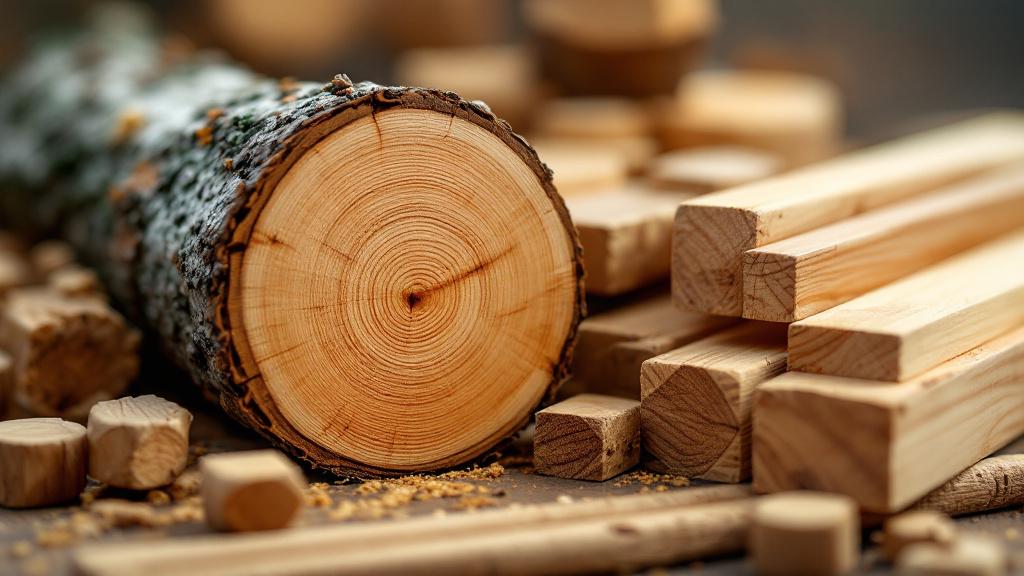
In recent years we increasingly think about what the things around us are made of. A home, furniture, a floor, a kitchen, a child’s cot — we want all of it to be not only beautiful and sturdy, but also safe. This matters especially when it comes to wood — a living, natural material that is already associated with eco-friendliness. But it is not that simple: treating the wood, gluing it, applying the finish — all of this affects the final properties of the product. And this is exactly where the question of choosing eco-friendly and safe materials.
This article is for those who work with wood, choose it for their interior, manufacture furniture, or simply want to know which materials are considered truly safe and which merely masquerade as “natural”. We will look at which materials are used in wood production today, how to tell the genuinely eco-friendly from the conditionally safe, and which approaches help make woodworking as “green” as possible — without harming health or nature.
Why eco-friendliness and safety are not a passing trend but a necessity
Wood is a warm, living material for which it is hard to find a substitute. But even the highest-quality wood needs treatment: it must be protected from moisture and pests, shaped, joined to other elements, made smooth and pleasant to the touch. Every one of these stages uses materials — adhesives, varnishes, oils, impregnations, sanding agents and so on.
If these materials are chosen incorrectly, the final product loses its natural value. Instead of healthy, eco-friendly furniture, we get a source of fumes, allergens and toxins — especially if the item is in a living space or a child’s room.
The main task of the modern manufacturer is not merely to make something beautiful and sturdy. Today it is important to think about the health of the people who will use the product and about minimising the impact on the environment at every stage of production. This is precisely why the choice of ecologically clean and safe materials is not a whim but a professional responsibility.
Which materials are considered eco-friendly in woodworking
Not every natural material can be called safe, and not every synthetic one is harmful. It comes down to the composition, the manufacturing technology and the consequences for the environment. Here are the main criteria by which you can determine whether a material is eco-friendly or not:
- Non-toxic composition — the absence of volatile organic compounds (VOCs), formaldehyde, phthalates and other hazardous substances.
- Minimal emissions — the material does not release harmful vapours, either during application or in use.
- Biocompatibility — it does not cause allergies or irritation of the skin or mucous membranes.
- Biodegradability or recyclability — the possibility of safe disposal or recycling.
- Verified origin of the raw material — wood from responsibly managed forests, with the corresponding certificates.
Now let us take a closer look at which materials and technologies meet these criteria and can genuinely be considered safe for people and nature.

Natural oils and waxes
This is one of the oldest and most proven ways of finishing wood. Natural oils (linseed, tung, hemp, walnut) and beeswax or carnauba not only bring out the texture of the wood but also protect it from moisture and dirt.
Advantages:
- A completely natural composition.
- They form no film — the wood “breathes”.
- Easy to refresh — there is no need to strip the old coating.
- They release no toxic vapours.
Disadvantages:
- They require regular care and renewal.
- They may be less resistant to mechanical damage.
Even so, for indoor furniture, children’s toys, cutting boards and worktops, this is the ideal option.
Water-based paints and coatings
Modern water-based paints and coatings are a serious step forward in eco-friendliness. Today you can find varnishes, paints and stains that have almost no smell, contain no formaldehyde and still provide good protection.
What makes them good:
- A minimal content of VOCs (volatile organic compounds).
- They dry quickly and leave no smell.
- They are suitable for indoor and outdoor work.
- A wide palette and range of sheens — from matt to gloss.
Such materials are widely used in the manufacture of furniture, flooring, window frames and doors. The main thing is to choose trusted manufacturers and read the composition on the packaging carefully.

Safe adhesive formulations
Glue is one of the most sensitive topics. Most traditional adhesives contain formaldehyde, especially in the production of plywood, particleboard and MDF. But alternatives are available today.
Eco-friendly adhesives:
- Solvent-free polyurethanes — strong, moisture-resistant, and they do not give off hazardous substances.
- Casein-based adhesives (milk protein) — a proven solution used in restoration and handcrafted work.
- Modified starch and other bio-adhesives — an actively developing field.
In the production of solid-wood furniture, mechanical joints (mortise-and-tenon, dowels) are also often used, which allows the use of glue to be minimised or avoided altogether.
Eco-friendly plywood, MDF and wood boards: is it possible?
It is often thought that eco-friendly production means only solid wood. But in reality it is not so clear-cut. Solid wood is wonderful, but expensive, heavy and not always suitable for serial production. That is why manufacturers make active use of boards — plywood, particleboard, MDF. The trouble is that most of them are produced using formaldehyde-based adhesives, which can off-gas during use and adversely affect health.
But progress does not stand still. Today there are technologies for producing wood boards with a reduced or zero formaldehyde content. This matters especially if the products are intended for living spaces, children’s rooms, kitchens or bathrooms.
What is important to know:
- E0 or Super E0 class plywood — such material releases virtually no formaldehyde. This is achieved through safe adhesive formulations and adherence to strict standards.
- MDF and particleboard on urea or polyurethane resins — safer alternatives to traditional boards.
- F★★★★ (Four Star) — the Japanese standard** for board eco-friendliness, guaranteeing minimal off-gassing of volatile substances. In Europe its equivalent is the E0 emission class.
If you work with board materials, choose products that have been tested for emissions and are suitable for indoor use.
Wood from a responsible source
Wood itself is a natural material, but its harvesting is not always done honestly and sustainably. Mass felling, illegal supplies, the absence of reforestation — all of this affects the state of nature. Today a manufacturer can choose for themselves: to support sustainable forestry, or to turn a blind eye to the origin of the raw material.
What is considered an eco-friendly approach to wood:
- Using wood with FSC or PEFC certification — this confirms that the forest was felled responsibly, with subsequent reforestation.
- Refusing wood from valuable or rare species, especially those under threat of extinction.
- Working with local suppliers and tree species to reduce the carbon footprint of transport.
- Reusing wood (for example, from the demolition of old buildings) — a direction that is developing actively in Europe and beginning to gain momentum here.
The conclusion is simple: eco-friendliness begins not with the packaging but with understanding where the wood came from and what will remain after it is harvested.

Disposal and recycling: where the waste goes
No woodworking business does without waste. Offcuts, shavings, sawdust, rejects, glue and varnish residues — all of it has to go somewhere. And here you can take one of two paths: simply dump it at a landfill, or approach the matter responsibly.
How eco-oriented manufacturers act:
- Sorting waste by type: wood separately, paint and coatings separately, packaging separately. This makes it possible not only to dispose of it safely but also to return some materials to circulation.
- Using offcuts and shavings: they can be made into briquettes for heating, compost additives, underlays or plywood blanks.
- Cooperating with recycling companies: many production companies sign contracts with specialised organisations that collect wood waste and process it into raw material.
- Minimising waste at the design stage: precise cutting, 3D modelling, using “leftovers” in small forms (for example, handles, stands, decorative elements).
Modern production is not only about “what to make” but also about “what will remain”. An eco-friendly approach is about respect for the material and about sensible consumption.
Safe processing methods: from sanding to drying
It is not enough simply to choose a good material. What also matters is how it is worked. Wood can be wonderful in its raw state but lose all its advantages through improper processing. And it can also harm the craftspeople working in production if the technologies are not observed.
Here are a few examples of how modern production companies make the process eco-friendly and safe:
- Dust-collection systems during sanding and sawing. Fine wood dust is dangerous to inhale, especially when it comes from coniferous species or glued materials. Modern workshops are equipped with powerful extraction and filtration systems.
- Drying wood without chemicals. Proper air or kiln drying makes it possible to avoid fungus and mould without using aggressive impregnations.
- Doing away with solvents. Where acetone, white spirit and other caustic substances were once used, harmless water-based formulations are used today.
- Protecting workers: safe respirators, gloves, ventilation, eye protection — this is not only care for the person but also an element of the overall eco-friendliness of production.

Handcraft and small forms — the path to conscious production
One cannot overlook such an important aspect as the scale of production. Mass manufacturing is always associated with a certain amount of loss, defects, packaging and transport. Small workshops, on the other hand, working in a manual or semi-automatic mode, are often far more careful with the material.
Craftspeople:
- more often choose quality raw material of clear origin,
- use natural finishing materials,
- work to individual orders, avoiding “overproduction”,
- use waste carefully — for many, even small chips are put to use.
This approach is becoming ever more popular. People are choosing conscious consumption; they want to have in their home not just furniture but an object with a story — made by hand, from a material they understand, with care and soul.
Eco-friendliness is not idealism but a new norm
The eco-friendly approach used to be treated as something “for the select few”. Supposedly it was expensive, complicated, impractical. But today the situation has changed. New materials, technologies and knowledge make it possible to create products that are sturdy, beautiful and safe for everyone.
And this is no longer just marketing. It is respect — for people, for the material, for nature. It is responsibility. And it is the future.
How to build an eco-friendly production cycle: a step-by-step approach
When we talk about eco-friendliness in woodworking, it is important to understand: it is not a single magic ingredient, not a special varnish and not merely “green” packaging. It is a systematic approach. It covers every stage: from choosing the wood to the moment the product reaches the customer. Below are the key steps that help a business become genuinely eco-friendly and safe.
1. Thoughtful sourcing of raw material
The very first decision is, of course, where and from whom to source the wood. Here it is important to:
- Work only with trusted suppliers who provide documents confirming the legal and sustainable origin of the wood.
- Give priority to local species, especially hardwoods: oak, ash, birch, maple. This reduces transport costs and the carbon footprint.
- Avoid rare or tropical species without certification — they are often harvested by barbaric methods and harm ecosystems.
2. Energy efficiency of production
The production process is not only about working the wood but also about consuming energy and water and using machines, lighting and ventilation. All of this can be made more efficient:
- Using energy-saving equipment and lighting.
- Setting up proper logistics in production — so that machines and equipment run without downtime or overload.
- Shifting some operations to manual or semi-automatic labour, especially at the finishing stages.
Some workshops even install solar panels, especially if production is located in a private building — this is a real way to reduce dependence on the grid.
3. A responsible approach to processing and finishing
We have already spoken about this in the previous sections: the choice of natural oils, waxes, water-based varnishes and safe adhesives is the foundation of eco-friendly production. But no less important is to:
- Not apply a finish “for good measure”if it is not needed. Many products look wonderful with minimal treatment.
- Consider where the product will be used: for a child’s room or a kitchen you need materials with enhanced safety standards.
- Minimise the number of consumables — reuse brushes and rollers by cleaning them afterwards rather than throwing them away.
4. Smart packaging and delivery
It seems like a trifle, but packaging and logistics are an important part of the overall footprint that production leaves behind.
What can be done:
- Use eco-friendly packaging: kraft cardboard, recycled plastic, paper fillers.
- Avoid foam, polyethylene and foam rubber, especially in single-use packaging.
- If delivery is within the city or the region — reuse the packaging again, especially when supplying shops or showrooms.
- Organise optimal logistics — load vehicles to the maximum, do not run transport empty, combine orders by direction.
5. Communication with the customer
And finally, the eco-friendly approach should be clear and visible to the customer. People want to know what they are buying. And here it is important not to overdo the marketing but to speak simply, in a human way.
How to speak with customers:
- Tell them what wood the product is made of, where it grew, how it was dried, what it was coated with.
- Explain why you use oils or natural varnishes, why you refused cheap adhesives.
- Yes, eco-friendliness may cost a little more, but it is an investment in health and a long service life — this is important to say.
- Show the process. Photos, videos, short reports — how the wood is treated, how the shade of oil is selected. This builds trust.

Current trends in eco-friendly woodworking
The world is changing, and with it the approach to production. Below are a few current trends that have already entered the practice of the best workshops and will become the norm in the coming years.
1. Recycling and “reclaimed” wood
Old beams, boards from dismantled houses, wood from industrial demolition — this is a rich material with a history. It is sanded, treated and given a new shape. Such products are valued for their character, their vintage spirit and their minimal ecological footprint.
2. Compact production close to the customer
Producing furniture in a region and selling it in that same region is not only practical but also eco-friendly. Transport and packaging costs fall and CO₂ emissions decrease. Customers increasingly value local producers, especially those who work with “understandable” materials.
3. Minimalism and functionality
The eco-friendly approach is not only about materials but also about meaningful design. People increasingly choose simple, durable things without excess. One solid wooden table is better than three cheap ones made of laminate.
4. Repairability and service
An eco-friendly manufacturer offers not just furniture but a thing with a future. If in 10 years you need to replace a leg, repaint a surface or refresh the oil — it can be done. Such products last for decades and do not turn into rubbish after the first defect.
5. Educational work with customers
Workshops and companies are beginning to share knowledge actively: they write articles, keep blogs, show the process. People are drawn to knowledge, especially when it concerns the health of their families and care for their home. This helps to shape a sustainable culture of consumption and respect for the material.
Conclusion: ecology is not a compromise but an advantage
Wood production is always an interaction with a living material. And that means the attitude towards it must be careful, honest and responsible. Modern technologies, materials and approaches make it possible to ensure that every product is not only beautiful but also safe — both for people and for nature.
Yes, the eco-friendly path sometimes demands more effort, more knowledge and slightly higher costs. But it delivers the main thing — trust. People increasingly value what is made with intelligence, heart and respect for nature.
Eco-friendly materials are not a fashion. They are the new norm for professional and conscious production. And everyone who works with wood can make their contribution to making this world a little warmer, cleaner and more beautiful.