How to Correctly Choose Between Plywood, MDF, Particleboard, and MFC for Different Tasks

In the world of woodworking and furniture making, every material has its own story. Plywood, MDF, particleboard, and MFC are words many have heard, but far from everyone understands how they differ and which tasks they are best suited for. If you are planning a renovation, updating furniture, or starting your own production, it is important to figure out exactly what to buy and why. Today I will explain in detail how these materials differ, what their strengths and weaknesses are, and where each of them is best used.
Why is the choice of material so important?
When it comes to working with wood or its derivatives, the material becomes the foundation of the entire structure. It determines not only the appearance of the product but also its durability, reliability, resistance to loads, and sometimes even safety. The wrong choice can lead to furniture quickly becoming unusable, the surface starting to delaminate, or the product simply not withstanding loads.
In addition, different materials have different prices and technical characteristics. So it is worth economizing sensibly — the most expensive option is not always optimal, and a cheap material will not always live up to expectations.
What is plywood?
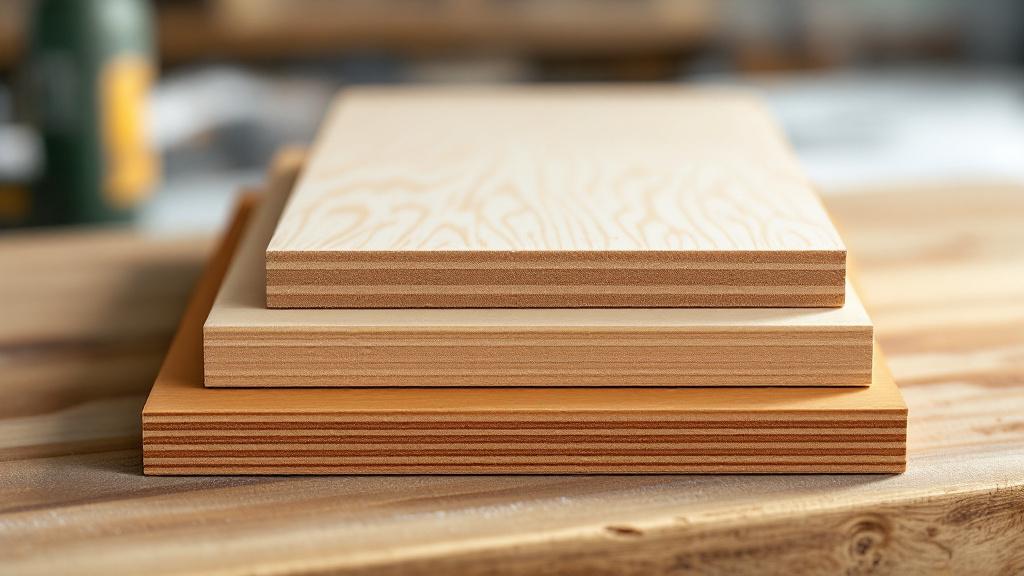
Plywood is a multilayer material consisting of thin sheets of wood glued together under a press. Each layer is arranged so that the grain of the wood runs perpendicular to the previous one, which gives plywood its particular strength and stability.
Advantages of plywood:
- High strength and resistance to loads.
- Good moisture resistance (especially in moisture-resistant grades).
- A natural wood pattern, which allows plywood to be used as a decorative material.
- Relatively low weight for its high strength.
Disadvantages of plywood:
- It can be more expensive than MDF or particleboard.
- The surface is not always perfectly even — some tasks require additional processing.
- The edges need careful finishing, since the layers are visible.
Where is plywood used?
Plywood is often used in construction, for making doors, furniture components, wall panels, and even in shipbuilding. If you need a reliable and strong base, plywood is one of the best options.
What is MDF?
MDF (medium-density fiberboard) is a board made of wood fibers pressed and glued together under high pressure using special resins. Unlike plywood, here the wood is ground down to fine particles and then compressed.
Advantages of MDF:
- A very even, smooth surface with no layers or knots.
- Easy to process — it can be cut, drilled, and sanded.
- Well suited for painting and laminating.
- Cheaper than plywood in comparable sizes.
Disadvantages of MDF:
- A less moisture-resistant material — with prolonged contact with water it swells.
- Lower strength and flexibility compared to plywood.
- When cut and sanded it produces dust that requires protection.
Where is MDF used?
MDF is ideal for making furniture with even surfaces — cabinet fronts, kitchen units, decorative panels. It is often used in interiors where perfect smoothness and the possibility of painting matter.
What is particleboard?
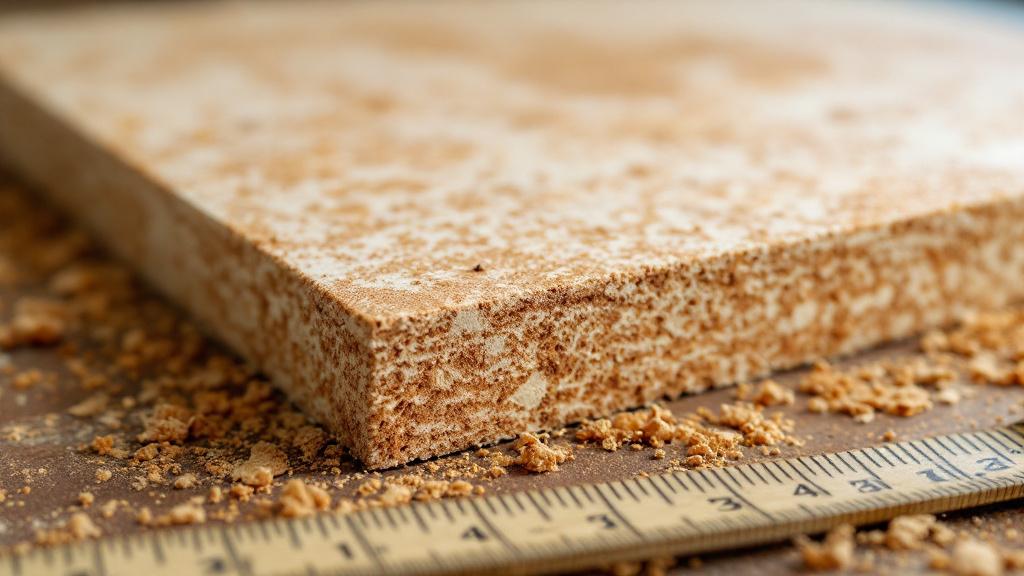
Particleboard is a wood-chip board made of pressed wood chips and adhesive. The chips remain visible in cross-section, and the board turns out dense but with a rough surface.
Advantages of particleboard:
- Low cost.
- Good density and strength under static loads.
- Used in inexpensive cabinet furniture.
- Can be laminated and covered with PVC film.
Disadvantages of particleboard:
- Very poor moisture resistance — the board swells and deforms on contact with water.
- The surface is rough and requires covering.
- It weighs more than plywood or MDF.
- Not as strong as plywood.
Where is particleboard used?
Particleboard is most often used for making furniture frames, shelves, and cabinet back panels. If your budget is limited and moisture resistance is not needed, particleboard is a good choice.
What is MFC?
MFC is melamine-faced chipboard. Essentially it is the same particleboard, but with one or two surfaces covered with a decorative and protective film (laminate). Lamination makes the board more resistant to moisture and mechanical damage and improves its appearance.
Advantages of MFC:
- A wide choice of colors and textures.
- Protected against scratches and moisture far better than ordinary particleboard.
- Easy to care for — the surface washes easily.
- The cost is affordable, a little higher than particleboard but lower than plywood and MDF.
Disadvantages of MFC:
- The edge requires careful finishing when sawn, otherwise the internal structure shows.
- Lower eco-friendliness — if the film is damaged, the material deteriorates.
- If the film is damaged, moisture can penetrate inside and destroy the board.
Where is MFC used?
MFC is widely used in the manufacture of cabinet furniture — wardrobes, tables, bedside cabinets, kitchens. It is a versatile material for those who want a beautiful and practical result at an affordable price.
Key criteria for choosing a material
To choose what is best specifically for your task, it is important to consider several factors:
1. Moisture resistance
- Plywood (especially moisture-resistant) withstands a damp environment well.
- MDF requires protection from moisture, but in dry rooms it is a great fit.
- Particleboard is extremely sensitive to water and deteriorates quickly without a covering.
- MFC is the most moisture-resistant of the particleboards thanks to the film, but damage to the film is critical.
2. Strength and durability
- Plywood is the strongest and most durable material.
- MDF is stronger than particleboard but weaker than plywood.
- Particleboard and MFC are suited for light and medium loads.
3. Appearance and finish
- Plywood is natural and is often used with an exposed wood structure.
- MDF is the ideal base for painting and decorative coatings.
- Particleboard needs a covering and is usually hidden within the structure.
- MFC is a ready-made solution with a decorative film.
4. Price
- Particleboard is the cheapest.
- MFC is slightly more expensive.
- MDF and plywood are more expensive, but for quality and durability.
Which material to choose for different tasks?
The choice between plywood, MDF, particleboard, and MFC often depends on exactly which task you are solving. Let’s break it down by area.
1. Cabinet furniture: wardrobes, chests of drawers, shelving units
Optimal choice: MFC and MDF.
- MFC is the most common option for furniture bodies thanks to its combination of price, practicality, and appearance. Thanks to the laminated surface, wardrobes, chests of drawers, and shelving units look neat and are resistant to scratches and dirt. When choosing, pay attention to the quality of the film — it should be even, without bubbles or defects.
- MDF is often used for furniture fronts — cabinet doors, decorative panels, elements with carving and milling. Its smooth surface allows MDF to be painted any color and to achieve an even finish.
- Particleboard is more often used for internal elements or budget furniture models, where appearance does not play the main role. For example, cabinet back panels and drawer bottoms.
- Plywood is used less often in cabinet furniture, but it is suitable for strong and durable structures, for example for made-to-order furniture where high reliability matters.
2. Kitchen units and countertops
Optimal choice: Plywood and MFC.
- Plywood is the best choice for the base of countertops and structures that will be subject to loads and contact with moisture. Moisture-resistant plywood will not swell and will hold its shape even in kitchen conditions.
- MFC is often used to face kitchen fronts and bodies thanks to the moisture resistance of the film and ease of care.
- MDF is suitable for kitchen fronts, but requires additional moisture-resistant treatment (for example, special paint or film). Without protection it deforms quickly.
- Particleboard is not recommended for kitchens because of its low moisture resistance.
3. Finishing work and decorative panels
Optimal choice: MDF and plywood.
- MDF is excellent for decorative panels, moldings, and interior elements with carving. The material cuts, sands, and paints easily.
- Plywood is good for finishing walls and ceilings, especially if you want to preserve the natural texture of the wood.
- MFC and particleboard are not suitable for decorative panels, as they look too plain and lack the necessary aesthetics.
4. Construction and rough work
Optimal choice: Plywood and particleboard.
- Plywood is indispensable in construction, for example for formwork, temporary structures, and covering floors and walls, thanks to its strength.
- Particleboard is used for rough finishing and temporary partitions, where high moisture resistance and a decorative look are not needed.
- MDF and MFC are practically never used in construction.
5. Floors and underlays for floor coverings
Optimal choice: Plywood.
Plywood is the ideal material for leveling a floor and creating a reliable base for laminate or parquet. It is resistant to loads and moisture-resistant.

Processing specifics of each material
By knowing the specifics of working with each of these materials, you will be able to achieve an excellent result and avoid mistakes.
- Plywood: it is sawn with an ordinary saw or a power saw with fine teeth. The edges are best finished with a sander or by hand so there are no burrs. It can be coated with varnish or stain to preserve its natural look.
- MDF: it is cut with a fine-toothed handsaw or a jigsaw with fine blades. Dust is produced during work, so a respirator and safety goggles are recommended. It sands and paints well.
- Particleboard: it is sawn with a circular saw and requires care so the edges do not crumble. After sawing, the edges must be covered with film or edge banding.
- MFC: it is cut with the same tools as particleboard, but when sawing you must use protective tape on the edges, otherwise the material may delaminate.
How not to go wrong with your choice — practical tips
- Determine the operating conditions. If the material will be exposed to moisture, choose plywood or MFC with a quality covering.
- Assess the load. For load-bearing structures plywood is best suited; for decorative elements, MDF.
- Think about the appearance. For smooth painted fronts, MDF; for imitating natural wood, plywood.
- Do not skimp on the quality of glue and films. Especially if you use particleboard and MFC — cheap materials quickly lose their appearance.
- Remember eco-friendliness. Plywood and MDF usually emit fewer harmful substances than low-quality particleboard.
Caring for plywood, MDF, particleboard, and MFC: simple recommendations
Proper care of wood-based materials will extend the service life of your products and preserve their appearance. Each material requires its own approach.
Caring for plywood
- Avoid prolonged exposure to moisture, even if the plywood is moisture-resistant — after contact with water, dry the surface thoroughly.
- To protect it from dirt and moisture, coat plywood with varnish, stain, or oil.
- Regularly wipe products free of dust with a soft, dry cloth.
- Do not use abrasive or aggressive cleaning agents.
Caring for MDF
- MDF must not be washed with a lot of water — it is better to use a slightly damp cloth.
- Mild cleaning agents without aggressive components are suitable for cleaning.
- Avoid mechanical damage — scratches appear easily on MDF.
- When painting, follow the paint manufacturer’s recommendations so the coating lasts a long time.
Caring for particleboard
- Particleboard requires the edges and surface to be covered with film or varnish, otherwise the board quickly absorbs moisture.
- Wet cleaning is done very carefully, without excess water.
- Do not place hot objects directly on the surface.
- Avoid impacts and strong mechanical effects.
Caring for MFC
- MFC is easily cleaned with a damp sponge and a mild cleaning agent.
- The surface is scratch-resistant, but avoid using sharp objects.
- Do not allow prolonged contact with water in places where the film is damaged.
- In case of chips and damage to the film, it is better to carry out repair or replacement of the elements right away.
Common mistakes when choosing and working with wood-based materials
Mistake #1: Buying cheap particleboard for damp rooms
Many people choose the cheapest option for the kitchen or bathroom without considering moisture resistance — the board swells, deforms, and becomes unusable within just a few months.
Mistake #2: Using MDF without a protective coating
MDF looks great after painting, but without it, it quickly absorbs moisture and loses its shape.
Mistake #3: Ignoring edge quality on MFC
If the edges are not finished correctly, the film can peel off and the board will start to break down.
Mistake #4: Overloading plywood in structures
Although plywood is strong, you should not use it under strong dynamic loads without additional fastenings — this can lead to cracks.
Mistake #5: A lack of knowledge about processing specifics
Incorrect sawing, improper sanding, or gluing reduces the quality and durability of products.
Conclusions: what to choose and why?
- If you need strength and durability, choose plywood. It is suitable for critical structures, floors, furniture under load, and even finishing with an exposed wood texture.
- If smoothness and the possibility of painting matter, your choice is MDF. It is ideal for decorative fronts, interiors, and furniture that requires an even surface.
- If the budget is limited and high moisture resistance is not required, particleboard is suitable for internal structures and rough work.
- For versatile cabinet furniture with a striking appearance and a moisture-resistant surface, MFC will be the optimal choice.
When choosing between plywood, MDF, particleboard, and MFC, consider the operating conditions, the tasks, the budget, and the desired appearance. Each material is unique and has its own place in the world of woodworking. The right choice and proper care will ensure a long service life for your products and comfort in your home or workspace.