
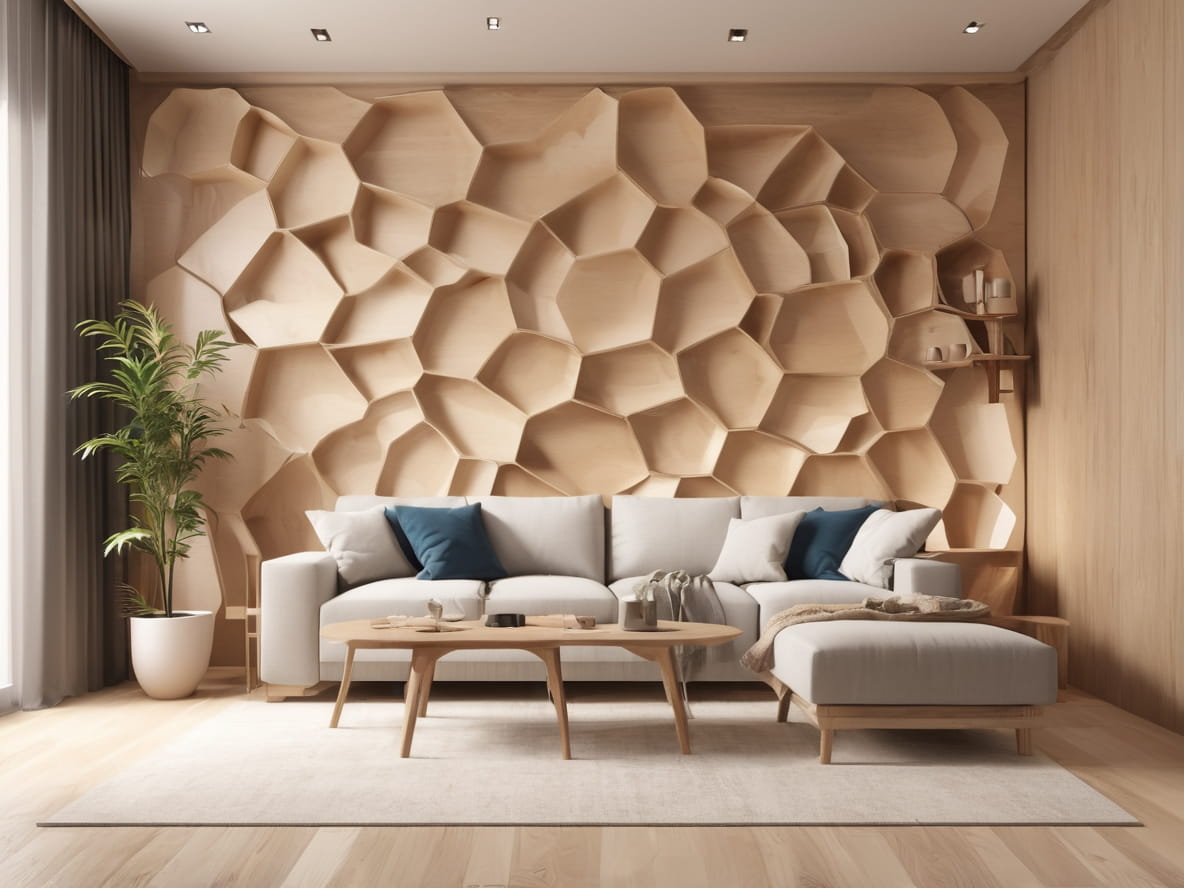
Wooden Interior Decor
Wooden interior decor means custom-made panels, partitions, slatted screens, ceiling inserts, carved wall panels, framing, shelves and mouldings built to a design project, drawing or sketch. We work with solid wood, MDF, plywood, MFC and particleboard, and the shapes and dimensions are matched to a specific space. Full cycle: milling and contour cutting on CNC, sanding, tinting and painting. Below you will find which products fall into this category, what materials and stages go into production, how long manufacturing takes and who needs this kind of decor most often.
Wooden interior decor: solutions for stylish interiors
Wooden interior decor covers a whole scattering of products — from the eye-catching to the almost invisible, yet all working towards the overall look of a space. Wall panels and art panels, shelving units and shelves, stands, three-dimensional letters, stair steps, partitions, railings with balusters, planters, frames, screens, slatted louvres, sliding walls. Some of these are purely decorative, while others also solve a practical task at the same time: a shelf stores, a partition divides a room into zones, a slatted screen hides what you would rather keep out of sight. It is precisely this combination of beauty and utility that makes wooden decor so sought after in residential, commercial and public spaces.
Behind every element lies its own idea — what the designer had in mind and what the client wanted to get. A wooden partition does not merely fence off a work corner from the living room; it also sets the tone for the whole room, becoming the very accent around which the rest of the interior is built. Frames, planters and small details work more subtly: they add warmth and soften the coldness of concrete and glass. And what is convenient — the very same slatted partition is equally at home in an apartment and in an office meeting room; only the context changes.
Designers return to wood not out of fashion but by calculation. The material is alive, warm to the touch, with a grain that never repeats — and at the same time it lasts for decades when treated properly. Add to this the general shift towards eco-friendly solutions, and it becomes clear why wooden decor is back in demand. Plus it is flexible in style: tinting to dark walnut leads into the classics, bleached oak into Scandinavian minimalism, painted MDF into a contemporary interior. The very same element can be presented in completely different ways — the finish decides everything.
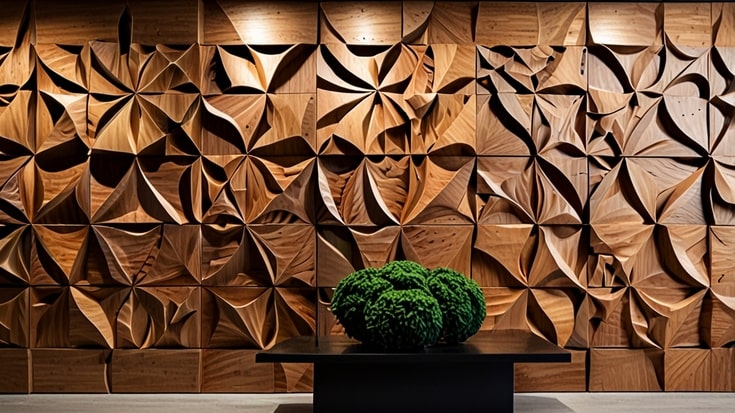
Panels
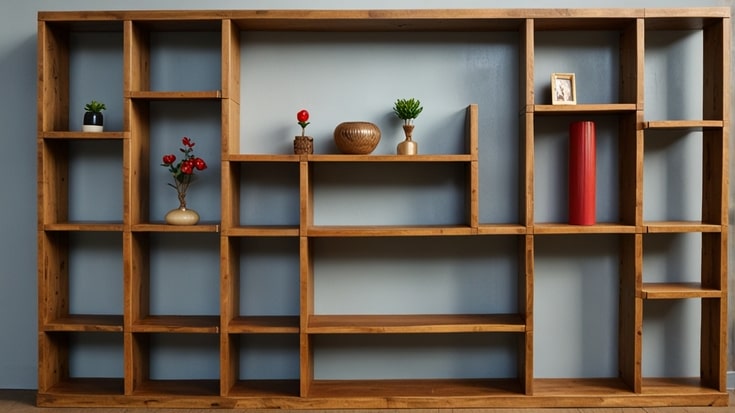
Shelving units
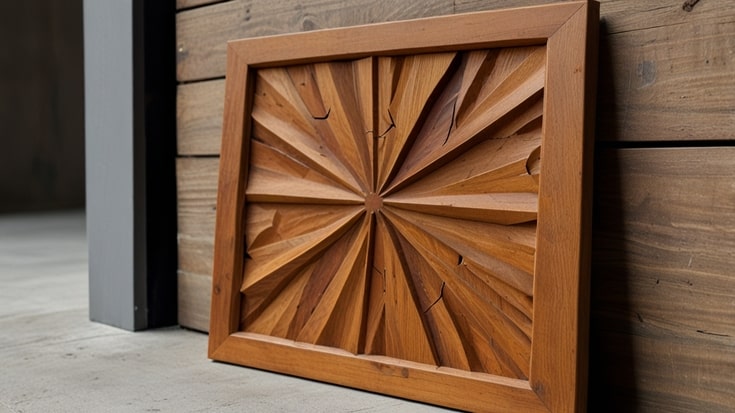
Art panels
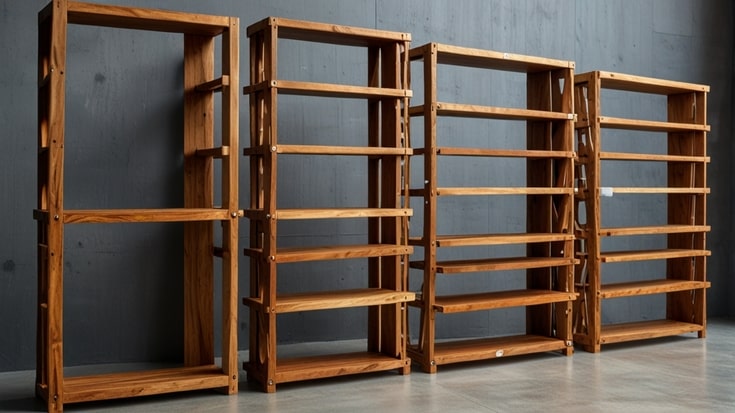
Stands
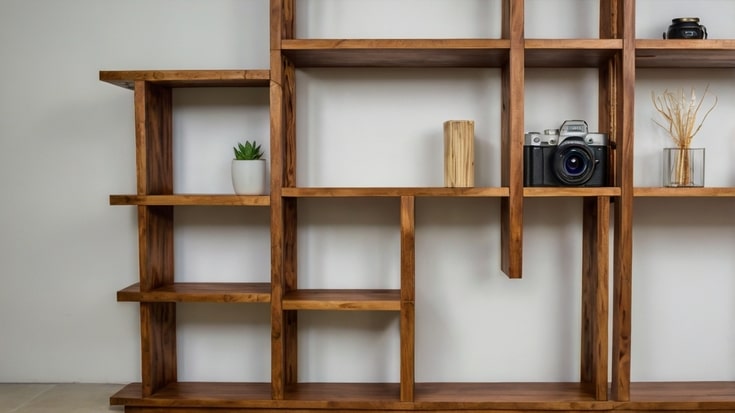
Shelves
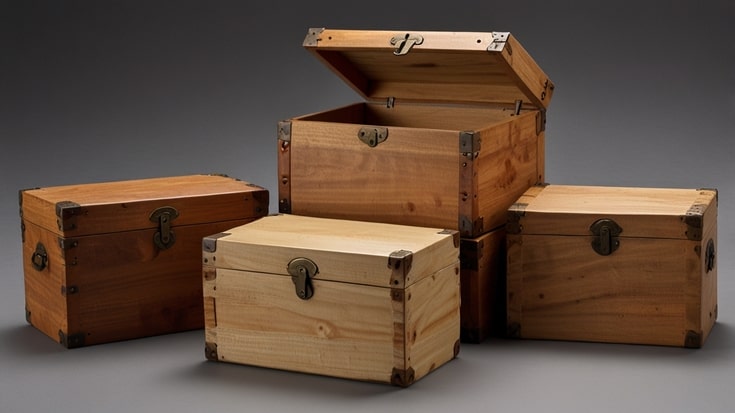
Boxes

Three-dimensional letters
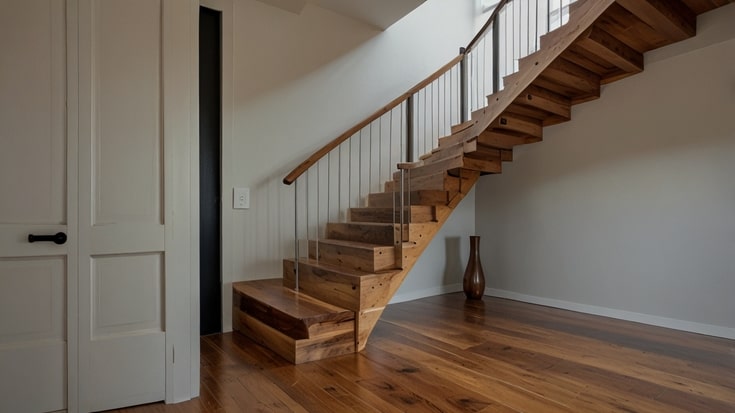
Stair steps
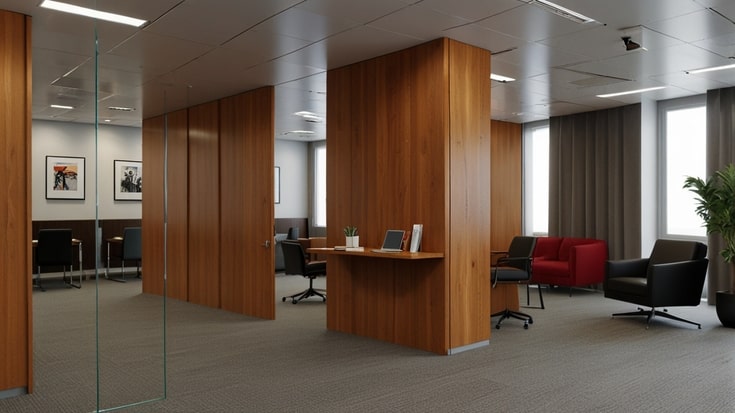
Partitions
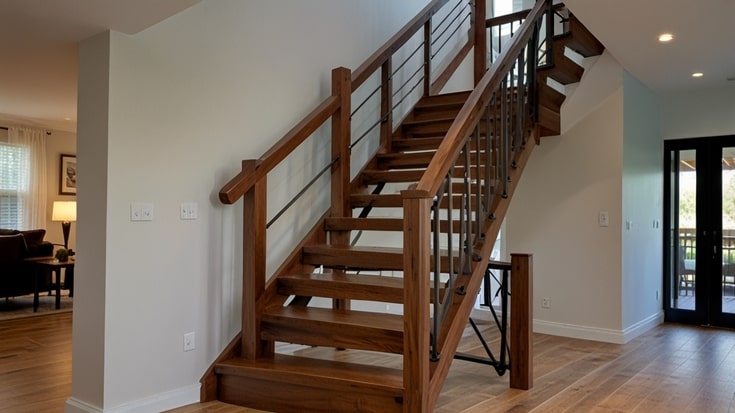
Railings
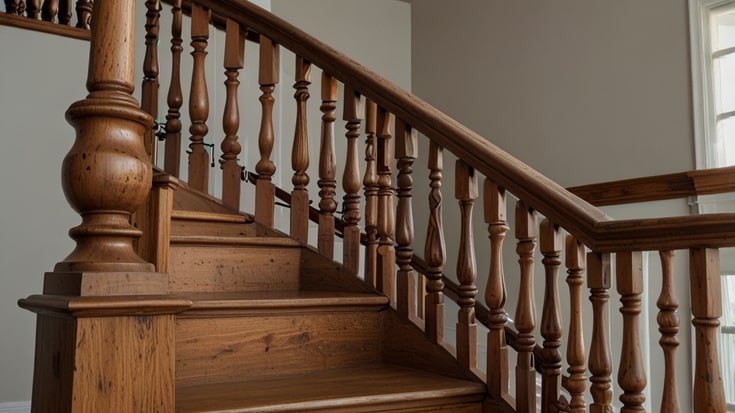
Balusters
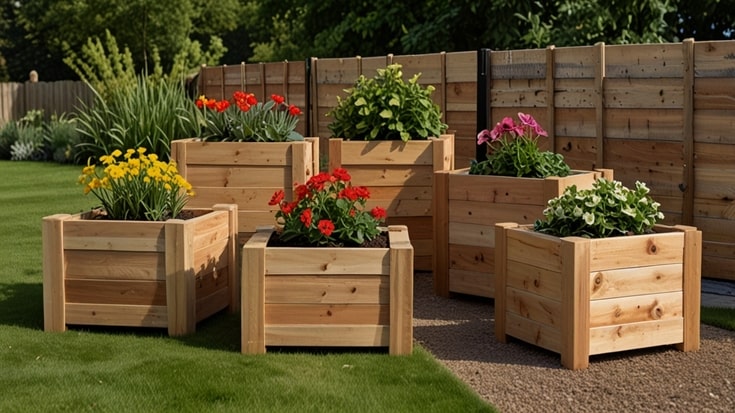
Planters
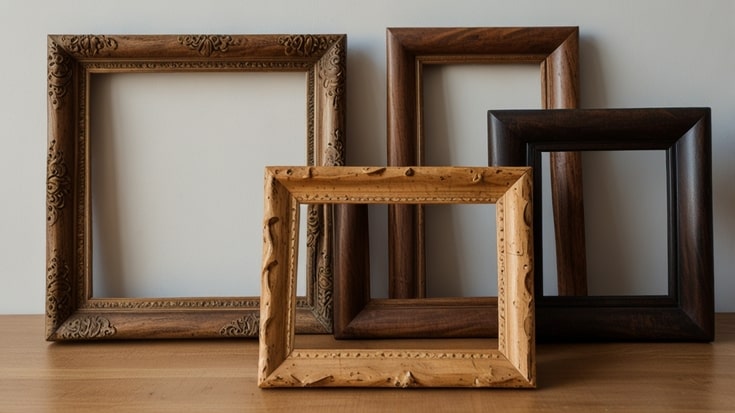
Frames
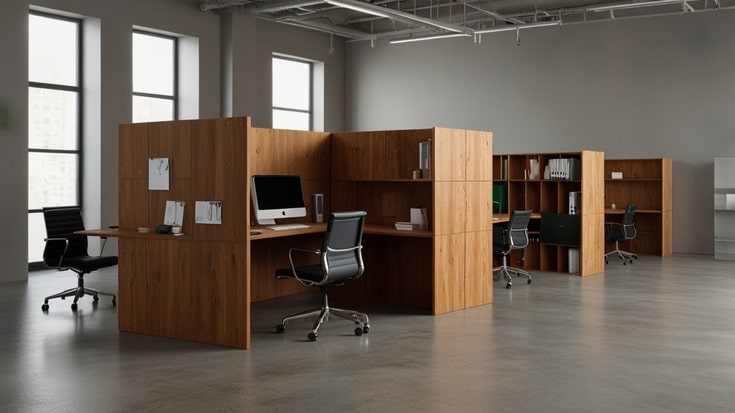
Modules
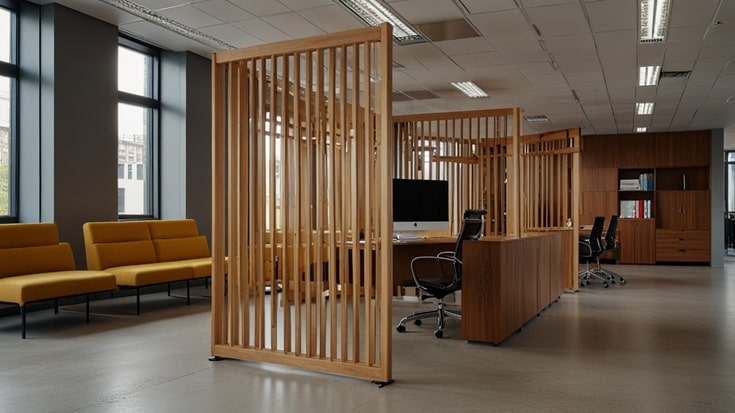
Screens
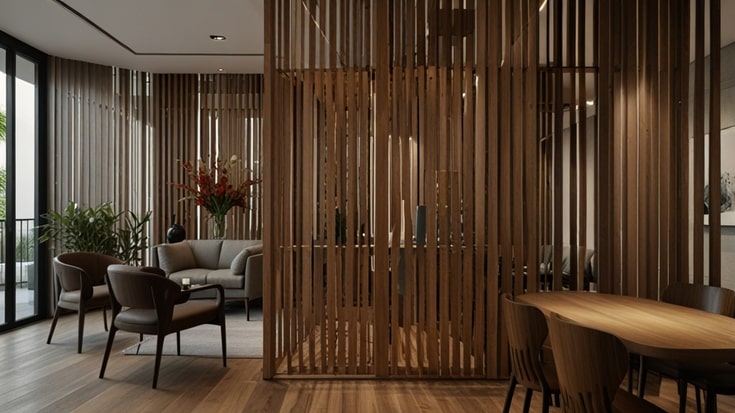
Slats
The specifics of producing wooden interior decor: the uniqueness and quality of every item
Decor is not a stream of identical parts, and therein lies the whole challenge. Today a carved panel with a fine pattern, tomorrow a curved slatted partition, the day after a batch of identical frames for a series. Each piece requires its own tooling, its own machine program, its own sequence of operations. There is no universal recipe: what works for a flat panel will not suit a three-dimensional step or a baluster. That is why the production of wooden interior decor is closer to bespoke work than to a conveyor line — and it is exactly this flexibility that people value in it.
It all begins with the choice of material, and there are no trifles here. Hardwoods — oak, beech, ash — go where strength and a prestigious look matter: railings, steps, large panels. Soft pine or spruce are more suitable for light decorative elements, where weight and price matter more than wear resistance. The finish is chosen for the task: oil preserves the natural texture and is pleasant to the touch, varnish gives a durable film and gloss, wax gives a soft matte surface. This choice determines not only the appearance but also how long the item will last without cracking or darkening.
Next the whole chain comes into play: cutting and contour milling, sanding, assembly, painting, decorating. And at every step everything rests on precision. A partition or a sliding wall whose parts are off by a couple of millimetres will assemble with a skew and gaps — during installation this shows up immediately. A slatted screen where the battens are set with a wandering pitch will lose all its rhythm. That is why the dimensions are checked not once but on intake, during machining and on output, before the item leaves for the client.
A separate concern is making the decor survive more than one season. Wood reacts to humidity and sun: without protection it dries out, darkens, and on the sunny side it fades. That is why the surface is sealed with a coating that keeps moisture and ultraviolet at bay. For an element in a dry living room a light oil is enough; for decor near a window or in a damp room a more serious formula is used. This matching of protection to the operating conditions is the very difference between an item that delights for years and one that loses its looks after a single winter.
How wooden products are manufactured
The stages of producing wooden interior decor: from idea to finished item
The path from board to finished decor element breaks down into several stages, and skipping or rushing any of them is out of the question — it will come back to haunt you at the finish. It all starts with preparing the timber and ends with the finishing coat and inspection. Below is a brief account of what happens at each step and why the order is exactly this.
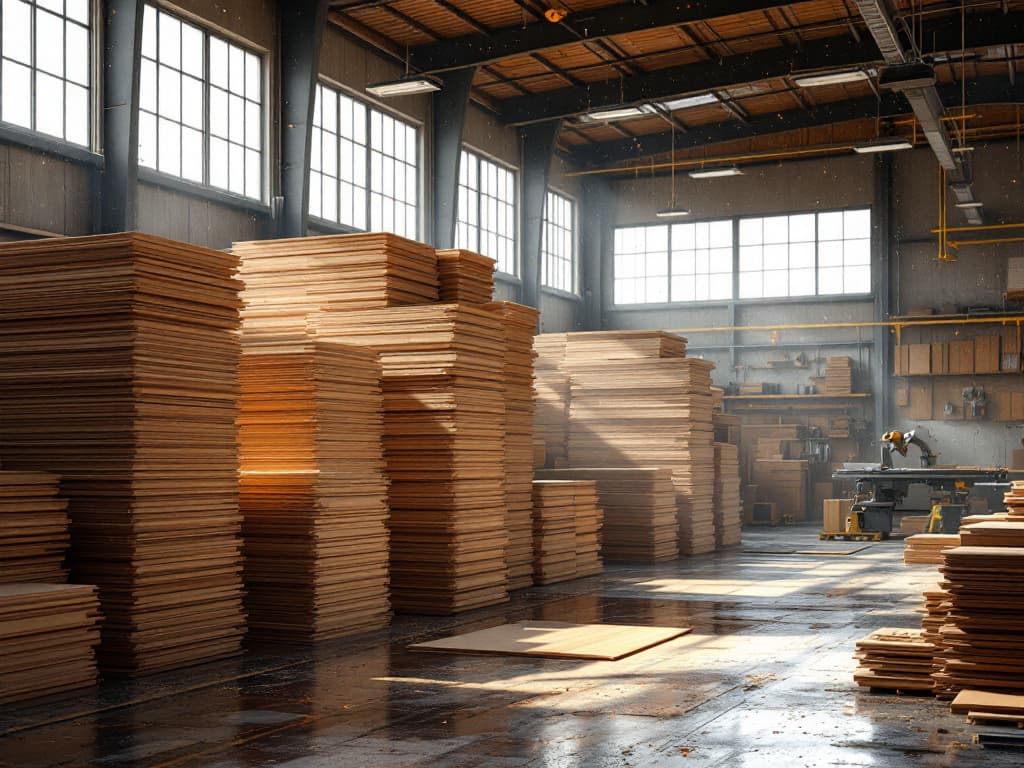
The first step is selecting and purchasing material for the specific item. For load-bearing panels and partitions hardwoods are more often chosen: they are stronger and hold their shape for years. For light decor that hangs on the wall and carries nothing, soft wood makes more sense — it is cheaper and weighs less, and no one will notice the difference in strength here. At the same stage the consumption is estimated with a margin for trimming, so it does not turn out mid-job that there is not enough board.
Next the material is cut, milled and sanded, and if necessary dried down to the required moisture content. A precise contour and identical part dimensions are produced by the CNC machine — it repeats the shape without deviations, and defects out of nowhere are ruled out. Here too it is decided what the finish will be: oil for a natural look, varnish for gloss and protection, or wax for a soft matte. The decision is made in advance, because it also affects the surface preparation before coating.
Once the parts are ready, they are assembled into a whole — railings with balusters, composite panels, modular structures. Here again it all comes down to accuracy: a skew in one joint drags the whole assembly out of true. After this the item goes through finishing and a final inspection. The geometry, surface cleanliness and coating quality are checked — so that an item without chips, paint runs or wandering joints goes to the client.
The finale is packing and dispatch. Decor is often fragile: on a carved panel the corners are easy to damage, on a slatted screen the outer batten is easy to snap off. That is why items are packed to survive the journey without loss — with corner and edge protection, and large pieces in a rigid crate. Then delivery to the client by any convenient means, whether to the neighbouring district or another region.
The advantages of wooden interior decor: why it is a smart choice
The main trump card of custom decor is that it is made for you, not for the average buyer. In a shop you take what is on the shelf and fit the interior to a ready-made item. Here it is the other way round: you set the shape, dimensions, pattern, shade, surface type yourself. A panel exactly to the width of the wall pier, a partition exactly to ceiling height, a colour to match the furniture already in place. As a result the item sits into the interior as if poured, without compromises like ‘well, it almost fits’.
The second plus is that wood ages beautifully. Plastic yellows and cracks over time, while oiled solid wood takes on a noble patina, only becoming more interesting. With careful handling wooden decor outlives more than one change of furnishings. Add to this eco-friendliness: natural wood does not release harmful chemistry, and for those who watch what fills their home, this is a weighty argument. It is no coincidence that demand for natural materials in interiors grows year on year.
The third point is the precision that comes from the pairing of machine and craftsman’s hands. A shelving unit, a partition, a carved module are made with an eye on both technology and aesthetics: it matters that a part not only looks beautiful but also fits flush, without gaps. CNC holds the geometry, hand finishing removes what the machine leaves behind, and the finishing sanding brings the surface to a state pleasant to both eye and touch. The result is an item you would not be ashamed to put in a prominent place.
And finally, style. Custom decor is not tied to a single aesthetic: the same panel in a dark tint with classic milling suits a study with leather armchairs, while in a light matte finish with simple lines it belongs in a Scandinavian living room. This versatility is what makes wooden interior decor a universal tool — it is equally easy to furnish an apartment, a restaurant or a business-centre lobby with it, changing only the material, colour and pattern to suit the specific task.
The benefits of working with professionals

Modern equipment
Panel saws, CNC and milling machines — precision, speed and quality guaranteed

Extensive experience and expertise
We know how to handle wood and sheet materials — reliably, precisely, professionally

Fast order fulfilment
Fast and without compromising quality. We value your time and our commitments

A full range of services in one place
Cutting to size, sawing, milling, sanding, painting, assembly — all in-house, with no middlemen

Trusted materials and consumables
We work only with quality materials, so you can be confident in the result

An individual approach to every client
We work to your drawings, create a machining program for the task and account for every detail
The advantages of cooperating with a wooden interior decor manufacturer
What does working with a specialised production give you, rather than buying something ready-made at the first shop you find? First of all — an order strictly to your project. Panels, partitions and decorative elements are made exactly as drawn by the designer or conceived by the client, down to the millimetre and the shade. There is no need to fit the interior to whatever you managed to find — the item is designed from the outset for the specific space and slots into it without gaps or forced compromises.
The second point is flexibility in volume. You can order a single bespoke item for an apartment, or a batch of a hundred identical elements for a whole project. This helps on large projects: fitting out a chain of cafes, a hotel’s room stock, an office open space — wherever many identical parts and tight deadlines are needed. At the same time a small client will not be refused a single panel, and a large one will not have delivery derailed by volume.
The third argument is quality that does not fall apart within a year. The item is checked not only at the end but throughout production, at every stage — so a defect is caught early, while it is cheap to fix. Hence both the reliability and the appearance that holds up for a long time. Plus a full service: packing and delivery are taken care of, so the client does not have to rack their brains over how to get a fragile carved panel there in one piece. A single contractor covers the whole path from sketch to doorstep.
And one more thing that is often underrated — the chance to calmly seek advice before ordering. Not every client knows how oak differs from ash and when oil is better than varnish. A tip on material and finish at the start helps you avoid overpaying for the unnecessary and not misjudge what matters. Sometimes such a conversation saves more than it seems: it turns out that MDF instead of expensive solid wood is enough for the idea, and the result comes out no worse at all.




The types of wooden interior decor products: from panels to decorative modules
The range is broad, and each group of products has its own role. Decorative panels work on the wall and the mood, shelving units and shelves on storage, partitions on dividing space, frames and modules on the details that pull an interior together. Below is a brief run through the main categories, so it is clear what stands behind what and what task each solves.
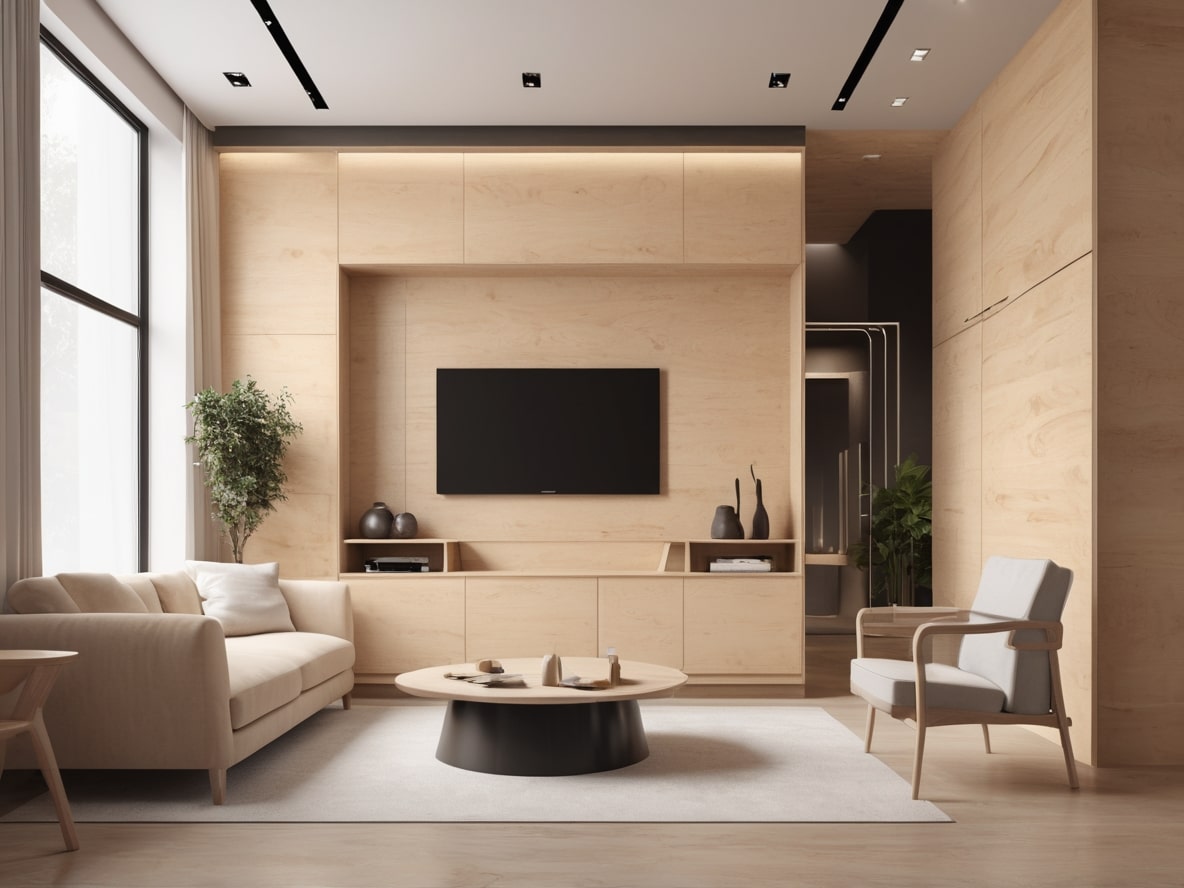
Decorative panels are perhaps the most popular element. They cover a wall entirely, highlight an accent zone behind a sofa or a bed headboard, and are sometimes used quite practically — to conceal an uneven surface. The finish sets the style: a deep tint for the classics, a light matte for minimalism, relief 3D milling for a striking accent. Hence the versatility — panels are equally in place in an apartment, a study, a hotel lobby or a meeting room.
Shelving units and shelves live at the crossroads of utility and beauty. They store books, dishes, plants — and at the same time become part of the decor themselves, especially when made of solid wood with an open texture. An open wooden shelving unit divides a room without overloading it with a solid wall, and lets light through. Frames and decorative modules work more subtly: these are the very details that give a space character and remove the impersonal feeling that the interior was assembled from a catalogue.
Partitions, screens and sliding walls are the best answer to the question ‘how to divide a room without building a permanent wall’. A slatted partition fences off the sleeping zone from the living room but leaves air and light; a sliding wall hides a walk-in wardrobe when needed and dissolves when not. Shapes and sizes can be anything — from solid to openwork — so such solutions fit equally well into a small apartment and a spacious open-space office.
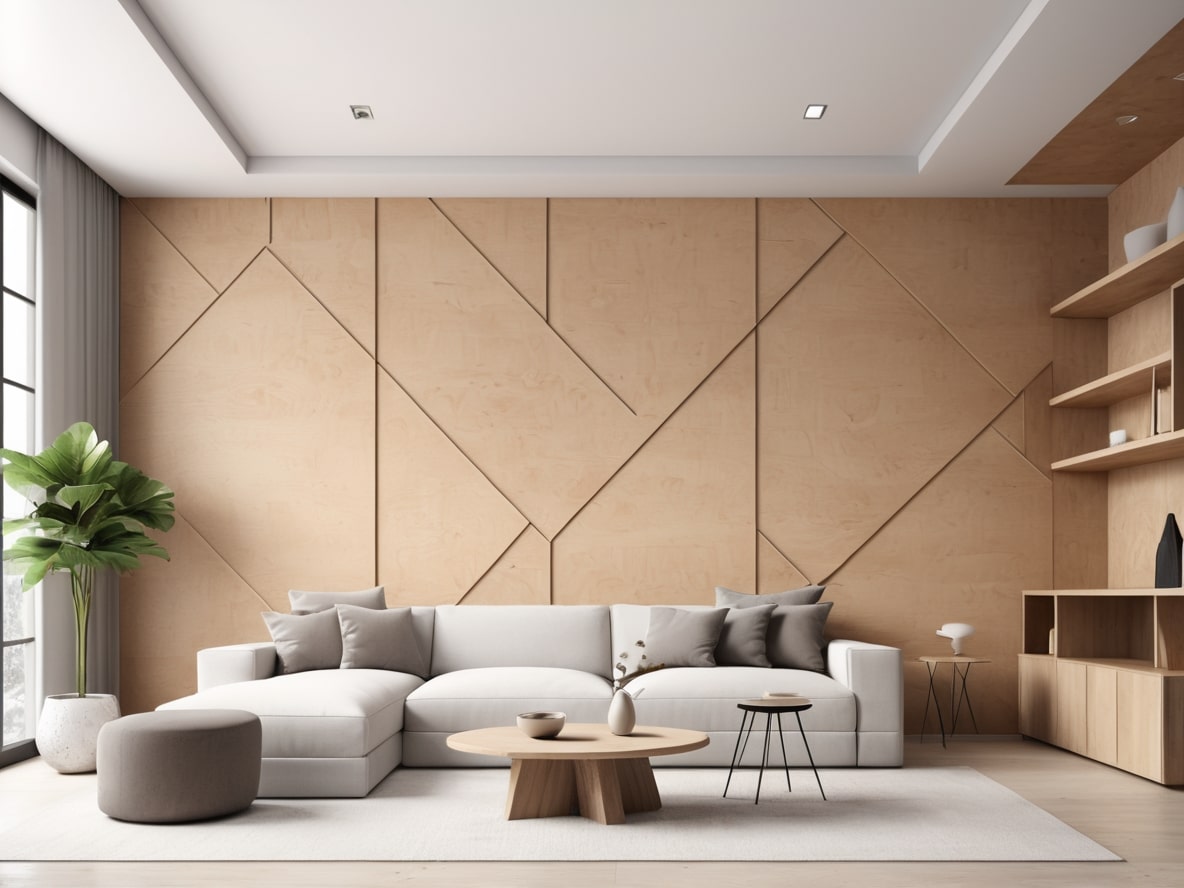
Our portfolio — finished products
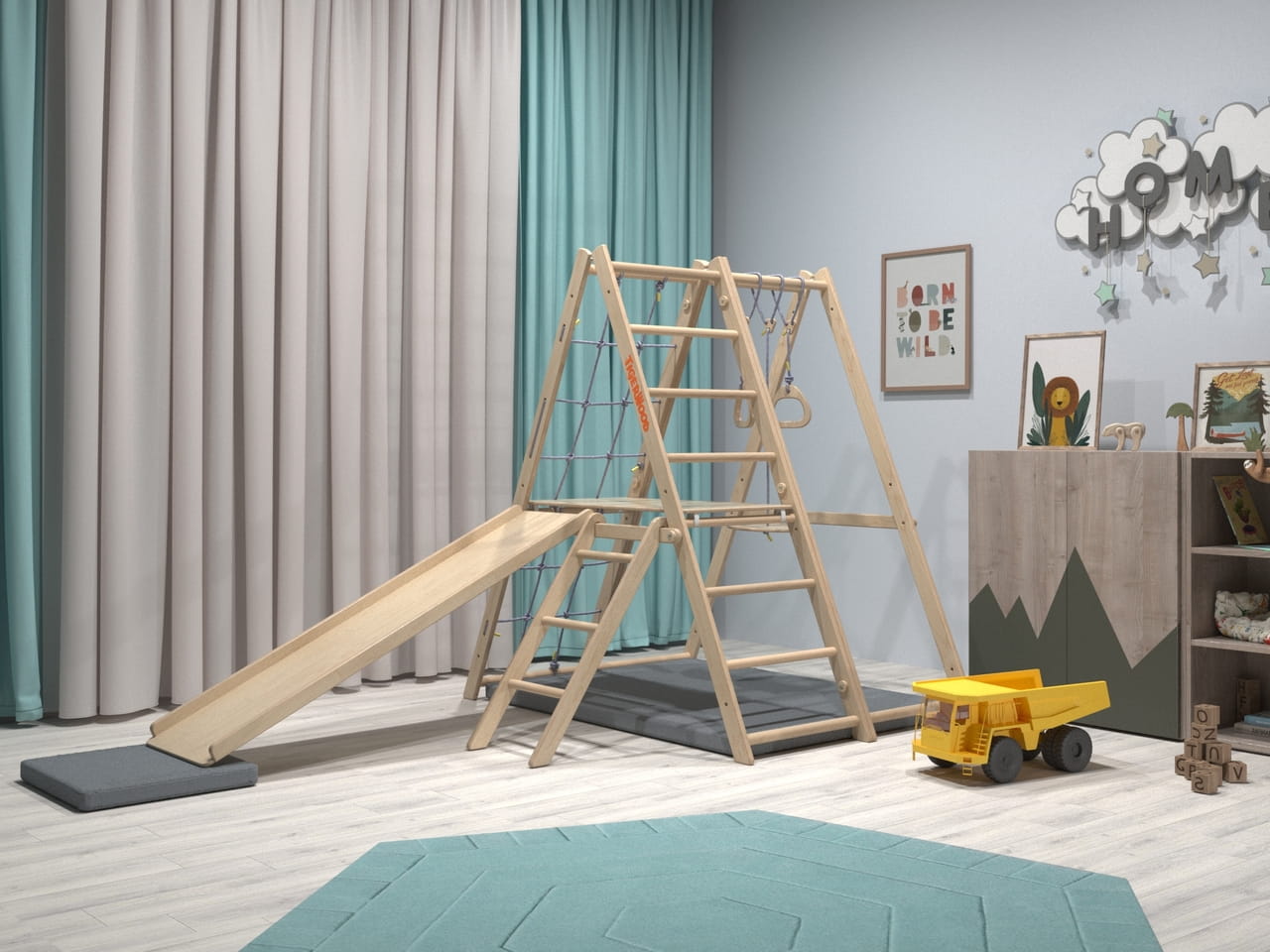
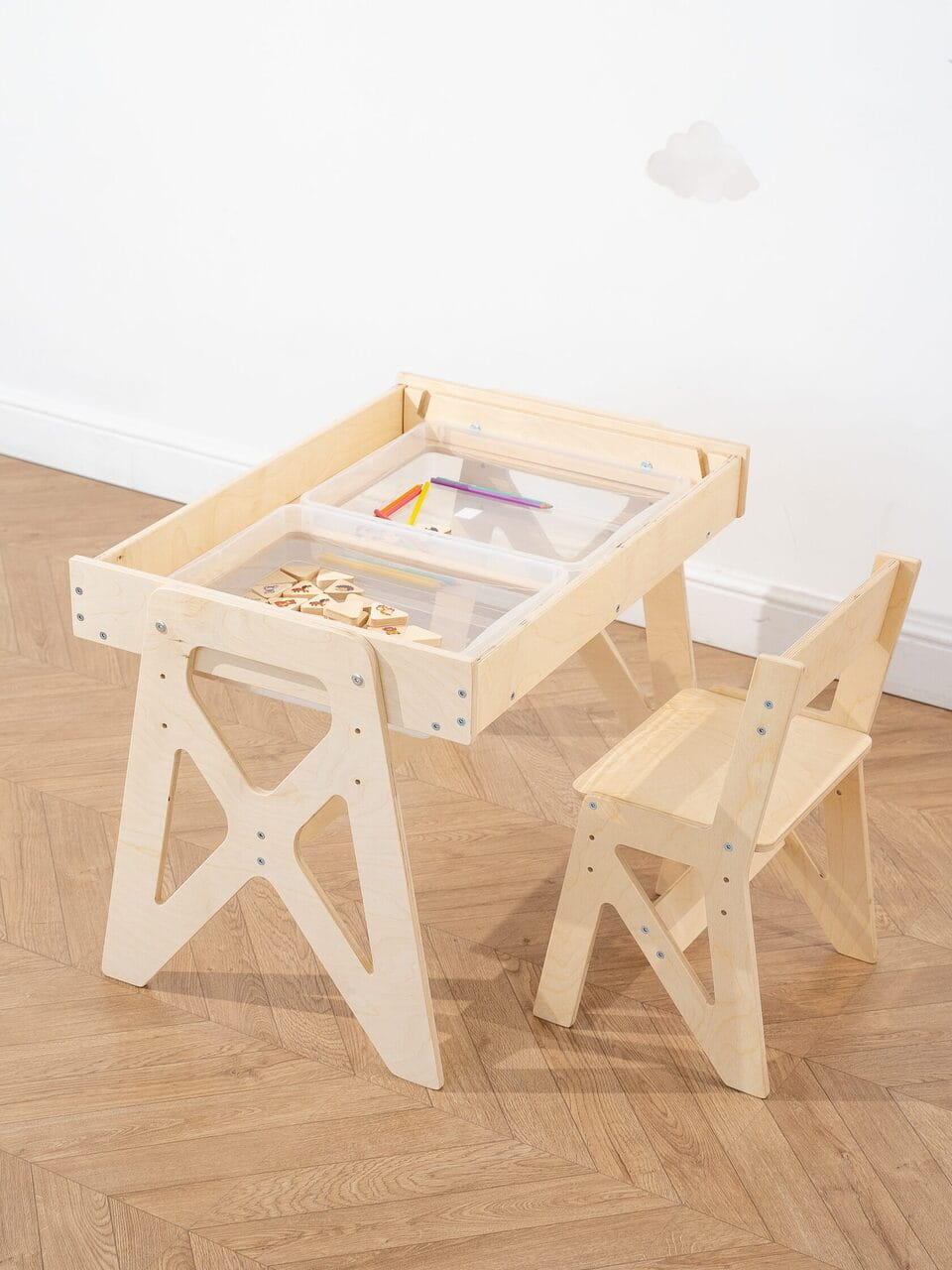


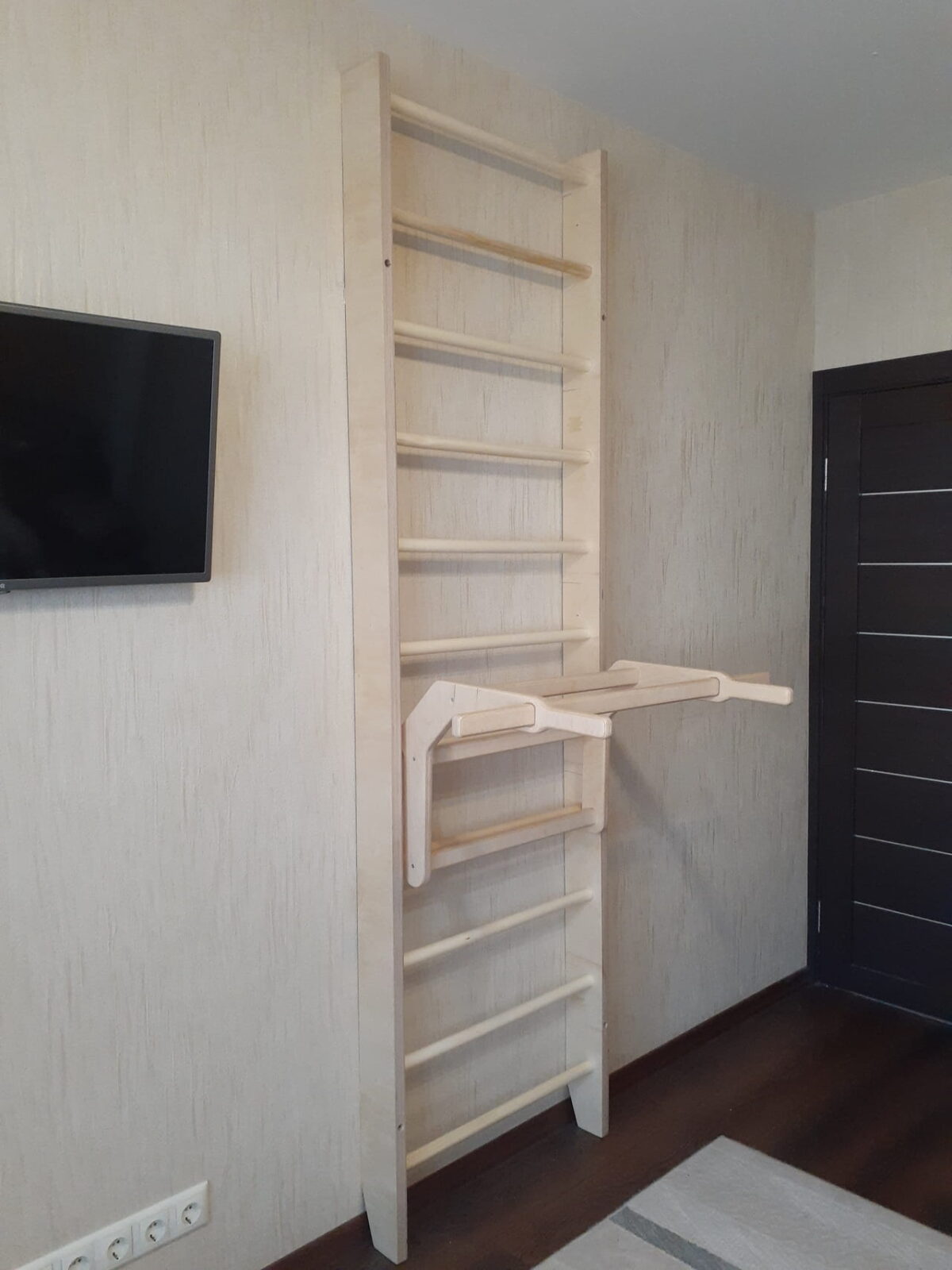
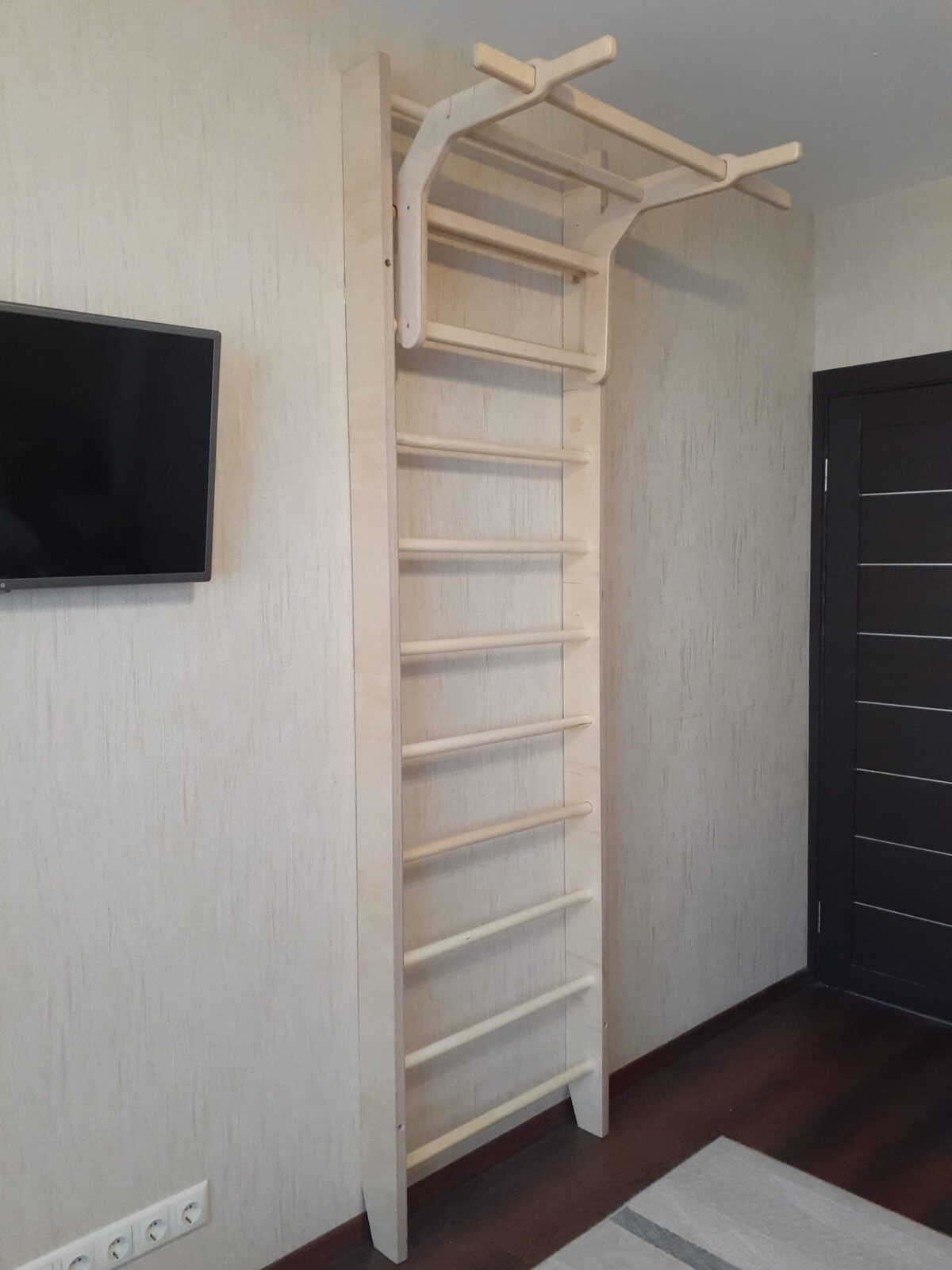
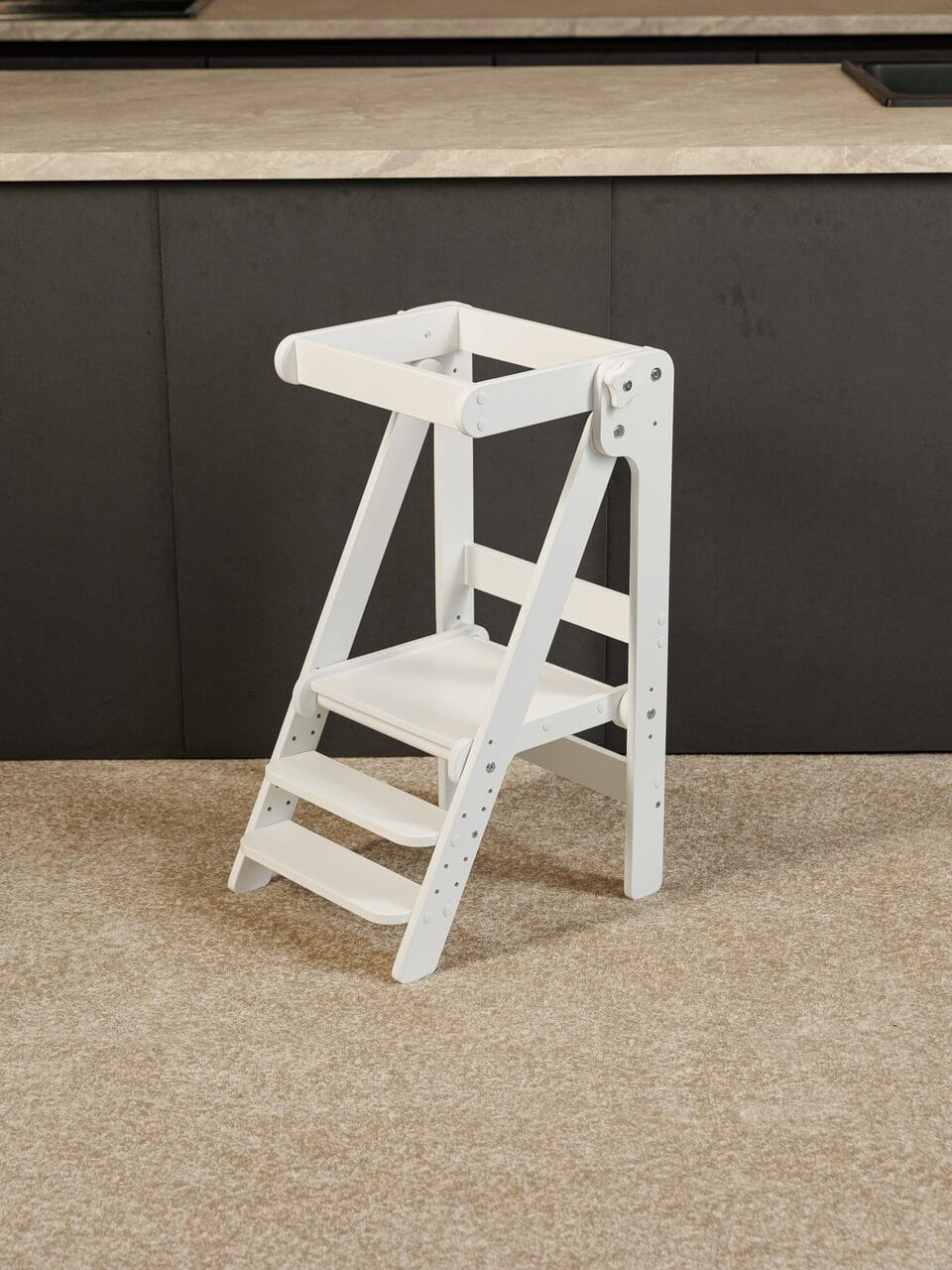
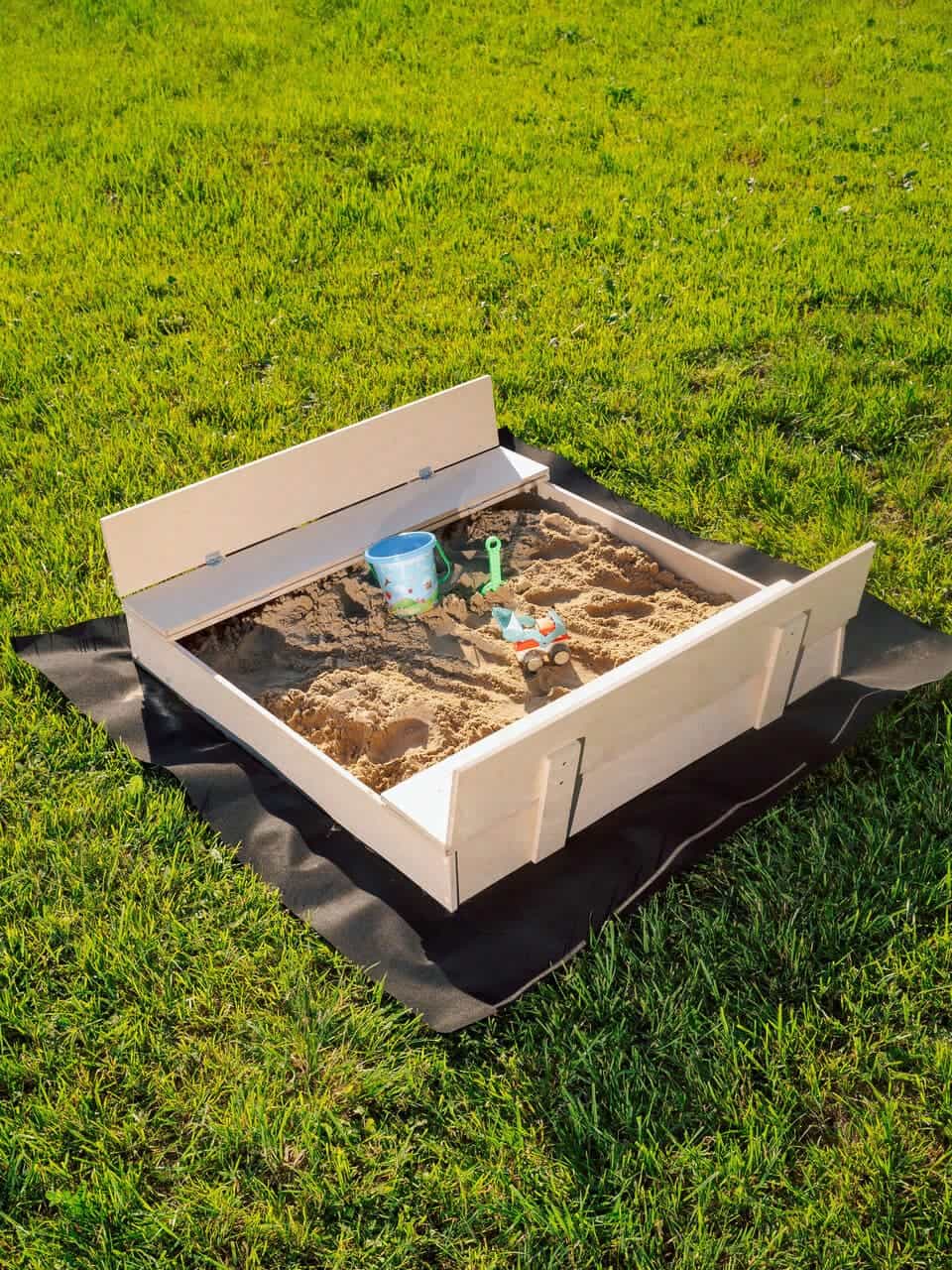

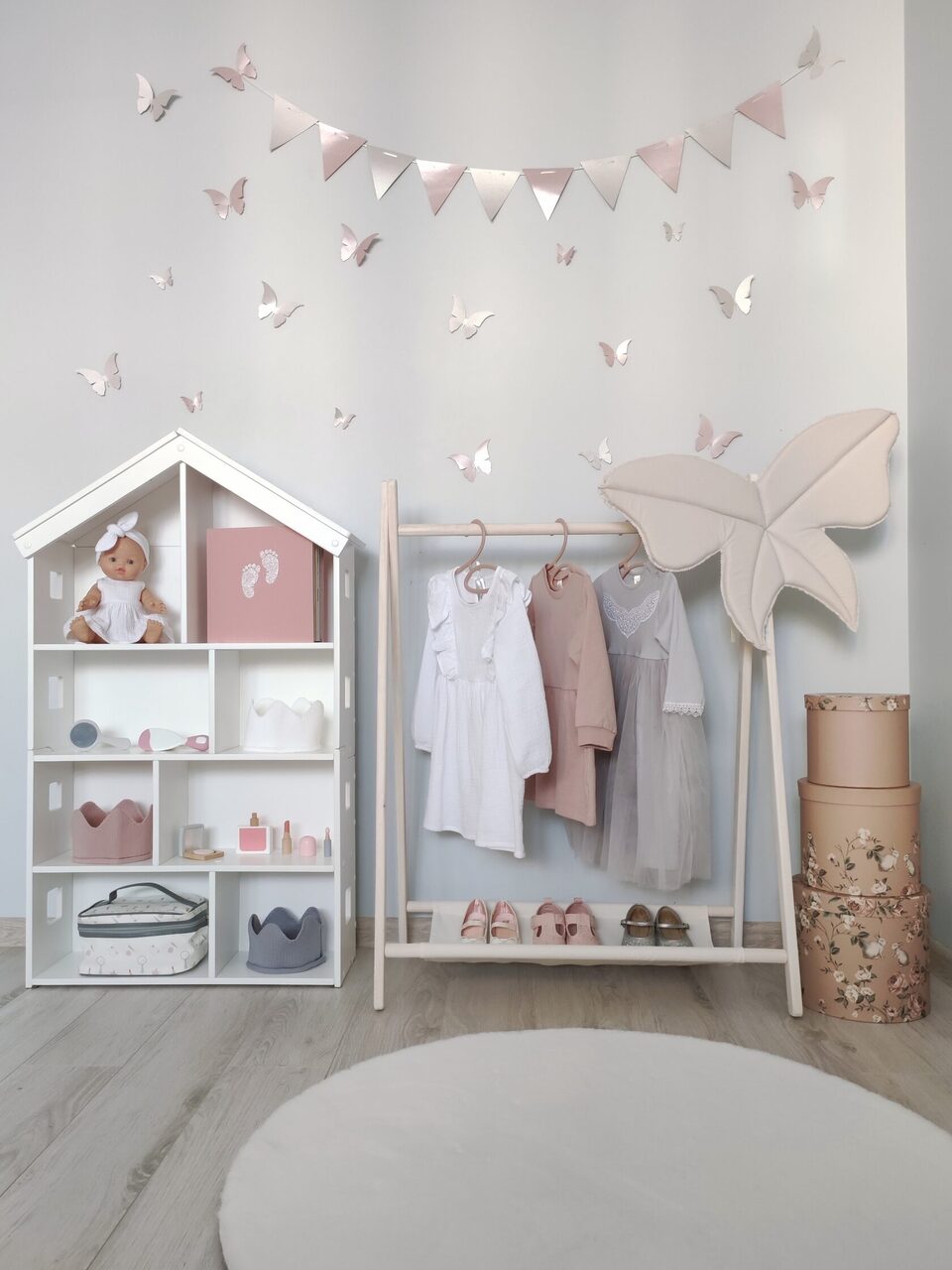

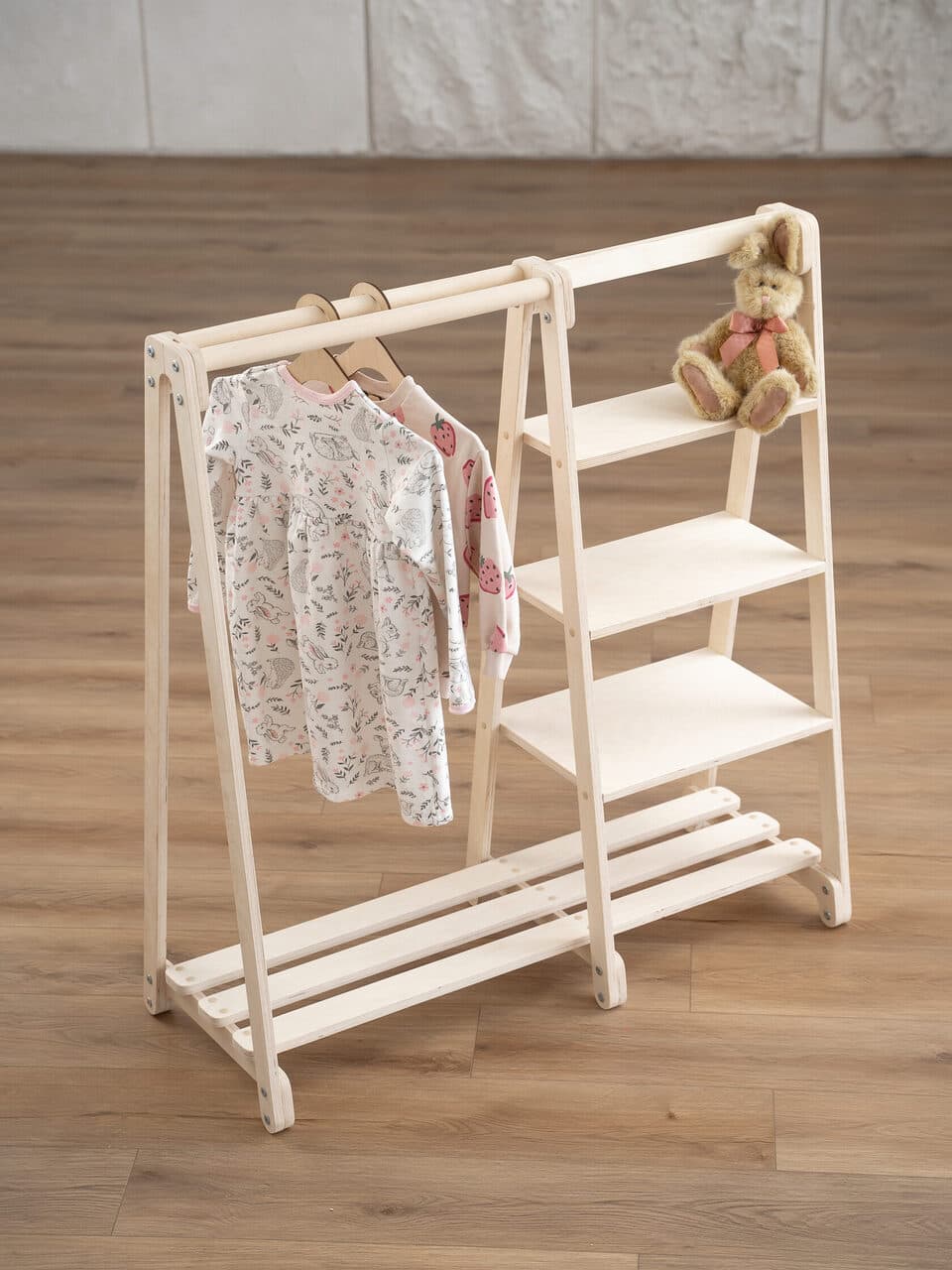
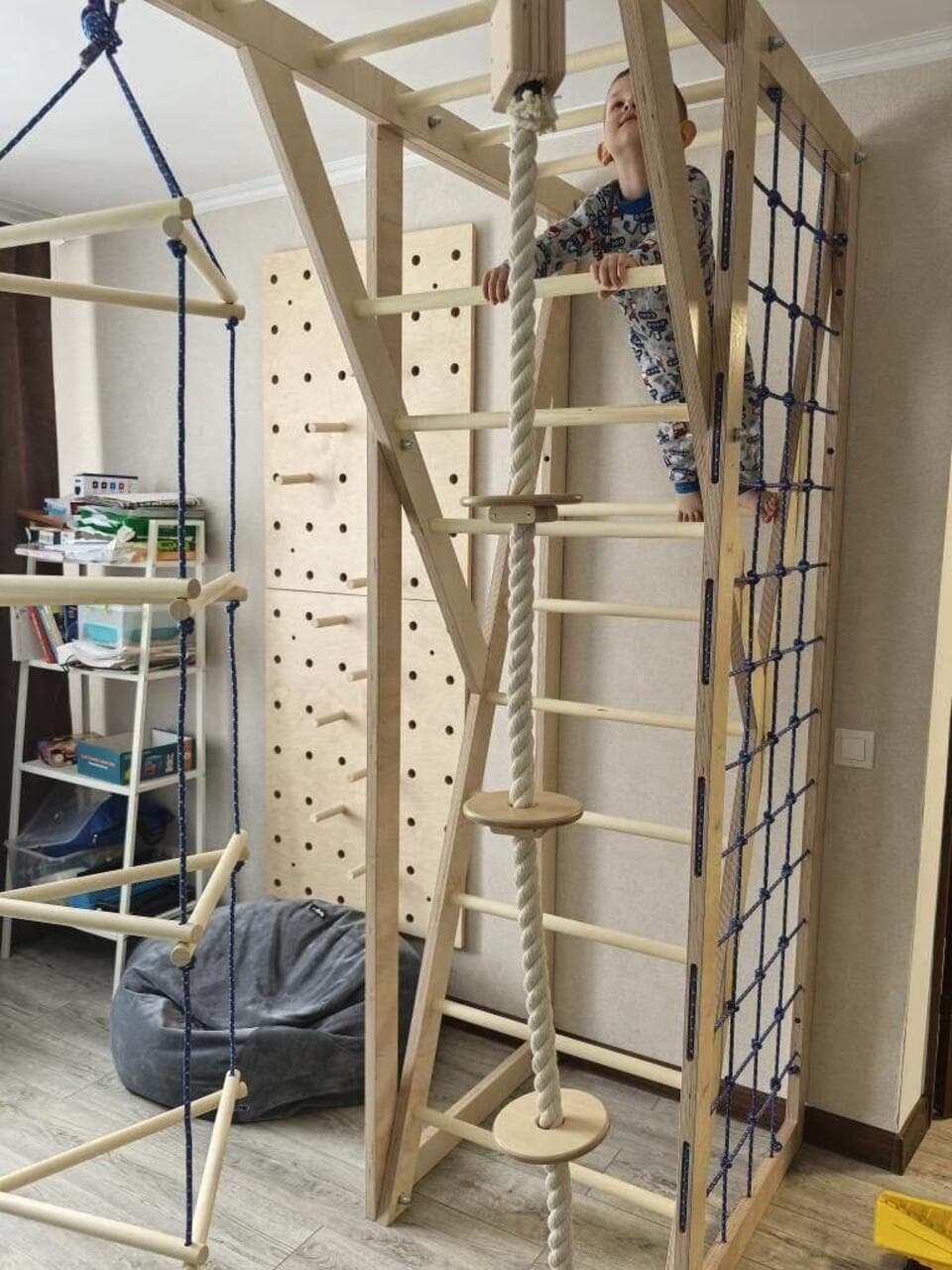
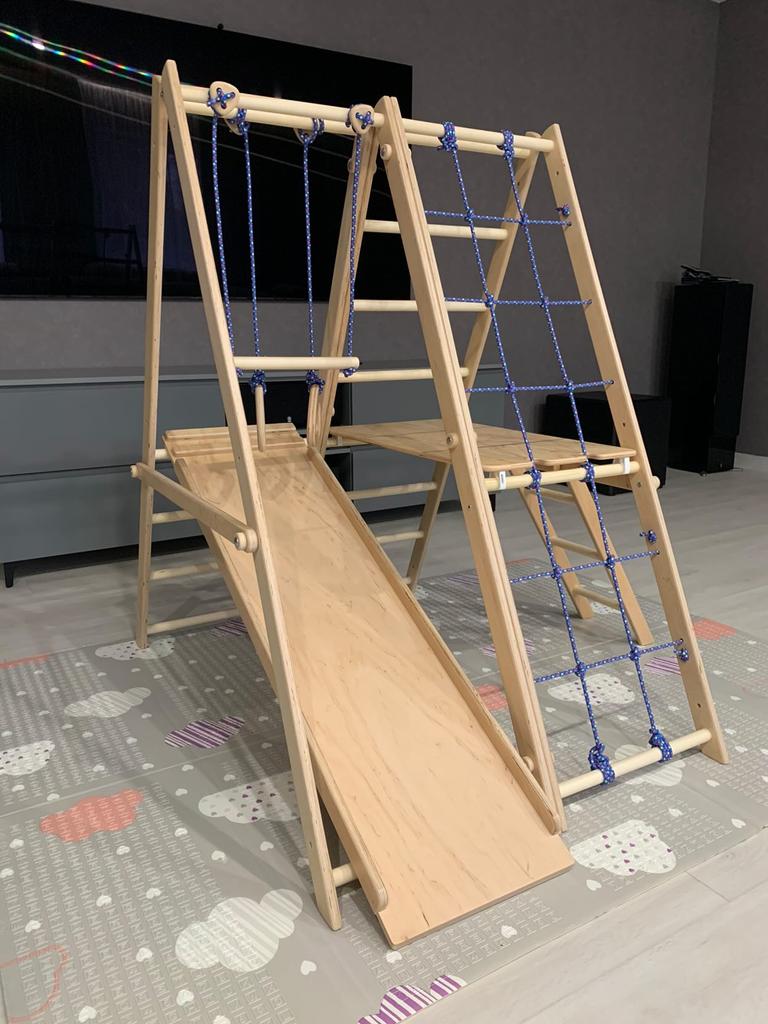

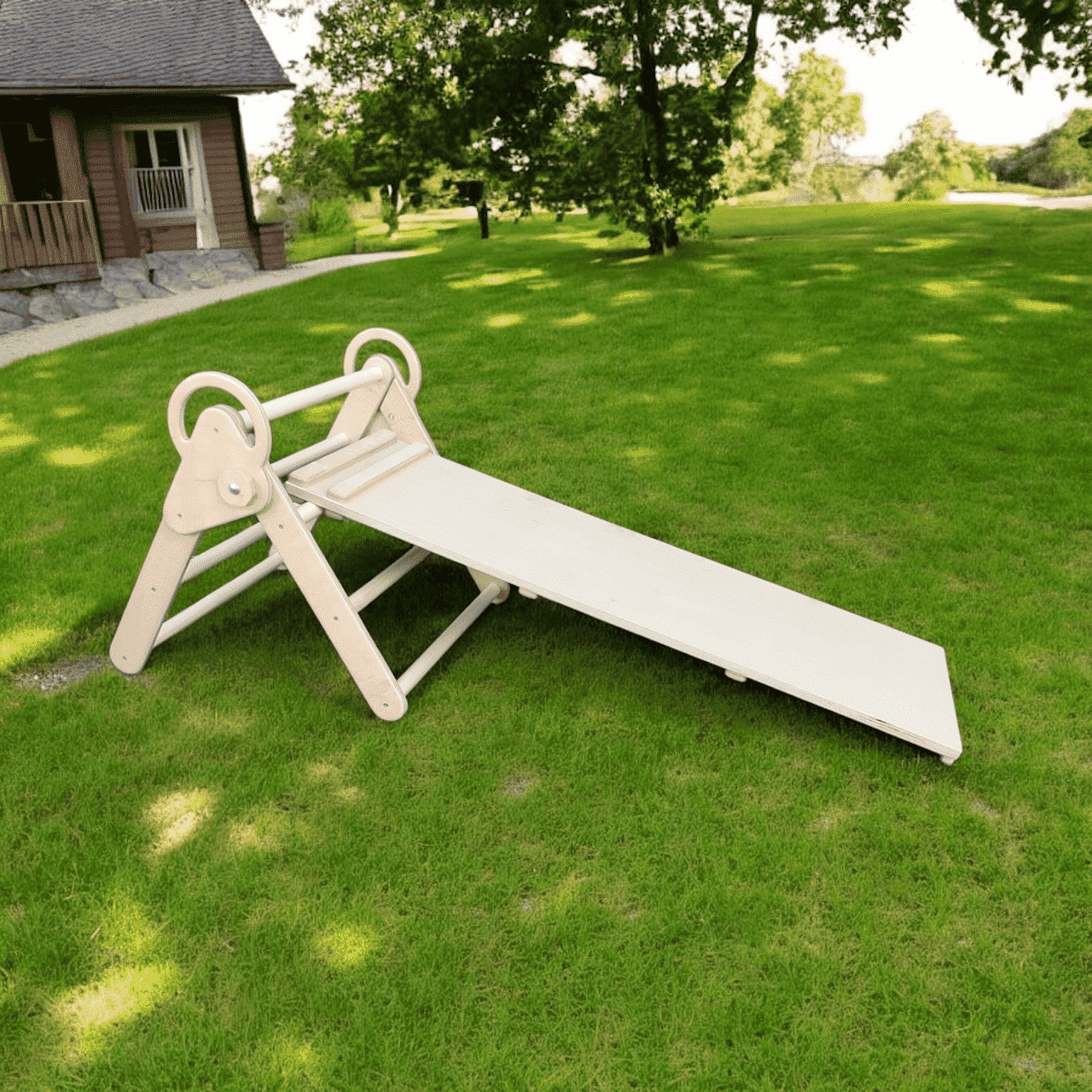



Examples of our work: successful wooden interior decor projects
We have a range of projects behind us, and they show clearly how wood lifts an interior. We have fitted out apartments, restaurants, hotels and offices. A telling case: in a hotel lobby we made an accent wall from panels. The task was twofold — to give the entrance area a prestigious look and at the same time to conceal an imperfect wall surface. The panels solved both at once: the guest sees a striking wooden wall, not the patches and plaster unevenness beneath it.
In another project we broke up an office open space into work zones with slatted partitions. It worked out doubly well: both function (each team has its own corner) and looks (the warm wood softened the officialdom of the open space, adding that very living note of natural materials). There was also a project with shelving units and shelves for a specific space — they helped squeeze the most out of the area and at the same time became a noticeable decorative accent, not just a place to store things.
What unites all these works is attention to detail. Every element, from a frame to a partition, is made with an eye on the specific space: its dimensions, light, style, the furniture already in place. This achieves the feeling that the decor has always been here rather than tacked on at the side. And one more nuance thought through in advance: durability. Railings, steps and frequently opened leaves take a load every day, so material and coating with a safety margin are built into them.
Who uses a carpentry workshop’s services

Furniture makers

Interior designers

Advertising companies

Exhibition stand builders

Art studios

Cafés and restaurants

Construction firms

Retail equipment manufacturers

Furniture factories

Private craftsmen

Custom orders

Manufacturing companies

Museums and exhibition halls

Architects

Theatres and film studios

Educational organizations

Children’s products manufacturing

Repair specialists

Online stores

Sole proprietors
Who orders wooden interior decor
The circle of clients for wooden interior decor is broad and quite varied. There are large construction companies that take decor in batches for their projects, and small studios for whom a bespoke item for a specific project matters. Designers and architects come, companies managing commercial real estate, finishing-materials shops that need a range for resale. Each has its own logic and its own budget, but the request is essentially one — to get a quality wooden element precisely fitted to the concept.
A separate and favourite story is working with architects and designers. They rarely need mass-market goods, more often something original and precisely on concept, something you cannot buy ready-made. Dialogue matters here: discuss the material, gauge the machining, suggest how to embody a bold idea in real wood and meet the deadline. This breaking down of the task at the start turns a sketch from the designer’s head into a concrete item that will stand exactly where intended.
There are also regular clients from the furniture trade: makers of furniture and accessories who need decorative wooden inserts — panels, frames, overlays — as part of their own products. A separate layer is hotels, restaurants, cafes and other public places. For them decor is also an atmosphere tool: warm wood makes a hall cosier, while a durable coating withstands the flow of visitors without losing its looks. Such clients often return when they open a new location.
Producing wooden interior decor — key points and advantages
In the finishing and construction sphere wooden interior decor steadily holds a place among the most sought-after categories, and this is no accident. It works on two fronts at once: it decorates and it delivers utility. A partition divides space, a shelf stores, a panel hides an uneven wall — and all of it looks warm and homely. Wood has what plastic and metal lack: a living texture and a feeling of naturalness that reads instantly the moment you step into the room.
The main strength of wooden decor is versatility. It does not dictate a style but adapts to it: the classics, contemporary minimalism, eco, loft — wood accepts them all, it is only a question of species, shape and finish. Plus the eco-friendliness that for many today is not an empty phrase but a real selection criterion. And durability: with sensible use and the right coating a wooden element keeps its looks for years rather than needing replacement every couple of seasons, as tends to happen with cheap alternatives.
Behind a finished item stands a chain of steps — from selecting and preparing the timber to the finishing coat — and the quality of the outcome is laid down at each of them. Cheap material or a skipped sanding will inevitably surface later: the coating goes on in patches, or the part warps. That is why control runs all the way through, not just at output: material is verified on intake, measured during machining, the finish checked before shipment. This approach gives that predictability for which a client turns to professionals.
If you gather the pluses of working with a specialised production into one paragraph, it comes out like this: an order to your own project, a wide choice of models and structures, precision of execution and attention to the specifics of the space. Every element is made for a specific task, not taken off the shelf. And a rich palette of finishes — tints, varnishes, oils, textures — makes it possible to get items of completely different moods from one and the same material. Hence the possibility of assembling a truly individual, recognisable interior.
Interior styles and choosing decor to match
Wood is convenient precisely because it is not tied to a single style — it is only a question of how you present it. In a classic interior, panels with relief milling, a deep tint of walnut or mahogany, neat mouldings and panel fields are appropriate. Here decor works towards solidity and a feeling of substance, so noble species are chosen and the pattern is made detailed.
Contemporary minimalism demands the opposite — simplicity and clean lines. Here smooth panels without pattern, light shades, bleached oak, matte surfaces are in vogue. Slatted partitions with an even batten pitch, laconic shelves without carving, monochrome. Eco style and Scandi go hand in hand: natural texture, warm light tones, minimal varnish, maximum sense of living wood. Loft, on the contrary, likes a rough texture, a brushed surface, dark stains and deliberate texturing.
The point is that one and the same element — say, a wall panel — is able to serve any of these styles if you choose the species, finish and pattern correctly. That is why a conversation about decor always begins not with ‘what are we making’ but with ‘what interior will it go into’. Everything else depends on the answer.
Materials for decor: what is chosen and when
Choosing a material is always a compromise between look, strength and budget. Solid wood gives real texture and repairability; it can be sanded and refreshed, but it is dearer and more capricious about humidity. MDF is ideal where a smooth painted surface or complex 3D milling is needed: it is uniform, has no grain and cuts cleanly. Plywood is strong, holds its shape and fasteners, and bends well — hence its popularity for radiused and shaped elements. MFC with a ready coating comes to the rescue when an even coloured background without painting is needed and the budget is limited.
| Material | Strong point | Where it is used in decor |
|---|---|---|
| 🌳 Solid wood | Natural texture, repairability | Railings, steps, premium-class panels |
| 🟤 MDF | Smoothness, flawless milling | Painted and 3D panels, carved decor |
| 🪵 Plywood | Strength, flexibility, holds fasteners | Curved shapes, slatted screens, frames |
| ⬜ MFC | Ready coating, economy | Shelves, simple panels, background elements |
In practice materials are often combined within a single item: a solid-wood frame with a painted MDF insert, a plywood frame under veneer. Such a mix keeps the balance between appearance and price, without overpaying for solid wood where no one will see or touch it.
Slatted partitions and screens
Slatted structures are perhaps the most recognisable trend of recent years, and for good reason. Vertical or horizontal battens with an even pitch divide a space but do not deaden it: light and air pass between the slats, and the eye does not run into a blank wall. Such a partition separates a hallway from the living room, a work corner from the sleeping zone, a staircase from a room. It marks a boundary while leaving a feeling of spaciousness.
Battens also work as pure decor on a wall or ceiling — a rhythmic pattern of slats enlivens a plane and adds depth. Precision is what matters here: the battens must stand at an equal pitch and in one plane, otherwise the whole effect falls apart and the structure looks amateurish. That is why slatted screens are a case where machine precision is visible to the naked eye, and it is not worth economising on it.
Carved decor and 3D panels
Where character and bespoke quality are needed, CNC milling comes into play. Carved panels, panels with three-dimensional relief, openwork screens, decorative overlays with ornament — all of this is cut by program, so even a complex pattern repeats without flaws and a series of identical elements comes out identical. 3D panels create a play of light and shadow on the wall that changes through the day, and one such accent can set the tone for the whole room.
Milling has a nuance worth knowing in advance: a very sharp inner corner of a pattern is rounded off to the cutter’s radius — this is a property of the tool, not a defect. If the drawing is critical in fine detail, it is either finished by hand or drawn from the outset allowing for this feature. Such details are talked through at the artwork approval stage, so the result matches the expectation.
Finishing coatings in detail
The finish decides no less than the shape. Oil soaks in deeply and leaves the wood ‘breathing’, emphasising the texture — it is chosen when a natural look and a pleasant velvety surface matter. The downside is that oil needs refreshing periodically, but this is done easily and without stripping the old layer. Varnish forms a durable film, protects against moisture and abrasion, gives gloss or matte to taste — ideal for load-bearing surfaces like railings and steps. Wax gives a soft matte and is pleasant to the touch, but it is more delicate than varnish and more suited to decor than to places where hands are constantly run over the surface.
Colour is a separate story. Tinting preserves the visible texture of the wood, only changing the shade, while opaque painting closes the grain completely, giving an even coloured background. The first option is chosen when you want to emphasise that it is wood; the second when shape and colour matter more and texture is secondary. The coating is applied in a separate chamber with drying in a clean zone, and this is exactly what determines whether the layer goes on evenly or comes out grainy with settled dust.
Installation and mounting
How the decor will hold in place is thought about back at the design stage, not afterwards. Wall panels are fixed with adhesive, on hidden rails or on mounting battens — the method is chosen based on weight, the wall surface and whether the element will one day need to be removed. Slatted partitions standing on the floor require a stable base, and tall structures are often additionally fixed to the ceiling or wall to rule out tipping over.
Well-considered mounting is not only about safety but also about looks: a properly installed panel sits without gaps or waves, and the fasteners do not catch the eye. That is why in doubtful cases the mounting joint is discussed in advance, and where necessary a clear installation diagram is supplied with the item, so that no questions arise on site.
Lead times and what affects them
The exact date is always calculated for the specific order, but the guidelines are clear. The lead time is affected by the complexity of the item, the batch volume, the type of finish and the production workload. A simple shelf or a smooth panel is ready in a few days. Carved decor with multi-stage machining and painting takes longer — here a significant part of the time is eaten up by the drying of the coating, which cannot be sped up without loss of quality. A large series for a project is calculated separately and agreed in advance.
If a project is tied to a site handover or an opening date, it is wise to get in touch early and build in a small time buffer. Decor often comes as the final touch, and any delay on it pushes back the completion of the entire renovation. An early order removes this stress and allows the details to be agreed calmly rather than rushing the work in a panic.
What the price is made up of
The question of cost without details usually stays without a precise answer, and this is not a trick but honesty: the price of decor is assembled from several components, each of which can be gauged in advance. Understanding this arithmetic helps you avoid being surprised by the estimate and see in advance where you can really save and where economy will backfire.
- 📐 Complexity of shape. A smooth panel is cheaper than a carved panel with an elaborate pattern.
- 🌳 Material. Solid wood is dearer than MDF and MFC; the species also affects the price.
- 🎨 Finish. Bare wood, sanding, oil or multi-layer painting — different budgets.
- 🔁 Print run. A single bespoke item is dearer per unit; a series is more cost-effective thanks to the tooling.
- 📏 Size and area. A large panelled wall requires more material and work.
- ⏱️ Urgency. Work outside the general queue is charged separately.
The simplest way not to overpay is to send a clear project and not rush the deadlines. Rework due to imprecise inputs and work in panic mode are exactly what add to the estimate those percentages you wanted to avoid. And where only the look matters, not the tactility, a sensible material substitution often helps — painted MDF instead of solid wood where the difference is invisible anyway.
Common client mistakes
Most disappointments happen not in production but at the task-setting stage. Here is what most often gets in the way of a first-time result.
- ❌ Measuring ‘by eye’. One imprecise dimension — and the panel does not fit the wall pier, and the partition does not reach the ceiling.
- ❌ Ignoring the operating conditions. Decor for a damp zone without a resistant coating quickly loses its looks.
- ❌ Misplaced economy on material. Too thin a panel bows under load.
- ❌ No tie to a style. An element beautiful in itself clashes with the interior if it is not chosen to match it.
- ❌ Urgency at the last moment. Complex carving and coating drying cannot be sped up at the snap of a finger.
It is no disaster if you did not take some of this into account — that is exactly what the dialogue before the start is for. A good contractor asks these questions himself before the work rather than after, when fixing things is already expensive. That is precisely why a conversation about details at the very beginning is worth more than it seems.
A one-off order or ongoing cooperation
Wooden interior decor is equally open both to those who came for a single panel for an apartment and to those looking for a contractor for the long haul. A one-off order is simple: you describe the task, agree the project, collect the finished item. No obligations for the future, only work and result.
Ongoing cooperation is more convenient for design studios, developers and chain establishments that need decor regularly. When the production already knows the client’s specifics and tastes, the work goes faster: fewer approvals, predictable quality, priority in the hot season. Many come this way — from a single trial order, and stay for years, because it is simpler to have one proven source than to explain the requirements to someone new each time.
Combined materials in a single item
Decor is often assembled from several materials at once, and this is not a compromise but a deliberate move. A wooden frame with a mirror or glass insert, a slatted screen with metal elements, a panel with lighting hidden in a groove. Each material is machined in its own mode, and at output it is assembled into a single item. Such combinations expand the palette of solutions: light, reflections, a contrast of textures make decor more expressive than a uniform wooden plane.
The ability to run such a complex composite order at a single site saves both time and nerves. There is no need to split the project across different contractors and then reconcile their deadlines and dimensions — the parts are coordinated with each other from the outset, and nothing ‘drifts apart’ during installation.
Quality control and a guarantee of the result
Control is built into the process, not tacked on for show at the end. On intake the project, dimensions and material are verified. During the process, on complex carved items, intermediate measurements are taken to catch a deviation early. On output the item is checked in full — geometry, surface cleanliness, coating quality, the absence of chips on the edges. Such an all-the-way barrier cuts off most problems before the decor even reaches the site.
If a disputed point does arise, it is easier to resolve precisely because the order passed through a single pair of hands. There is no need to work out at whose stage the error occurred — responsibility for the result is not smeared across performers. For the client this is the real guarantee: it is clear who to hold accountable.
Caring for wooden decor
A finished item will last noticeably longer if you observe a couple of simple rules. Wood reacts to humidity and temperature, but with sensible handling it lives calmly for decades, only taking on a noble look.
- 💧 Avoid sharp swings in humidity — they make wood dry out or swell.
- 🧴 Wipe the surface with a soft cloth without aggressive chemistry, especially oiled coatings.
- ☀️ Protect from prolonged direct sun — it fades the colour and dries out the solid wood.
- 🛠️ An oil coating is easy to refresh yourself; varnish lasts longer but is harder to renew.
- 🌀 Dust on carved panels and slatted screens is convenient to remove with a soft brush or a vacuum cleaner with an attachment.
These small things are rarely talked through at purchase, but they are exactly what determine whether the decor will delight in five years as it did on the first day. If you wish, care conditions can be advised directly for your item and coating type.
A glossary of terms for the client
When discussing decor, words come up that are familiar to the workshop and hazy to the client. A short glossary removes discrepancies before the start — when the parties understand the terms the same way, there are fewer grounds for ‘I thought it would be different’.
| Term | What it means |
|---|---|
| 🪵 Slat | A narrow batten-strip, sets of which are assembled into partitions and screens |
| 🎯 Panel field | An insert in the frame of a panel or door, often with milling |
| 🖼️ Moulding | A profiled strip for framing and decorating walls and ceilings |
| 🌫️ Tinting | Changing the shade of the wood while preserving the visible texture |
| ✨ Brushing | A treatment that emphasises the relief of the annual rings |
| 🔲 3D panel | A panel with three-dimensional relief that creates a play of light and shadow |
How to prepare an order
A good order begins not with the machine but with a clearly stated task. A little preparation on the client’s part saves both sides time and removes most misunderstandings.
- 📝 Describe the task: what kind of element, where it will stand, in what interior.
- 📐 Attach dimensions or a drawing — even freehand, but with real figures.
- 🎨 Decide on the material and finish, or ask for advice.
- 🖼️ Show a reference — a photo or picture of what you are aiming for.
- 🔢 State the quantity: a single item or a batch.
- 📅 Name the deadline, if the order is tied to a date.
You do not have to come with a perfect tech package — half of orders start with the phrase ‘I want something like this, help me figure it out’. The production’s task is precisely to translate an everyday description and a picture in your head into the language of drawings and operations. But the more inputs at the start, the shorter the path to the finished item.
Delivery and working across regions
Distance is no obstacle: finished decor is shipped across all of Europe. Carved and fragile items are packed especially carefully, with corner and edge protection, and large pieces in a rigid crate, so they survive the journey without loss. For a client in another city the process looks just as simple as for a neighbouring one: the project is agreed remotely, the item is manufactured and dispatched by a carrier.
A repeat order is usually simpler than the first: if the project has already passed through production, the parameters and shade are saved, and an added element is matched to the existing one. This helps those who furnish a site in stages or expand an already finished interior.
More questions about interior decor
Can a decor piece you like from a photo be reproduced? Most often yes, adjusted for your dimensions and materials. A photo or reference serves as a starting point, and then the structure is adapted to the space and budget.
Do you make decor for damp rooms? Yes, but with a caveat about material and coating: for a bathroom or a poolside zone, moisture-resistant bases and durable formulas are used. Ordinary interior varnish will not last long there, so the operating conditions are talked through in advance.
Do you help with installation? At the very least a clear installation diagram is supplied with the item, and complex mounting joints are thought through back at the design stage, so no surprises arise on site.
To bring it all together briefly: wooden interior decor is a way to get a precise, stylish and durable element for a specific space, without the compromises of a ready-made shelf item. It is enough to describe the task and show what you are aiming for — the rest will be broken down into stages and brought to a finished item on time.
The equipment on which quality rests
Fine words about quality are worth nothing without the machines that deliver that quality. The main work on contour and relief is taken on by CNC: it cuts and mills by program, repeating even a complex pattern without deviations, and turns out a series of identical parts identical from first to last. A panel saw is responsible for the clean cutting of a sheet for panels and bases, the cross-cut saw for precise joint angles, and sanding equipment brings the surface to the required finish. A spray booth with drying in a clean zone seals all of this with an even, dust-free layer.
No single machine makes an item whole on its own — the value is in the chain. A blank passes without loss from cutting to milling, from there to sanding and into the booth, and at output it is assembled into a finished decor element. It is precisely this end-to-end route under a single control that distinguishes a specialised production from an artisan workshop where every stage lives on its own.
Where wooden decor is used
To match the possibilities to your own task, here is a short map of typical applications by object type. The list is not exhaustive — rather it shows how different spaces are covered by one and the same set of products.
| Object | What is most often ordered |
|---|---|
| 🏠 Apartments and houses | Wall panels, slatted partitions, shelves, framing |
| 🏨 Hotels | Accent walls in the lobby, room decor, reception zones |
| 🍽️ Cafes and restaurants | Panels, zoning screens, decorative screens |
| 🏢 Offices | Slatted partitions, branded panels, shelving units |
| 🛍️ Shops | Decorative walls, window-display and retail decor |
If your scenario is not in the table, it does not mean it will not be taken on. Rather the opposite: a non-standard task is the most interesting part. It is enough to describe what you need, and a solution will be assembled from the same set of operations, just in a different combination.
One contractor or several
The temptation to assemble a project from the cheapest performers is understandable: cutting a bit cheaper here, milling at a discount there, painting handed to a third party. On paper it is a saving, in reality it is a risk. Every joint between contractors is a place where time is lost, mismatched grades surface and an argument begins over who is to blame for a discrepancy in dimensions or shade. Decor is especially sensitive to this: panels from different batches easily diverge in colour, and a composite partition does not come together in geometry.
A single cycle at one site is a bit dearer in the moment but usually wins out in the end — thanks to the deadlines, the integrity of the result and a single party responsible for everything. When cutting, milling, painting and assembly go one after another under common control, the parts come out coordinated with each other, and nothing has to be adjusted on site during installation.
Branding and corporate identity
For a business, decor is also a carrier of identity. A logo is milled onto panels and screens, a corporate pattern is cut, a corporate shade is set in the tint. A restaurant gets a recognisable wall that visitors photograph, an office gets décor in a single corporate style, a chain gets identical decor for all its locations. Wood here works more subtly than a plastic sign: it conveys the brand’s status and character without shouting about it.
For such tasks repeatability is especially important: if a chain opens a new location a year later, the added elements must match those already in place. A saved project and machine program make it possible to hold both the shape and the shade, so the update does not stand out from the general row.
Ceiling decor and framing
The ceiling often remains a forgotten plane, and for no good reason — wooden decor is able to completely change the perception of a room from the bottom up. Slatted structures on the ceiling set a rhythm and visually stretch the space, coffers and beams add depth and character, and wooden inserts soften the coldness of a smooth white surface. Framing of door and window openings, architraves and mouldings work at the crossroads of function and decor: they cover technological gaps and at the same time neatly complete the picture, removing the feeling of unfinishedness.
Such elements demand a special precision of fit: a ceiling batten that has drifted from the plane, or an architrave with a wandering gap, catch the eye immediately. That is why they are made strictly to the measurements of the specific space rather than to average dimensions — only this way does the decor sit flush and look like part of the architecture, not a part glued on top.
Ecology and sensible use of material
The topic of waste seems boring exactly until you count the money. Precise cutting and a thought-out layout of parts on the sheet mean less material goes into offcuts, and this is a direct saving for the client and a clean, predictable process for the production. Large remnants, moreover, are not thrown away — they go into small parts of the same project: inserts, templates, decorative overlays.
A careful approach also has an ecological side, which for many today truly matters. Natural wood is itself a renewable material, and thrifty cutting reduces the amount of waste and the load on the environment. For an interior conceived as warm and natural, this is a logical continuation of the idea: the result is eco-friendly, and the path to it is without needless loss.
Seasonality and planning an order
Decor production has its own ebbs and flows. Before major holidays, at the height of the renovation season and during a wave of venue openings, the queue is naturally denser and lead times stretch a little. In quiet periods a simple order goes through almost without waiting. Knowing this seasonality helps you plan: if decor is needed for a site handover or an opening date, it is wiser to build in time in advance rather than count on a complex carved panel being made in a couple of days at the very peak. Regular clients are at an advantage in this sense — it is usually easier for them to get priority, because their tasks are already familiar to the production and therefore require fewer approvals at the start.
And one more practical point in closing: decor almost always comes as the final chord of a renovation, so any hitch on it pushes back the completion of the entire project. An early order removes this dependence — while the rough work is under way, the decor elements are already being made, drying and waiting for their moment. By the time the space is ready to receive the final touches, they are at hand, and the site is closed exactly on schedule, without a nervous rush in the last days.
What materials are used to produce interior decor?
Different timber is used — the choice depends on what matters more in the specific item. Hardwoods like oak and beech go where strength and a prestigious look are needed; soft pine and spruce go into light decor, where weight and price matter more. Besides solid wood, plywood, MDF, MFC and particleboard are used in the work. The finish is also a choice: oil for a natural texture, varnish for protection and gloss, wax for a soft matte.
What types of decorative elements can be ordered?
The range is broad: panels and art panels, partitions and screens, shelving units and shelves, frames, slatted screens, ceiling inserts, three-dimensional letters, railings with balusters, decorative modules and mouldings. Any item is adapted to the specific space — by size, shape, colour and style, so the finished solution sits into the interior without adjustment.
How to order the production of decorative elements?
It is enough to bring a project, a drawing or even just an idea with approximate dimensions. Next the technical details and finish preferences are discussed, and then an estimate with execution options is prepared. A ready drawing speeds up the start but is not mandatory — if there is none, the project will be helped to a working state on the spot.
What are the production lead times?
The lead time comes down to complexity and volume. Simple items are ready in a few days, complex carved pieces or large batches in one to two weeks, and sometimes longer if multi-stage machining and painting with drying are required. The exact date is named for the specific order at the approval stage, so that it is realistic rather than ‘for luck’.
Can I order items to individual dimensions?
Yes, manufacture to individual dimensions is the main format. This is exactly why people turn to custom decor: a panel exactly to the width of the wall pier, a partition exactly to ceiling height, an element for a non-standard niche. Dimensions are taken for the specific space, so the finished item fits without gaps or rework.
What finish can be chosen for the items?
The finish is a choice: oil, varnish, wax, tinting, opaque painting. Oil preserves a natural look and is pleasant to the touch, varnish gives a durable film and shine, wax a soft matte. Besides beauty, the coating protects the wood from moisture and abrasion, extending its service life. The shade and surface type are chosen to match the interior and the operating conditions.
Can products be ordered in large volumes?
Yes, the volume is practically unlimited. You can order a single bespoke item for an apartment or a large batch for a commercial project — a cafe chain, a hotel, an office. On series the price per unit is lower thanks to the tooling, and the parts come out identical, which matters when you need to furnish many locations in a single style.
What are the advantages of wooden decor over other materials?
Wood is eco-friendly, durable and simply beautiful — it has a living texture that plastic and metal lack. It fits any style, from the classics to minimalism, and adapts easily to the task through the choice of species, shape and finish. With careful use wooden decor lasts for years and only takes on a nobler look over time.
Reach us in whatever way suits you best
Call us, message us on a messenger app or reach out via social media — choose whichever way suits you
🗺️ We accept orders from clients across all of Europe
💬 Useful information and articles

Eco-friendly and safe materials for modern wood production
Eco-friendly and safe materials for modern wood production In recent years we increasingly think about what the things around us are made of. A home, furniture, a floor, a kitchen, a

How to Correctly Choose Between Plywood, MDF, Particleboard, and MFC for Different Tasks
How to Correctly Choose Between Plywood, MDF, Particleboard, and MFC for Different Tasks In the world of woodworking and furniture making, every material has its own story. Plywood, MDF, particleboard, and

Cutting sheet wood materials at different angles: why and how it is done
Cutting sheet wood materials at different angles: why and how it is done Working with wood materials is not just sawing. To get a truly high-quality and durable product, you have

Recommendations for choosing sheet materials for indoor and outdoor projects
Recommendations for choosing sheet materials for indoor and outdoor projects In woodworking, choosing the right sheet material is like laying a foundation for a builder. What you pick at the very