
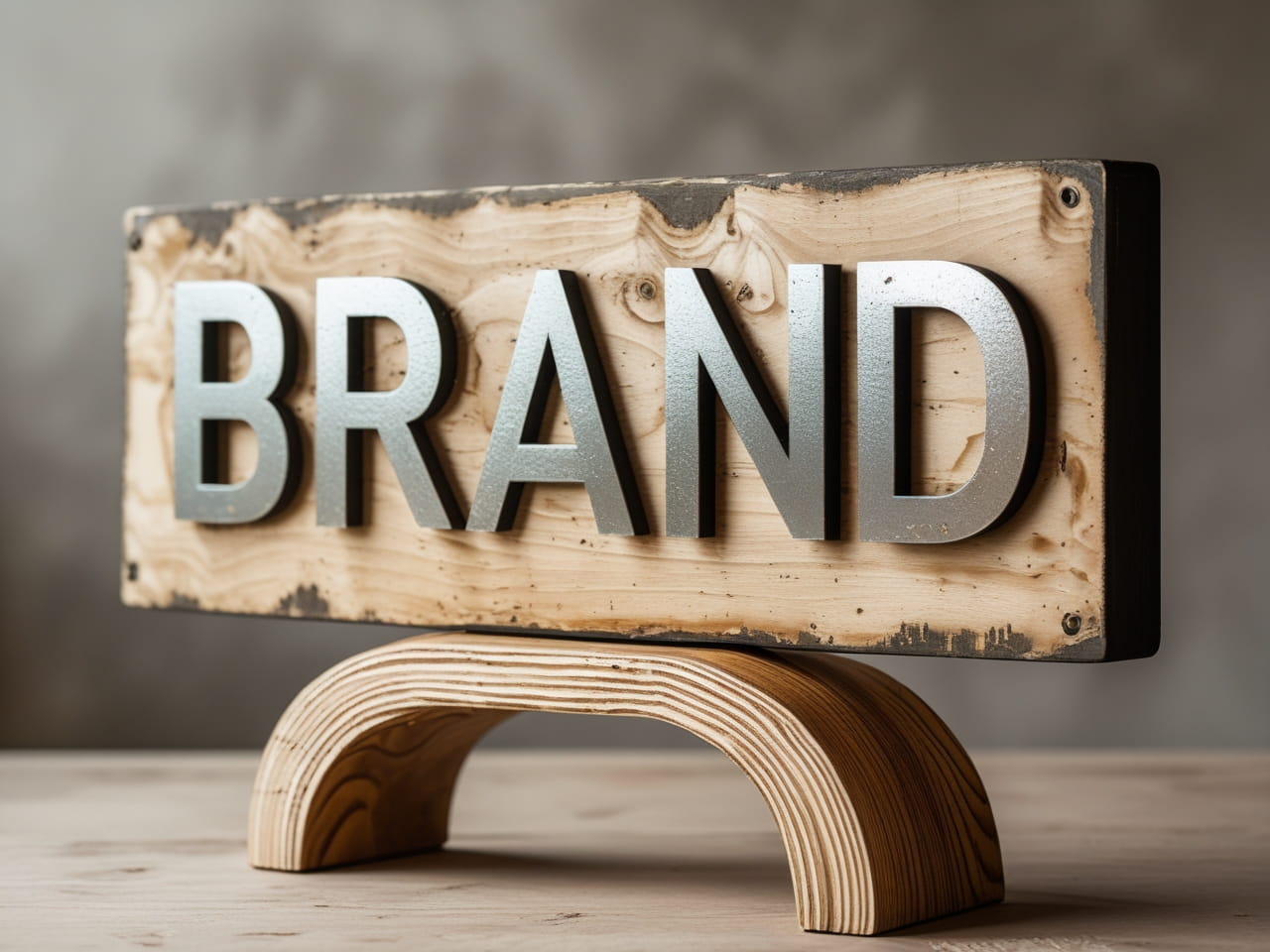
Wooden Promotional Products
Wooden promotional products are signs, three-dimensional letters, plaques, stands, reception logos, wayfinding signs, POS materials and exhibition structures, made for a specific brand from plywood, MDF, MFC, particleboard and solid wood. The contour is cut and engraved on CNC, so the logo and font are reproduced to the letter, while the surface is sealed with paint or oil for outdoor or indoor placement. Below you will find which products are made, from what materials, how an order runs from artwork to installation, how long it takes and whom such products suit.
Producing wooden promotional products for business
Wood advertising catches the eye differently than plastic and metal — thanks to a living texture and a sense of quality. A wide set of materials goes into the work, from plywood and MDF to solid wood, so in a single style you can make both a discreet office plaque and a striking sign for a cafe. The category includes signs, plaques, three-dimensional letters, panels, wayfinding signs, stands — everything that helps bring a customer to the door and hold their attention at the point of sale or at an exhibition.
Wood advertising is valued for its versatility and naturalness. Such an element looks organic both inside a space and on a facade, equally in place in a restaurant, a shop or on an exhibition stand. Subconsciously wood reads as ‘quality and genuine’ rather than ‘cheap and for one season’ — and that works for the company’s image. Plus every item is easy to tailor to the corporate identity: colour, font, texture.
Any item — three-dimensional letters, a sign, a plaque — is made to an individual project rather than taken from a catalogue of ready shapes. Hence the precise fit to the corporate style: that very shade, that very font, that very geometry for a specific facade or interior. Add to this the various finishing and painting options, and it turns out that wood barely limits the designer’s imagination and merely provides a pleasant natural base.
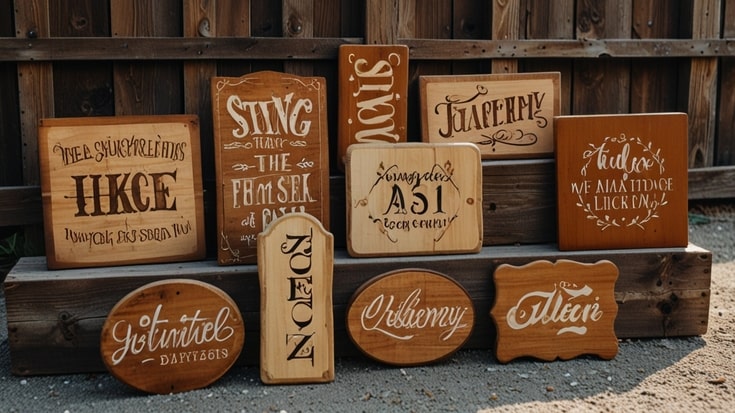
Signs
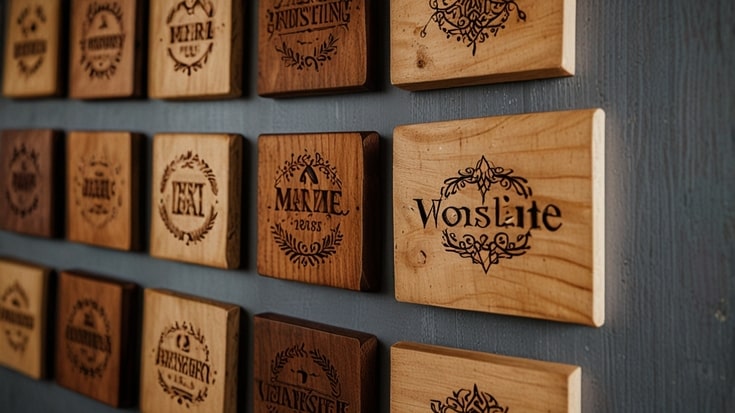
Plaques
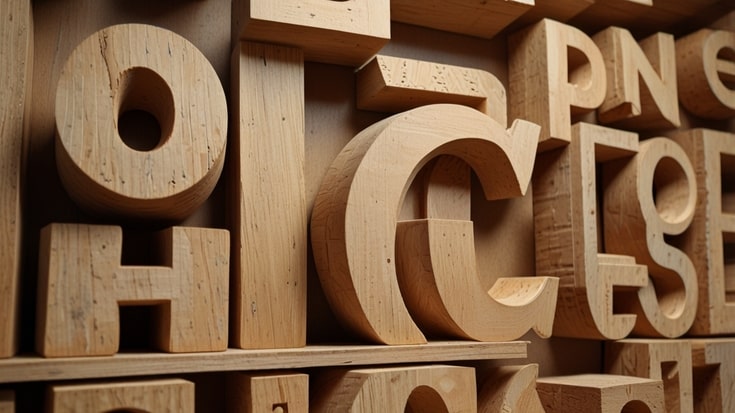
Three-dimensional letters
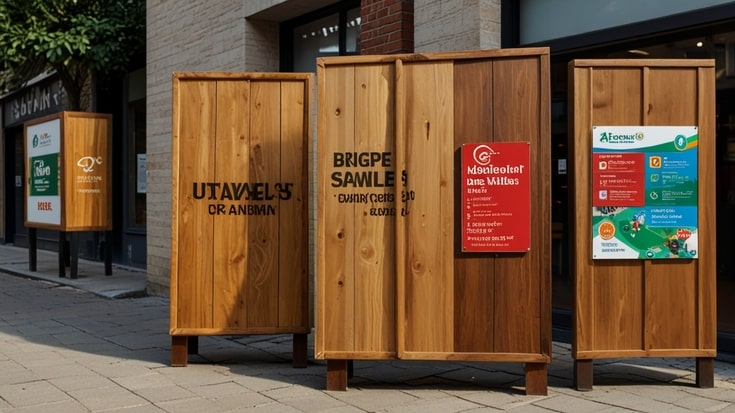
Panels
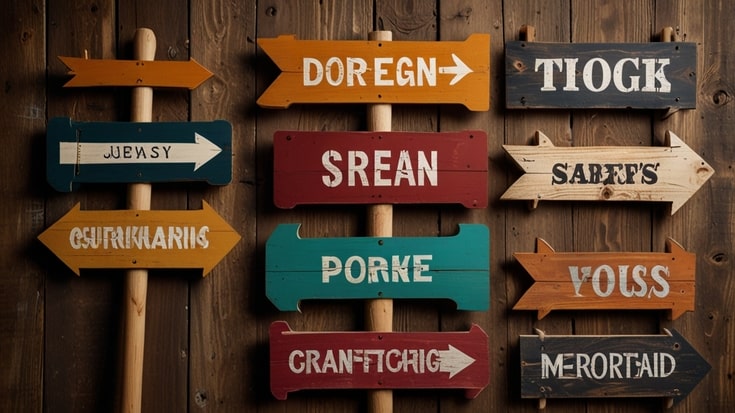
Wayfinding signs
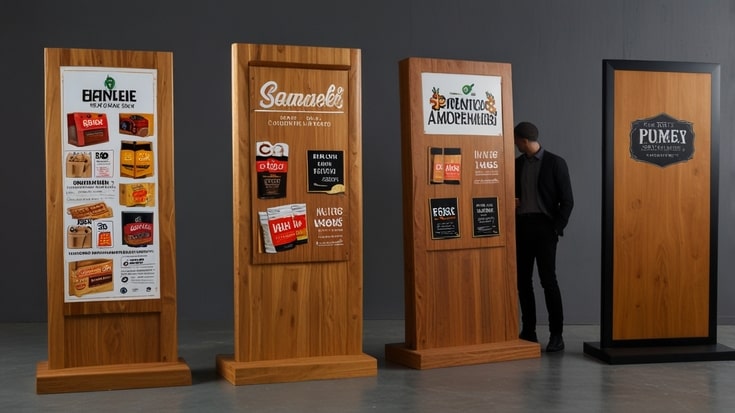
Stands
The specifics of producing wooden promotional products: how to create effective advertising elements
Producing wood advertising has its own subtleties, and the first is the right choice of material for the operating conditions. A sign that will hang outdoors in rain, snow and sun, and a plaque for a warm office, are two different stories. For outdoor use hardier species and boards are chosen, resistant to moisture and ultraviolet; moisture-resistant plywood and solid wood such as larch or oak are used here. A mistake at this step shows up within a season: the coating cracks, the wood warps.
Three-dimensional letters and fine decor demand a precision the hand cannot deliver — here CNC helps out. The machine cuts the contour strictly to the artwork, so the edges come out crisp and identical letters are genuinely identical. Complex structures — stands, multi-layer panels — are no longer only about function but also about how the item fits into the space. That is why the design and finish are thought through in advance rather than ‘as you go’.
The finish of wood advertising varies: painting in the desired colour, varnish, tinting, natural formulas such as wax and oil. The choice is not only about beauty — the coating also protects the item from moisture and fading, extending its service life. For an outdoor sign this is a mandatory layer of armour, for an indoor plaque it is more a matter of looks and a surface pleasant to the touch.
How wooden products are manufactured
The stages of producing wooden promotional products: from idea to finished item
An order goes through several stages, and each matters. It starts with design: the task is broken down, the size, shape and function of the element are determined. Here it is also checked against the brand — a sign must be legible from the right distance and work towards recognition, not merely ‘hang there prettily’. The more precisely the artwork is agreed at this step, the fewer revisions there will be later.
After the artwork is approved, the materials are prepared: the timber or board, paints, varnishes, adhesive are selected. Then the wood goes into machining — sawing, milling, contour cutting. On the accuracy of these operations directly depends whether the finished letter will have even edges and the panel a clean edge without chips.
The next step is assembly. Three-dimensional letters and composite panels are put together from several parts, and here accuracy matters: a skew of a couple of millimetres on a large sign is visible immediately. If the item is mounted on a wall or a stand, the hardware is fitted and the fastening is thought through, so that installation on site goes without surprises.
Finishing completes it all. The coating is chosen for the task — painting, varnish, tinting, a protective layer. This stage both lifts the appearance and works towards durability: sealed wood copes more calmly with swings in humidity, sun and street grime. You must not rush it — the paint and varnish need to dry properly.
The advantages of producing wooden promotional products: why choose wooden advertising elements
Wood advertising has several strong points that bring clients to it. The first is eco-friendliness: a natural material adds points to the image, especially if a company bets on ‘green’ values. To a client and partner such a choice reads as substance rather than a wish to save on plastic.
The second is durability. Plastic fades and clouds, metal rusts, while properly treated wood holds its looks for years. With normal care and a protective coating a sign does not lose its neatness even after several seasons, which for outdoor advertising is worth a great deal.
The third is an appearance hard to fake with other materials. Wood looks equally good in the classics and in contemporary minimalism, adapts easily to the interior and the facade. Every item comes out individual in its own way, and that is exactly what helps a brand not blend into the crowd of competitors.
The benefits of working with professionals

Modern equipment
Panel saws, CNC and milling machines — precision, speed and quality guaranteed

Extensive experience and expertise
We know how to handle wood and sheet materials — reliably, precisely, professionally

Fast order fulfilment
Fast and without compromising quality. We value your time and our commitments

A full range of services in one place
Cutting to size, sawing, milling, sanding, painting, assembly — all in-house, with no middlemen

Trusted materials and consumables
We work only with quality materials, so you can be confident in the result

An individual approach to every client
We work to your drawings, create a machining program for the task and account for every detail
The advantages of working with a wooden promotional products manufacturer
Working with a specialised manufacturer gives the client several benefits. The main one — individual design for the specific task and the brand’s concept. There is no need to squeeze the idea into a ready template: the element is designed so that it hits the mark exactly and sets the company apart from its neighbours on the street or in the exhibition row.
The second plus is modern equipment. CNC machines and other technology deliver the precision and repeatability you cannot achieve by eye. For a series of identical plaques or three-dimensional letters this is critical: all copies come out like twins, without discrepancies in dimensions and font.
The third is predictability and a full cycle. With professionals it is easier to agree on realistic deadlines and get sensible advice on materials, finish and design. Often this is turnkey work: from artwork to installation of the finished item on site, without having to separately look for an installer.


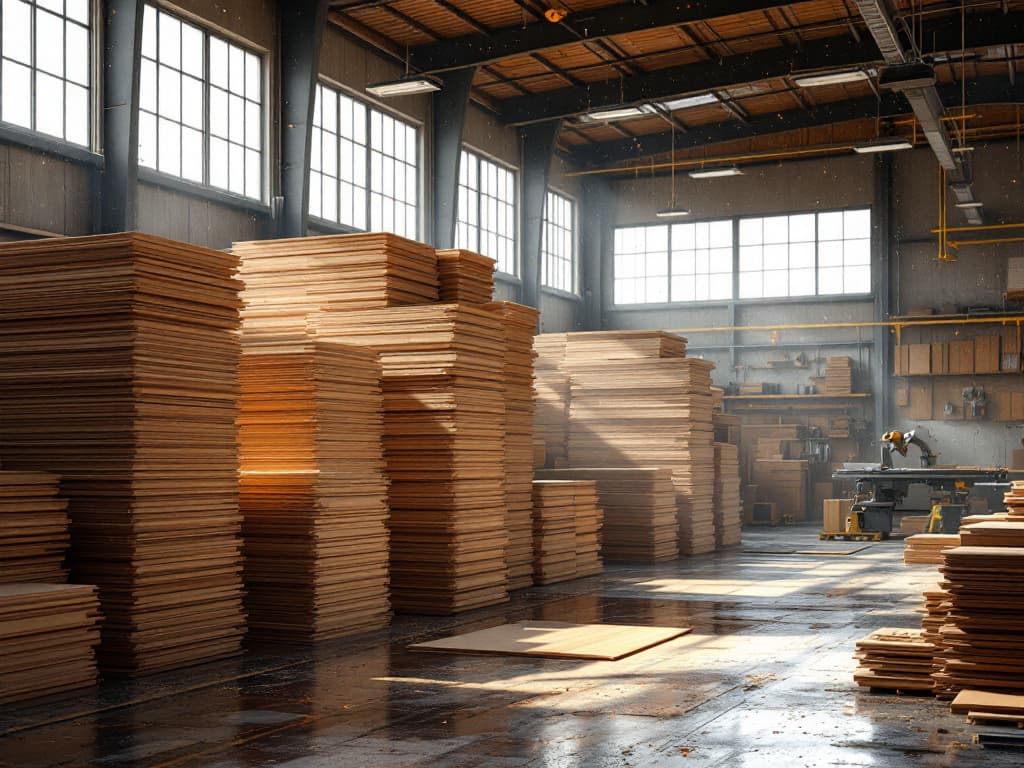

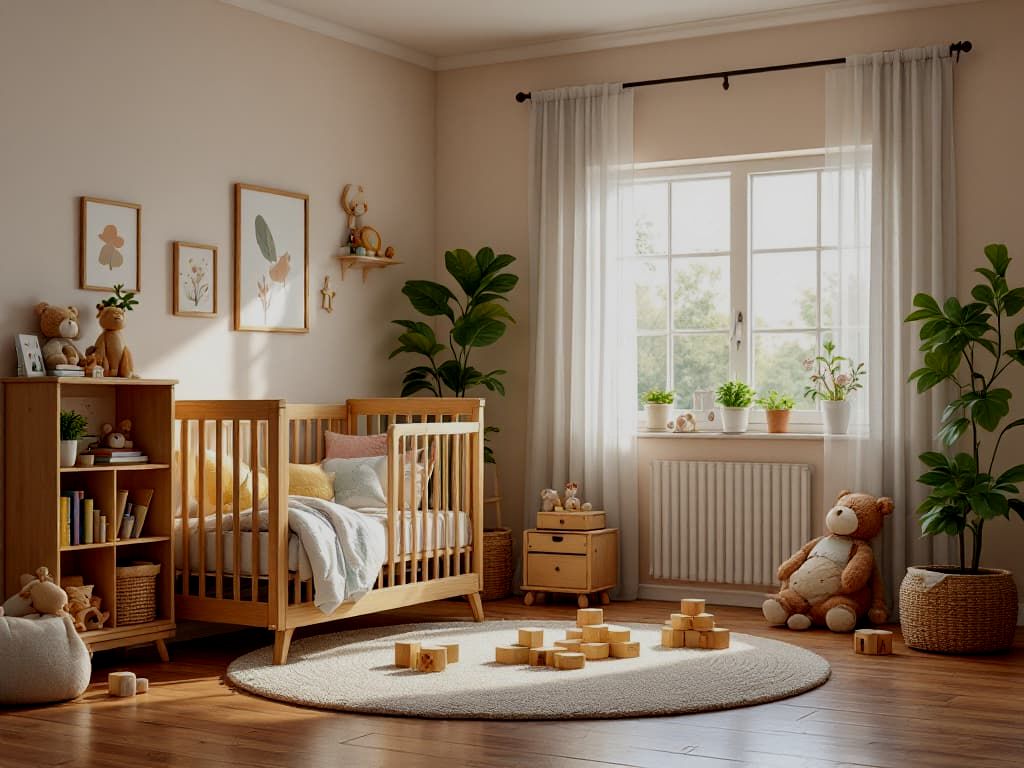
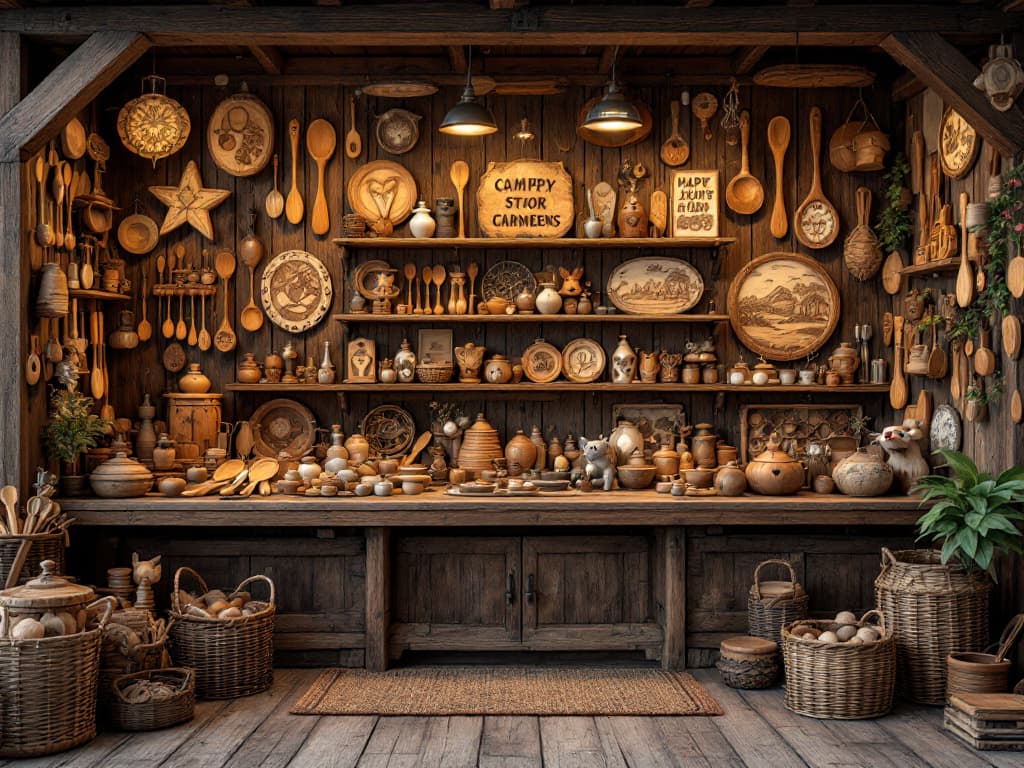

An overview of all product categories: from advertising to decorative solutions
Besides advertising itself, the production usually covers adjacent tasks too. The range includes not only signs and plaques but also decorative elements for interior and exterior. This covers decorative panels, partitions, shelving units and shelves — the things that help assemble a stylish and coherent look of the space around the brand.
You can also order wooden furniture — stands, boxes, the same three-dimensional letters that work at once as advertising and as a functional part of the interior. Everything is made for a specific brand, taking the design and task into account. And, like the main promotional products, these items come out durable, neat and eco-friendly.
Each direction has its own specifics. Furniture elements are designed with an eye on ergonomics and a real usage scenario, while advertising ones with an emphasis on catching the eye and shaping the company’s image. What unites them is the material: wood is equally at home in both, and especially valued by those who choose natural on principle.
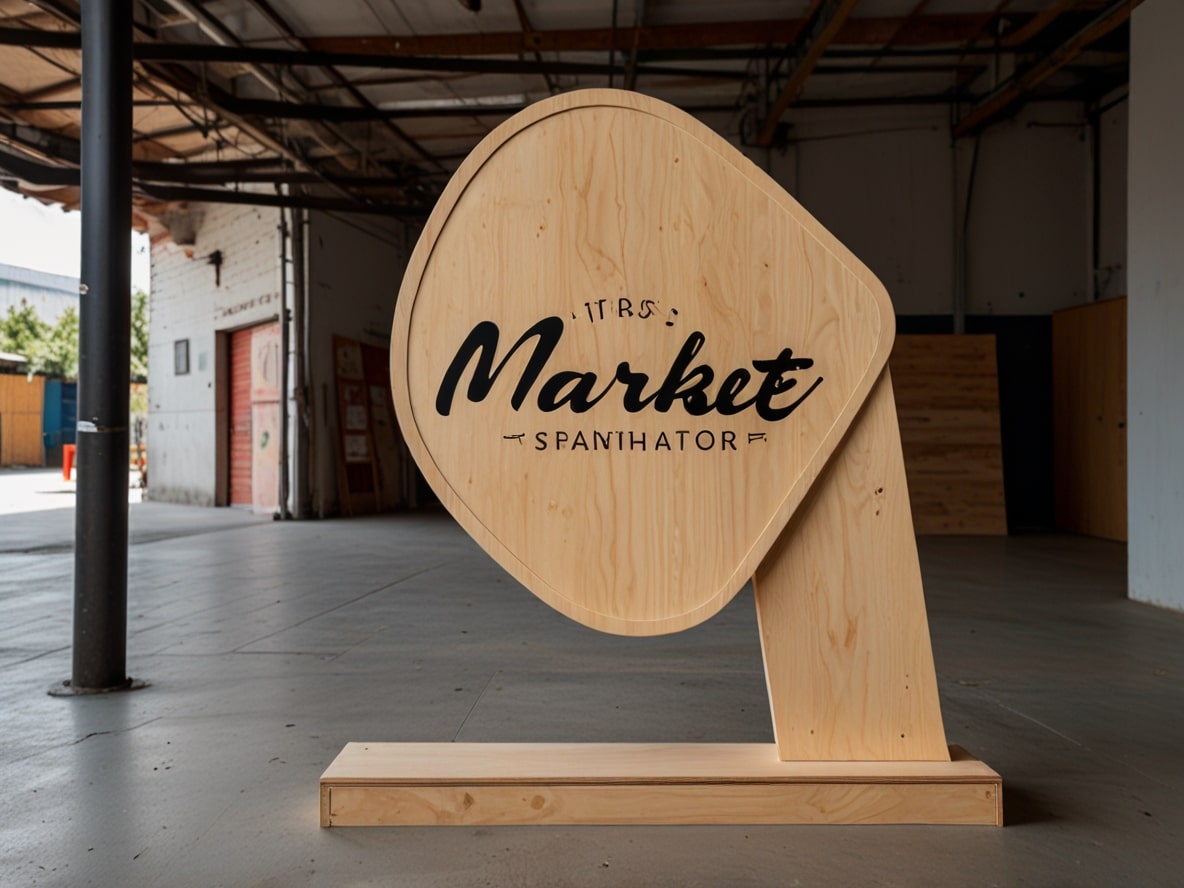
Our portfolio — finished products
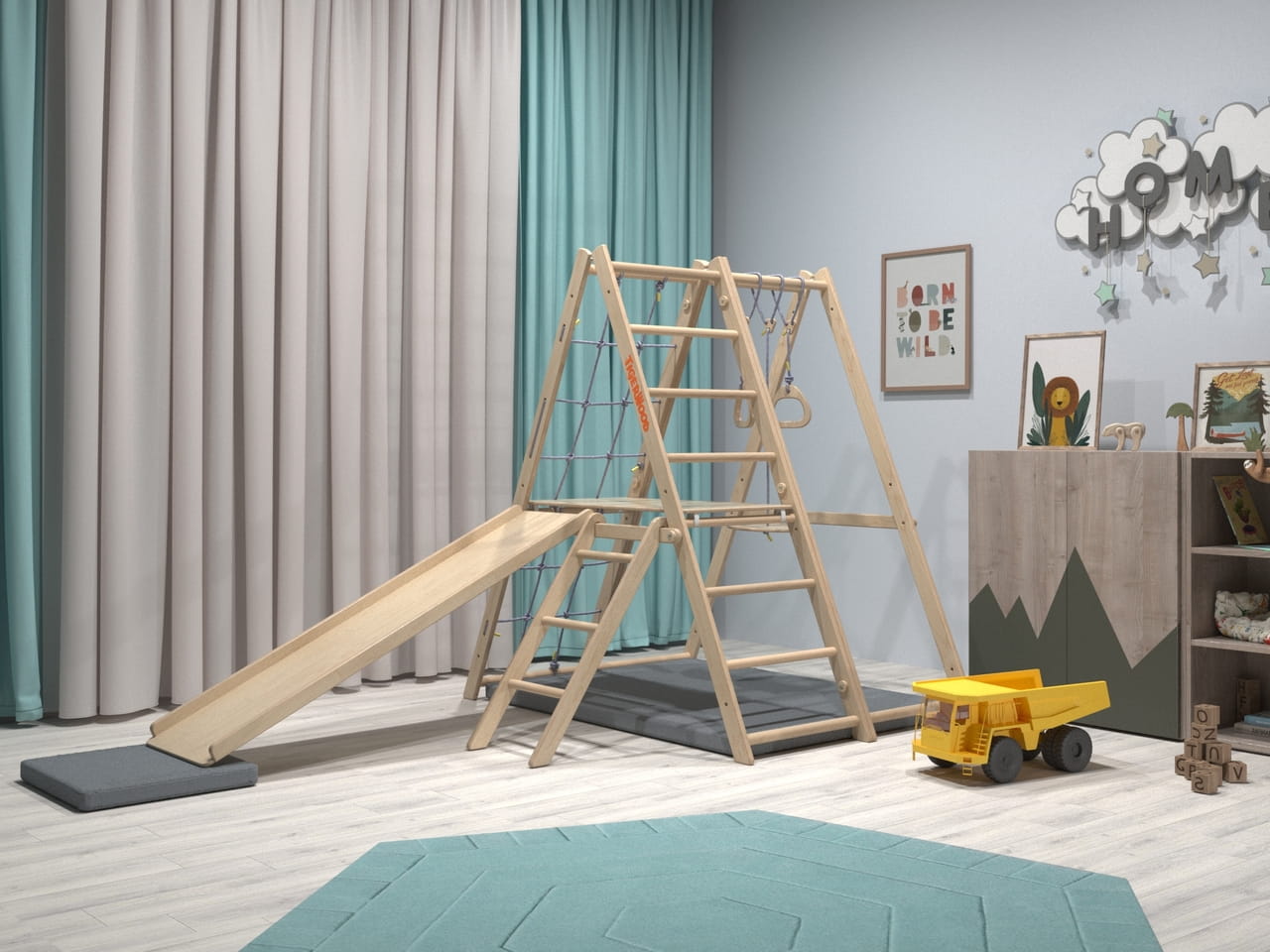
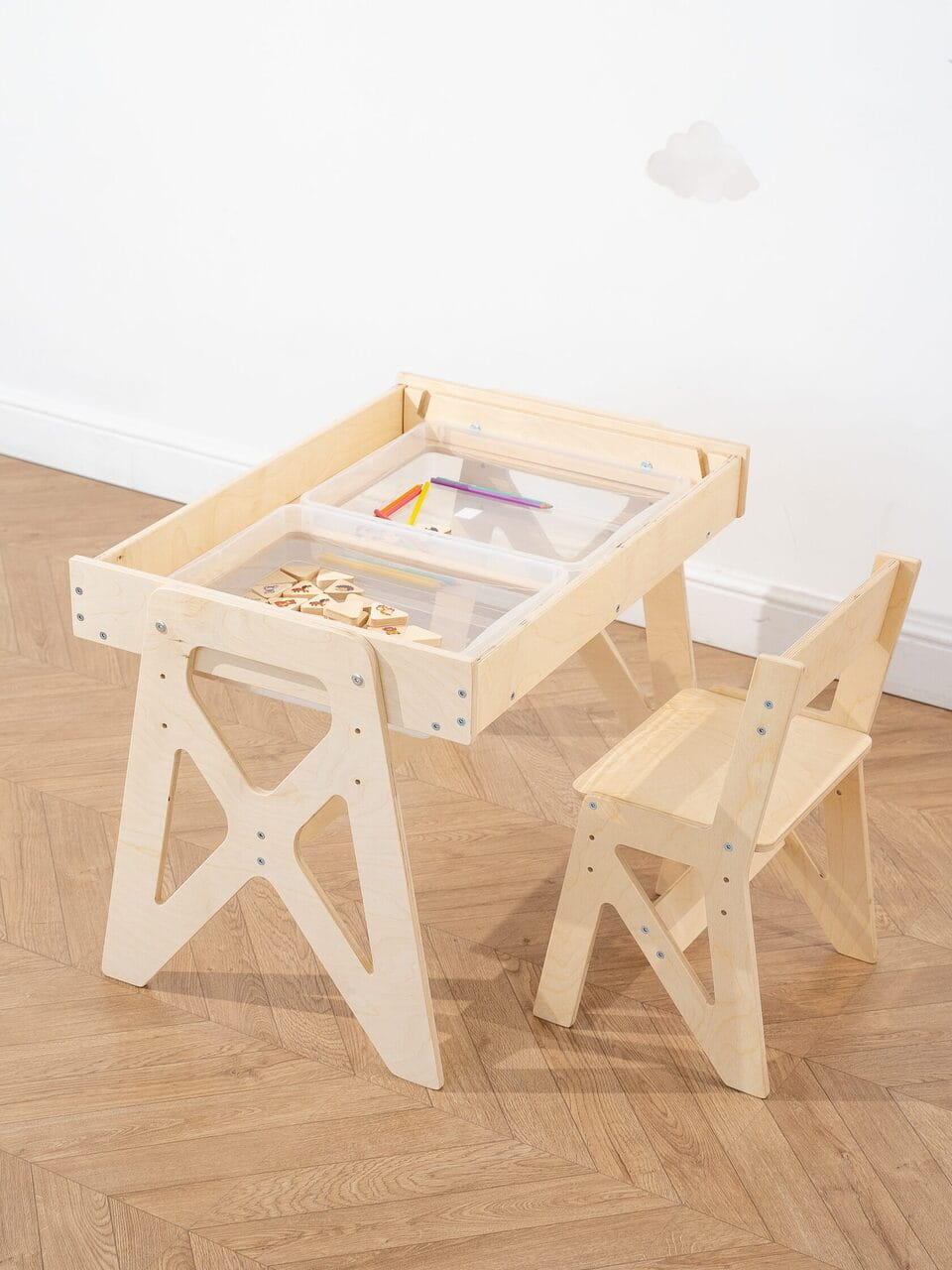


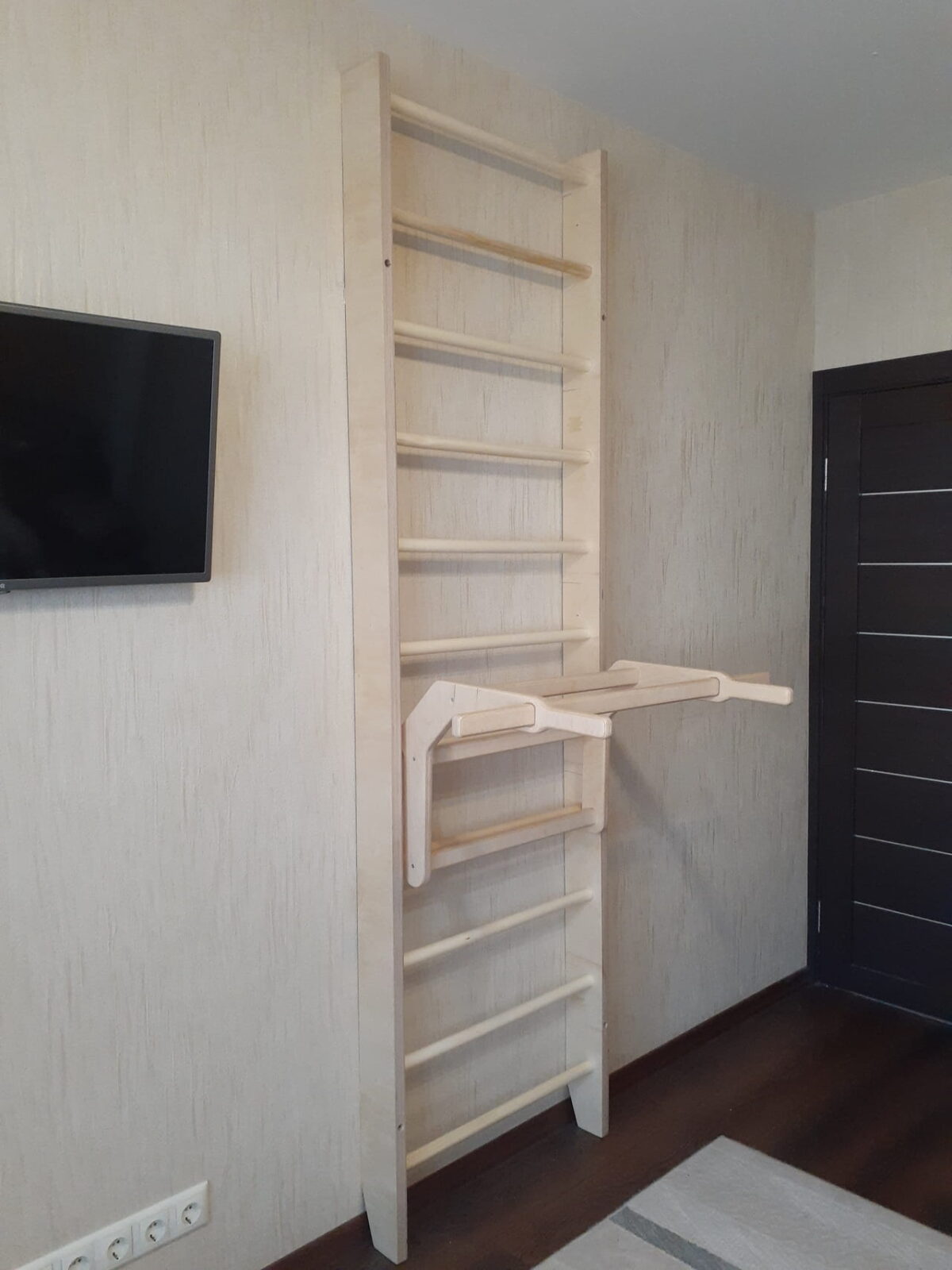
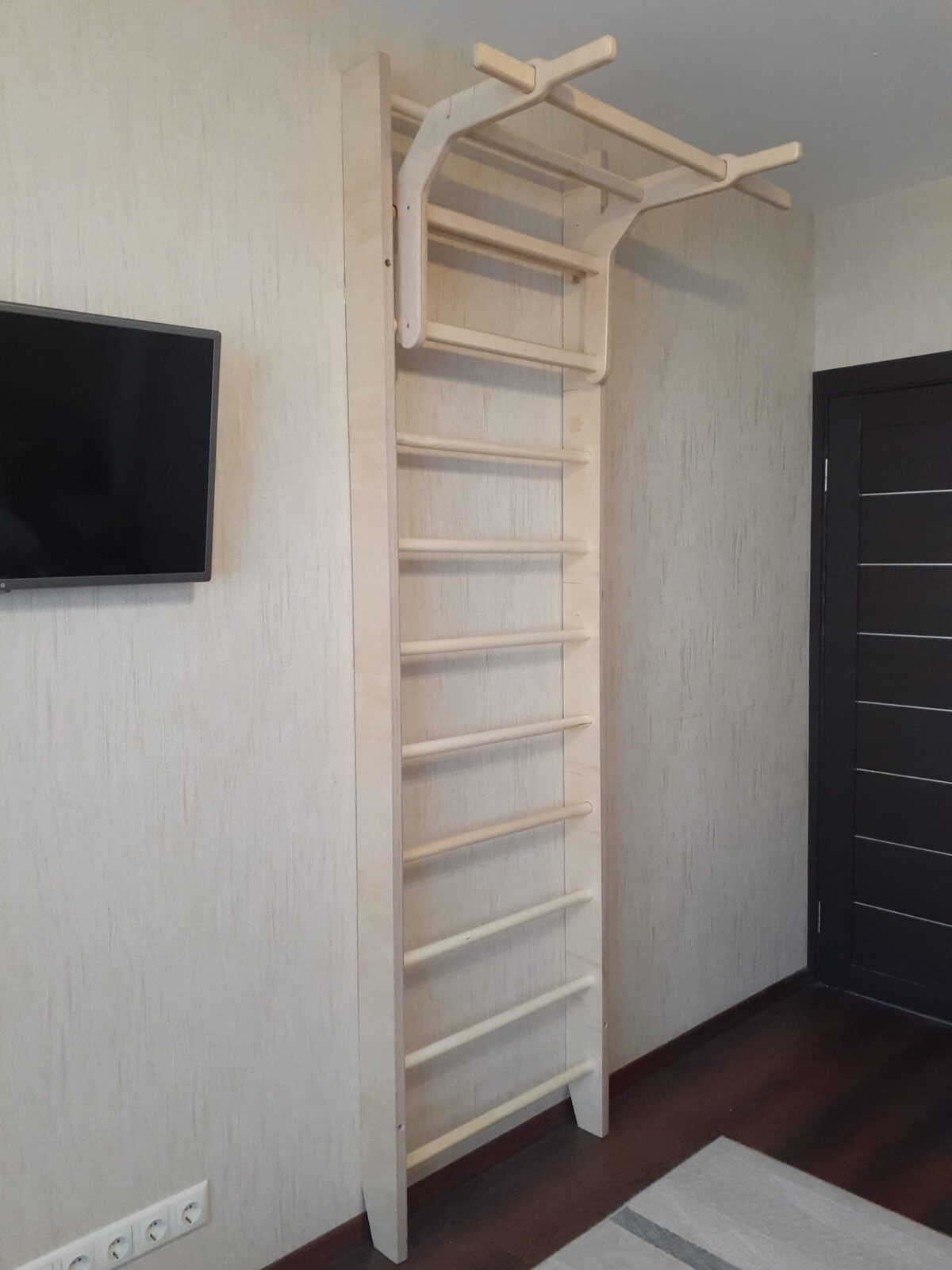
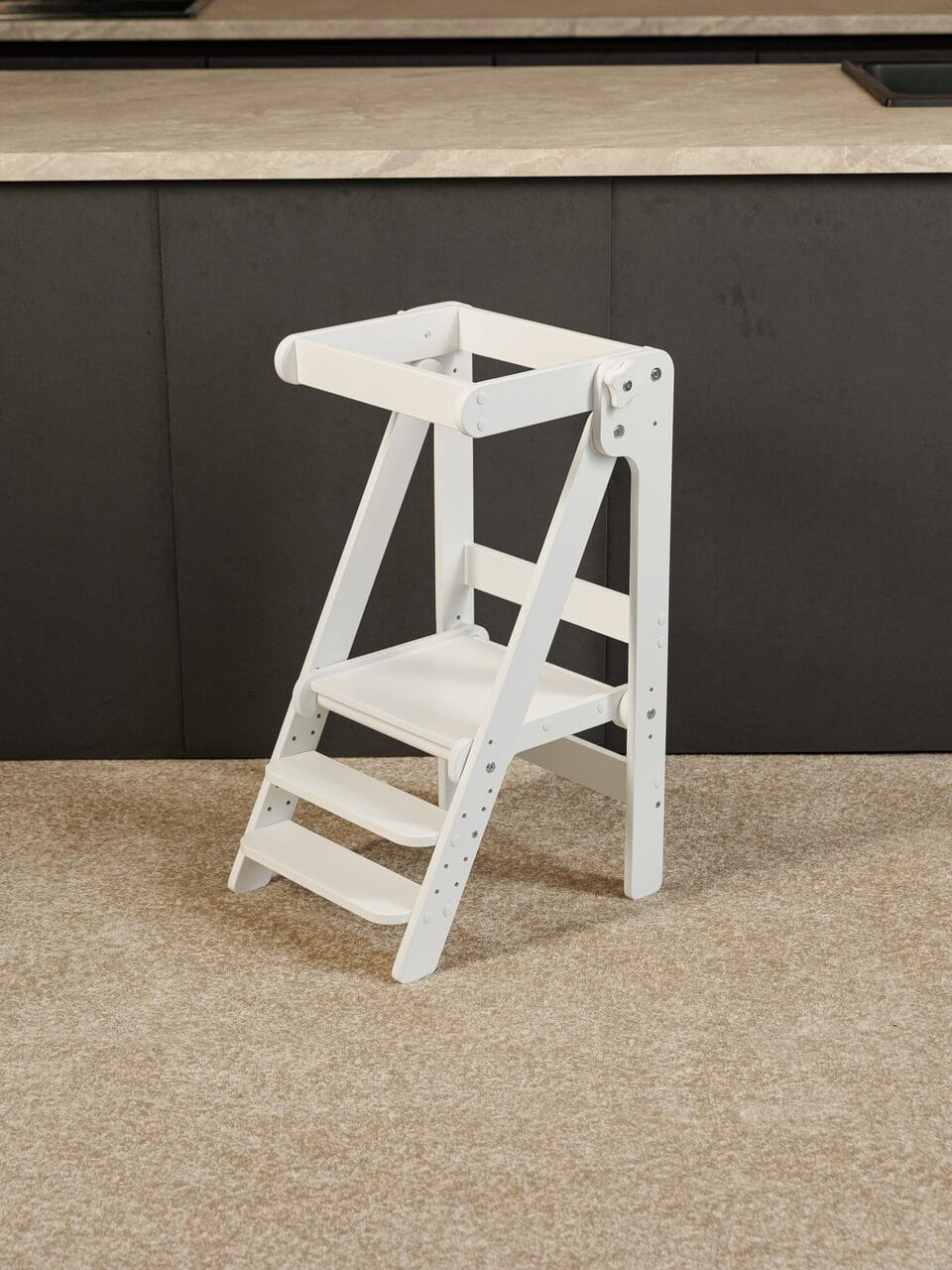
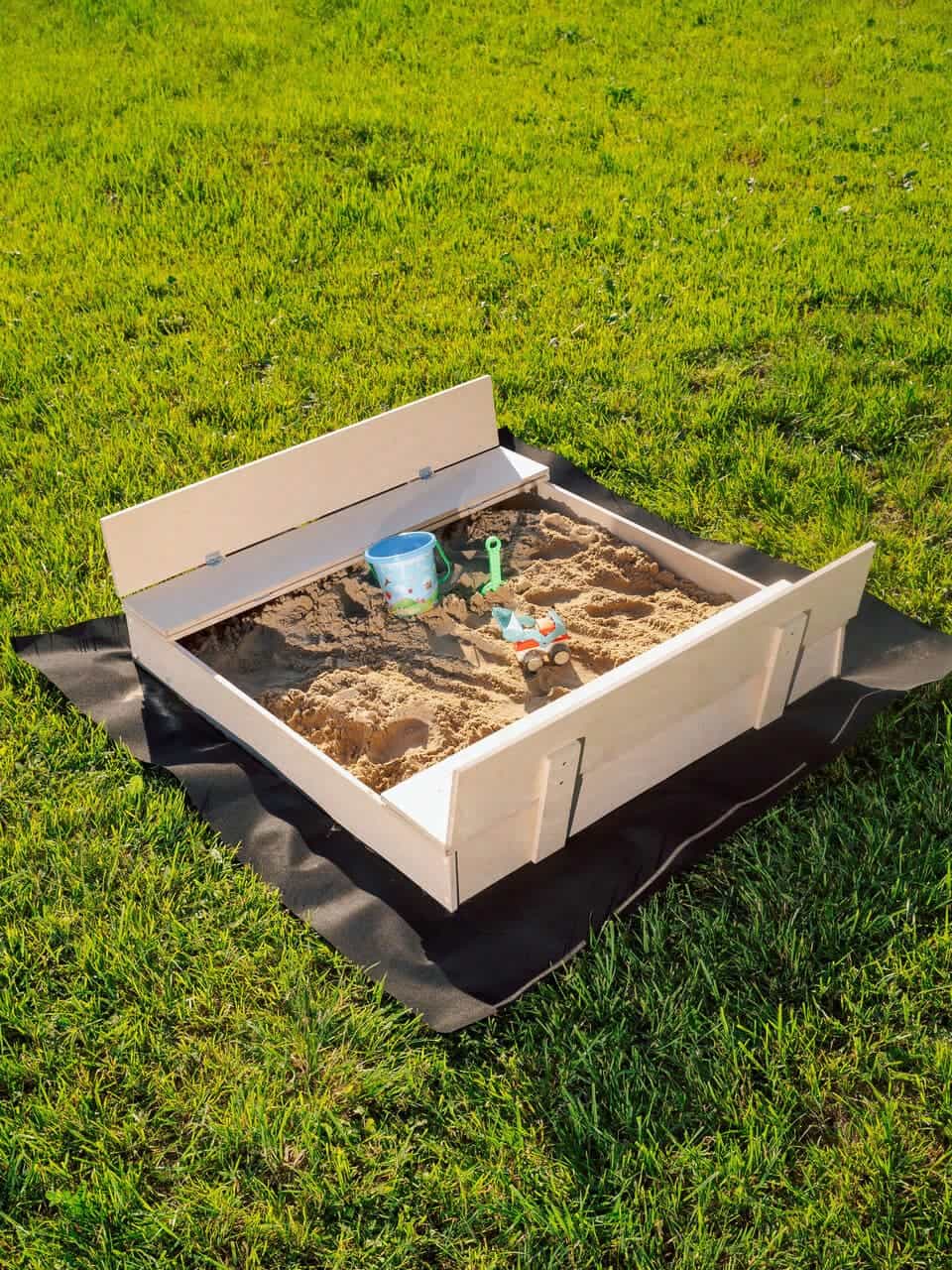

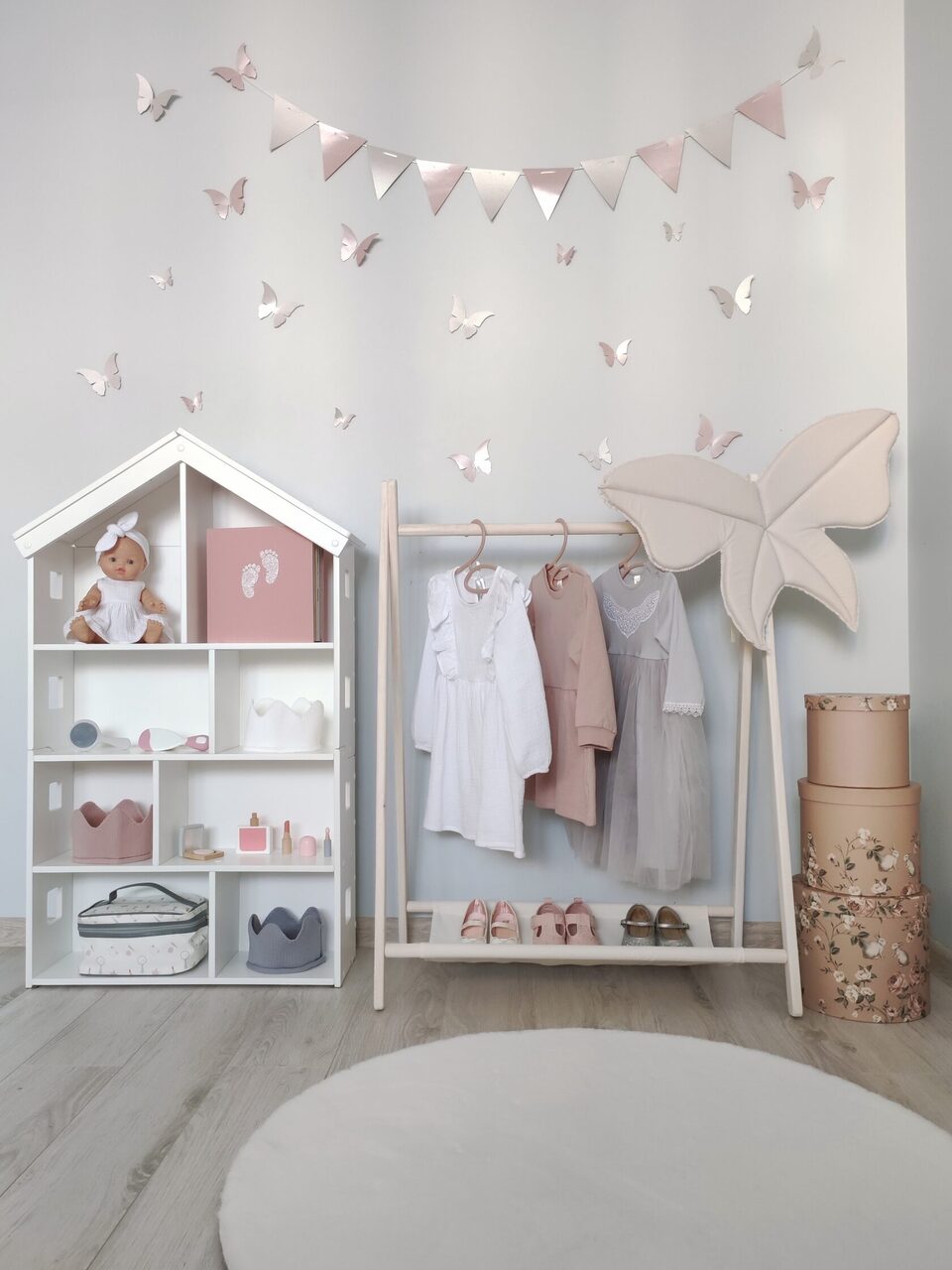

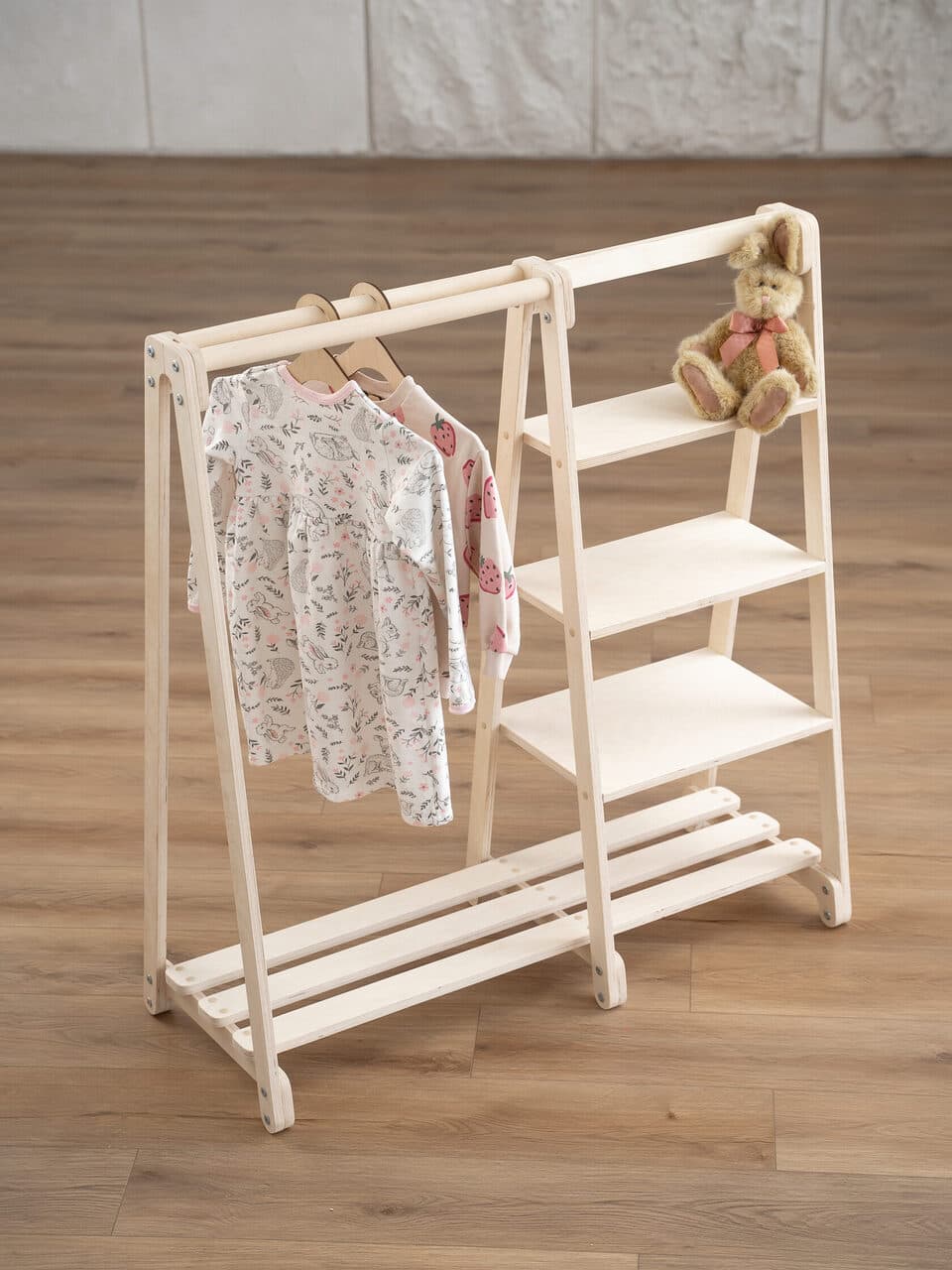
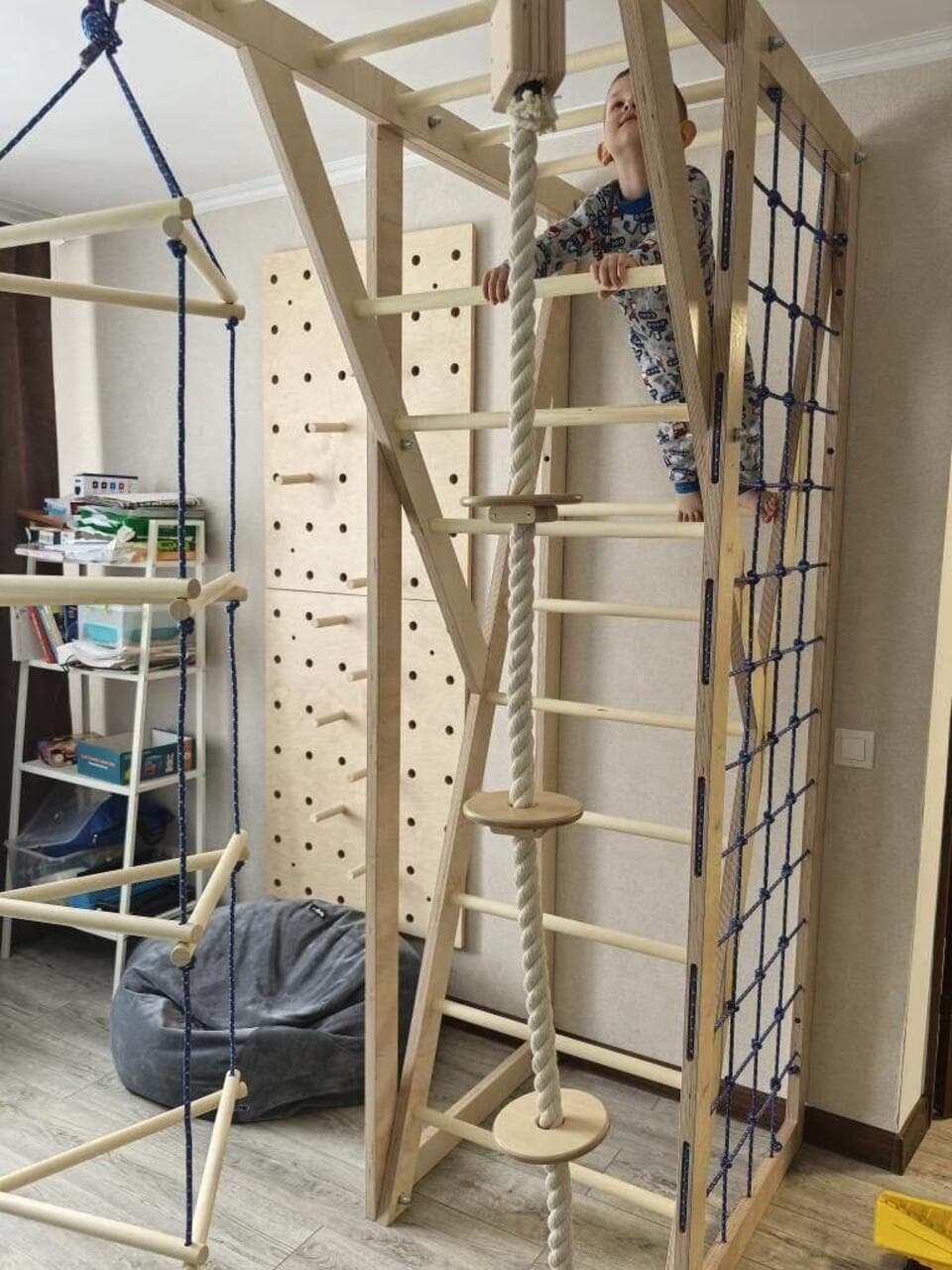
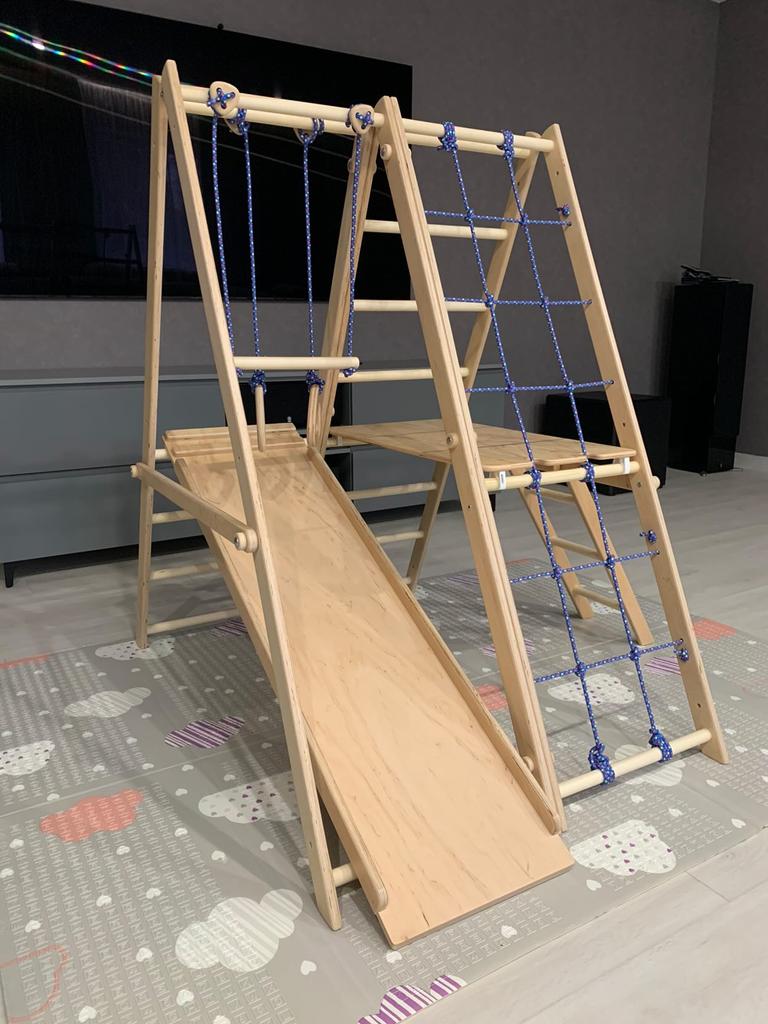

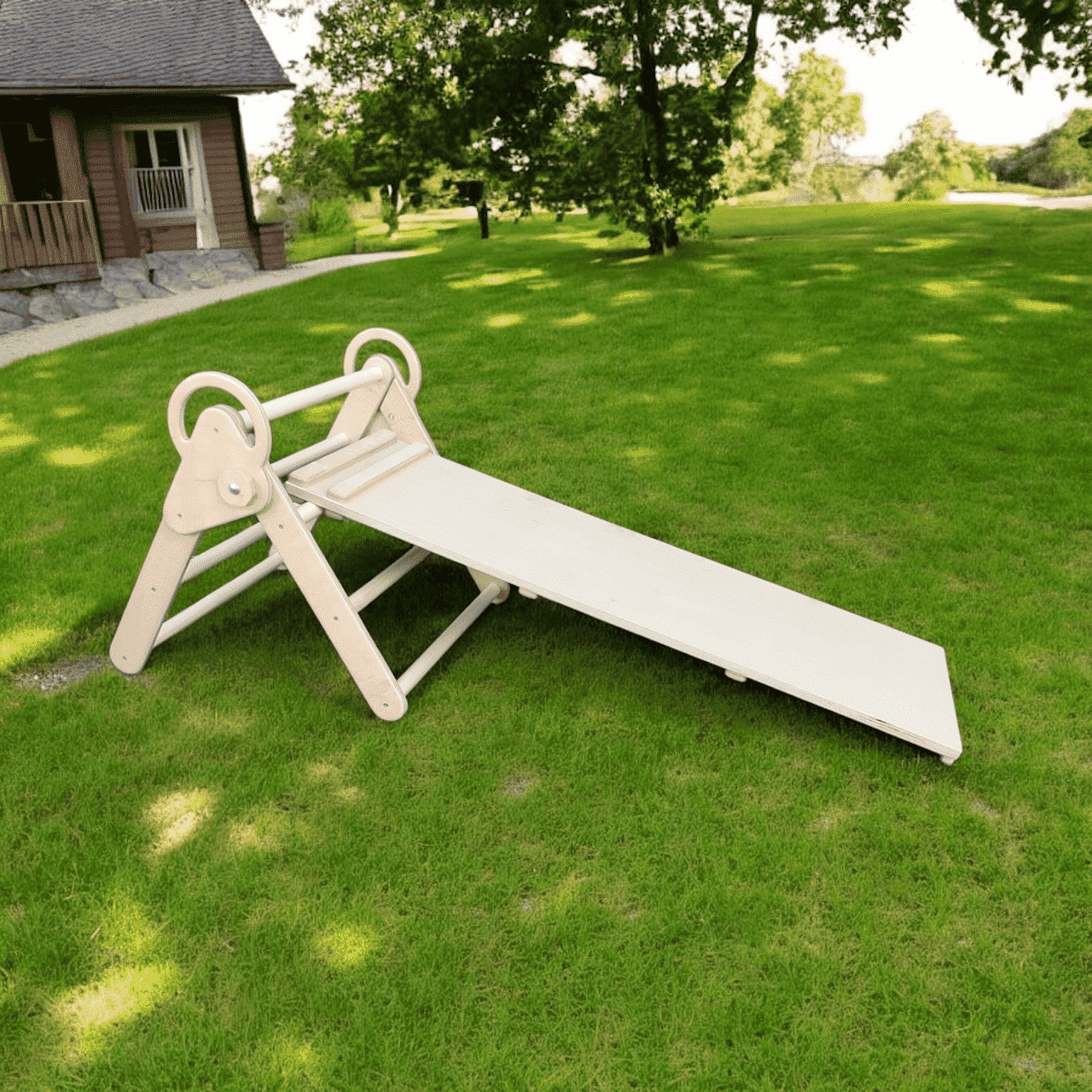

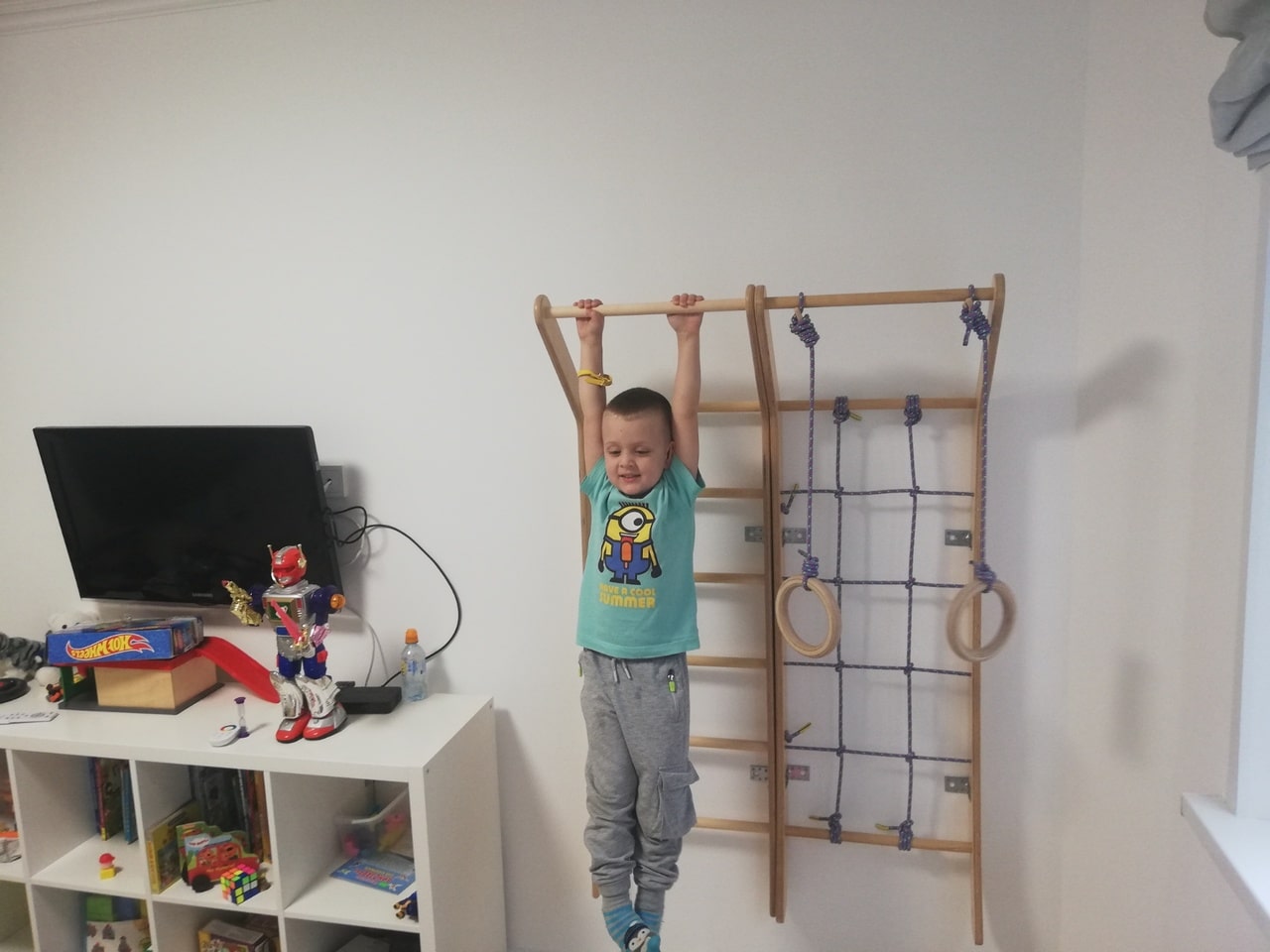


Examples of our work: what a quality production process is capable of
Walking through the completed works, the picture comes out vivid. For one restaurant we made three-dimensional wooden letters for a sign — with a contrasting finish and lighting, so they would read both by day and in the evening, and at the same time match the hall’s interior. For another client — stylish panels and stands for presenting products at an exhibition.
A frequent request is personalised plaques and wayfinding signs: for an office, a warehouse, an exhibition stand. For example, for a clothing shop we made plaques with a logo applied by engraving — they neatly emphasised the corporate identity without pulling attention onto themselves. A small thing, yet it pulls the brand image together.
Every project is a separate task with its own inputs, and the successful examples show precisely how wood helps a company stand out and cover both the advertising and the practical function at once.
Who uses a carpentry workshop’s services

Furniture makers

Interior designers

Advertising companies

Exhibition stand builders

Art studios

Cafés and restaurants

Construction firms

Retail equipment manufacturers

Furniture factories

Private craftsmen

Custom orders

Manufacturing companies

Museums and exhibition halls

Architects

Theatres and film studios

Educational organizations

Children’s products manufacturing

Repair specialists

Online stores

Sole proprietors
Who the client is: the variety of applications for wooden promotional products
Demand for wood advertising comes from the most varied fields. First of all this is retail of any scale, and also cafes, restaurants, bars and hotels. For such establishments it matters to catch the guest right at the entrance — with a bright but not shouting sign, a stylish plaque, a recognisable facade element.
Construction companies, architectural bureaus and interior designers order too, as well as those who assemble exhibition stands and retail equipment. Wooden elements are readily used for fitting out exhibitions, presentations and corporate events — wherever a warm, living accent is needed.
A separate category is education: schools, kindergartens, universities, where wood is used for wayfinding and decor for cosy, lived-in spaces. And, of course, those engaged in souvenirs and corporate gifts: natural wood fits perfectly as the basis of bespoke, memorable items.
Wooden promotional products — the perfect solution for your business
Bringing it all together, wooden promotional products are a working and at the same time eco-friendly way to announce a brand and add character to a space. A sign for a shop, a plaque for an office, three-dimensional letters for a facade — everywhere wood delivers that natural texture thanks to which the element is perceived not only as advertising but also as a piece of decor.
An item’s path is made up of several steps. First comes design to the brand’s concept — restrained minimalism or, on the contrary, a bright story with colour and texture. Then the material is chosen for outdoor or indoor placement and the finish is decided: painting, varnish, a protective layer, so the item both looks good and weathers the elements.
Another weighty merit of such advertising is its service life. Plastic and metal structures tire faster, while wood with proper treatment lives for decades, keeping a working appearance. It copes calmly with sun, rain and snow, so it feels confident even outdoors.
The production employs modern equipment for careful machining. CNC machines deliver precision in both cutting and engraving, so every detail comes out crisp. This is especially noticeable on complex items — three-dimensional letters and panels, where a crooked line or an uneven font catches the eye immediately.
The key thing in wood advertising is eco-friendliness and flexible customisation to the client. Hence the unique items that precisely reflect the company’s style for any concept. Material, colour range, type of finish — these are only some of the levers that wood opens up as a base for advertising elements.
Wooden promotional products: a breakdown for the client
Next — practice without generalities: which items are ordered most often, what they are made of, how engraving differs from milling, what the price and lead times are made up of and what to watch for so a sign survives more than one season. All of this from real work rather than an advertising brochure.
Which items are made most often
Wooden promotional products are a long list, not just a sign above the entrance. The most popular are three-dimensional letters: they are cut from plywood or MDF, painted in the corporate colour and lit up, so the name reads even at dusk. Next come plaques: office, door, wayfinding, with an engraved logo or address. A separate big topic is stands and reception logos that greet a guest in the lobby and immediately set the tone.
For points of sale we make displays, POS materials, price-tag holders and small presentation structures — the things that stand by the till or on the shelf and gently nudge towards a purchase. For exhibitions and events we assemble stands, panels with a logo, photo zones. And there are also wayfinding signs, number tags, menu boards for cafes, decorative overlays for facades. One thing unites it all: wood can be cut to any contour and turned into almost any advertising medium.
| Item | Where it works | Common material |
|---|---|---|
| 🔤 Three-dimensional letters | Facade, interior, photo zone | Plywood, MDF, solid wood |
| 🪧 Sign | Entrance, shop window | Moisture-resistant plywood, solid wood |
| 🏷️ Plaques and wayfinding signs | Office, wayfinding | MDF, plywood, acrylic glass |
| 🛎️ Reception logo, counter | Lobby, reception | MDF, solid wood |
| 🛍️ POS and displays | Sales floor, till | Plywood, MFC |
| 🎪 Exhibition panels | Stands, presentations | Plywood, MDF, plastic |
Materials and what each is suited to
The material determines the price, the look and how long the item will live. Solid wood looks the noblest and ages well, but is dearer and more demanding about conditions. MDF is the favourite for painted three-dimensional letters and smooth panels: it is uniform, mills excellently and gives an ideal surface for painting. Plywood is strong, holds fasteners and is not afraid of load, so it goes into frames, stands and outdoor structures, especially in a moisture-resistant version. MFC with a ready coating comes to the rescue where you need it fast and cheap.
Outdoor advertising has its own logic. Everything that hangs outdoors is at war with moisture, sun and temperature swings, so here resistant species such as larch and oak or moisture-resistant plywood are used, and a protective coating is applied on top without fail. For interiors the requirements are milder: here looks and tactility come to the fore rather than armour against the weather. If you are in doubt about the choice, it is simpler to describe where the item will stand and in what conditions — a suitable material will be suggested, often saving on what is excessive in your particular case.
Engraving and milling of a logo
A logo is applied to wood in two main ways, and each has its own character. Engraving removes a thin layer and leaves a neat image with a light relief and a contrast of texture — it looks good on plaques, number tags, the souvenir part of an advertising line. Milling goes deeper: with it a through contour, three-dimensional elements, deep relief, windows in panels are cut. For three-dimensional letters this is the main tool — the contour is cut strictly to the artwork, so the font comes out even and a series of identical signs genuinely identical.
There is a nuance worth knowing in advance: a very sharp inner corner in milling is rounded off to the tool’s radius. This is not a defect but the physics of the process. If a sharp corner in the logo is critical, it is either finished by hand or a minimum radius is built into the artwork — you will be warned about this at the preparation stage. Thin bridges and small details also require care: they are cut more gently so as not to crumble. All of this is what distinguishes clean work from crude ‘by eye’ sawing.
Outdoor and indoor advertising: the difference in approach
One and the same item for the street and for a room is made differently, and economising on this difference is a sure way to be disappointed within a season. Outdoor advertising must take the hit: a moisture-resistant material, a multi-layer protective coating, thought-out fastening resistant to wind. Wood on a facade without proper impregnation quickly darkens, cracks and warps, so here the coating is not cosmetics but mandatory armour.
Indoor advertising lives in hothouse conditions, and here the emphasis shifts to appearance: a pleasant surface, a precise shade to match the interior, neat engraving. You can afford lighter materials and fine details that would not survive outdoors. Understanding this difference at the start helps you avoid overpaying for excess protection where it is not needed, and not economise where it is critical.
What the price is made up of
The question ‘how much does it cost’ without details stays without a precise answer, and that is honest, not an excuse. The price of wooden promotional products is assembled from several clear components, and each can be gauged in advance.
- ✏️ Complexity of the artwork. A simple plaque and a multi-layer composition with cut-outs are a different amount of work.
- 🧱 Material. Solid wood is dearer than MDF and plywood; consumption depends on the size and the layout.
- 📐 Size and volume. A large sign and a small number tag are different weight categories.
- 🎨 Finish. Painting in one colour, a multi-layer coating, patina, lighting — everything counts.
- 🔁 Print run. A series works out more cost-effective per unit than a single item.
- 🚚 Installation and delivery. Self-collection or turnkey installation is also part of the estimate.
The simplest way not to be surprised by the bill is to send clear artwork and not rush the deadlines. Revisions due to a raw brief and work in panic mode usually add to the estimate those percentages you wanted to avoid. Here the cost and the deadline are named in advance, before the start, so that no new sums arise during the process.
How long manufacturing takes
Lead times are the second most frequent question after price, and here too there are clear guidelines, though the exact date is always calculated for the specific artwork. A simple plaque or a few wayfinding signs are ready in a couple of days. A batch of three-dimensional letters with painting takes longer — here the time budget is set not so much by the cutting itself as by the drying of the coating, which cannot be rushed without harming the result. A complex exhibition stand or a set for a chain is a separate story, planned in advance.
| Type of order | Guideline lead time | Example |
|---|---|---|
| 🏷️ Plaques, wayfinding signs | 1–3 days | Wayfinding for an office |
| 🔤 Three-dimensional letters | 4–7 days | A name for a facade with painting |
| 🎪 Stand, panels | from 5–10 days | An exhibition structure |
| 📦 Serial batch | by agreement | Fitting out a chain of locations |
If a project is tied to a date — a shop opening, an exhibition, a presentation — it is wise to get in touch early and leave a small time buffer rather than bring the artwork ‘for the day after tomorrow’. Then the item has time to go the whole way without haste: cutting, assembly, painting and full drying. Advertising made in a rush too often gives itself away with paint runs and a slightly crooked edge.
How to prepare artwork and in what format
A good result begins with clear artwork, but that does not mean the client must be a master of graphics programs. The ideal option is a vector file of the logo and lettering: from it the contour is transferred to the machine without loss of quality, and the letters come out exactly as intended. Vector source formats will do; a raster image will also be accepted, but it will most likely have to be redrawn into vector, and that is additional time.
If there is no ready artwork at all, it is no problem: it is enough to describe the task, send a photo of the place where the item will hang, and approximate dimensions. Then the artwork will be drawn and agreed with you before cutting. It is useful to state at once the corporate colours, the desired material and where the element will be placed — indoors or outdoors. The fuller the inputs at the start, the fewer revisions and re-queries later, and the closer the result to what you had in mind.
Branding and corporate identity
The point of promotional products is not merely to hang a pretty piece of wood but for it to work towards brand recognition. That is why it matters that the colour hits the corporate palette, the font matches the corporate one, and the item’s style echoes the rest of the company’s identity. A wooden sign in warm natural tones suits a coffee shop and an eco-store, while a strict engraved plaque suits a legal or medical practice. The material is one, but the character is different for each business.
It is good when a company’s whole advertising line is kept in a single key: sign, plaques, wayfinding signs, POS materials and souvenirs look like elements of one system rather than a random set. This strengthens the effect and makes the brand more noticeable. If a corporate identity already exists, the items are matched to it; if it is only being formed — help is given in choosing the material and finish that will lay the foundation of a recognisable image.
Series and print run
A single sign is one thing, a batch of identical plaques for a chain or a set of wayfinding signs for a large building is another. In a print run the strong point of machine production is revealed: the program cuts every copy to one and the same contour, so the hundredth plaque does not differ from the first. Handwork does not give such repeatability in principle. The larger the series, the more noticeable the gain in price per unit — thanks to a single setup and tooling.
For a chain business this is especially valuable: all locations get décor of a single standard, and the brand looks unified in every city. At the same time nothing prevents starting with a trial sample — making a single copy, assessing it in the flesh, making revisions, and only then launching the run. This catches all the roughness while it costs nothing, rather than after the whole batch has been printed.
Common client mistakes
Most hiccups happen not at the machine but at the task-setting stage. Knowing the typical slip-ups helps you dodge them and get a first-time result.
- ❌ A raster logo instead of vector. A small image is no good for precise cutting — the contour will have to be redrawn.
- ❌ Economising on the coating for outdoors. Without protection, wood on a facade quickly loses its looks.
- ❌ Too thin details. Hairline bridges look pretty on screen but crumble in real life.
- ❌ Dimensions ‘by eye’. A sign should be tried against the real place, not against the imagination.
- ❌ Urgency at the last moment. Coating drying cannot be sped up.
It is no disaster if you did not take some of this into account — that is exactly what the dialogue before the start is for. A sensible manufacturer asks these questions himself in advance rather than after the item is cut and reworking it is expensive.
Quality control and a guarantee of the result
Control is built into the process, not tacked on for show at the end. On intake the artwork, dimensions and material are verified: the wrong shade or a board unsuitable for outdoors is caught before cutting, while it costs nothing. During the process, on complex three-dimensional items, an intermediate check is made. On output the item is looked at in full — the cleanliness of the edge, the evenness of the font, the coating quality, the match to the artwork and the uniformity across the series.
If a disputed point arises, it is easier to resolve precisely because the order passed through a single pair of hands. There is no need to work out at whose stage the error occurred — responsibility for the result is not smeared across contractors. For the client this is the real guarantee: it is clear who to hold accountable, and there is confidence that the sign will reach the facade exactly as it was agreed on the artwork.
Delivery and installation
Finished items are shipped across all of Europe. Three-dimensional letters, panels and fragile elements are packed carefully so that the edge and coating do not suffer on the way. For a client from another region the process looks just as simple as for a neighbouring city: the artwork is agreed remotely, the item is manufactured and dispatched by a carrier.
Installation can be ordered separately — mounting a sign or letters on a facade, fixing plaques and wayfinding signs. This is convenient in that there is no need to look for a separate crew and explain the fastening specifics to them: those who made the item know best how to hang it correctly. For outdoor advertising competent installation is no less important than the manufacture itself — a poorly fixed sign both looks sloppy and is unsafe.
Lighting and combining materials
Wood rarely works alone — it is often combined with other materials, and this noticeably expands the possibilities. A classic of the genre is wooden three-dimensional letters with lighting: an LED strip is hidden behind the element and gives a soft glow along the contour, so the name reads even in the dark and looks more expensive. Such a technique turns an ordinary sign into a facade accent.
Wood also combines well with acrylic glass: transparent inserts, backings under a logo, combined plaques where the warm texture of wood sits next to the clean gloss of plastic. Metal fasteners, acrylic letters on a wooden backing, glass in a solid-wood frame — the options are countless. Each material is cut in its own mode, and then the elements are joined during assembly. The result is a composite item that no single material would have given on its own — and it is precisely such solutions that are most often remembered.
Why wood, not plastic or metal
Plastic is cheap and practical, metal is strong and severe, but wood has what they lack — warmth and naturalness that read instantly. A wooden sign does not look like mass-market goods; it adds character to a brand and hints at substance. For fields where atmosphere matters — cafes, craft shops, eco-stores, barbershops — this is often the deciding argument: wood creates that cosy, ‘living’ picture that a plastic banner cannot deliver however hard it tries.
There is a practical side too. Plastic clouds and fades over time, cheap metal rusts and bends, while properly treated wood with due care holds its looks for decades. It is repairable: a worn coating can be refreshed without throwing out the whole item. Of course, wood is more demanding about protection from moisture, but with the right treatment this downside is closed off, while the pluses of appearance and durability remain.
Caring for wood advertising
For a sign or plaque to delight for years, it is worth caring for it minimally. Wood is a living material, it reacts to humidity and sun, but with sensible handling it lasts very long. Dust and dirt are removed with a soft cloth without aggressive chemistry, especially from oiled and waxed coatings, which do not like solvents. Outdoor items are worth inspecting once a season: whether the coating has peeled, whether cracks have appeared — a small touch-up in time saves a big repair later.
An oil coating, if it has dulled, is easy to refresh yourself — applying a fresh layer over the old. Varnish is trickier, but it also lasts longer. An outdoor sign is best protected from constant contact with water at the mounting points, where moisture gathers most readily. These simple things are rarely talked through at ordering, but they are exactly what determine whether the advertising will look neat in five years as it did on the first day. If you wish, care conditions can be advised directly for your item and coating.
A one-off order or ongoing cooperation
Wooden promotional products are equally open both to those who came for a single sign and to those looking for a contractor for the long haul. A one-off order is simple: you describe the task, agree the artwork, collect the finished item. No obligations for the future. This format is chosen when you need to quickly cover a specific location — fit out a new cafe, update a plaque, make a stand for one exhibition.
Ongoing cooperation is more convenient for chains and agencies that order décor regularly. When the manufacturer already knows the client’s corporate identity and the specifics of its tasks, the work goes faster: fewer approvals, predictable quality, a single standard for all locations. Advertising agencies often hand the wooden part of orders to one proven workshop, so as not to reassemble every project across different performers. Many come this way — from a single trial item, and stay for years.
Ecology and a responsible choice
Wood is a renewable material, and this increasingly becomes part of the marketing message rather than merely a technical detail. Companies that declare a concern for the environment logically support this in their décor too: a wooden sign speaks of the brand’s values without a single word. Woodworking waste is put to use here — offcuts turn into small parts and souvenirs rather than settling in a useless heap.
For coatings, formulas safe in use are chosen where possible — especially if the item will stand in a room where people spend a lot of time. Such an approach is at once about health and about image: the audience pays ever closer attention to what the things around it are made of. Advertising from a natural material with an honest, ‘breathing’ finish works for trust more subtly than any loud slogan.
The equipment on which quality rests
Fine words about precision mean nothing without the machines that deliver that precision. The basis of production is CNC routing-engraving machines. They guide the tool by program, so they cut a contour of any complexity without a trembling hand: three-dimensional letters, openwork panels, through cut-outs, deep relief. The identical parts of a series come out genuinely identical, and a small font stays legible. For cutting a sheet to size a panel saw works, giving a clean straight edge without chips.
Then sanding and the spray zone come into play. The surface is brought to the required smoothness, and the coating is applied in a separate chamber where there is no flying dust — this determines whether the paint goes on evenly or comes out grainy. Drying in a clean zone leaves no stuck specks. It is precisely the pairing of machines and competent finishing, rather than some single magic device, that gives the result for which people turn to wood advertising in the first place.
A glossary of terms for the client
When discussing an order, words come up that are familiar to the production and hazy to the client. A short glossary removes discrepancies before the start.
| Term | What it means |
|---|---|
| 🔤 Three-dimensional letters | Separately cut letters with thickness, not a flat print |
| ✒️ Engraving | A shallow image or inscription made by removing a thin layer |
| 🌀 Milling | Cutting the contour and relief with a cutter, including all the way through |
| 🗺️ Vector | Artwork with mathematical contours — ideal for the machine |
| 💡 Backlighting | Lighting from behind, giving a glow along the letter’s contour |
| 🛍️ POS materials | Advertising structures in the sales zone: at the till, on the shelf |
How to choose a manufacturer
If you are choosing whom to trust with your décor, here are a few signs by which a reliable contractor is visible, rather than a lottery. He names the deadline and price in advance rather than ‘after the fact’. He asks questions about the artwork and the placement before cutting rather than after. He tells you honestly which material suits outdoors and which only the interior. He shows examples of work rather than only fine words. He takes on both a single sign and a series, without brushing off a small order.
A separate plus is a full cycle at one site: artwork, cutting, painting, assembly and installation under a single responsibility. When all the stages go one after another, the dimensions do not ‘drift’ at the joints between performers, and you can hold one party accountable for the result. This is more convenient and predictable than assembling a project piecemeal across different contractors and then reconciling their deadlines and quality.
Seasonality and planning
Advertising production has its own hot periods. Before major holidays, at the start of the business season, on the eve of big exhibitions, the queue for manufacture is naturally denser, and lead times stretch a little. In quiet months a simple order goes through almost without waiting. Understanding this seasonality helps you plan: if a sign is needed for a location opening or a specific event at the height of the season, it is wiser to book time in advance rather than count on manufacture at the last moment. Regular clients are at an advantage in this sense — their tasks are familiar, and it is easier for them to get priority.
More questions about wood advertising
Can I order just a single sign? Yes, there is no minimum volume. A single item is just as normal an order as a series, only the price per unit is lower for a run.
How large can a sign be? Large structures are assembled from several parts, so the size is limited by logistics and installation rather than by the production’s capabilities. An oversized sign is simply divided into modules that join up on site.
Will you make it strictly to the corporate colour? Yes, the painting is matched by a sample or a catalogue and kept consistent across the whole batch. Small nuances of perception depend on the lighting, but within a single order the parts will be of one tone.
And if there is only an idea without artwork? Describe what you want to get, attach a reference or a photo of the place — the artwork will be drawn and agreed with you. You do not need to be a master of graphics programs for this.
Is wood advertising suitable for the street in a rainy climate? Yes, with the right material and protective coating. Moisture-resistant plywood or a resistant species plus a quality varnish cope calmly with both rain and snow; the main thing is not to economise on protection.
To bring it all together briefly: wooden promotional products are a way to announce a brand beautifully, naturally and for the long term. A sign, three-dimensional letters, plaques, stands, POS materials — everything is made for a specific task, from a suitable material, with precise CNC cutting and a protective finish. It is enough to describe the idea or send the artwork — the rest will be broken down into stages and brought to a finished item, right up to installation on site.
Types of finish and how they change an item
One and the same wooden letter looks completely different depending on the finish, and the choice of finish is half the final impression. A clear varnish preserves the natural pattern of the wood and adds depth, emphasising the texture; it suits where you want to show ‘real wood’. Coloured enamel, on the contrary, completely covers the surface and gives an even corporate shade — ideal when a precise corporate colour is needed and the texture is secondary. Oil and wax give a matte, living surface with an effect of naturalness and are pleasant to the touch.
A separate story is decorative techniques: patina, ageing, tinting to a valuable species, brushing, in which the soft fibres are picked out and the wood’s relief shows more strongly. Such effects turn a simple sign into a designer object and work well where atmosphere matters — in craft establishments, boutiques, interior projects. The choice of finish is usually made in dialogue: you describe the desired image and conditions, and a formula and technique are chosen to match, so the result both looks as intended and holds up in real use.
Advertising and a souvenir line in one style
Wood is convenient in that it lets you assemble all the corporate paraphernalia in a single key. Besides large advertising — signs and stands — from the same material and in the same style small things are made: badges, table number tags, coasters, menu boards, corporate souvenirs and gifts with an engraved logo. When all of this is kept in one style, the brand reads as a whole rather than as a set of random objects from different places.
For cafes and restaurants this is an especially popular combination: a sign on the facade, plaques on the doors, wooden menus, number tags and coasters — all from one workshop and in one aesthetic. A guest subconsciously reads such consistency as a sign that the establishment is thought through to the smallest detail. For a business this is an inexpensive way to strengthen the impression, and for the production a logical extension of the order, where the advertising and the souvenir part are made together.
Outsourcing for advertising agencies
Advertising and branding agencies often do not keep their own woodworking production — it is not worth their while to maintain machines, floor space and craftsmen for occasional tasks. So they hand the wooden part of projects out to a specialised workshop. This is cheaper than their own facility and more reliable than random performers: the agency brings the artwork and gets a finished item of the required quality and on time, under its own brand before the client.
Such a partnership is convenient for both sides. The agency unburdens itself of technical hassle and confidently promises the client a result, knowing that a proven production stands behind it. And work to clear artwork and a clear brief goes fast and without needless approvals. Over time this grows into ongoing cooperation, where quality requirements, familiar formats and acceptable deadlines are understood at a hint.
And the last point that matters: the earlier you discuss a project, the more calmly it goes. At the start useful small things surface — where to build in a radius, which material to take for outdoors, whether to add lighting, how to break a large sign into modules. Such a conversation saves both money and time, and removes most questions before the first sheet even goes under the cutter.
More examples from practice
So the possibilities do not stay abstract, here are a few more typical scenarios. For a coffee-shop chain we assembled a single décor set: identical wooden signs for each location, ‘open/closed’ plaques, number tags and menu boards in a common style. The order went as a batch, so all locations got identical décor and the brand became recognisable in any district. For a barbershop we made a brutal sign from solid wood with brushing and contour lighting — textured, ‘masculine’, to match the establishment’s overall style.
A separate frequent request is fitting out offices and business centres: wayfinding plaques, floor signs, a reception logo from three-dimensional letters. Here restrained precision and a single style throughout the building matter, and machine cutting delivers precisely that neat uniformity. And for one exhibition we assembled a demountable wooden stand with panels for a logo, which transports and installs easily at a new venue. Every such project is its own task, but the approach to them is common: artwork, precise cutting, a finish for the conditions, neat assembly.
What happens after manufacture
Finished promotional products are not the final point but the start of the item’s life on site. After manufacture it is either collected by the client, or dispatched by a carrier, or installed by those who made it. For outdoor items installation is worth trusting to professionals: it matters not only to hang it evenly but also to fix it correctly, account for wind load and protect the mounting points from moisture. A well-made and competently installed sign works for the brand for years, requiring no attention.
If over time you need to add to the décor — add a plaque, make a few more letters, refresh a worn element — it is simpler when the order has already passed through this production: the artwork and parameters are saved, and the new part will come out in the same style and colour. That is why many return to the same performer: a single point is responsible for the whole corporate ‘wooden’ set, and it does not have to be reassembled piece by piece across different contractors each time.
The size and legibility of a sign
A beautiful sign that cannot be seen from the street does not do its job, so the size and legibility are calculated in advance rather than ‘by eye’. The further the text hangs from the viewer and the faster they walk or drive past, the larger the letters must be and the more contrasting the finish. A thin elegant font is good for a door plaque a person walks right up to, but on the facade of a multi-storey building it will simply dissolve. For outdoor letters the mounting height, the viewing angle and how the element will read in the evening under lighting are all taken into account.
Contrast decides no less than size. Dark letters on a light backing or, on the contrary, a light element on a dark facade read from a greater distance than shade on shade. All of this is easy to account for at the artwork stage — it is enough to say from where and at what distance people will see the sign. The optimal size and line thickness will be suggested on the basis of experience: better to catch this before cutting than to discover that an expensive sign is lost on the facade.
Another point worth discussing in advance is the method of fastening. On it depend the appearance, the reliability and how visible the mounting points are. Concealed fastening makes the letters seem to float above the surface, standoff holders add volume and let you hide lighting behind the element, while simple fastening to a backing is cheaper and faster. For different surfaces — brick, plaster, glass, plasterboard — its own option is chosen, so the sign holds for years and leaves no cracks on the facade.
Finally, it is useful to build in a small time buffer for approving the artwork. It is precisely at this stage that the item’s final look is born, and a couple of revision iterations are the norm, not a delay. The more calmly the approval goes, the more precisely the finished wooden promotional products will match what you had in mind, and the fewer grounds there are for reworking after cutting.
It is worth remembering about a material reserve too. In shaped cutting part of the sheet inevitably goes into offcuts, especially if there are few parts and they are of a complex shape. A small reserve is normal insurance, not an overpayment: better to have a reserve than to halt the work over a shortfall of a couple of centimetres of board. A sensible layout keeps losses to a minimum, but on complex artwork a small reserve is still built in advance, so as not to stall the manufacture halfway.
What advertising items can be made from wood?
From wood we make signs, three-dimensional letters, plaques, panels, wayfinding signs, stands, reception logos, displays and POS materials — for outdoor and indoor advertising. Essentially almost any flat or three-dimensional advertising element that can be cut to a contour and assembled.
How long do wooden advertising items last?
Wooden advertising items last a long time — with quality treatment and protection, decades. Much depends on the conditions: an indoor plaque will outlive an outdoor sign, but outdoor advertising with a good coating also lasts many seasons.
Can an individual design be made?
Yes, almost everything is made to an individual project. It is enough to describe the task and send a logo or sketch — the shape, size and finish will be tailored to your brand.
What type of wood is used to produce advertising items?
For outdoors, resistant species and materials are used — oak, larch, moisture-resistant plywood. For interiors lighter options will do too, including MDF for painting. The specific material is chosen for the placement conditions.
What affects the cost of wooden promotional products?
The cost is made up of the design complexity, the material, the item’s size and the amount of machining with finishing. A simple plaque and a multi-layer three-dimensional sign with lighting are different budgets.
What finishing methods can be used?
In use are painting, varnishing, tinting, and also natural coatings — wax and oil. The choice depends on where the item will stand and how it should look.
What technologies are used for production?
The basis is CNC machines: they deliver precise cutting and engraving, thanks to which the contour and font come out crisp and a series of identical parts even.
Can delivery and installation of finished items be ordered?
Yes, delivery and installation can be ordered together with manufacture. This is convenient: you get the finished element already installed, without looking for a separate crew.
What are the lead times for wooden advertising items?
The lead time depends on the order’s complexity: a simple item is ready in a few days, a three-dimensional project or a series in one to two weeks. The exact date is named for the specific artwork.
How to ensure the durability of wooden advertising elements?
Durability is ensured by proper treatment and a protective coating — painting, varnish or oil, sealing the wood from moisture and ultraviolet. For outdoor items this layer is mandatory.
Reach us in whatever way suits you best
Call us, message us on a messenger app or reach out via social media — choose whichever way suits you
🗺️ We accept orders from clients across all of Europe
💬 Useful information and articles
Eco-friendly and safe materials for modern wood production
Eco-friendly and safe materials for modern wood production In recent years we increasingly think about what the things around us are made of. A home, furniture, a floor, a kitchen, a

How to Correctly Choose Between Plywood, MDF, Particleboard, and MFC for Different Tasks
How to Correctly Choose Between Plywood, MDF, Particleboard, and MFC for Different Tasks In the world of woodworking and furniture making, every material has its own story. Plywood, MDF, particleboard, and

Cutting sheet wood materials at different angles: why and how it is done
Cutting sheet wood materials at different angles: why and how it is done Working with wood materials is not just sawing. To get a truly high-quality and durable product, you have

Recommendations for choosing sheet materials for indoor and outdoor projects
Recommendations for choosing sheet materials for indoor and outdoor projects In woodworking, choosing the right sheet material is like laying a foundation for a builder. What you pick at the very