

Sawing of wood and materials
Sawing of wood and board materials is the cutting of boards, plywood, MDF, MFC, particleboard and OSB into parts of a set size with an even edge and precise geometry. The work is done on panel-sizing saws and CNC, from your drawings or specification, whether a single part or a serial batch. Below is which materials are sawn, what stages the work involves, how long it takes and how the nesting of parts helps save on material.
Professional sawing of wood and sheet materials
Sawing of wood and sheet boards is the basic operation with which almost any woodworking order begins. It is sought by furniture makers, builders, shop owners — everyone who needs parts exactly to size, not “roughly like that”. The usual boards go into the work: MDF, plywood, particleboard, MFC, OSB and edge-glued panel. These materials are found everywhere — from carcass furniture to partitions and finishing — so the demand for a neat cut stays steadily high all year round.
How does it work in practice? Whole sheets arrive at the site, and then the machine cuts them into the required sizes and shapes. If the task is simple, these are straight cuts along and across. If it is more complex, CNC comes into play and profiled outlines, openings, recesses and angled cuts are added. In essence, wood sawing here does not end at “cut out a rectangle”: one part can go through several operations at once without leaving the workshop.
The field of application is wide. Furniture, partitions, doors, structural elements, decor — everywhere the basis is parts cut from a board or plank. Those who need precise blanks for further assembly especially value such a service: you get a set to size and assemble straight away, without fitting in place with a handsaw and swearing. The saving of time here is sometimes more important than the price of the cut itself.
The interior does not get by without cutting either: shelves, worktops, furniture fronts, retail stands, finishing panels — all of this is first cut out from a sheet. And here another advantage of precise sawing surfaces: the neater the nesting of parts on the board, the less goes into offcuts. On a single sheet the difference is small, but on a batch of fifty boards the material saving comes out quite tangible — both in money and in timeline.
The benefits of working with professionals
Modern equipment
Panel saws, CNC and milling machines — precision, speed and quality guaranteed

Extensive experience and expertise
We know how to handle wood and sheet materials — reliably, precisely, professionally

Fast order fulfilment
Fast and without compromising quality. We value your time and our commitments

A full range of services in one place
Cutting to size, sawing, milling, sanding, painting, assembly — all in-house, with no middlemen
Trusted materials and consumables
We work only with quality materials, so you can be confident in the result
An individual approach to every client
We work to your drawings, create a machining program for the task and account for every detail
Features of the service: precision, flexibility and reliability in sawing sheet materials
Good wood sawing rests on two things at once: on the machine and on the person behind it. Expensive equipment alone is not enough — you need to understand the character of each board. MDF behaves differently from MFC, plywood requires a different approach than OSB. The feed rate, the type of saw and the machine setup all depend on the material. An experienced operator keeps this in mind and chooses the mode before ever switching on the saw.
Let us look at specifics. MDF is a dense fibrous board: push the feed and you easily get a chip or a tear on the surface, so it is cut carefully. MFC and particleboard raise a lot of dust, here you need extraction with filters and a sharp tool, otherwise the edge comes out ragged rather than smooth. Plywood and OSB are layered, they have their own structure that tends to tear up at the exit of the saw. Each case is a separate setup, and it is precisely in this that the difference lies between a clean cut and “it’ll do”.
The dimensions and shape decide a lot too. Straight cuts are one story, but recesses, openings, angled cuts or milled outlines are another, more complex one. But the requirement for the result is the same everywhere: hit the size. A crookedly sawn part drags a skew along at assembly, so precision here is not a wish but a mandatory condition on which it depends whether the whole structure will come together in the end.
CNC machines draw out the precision that cannot be repeated by hand: the program cuts along one and the same outline time after time without deviations. Plus a sharp, timely-replaced tool — a blunt saw tears the edge and heats the material. Together this gives a result that does not fall apart in a month: even parts, tight joints, a product that lasts a long time.
Stages of the wood and sheet material sawing service
Consultation
Receiving drawings or developing a plan
Agreeing lead times and cost
Launch into production
Quality control at every stage
Finishing
Packaging and preparation for shipment
Delivery or pickup
Stages of wood sawing: from measurement to finished product
Wood sawing goes through several steps, and none can be skipped without loss of quality. It all starts with the request and an exact calculation: what parts are needed, how many, what size and how much sheet will go with the cuts taken into account. Already at this stage the nesting is estimated — how to lay the parts out on the board so fewer offcuts remain. An error in the calculation here is the most expensive: under-order material and you get downtime, over-order and it’s money down the drain.
Next the board goes onto the machine. Here it is either a simple ripping into equal parts or more complex tasks — openings, milling, profiled cut-outs, angled cutting. What exactly is needed depends on the project: straight cuts are enough for shelves, but a furniture front already needs a profiled outline. It is good when all of this is done at one site — you do not have to cart the semi-finished part from machine to machine at different addresses.
Then comes inspection. The parts are re-measured and checked against the brief: an extra millimetre on one blank adds up with the neighbouring ones at assembly and shows up as a skewed front or a gap. It is easier to catch a deviation here, at the machine’s exit, than later on site, when reworking is long and expensive. So the check is not a formality for show but a real barrier against defects.
When the cut is ready, the edges are dealt with if necessary. An open end of particleboard or MDF fears moisture and crumbles easily, so it is sealed or treated — that way the part lasts longer and looks tidier. Plus a neat edge is also about appearance: a furniture front with a battered edge immediately drops in value. A trifle that is visible at first glance.
The finale is packing and dispatch. Finished parts are packed with an eye to size, shape and fragility: thin panels and glass-like materials need protection from impacts and chips in transit. There is little use in a perfect cut if the part arrives with a knocked-off corner. So the packing is chosen for the specific cargo rather than wrapping everything in one film on a residual basis.
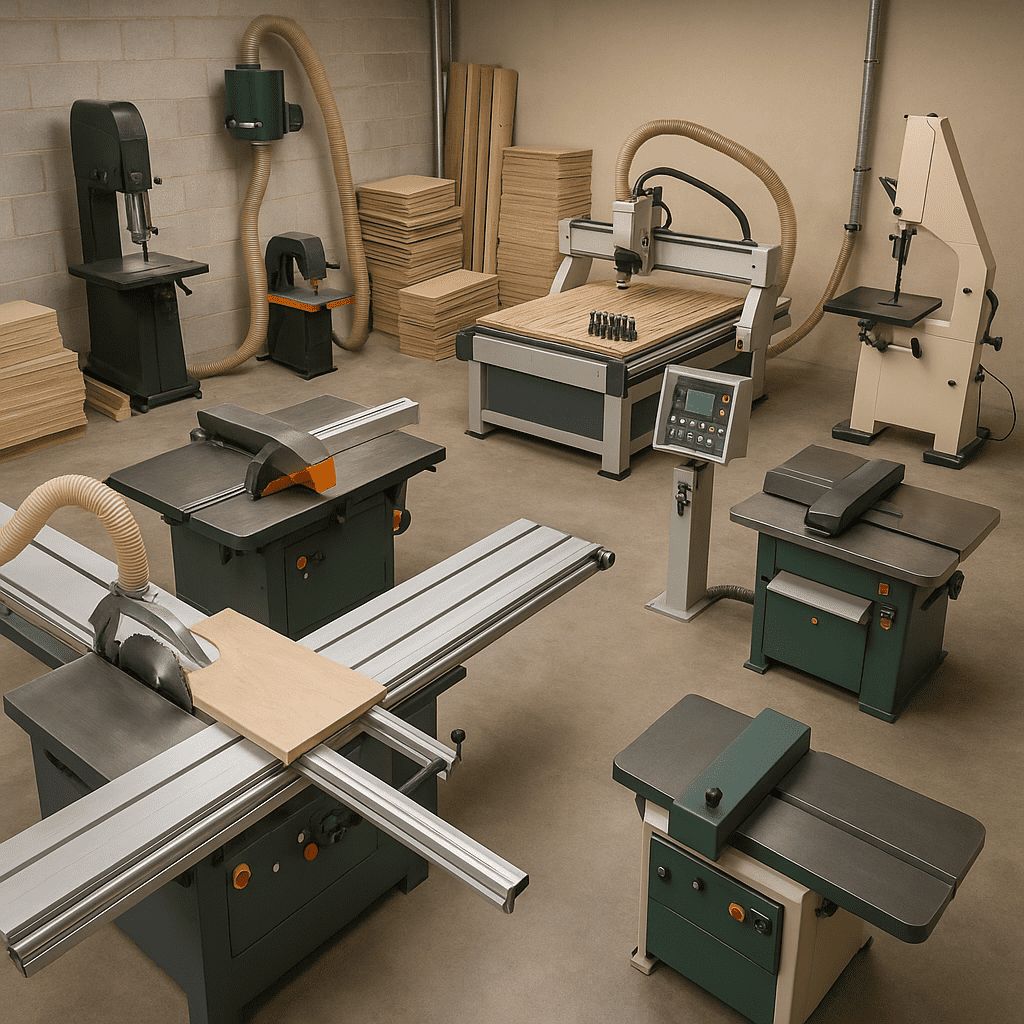
Advantages of sawing sheet materials: why choose exactly this service
Why is ordering wood sawing on the outside often more profitable than sawing yourself? First — precision. The part comes out exactly to size for the project, without “plus or minus a couple of millimetres”. Second — less waste: a well-thought-out nesting cuts the maximum out of a sheet rather than leaving half the board in offcuts. For business this is a direct saving both on raw material and on the time that would otherwise go into reworks.
Separately about series. When there are many parts, it is critical that the hundredth is the same as the first. A CNC machine does not tire and does not “wear in the eye” by the end of the shift — the program holds one size for the whole run. For a large batch this is decisive: a jumble of sizes at assembly turns into a nightmare, and even cutting across the whole series simply rules it out. Hence also fewer defects at the output.
There is a gain in speed too. Having outsourced the cutting, a company gets a ready set of parts and moves straight to assembly, bypassing its own cutting stage. For those working to deadlines — launching a new collection, delivering by a date — this is a tangible head start. Products reach the market faster, and unnecessary operations within one’s own production simply drop away.
And more about money. A CNC panel-sizing saw is a serious investment plus ongoing servicing, replacement of saw blades, operator training. Keeping all of this for irregular sawing is unprofitable. It is easier to pay for a ready result per order: the quality is the same, but there are no capital costs and no headache with the equipment. This is especially true for small workshops and one-off projects.
Advantages of wood sawing with a professional contractor
Working with an experienced sawing contractor gives a business several obvious pluses. The main one is qualification. A person who has been cutting MDF, plywood and MFC for years knows in advance where a board will chip, where it will raise dust, where the feed needs to be reduced. A newcomer collects these rakes on their own material and at their own expense, while a pro simply avoids them. Fewer mistakes — fewer ruined sheets.
The second — the equipment. A specialist contractor has machinery that not everyone would buy for themselves: precise sizing saws, CNC, extraction, a sharp tool on rotation. For a large customer who needs hundreds of identical blanks, this is a guarantee that the whole run will come out to one size. Stability from the first part to the last is exactly what people pay for in serial sawing.
The third — time and effort. Sawing to order takes a whole layer of work off you: no need to stand at the machine yourself, watch the sheet consumption, clear away dust and shavings. The freed-up hands and hours go to what brings in money — assembly, sales, working with clients. For a small team this is sometimes more important than the direct saving on the cut itself.
And the fourth — flexibility. Plans change: a rush order lands, non-standard sizes are needed, the client changes their mind along the way. A contractor knows how to adapt to this — take on work out of turn, recalculate the nesting, propose a solution for an unusual task. Your own production in such situations runs up against machine loading, while outside sawing gives room to manoeuvre.


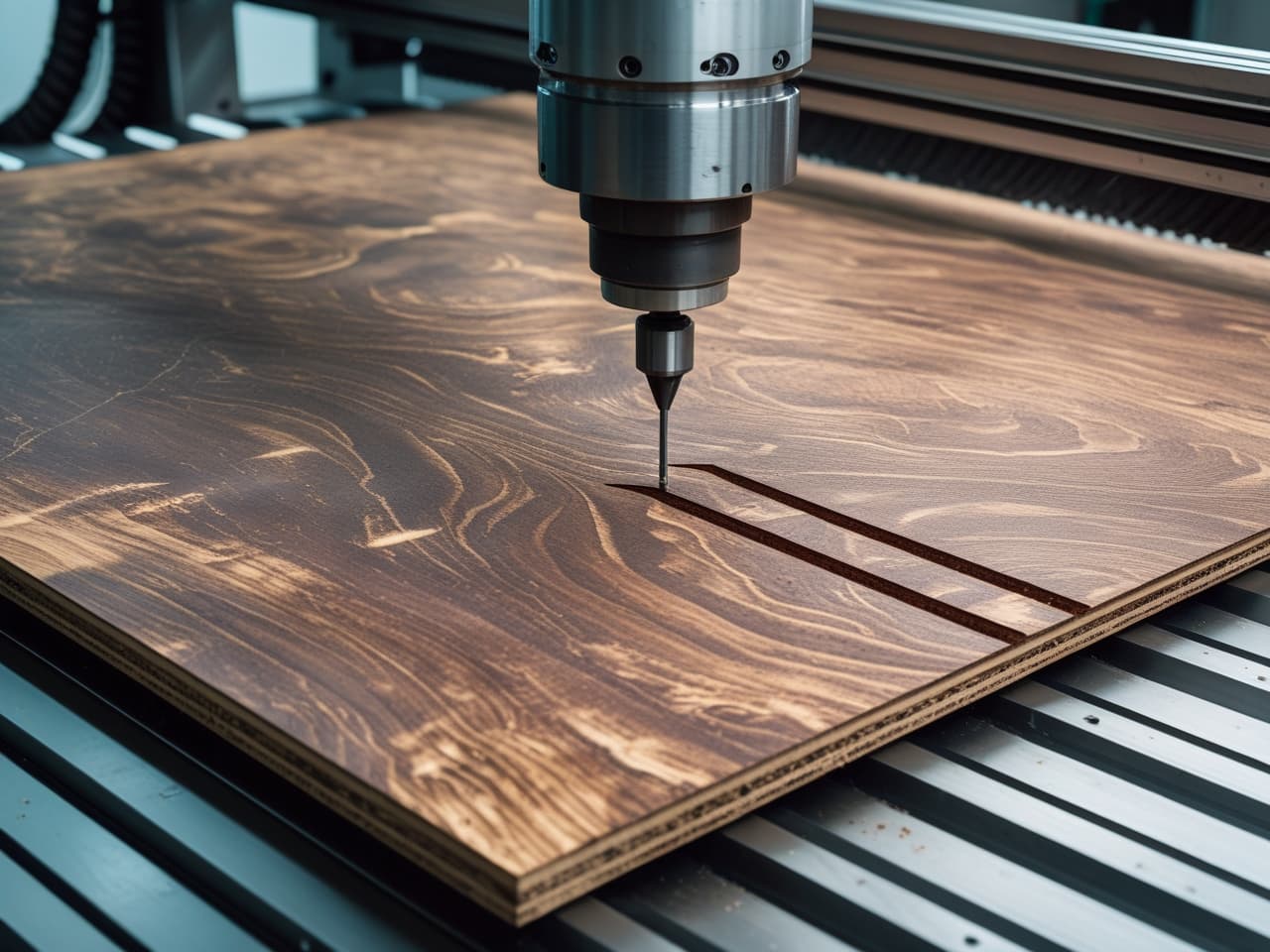


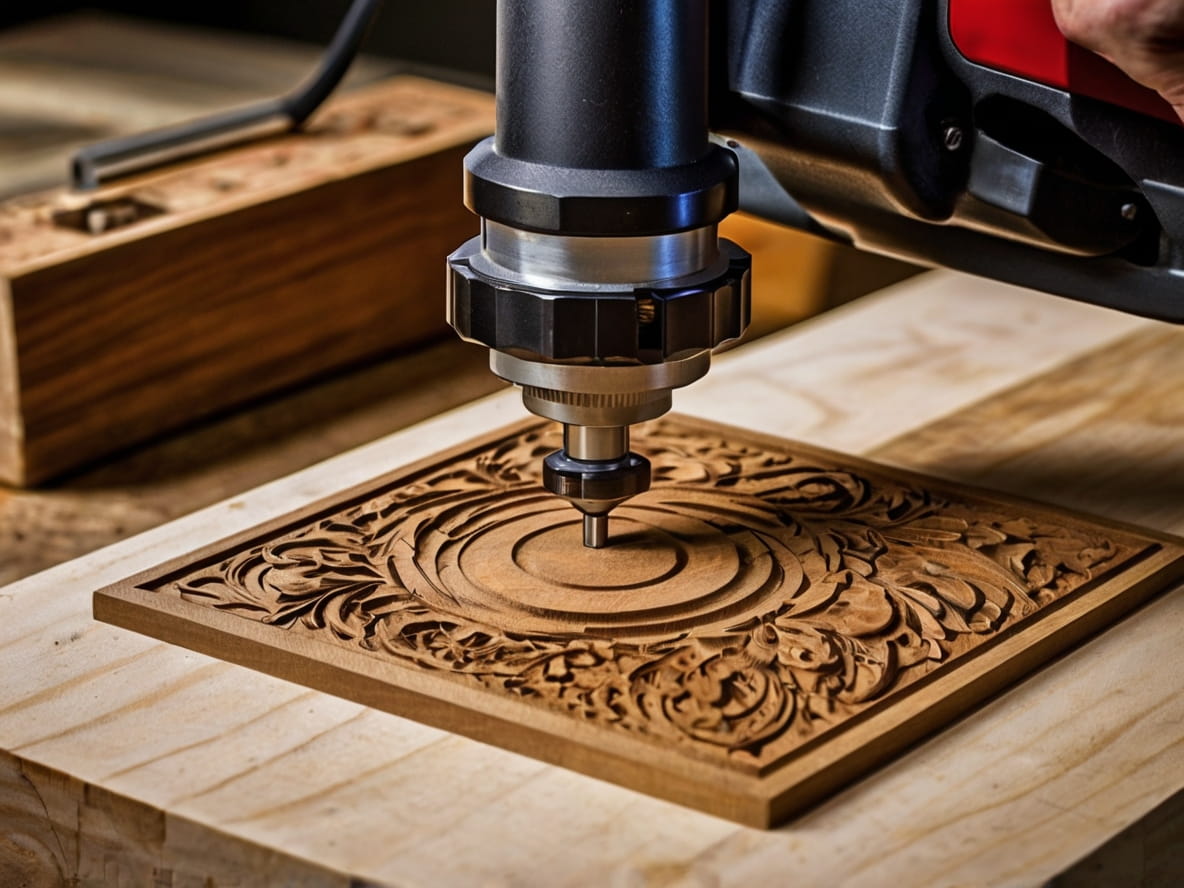


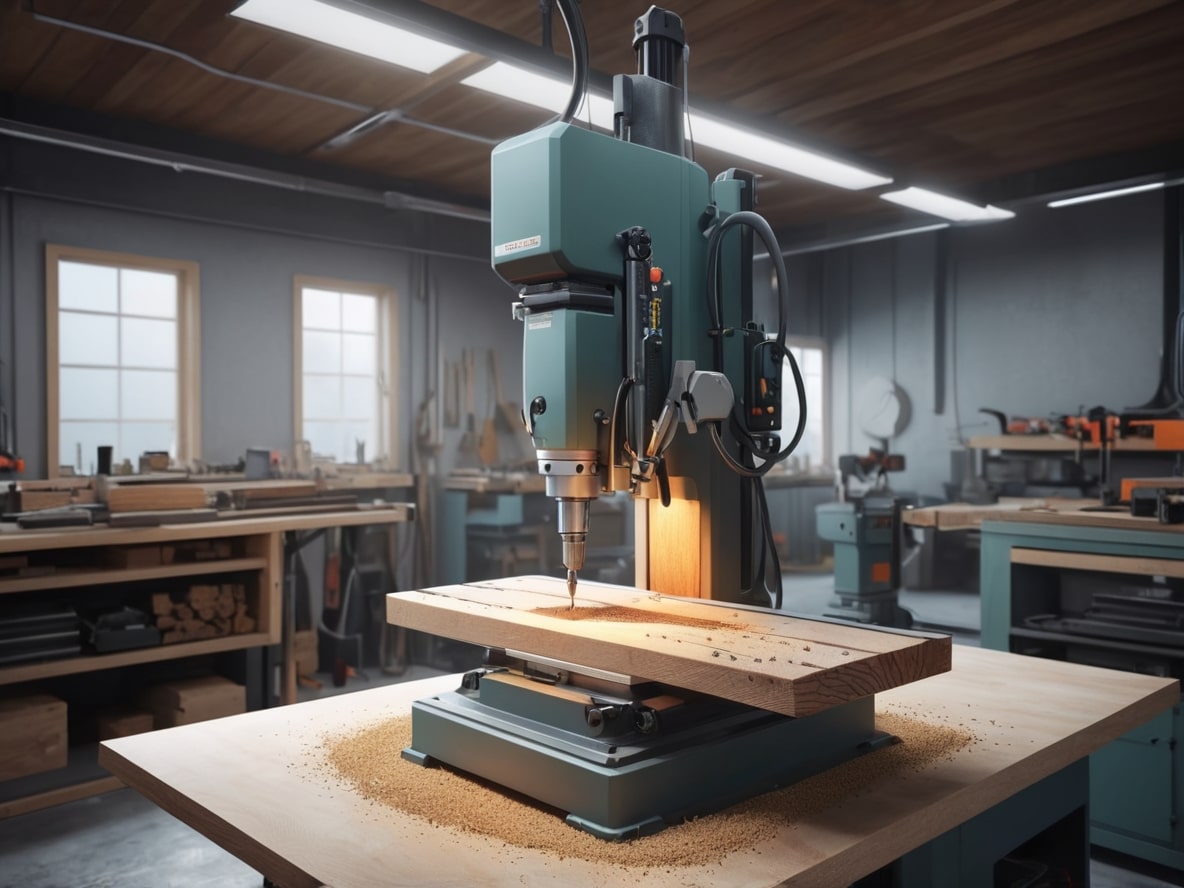


All types of services: variety in machining wood-based materials
Wood sawing is rarely needed on its own — usually a tail of other operations follows it. So alongside the cutting go milling, angled cutting, drilling of openings and other things that come up during the project. The convenience is that all of this is done in one place: after sawing you do not have to look for someone to drill or chamfer. The part goes through the needed stages in a row and comes out already ready for assembly.
Milling and angled cutting are especially in demand in furniture, in making doors and partitions — where not only the size but also the shape matters. Say, a worktop needs a rounded corner, a decorative panel a profiled outline, a frame the edges cut at 45 degrees. Such things cannot be done by eye: you need both a suitable machine and a hand that knows how to use it. This is exactly where the difference between a workshop and a garage shows.
If a finished look is needed rather than a bare blank, surface finishing is added: sanding, lacquer, painting. This is already for those to whom not only the strength but also the appearance of the product matters. A furniture front, a display case, a decorative panel without a finish look like a semi-finished part, and with it — like a finished product. And it is convenient for the customer: the part is both sawn and refined in one place, without passing it to a painter on the outside.
All this additional machining requires careful setup of the machines and attention to detail — otherwise the profiled cut-out goes askew and the lacquer lies in patches. But the result comes out not only beautiful but also durable. Such a format is especially helpful for producers with complex, non-standard projects, where standard parts will not do and each item is counted separately.

Our portfolio — finished products
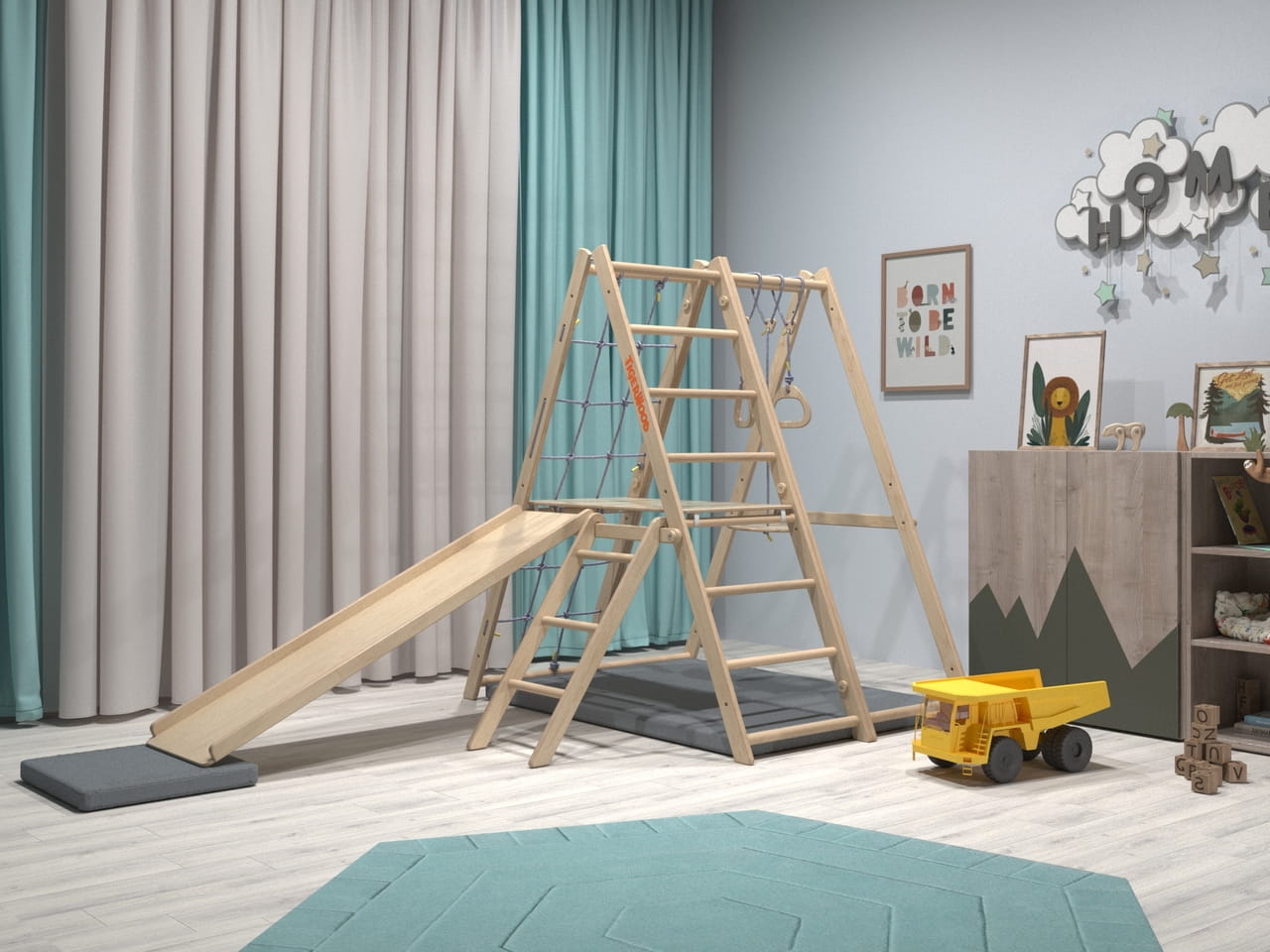
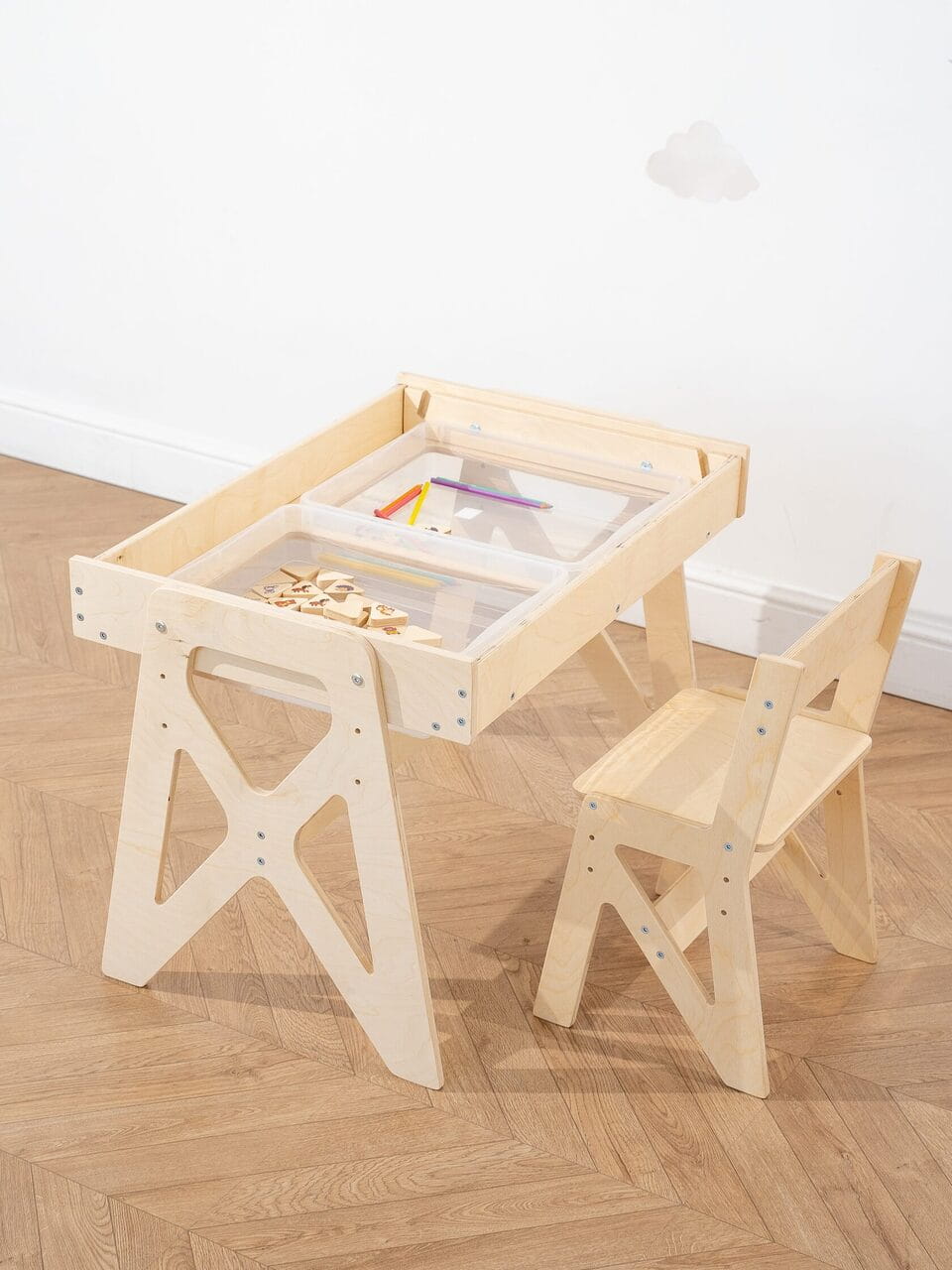


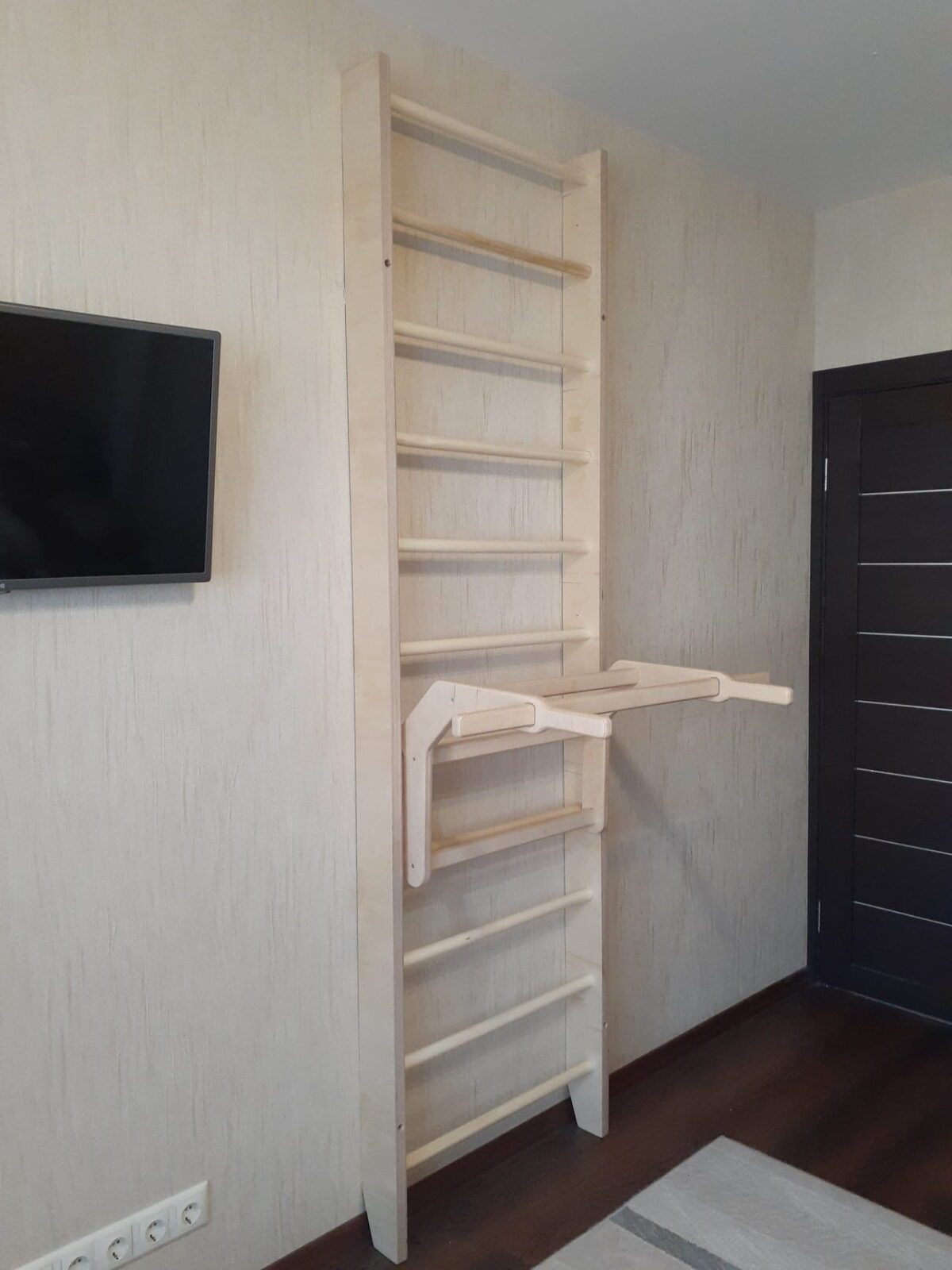
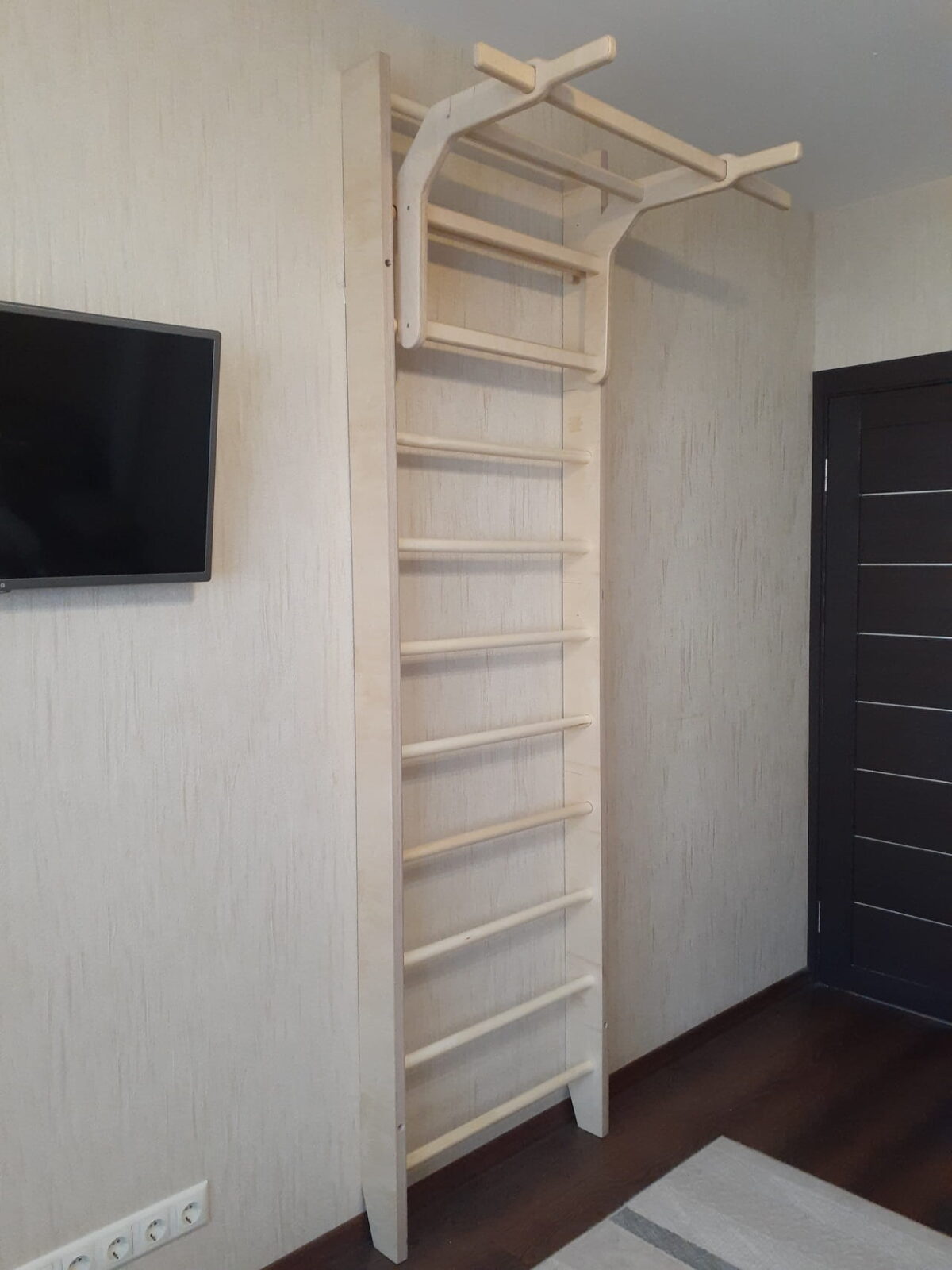
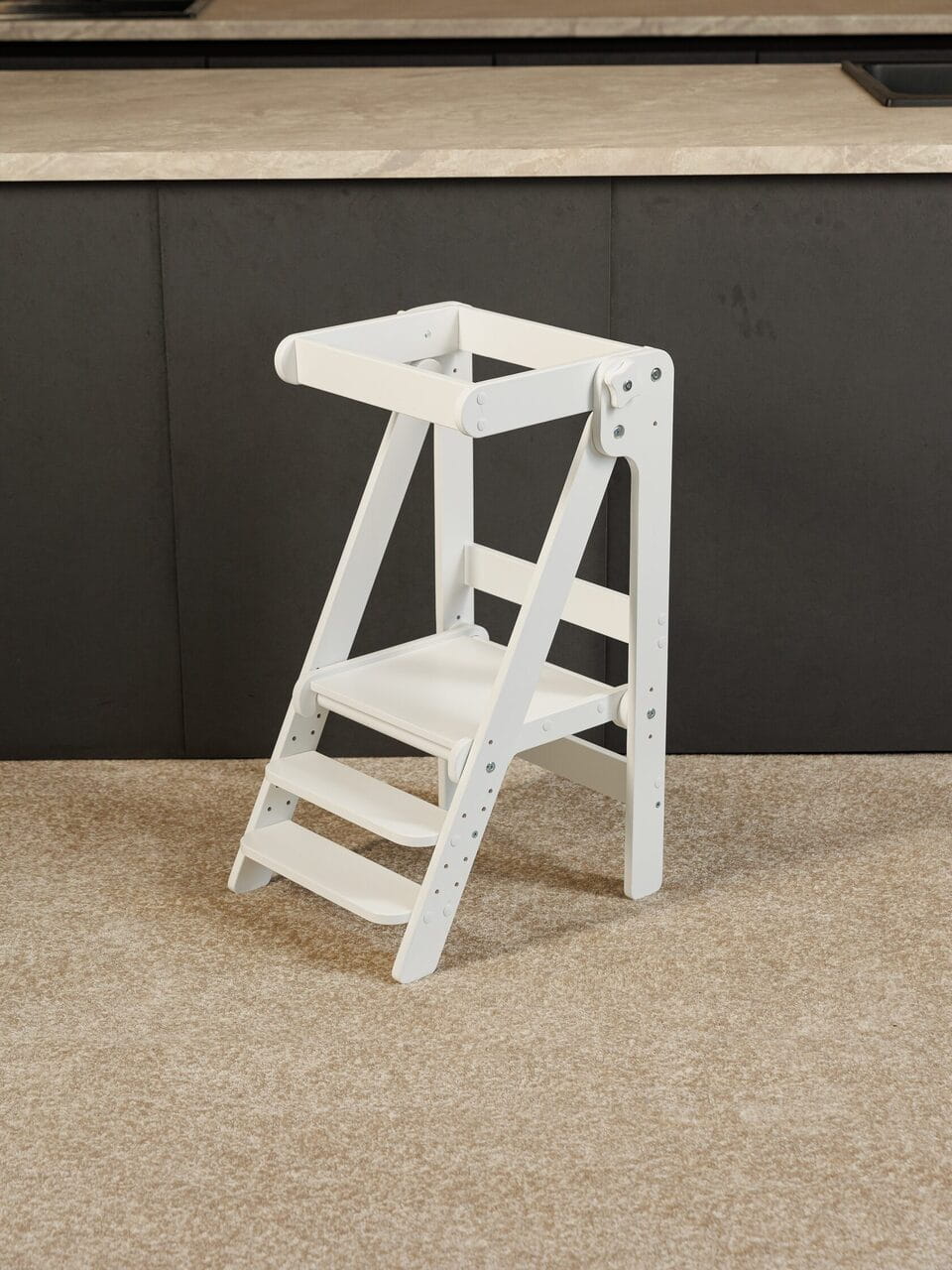




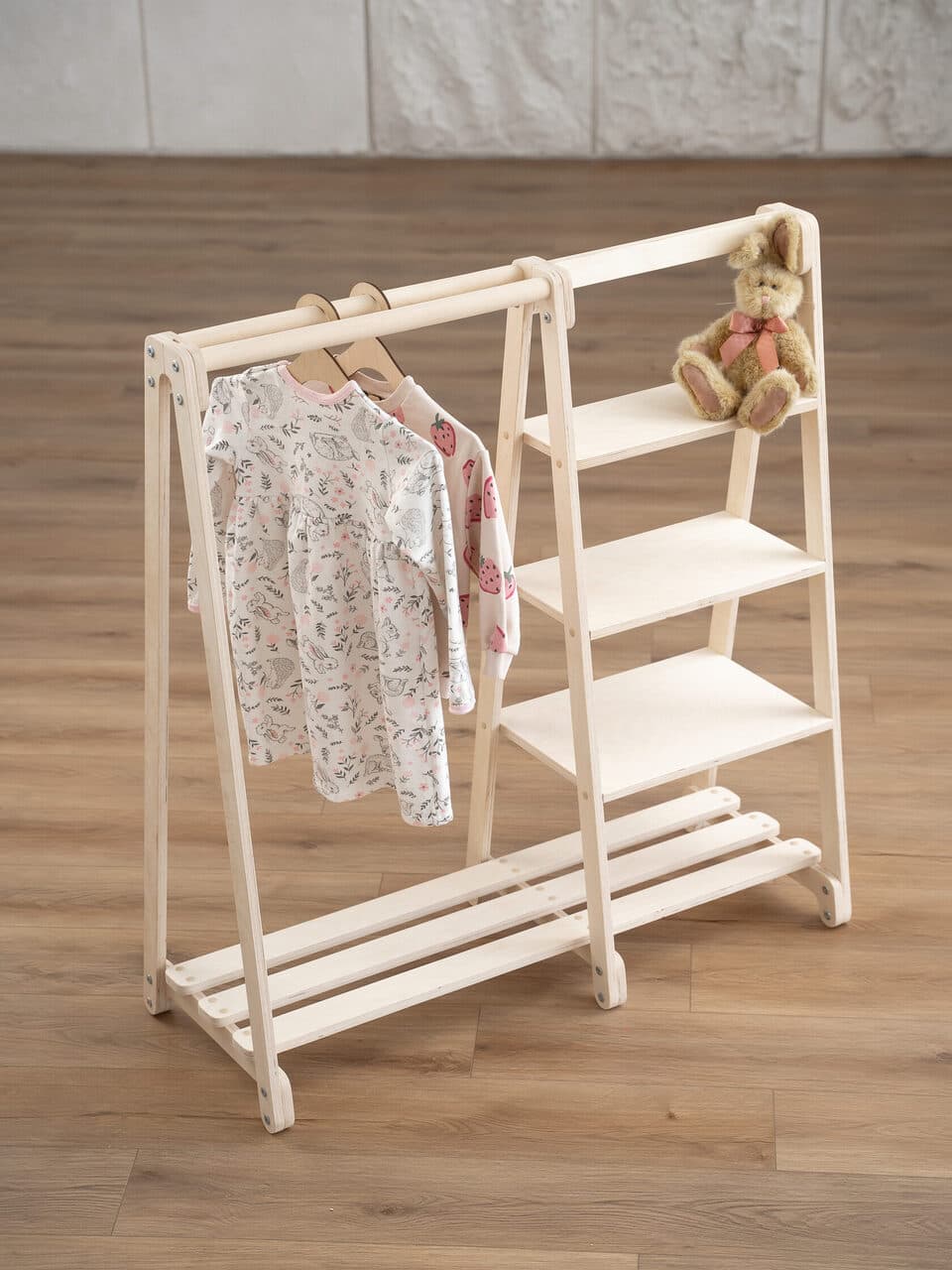
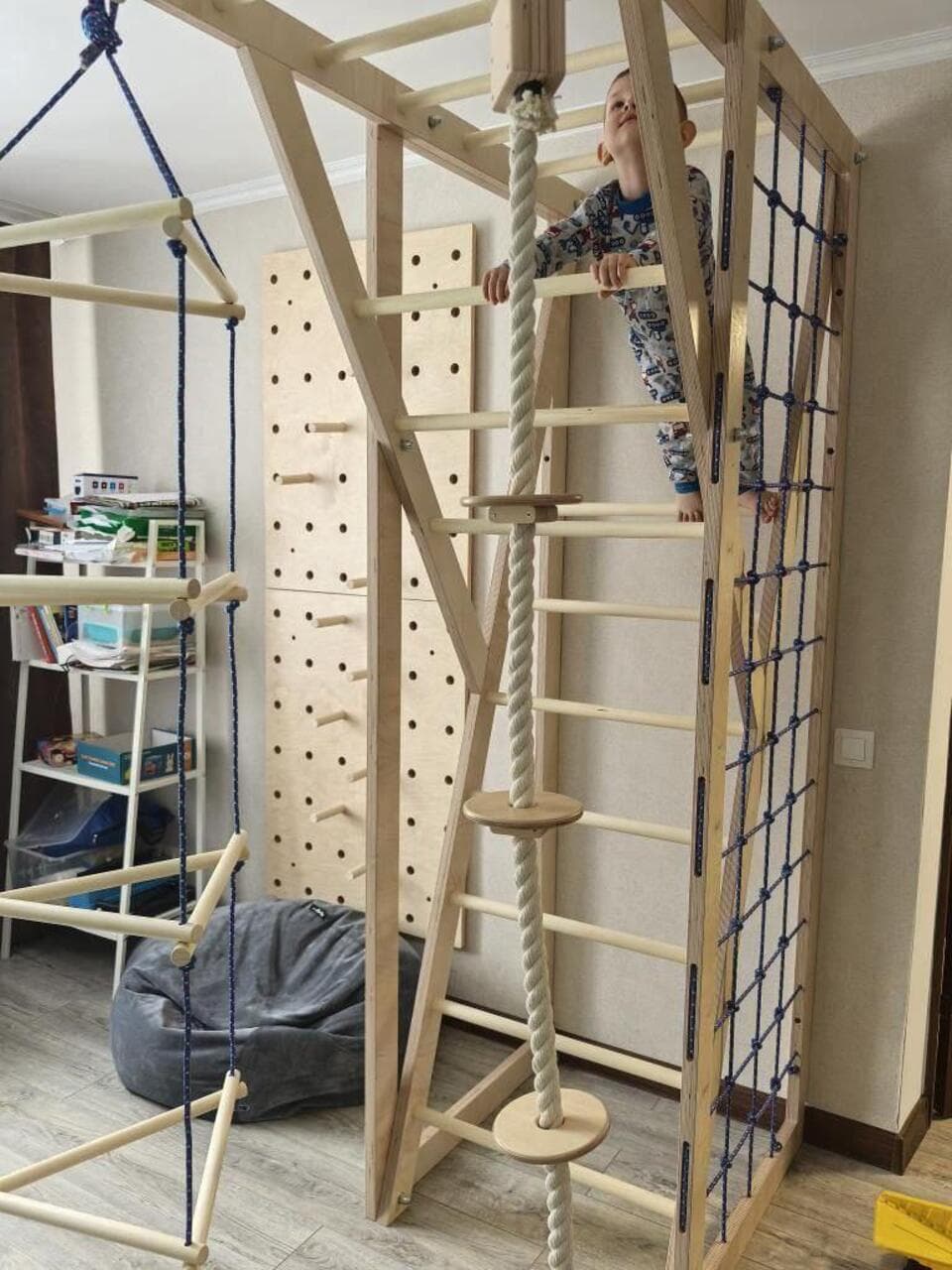
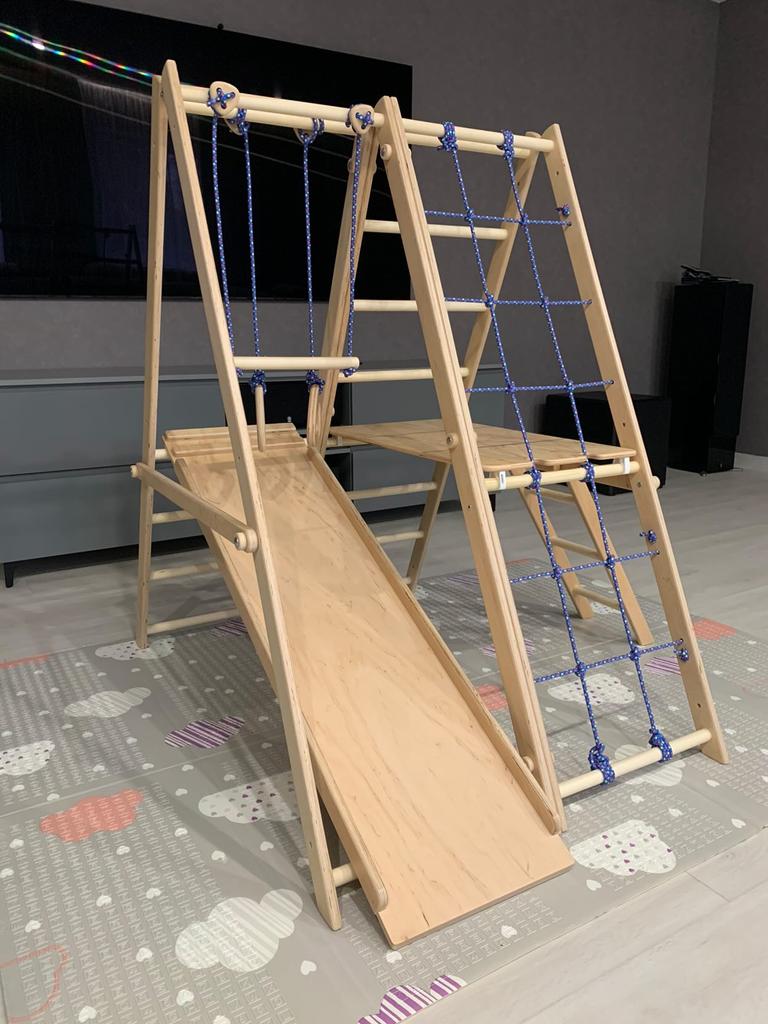

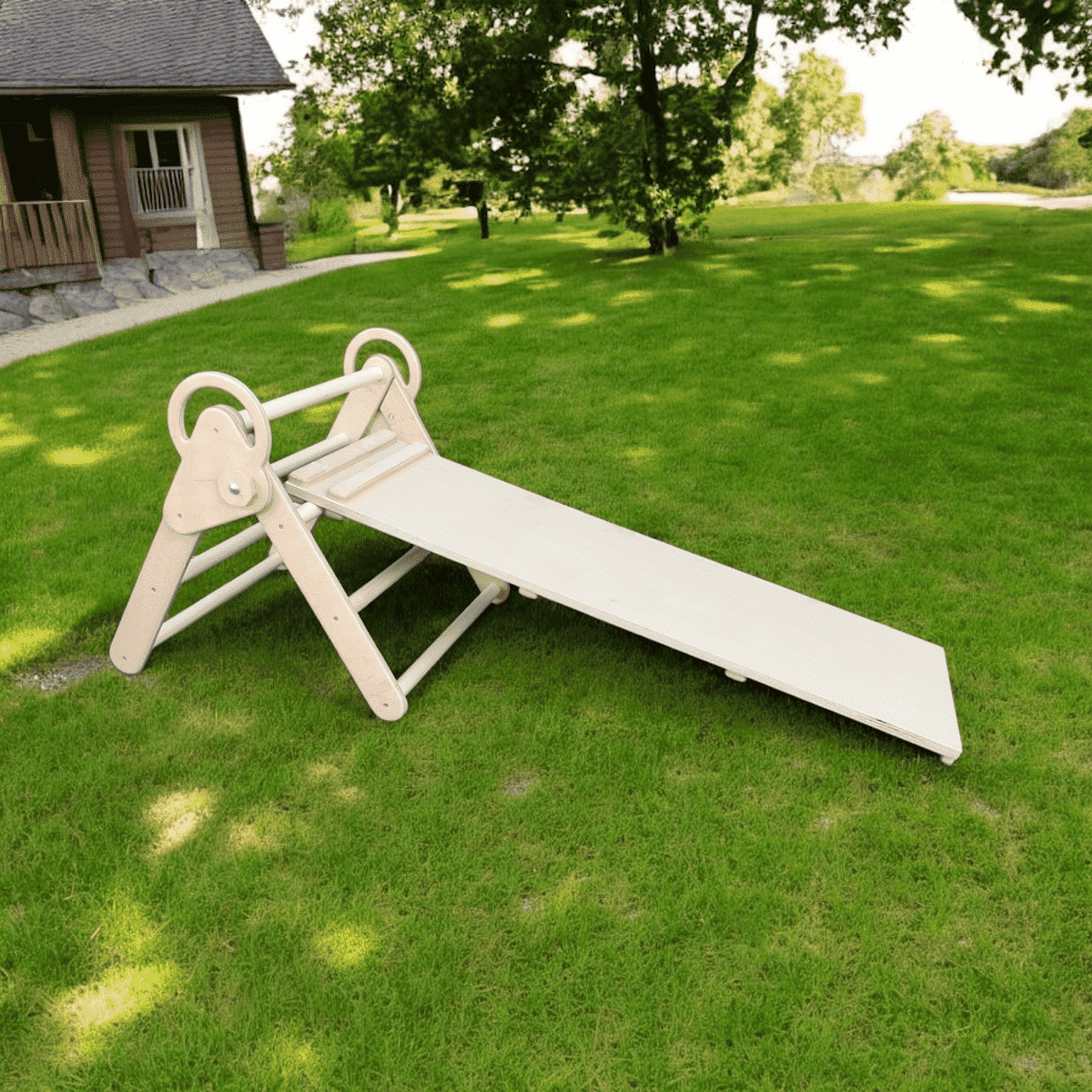

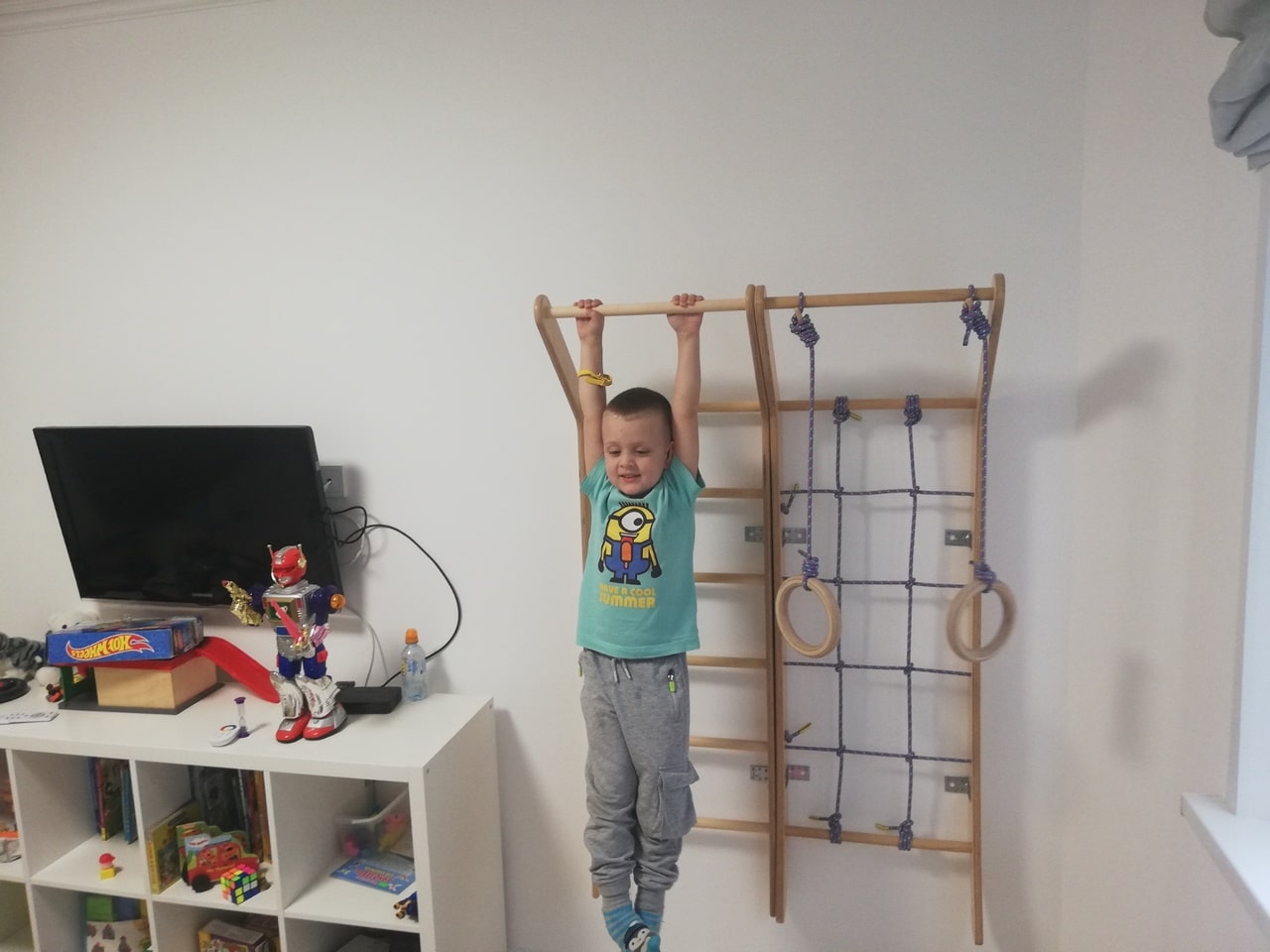


Examples of work: what can be done with the sawing and machining of sheet materials
It is easier to understand the possibilities through concrete examples. Frames, furniture fronts, doors and decorative panels for interiors are sawn from plywood. This material is loved for its combination of strength and the ability to bend: it handles both simple straight parts and complex curved shapes that cannot be made from particleboard. Hence its popularity — from boxes to designer stands.
Particleboard and MFC are, above all, carcass furniture: wardrobes, shelving units, chests of drawers, kitchens. The material is budget-friendly, but with competent sawing it gives the needed rigidity and lasts for years. The ready surface of MFC removes the question of finishing — the part comes with a decorative surface right away. An even cut plus a closed edge markedly speed up assembly: the parts simply join together, without fitting.
MDF is valued for its smooth dense surface, which mills and paints beautifully. Decorative panels, mouldings and carved fronts are made from it — everything where not only strength but also appearance is needed. Sawing with subsequent machining turns the board into a blank for exclusive furniture: MDF takes paint evenly, and the router cuts anything from a fine ornament to deep relief on it.
OSB and edge-glued panel cover another layer of tasks. OSB goes into construction and rough structures where strength for little money matters. Edge-glued panel from glued lamellas is already about solid wood: worktops, shelves, staircases, parts with a natural wood grain. Both materials are sawn both for standard elements and for complex shapes — depending on what the project needs.
Who uses a carpentry workshop’s services

Furniture makers

Interior designers

Advertising companies

Exhibition stand builders

Art studios

Cafés and restaurants

Construction firms

Retail equipment manufacturers
Furniture factories

Private craftsmen

Custom orders

Manufacturing companies

Museums and exhibition halls

Architects

Theatres and film studios

Educational organizations

Children’s products manufacturing

Repair specialists

Online stores

Sole proprietors
How the service of sawing and machining sheet materials works
Who orders sawing of wood and boards? The circle is wide. Furniture makers and builders — that goes without saying. Producers of decor and advertising structures — for profiled parts. Large factories that need an outside contractor for peak load come too, and small workshops without their own machine. Everyone has the same task — to get quality blanks, but the scales and requirements are different for each.
Besides precision, customers value flexibility. One needs it “for yesterday”, another a non-standard size or work with an unusual material. It is good when the contractor does not answer with a templated “we don’t do that” but looks for a solution. Both a large order for a thousand parts and a small series of a dozen — both variants are handled. The price per piece and the deadline change with the volume, but not the very fact that the task will be taken on.
Another point is planning. When the cutting is handed to a reliable contractor with clear deadlines, it is easier to build one’s own schedule: you know when the parts will arrive and gear the assembly and delivery to it. This is especially helpful when launching a new collection or on a rush order, where every shift in time drags the next one along. Predictable sawing removes part of this frazzle.
All the features of the sheet-material sawing service and its benefits for business
To bring it all together: sawing of wood and boards is the neat machining of MDF, plywood, particleboard, MFC, OSB and edge-glued panel to the required size. The service rests on three pillars — precision, speed, saving. For furniture makers it simplifies assembly, for builders it gives ready elements, for decor producers — parts of any shape. And for everyone at once it saves material thanks to competent nesting. Below — a bit more detail on each of these pluses.
Precision is the foundation of everything. CNC machines cut by program, so the part comes out exactly to the set size and shape, whether one piece or a thousand. This is equally important for a large production and a private individual: a skewed blank spoils the assembly regardless of scale. A stable, repeatable cut is essentially what people turn to professional sawing for.
Speed is the second trump card. When the parts arrive precise, assembly goes without stopping for fitting: put it up, join it, move on. For companies living by tight deadlines this is critical — every hour on reworking eats into the schedule. A precise cut removes this loss at the root, so the finished product is assembled and installed noticeably faster.
Saving on material is the third plus, and often an underrated one. The program lays the parts out on the sheet so that a minimum of offcuts remains — where a newcomer leaves half the board as waste, an optimised cutting plan carves out a couple more parts. At volume this is a direct saving on raw material, and at the same time less rubbish to cart away and dispose of.
Finally, flexibility. One and the same sawing serves both a series and a one-off order — you can release a batch of popular furniture and immediately take on a single project for a specific client. For a business this is the ability to broaden the range and respond quickly to new market demands without rebuilding production from scratch each time.
And at the base of it all — people and machinery. An experienced operator plus sound, precise equipment give the result for which sawing is ordered on the outside in the first place. When cutting, edge and finishing go in one chain under common control, the customer gets predictable quality at every step — without surprises on unpacking and without reworks. That is exactly why wood sawing remains the first operation people start with, entrusting it to professionals.
Sawing of wood and boards: a detailed breakdown for the customer
Below — what usually gets clarified in correspondence with a manager, gathered in one place. Which material is cut how, what the price is made up of, how long to wait and where customers most often stumble. Useful both for those ordering sawing for the first time and for those who want to pay only for what is needed.
Materials and features of the cut
Each board has its own temperament, and the edge that comes out and how much scrap there is depend on it. We have put together a short cheat sheet: what the material is, what to expect of it in sawing and where it is usually used.
| Material | Feature in sawing | Where it is used |
|---|---|---|
| 🟤 MDF | Dense, fears chips — cut carefully | Painted fronts, decor, mouldings |
| ⬜ MFC | Raises a lot of dust, a sharp saw and extraction matter | Carcass furniture, kitchens, wardrobes |
| 🪵 Plywood | Layered, prone to tearing at the exit | Frames, curved shapes, stands |
| 🟫 Particleboard | Crumbles at the edge without setup | Budget furniture, bases |
| 🔶 OSB | Heterogeneous structure, rougher cut | Construction, rough structures |
| 🌳 Edge-glued panel | Solid wood, cleanliness of the end matters | Worktops, shelves, staircases |
Not sure what to choose — describe the task and the conditions where the part will stand. It often turns out that a budget material will do instead of an expensive one, and the result looks no different.
What types of sawing there are
The word “sawing” hides several different operations behind it. Here are the main ones ordered most often.
- ➡️ Straight cut. Ripping a sheet into rectangular parts — the most common task.
- 📐 Angled cut. Cutting edges at 45° for frames and joints.
- 🌀 Profiled outline. Curved parts and cut-outs on CNC.
- 🕳️ Openings and recesses. For hardware, services, fasteners.
- 🔲 Cutting by plan. Many parts from a sheet with waste optimisation.
What the sawing price is made up of
It is hard to name an exact sum without details, and that is honest, not an excuse. The price is assembled from several parts, each of which can be estimated in advance.
- 📏 Number of cuts. The more parts and lines, the higher the volume of work.
- 🧱 Material. Its cost plus consumption taking offcuts into account.
- 📐 Complexity. A straight cut is cheaper than a profiled outline and openings.
- 🔁 Run size. A series works out more favourable per part than a single piece.
- 🎨 Additional machining. Edge, milling, painting are counted separately.
- ⏱️ Urgency. Work out of turn is more expensive than usual.
The simplest way to save is to send a clean drawing and not rush the deadline. Reworks due to inaccurate data and the emergency mode are exactly what add extra percentages to the estimate.
Deadlines by type of order
The exact date is calculated per order, but the rough guides from experience are these. They help to understand whether the sawing will make it in time for your assembly or installation schedule.
| Type of order | Rough deadline guide | Example |
|---|---|---|
| ✂️ Simple ripping | 1–2 days | Cutting MFC for a wardrobe |
| 🕳️ Cut with openings | 2–3 days | Parts for hardware |
| 🌀 Profiled outline | 3–5 days | Fronts with rounding |
| 🎨 Cut with finishing | 5–7 days | Painted panel |
| 📦 Serial batch | by agreement | A set for a furniture line |
Common mistakes when ordering sawing
Most problems arise not at the machine but when setting the task. Here is what most often gets in the way of a first-time result.
- ❌ Sizes “from memory”. One wrong measurement — and a re-cut of the whole part. Better to measure twice.
- ❌ Forgotten allowances. No gap for the edge or assembly — the parts do not come together.
- ❌ Saving on thickness. A board that is too thin flexes under load.
- ❌ No cutting plan. Without a parts plan the material consumption grows.
- ❌ Urgency at the last moment. A rush raises both the price and the risk of error.
How to prepare a sawing request
The clearer the inputs, the fewer clarifications and the faster the calculation. A little preparation on the customer’s side saves time for both sides.
- 📝 Describe what the parts are and what they are for.
- 📐 Attach dimensions or a drawing — it can be freehand, but with real figures.
- 🧱 State the material and thickness or say that it should be chosen for you.
- 🔢 Name the quantity — a single part or a batch.
- 🎨 Clarify whether an edge, milling or finishing is needed.
- 📅 Say the desired date if the order is tied to an event.
Cutting optimisation: how material is saved
The nesting deserves a separate word. The program takes the list of your parts and arranges them on the sheet like a jigsaw — densely, with minimal gaps between cuts. The difference from cutting “by eye” can be substantial: where a newcomer leaves half the board in offcuts, optimisation carves out several more parts. On a single sheet this is pennies, but on a batch of dozens of boards — whole saved sheets and less rubbish to cart away. So on a large order wood sawing almost always goes through a calculated plan rather than at random.
Edge and end machining
The cut is half the job, the other half is often about the end. In particleboard and MDF the open edge is loose: it fears moisture, crumbles and looks unfinished. So after sawing the edge is either covered with banding or treated, so that the part lasts longer and looks tidier. For a furniture front or a display case this is not a luxury but a necessity — it is precisely by the edge that you can most often tell where a professional worked and where not.
Three examples of sawing orders
A kitchen from MFC. The customer sent the dimensions of the carcasses. From them a cutting plan was drawn up, the sheets were ripped into parts, the edge was closed. The output is a ready set that only needs to be assembled with confirmat screws. Simple ripping, a couple of days’ work, minimal waste thanks to the nesting.
Stands from plywood. An advertising agency needed a batch of identical stands with a profiled cut-out for a logo. Here there is no getting by without CNC: the outline is cut by program, all parts come out like twins. An even cut plus neat cut-outs — and the stands are ready for assembly and painting.
A worktop from edge-glued panel. A private client ordered a worktop from edge-glued panel with an angled cut and a rounded edge. Solid wood requires a clean end, so both the machine setup and the subsequent sanding matter. The result is a solid part with a natural grain, ready for oil.
Three different orders — but the logic is one: task, cutting calculation, cut, inspection, and edge and finishing if needed. Only the material and the set of operations change. It is precisely this predictability that makes it possible to take on both a kitchen, and stands, and a one-off worktop, without rebuilding the process for each case.
Your material or ours
Both variants are handled. You can bring your own board — before cutting it is inspected for suitability: the geometry, the moisture, the absence of delamination are checked. Or you can have the material bought for the project: then there is less risk of getting a warped sheet, and all responsibility for quality is on one side. Which is more profitable depends on whether you have access to the needed material at an adequate price or it is easier to entrust this to the contractor.
Sawing, cutting and ripping: what the difference is
In everyday speech these words are often confused, though their shades differ. Ripping is the lengthwise cutting of a board or sheet into strips, along the grain. Cutting is the nesting and cutting out of parts of the needed shape from a sheet, often with optimisation. Sawing is the broadest concept, it covers both, any cutting of material into parts. In practice the customer need not juggle the terms: it is enough to explain what needs to come out, and how to call it technically is the contractor’s concern.
A panel-sizing saw or CNC
Two main tools solve different tasks, and the choice between them is not a question of “which is better” but of “what is needed”. The table below shows where each is stronger.
| Criterion | 📏 Sizing saw | 🤖 CNC |
|---|---|---|
| Straight cuts of a sheet | Fast and clean | Also can |
| Profiled outline | No | Yes |
| Openings and recesses | Limited | Yes |
| Speed on straight cutting | High | Medium |
| Repeatability on a series | Good | Ideal |
To put it simply, for ripping a stack of sheets into rectangles a sizing saw is faster, and for parts with a complex outline, openings and identical geometry in a series — CNC. Often both are used in one order: first the sheet is cut on the sizing saw, then CNC adds the profiled cut-outs. That is how a clean and precise result is achieved within a reasonable time.
Who needs sawing: industries and tasks
To try the service on for your own field, here is a summary of typical requests by industry. It shows how varied the tasks are that are covered by one and the same cut.
| Industry | What is cut | Material |
|---|---|---|
| 🪑 Furniture | Carcasses, fronts, shelves, worktops | MFC, MDF, panel |
| 🛍️ Retail | Display cases, stands, shelving units | MFC, plywood |
| 📢 Advertising | Stands, letters, signs | Plywood, MDF, plastic |
| 🏠 Interior | Panels, inserts, frames | MDF, solid wood |
| 🏗️ Construction | Frames, rough structures | OSB, plywood |
| 🏭 Production | Technical parts, packaging | Plywood, hardboard |
If your task is not in the table — that is not a refusal. Non-standard requests are the most interesting: it is enough to describe the needed result, and a solution will be found from the same operations in a different combination.
A one-off order or ongoing cooperation
Cutting is equally open to those who have come for a single part and to those who need a contractor for the long term. A one-off order is about closing a specific task quickly: rip the sheets, cut out a couple of fronts. Described, agreed, collected — without commitments. Ongoing cooperation is convenient for furniture workshops and retail chains: it is easier to keep one trusted source of parts than to explain the requirements to a new maker each time. A familiar contractor does not need to be told about your standards anew — fewer approvals, predictable quality, priority in the busy season.
Myths about sawing to order
A few stereotypes have built up around the service, because of which people put off getting in touch. Let us sort out the hardy ones.
- 💭 “They won’t take a single part.” They will. A one-off cut is an everyday matter, not a favour.
- 💭 “You can’t use your own material.” You can. It will be checked and put into the work.
- 💭 “There’s no point coming without a drawing.” Dimensions and a description are enough, the cutting plan will be drawn up for you.
- 💭 “A handsaw at home is just as good.” You cannot rip a board evenly and without chips with a hand tool.
- 💭 “From another city it’s unrealistic.” The parts will be made and sent by a transport company.
How to tell a quality cut
Having received the parts, it is easy to check the work yourself. Here is what to look at.
- ✅ The edge is even, without chips or ragged sections.
- ✅ The dimensions match the order to the millimetre.
- ✅ The corners are square where they should be square.
- ✅ The parts of one batch are identical to each other.
- ✅ The end is not charred or melted by a blunt saw.
Quality control and a guarantee of the result
Control is built into the process, not tacked on at the end for show. At the intake the drawing, dimensions and material are checked — the wrong decor or an excess thickness is caught before cutting. Along the way, intermediate measurements are taken at the responsible operations. At the output the parts are checked as a whole: dimensions, corners, cleanliness of the edge. Since the whole order passes through one pair of hands, in a contentious moment there is no need to find out who is to blame — responsibility is on one side. For the customer this is the real guarantee: it is clear whom to ask.
To put it briefly: sawing of wood and boards is precise parts to size without chips, with a well-thought-out nesting and, if desired, with edge and finishing in one place. It only remains to send the dimensions or a drawing — the rest will be calculated, broken down into stages and brought to finished blanks, whether a single part or a batch for a whole line.
Material preparation: why it matters
The quality of the cut begins even before the machine — with the condition of the board itself. A damp sheet of particleboard cuts worse than a dry one: the edge comes out loose, and after drying the part may warp. So the material should preferably be stored in a dry room on an even surface, without bends or load on top. If the board is brought by the customer, it is inspected: a warped, delaminated or damp sheet is better identified before cutting than to spoil the work and then argue about the causes. A trifle rarely thought about, but it is precisely this that often determines whether the edge will be perfect.
What affects the cleanliness of the edge
An even edge without chips is the main sign of a good cut, and it depends on several things at once. We have put them together so it is clear what the result is made up of.
- 🔪 Sharpness of the saw. A blunt blade tears and heats the material, leaving tears.
- ⚙️ Feed rate. Too fast — chips, too slow — scorching.
- 🧩 Type of material. Brittle MFC requires more care than plywood.
- 📐 Machine setup. A correct scoring unit closes the lower edge.
- 🧹 Cleanliness of the table. Shavings under the sheet are a cause of an uneven cut.
In essence, a clean edge is the sum of small details. That is exactly why the same sheet is cut differently by an experienced workshop and a random garage: the machinery seems similar, but the result is visible to the naked eye.
Cutting for edge banding and hardware boring
Parts are often cut not “just so” but for further operations — edge banding and hardware boring. Here it is important to build this into the size in advance: the edge tape adds fractions of a millimetre, and if it is forgotten, the finished part will turn out slightly bigger than calculated. The same with openings for confirmat screws and hinges — they are more convenient to mark out and drill at the same stage, while the part is in the work. When the cut, edge and boring are planned together, everything simply comes together at assembly, without fitting with a file in place.
Delivery of finished parts
Finished blanks still have to be delivered without losses, and that is a separate concern. Thin panels, long parts and fragile materials like acrylic glass require protection from impacts and bending. The packing is chosen for the specific cargo: in one case film and corner protectors are enough, in another a rigid crate is needed. Dispatch is possible to any region across all of Europe by a transport company — for a client from another city the process is no more complex than for a neighbouring one, the only difference is the method of delivery. There is little use in a perfect cut if the part arrives with a knocked-off corner, so the packing is treated as seriously as the work itself.
Waste and ecology
Any cut leaves offcuts and shavings, and the question is how much exactly. An optimised nesting of parts reduces the amount of waste right from the start — this is both a saving on material and less rubbish to cart away. Shavings and dust are collected by extraction rather than settling all over the workshop, which matters both for cleanliness of work and for people’s health. Large offcuts often go into use for small parts rather than straight to scrap. Such an approach is beneficial on all sides: the customer pays less for raw material, and the production stays tidy and predictable.
A few more common questions
Is a ready cutting file needed? No. A list of parts with dimensions is enough — the plan will be drawn up for you. A ready file will only speed up the calculation.
Can the order be changed after calculation? Before it goes into the work — yes, the dimensions and quantity can still be adjusted. After cutting has begun, changes are already harder and may affect the deadline.
What to do with material leftovers? Large offcuts are usually returned to the customer together with the parts — they can later make small elements or a repair reserve.
Is laminated board cut without chips? Yes, with a sharp tool and a scoring unit the edge of MFC comes out clean. This is exactly the case where the machine setup matters.
Order the cut or saw yourself
The temptation to rip a sheet with your own efforts is understandable, especially if a circular saw is on hand. But this path has its own price. Let us compare honestly, without leaning to one side.
| Criterion | 🔨 By your own efforts | 🛠️ To order |
|---|---|---|
| Precision | Depends on skill | Stable, to fractions of a mm |
| Edge | Often with chips | Even, clean |
| Speed on a batch | Slow | Fast |
| Waste | More, without nesting | Less, optimisation |
| Equipment | Your own, servicing on you | Ready, at the contractor’s |
For one or two simple parts your own hands are quite reasonable. But as soon as it is about a batch, precise dimensions or laminated board, where a chip immediately catches the eye, the outside cut usually wins — in quality, speed and ultimately in money, if you count the spoiled material and the time spent.
How to estimate the quantity of material
A frequent newcomer’s question is how many sheets to buy. By eye it is easy to miss in both directions. It is easier to hand over a list of parts with dimensions, and the nesting calculation itself will show how many boards are needed taking the cuts and inevitable offcuts into account. It is important to allow for a small reserve: one or two percent of the material goes on trimming and possible sheet defects. Better to have an extra piece on hand than to halt the work for want of half a part. On a serial order such a calculation especially pays off — it saves both money and unnecessary trips for a board.
Board thickness and what it affects
Thickness is not a trifle but an important parameter worth thinking through in advance. A board that is too thin flexes under load: a shelf sags, a worktop “goes”. One that is too thick weighs down the structure and makes the material dearer without need. For shelves and fronts 16–18 mm is usually taken, for loaded worktops — thicker, for back walls and inserts thin hardboard is enough. If in doubt, they will advise based on where the part will stand and what load it will bear. A mistake with thickness surfaces not at once but after a month or two of use, so it is better not to make it at the start.
Bringing it all together, we get a simple picture: a neat cut to size, a well-thought-out nesting, the right thickness and a clean edge — that is what the result is made of, the one people turn to professionals for. It only remains to describe the task and get finished parts with which assembly will go easily and without surprises.
Glossary: sawing terms in plain words
There are plenty of special words around sawing, and the customer can easily get tangled up in them. A short explanation will help to set the task more precisely and to understand what the specialist is talking about.
| Term | What it means |
|---|---|
| ➡️ Rip cut | Sawing along the long side of a sheet or board |
| ⬇️ Cross cut | Sawing across, to size along the length of the part |
| 📐 Allowance | A small reserve of material for further machining |
| 🎯 Reference edge | An even side from which all measurements are taken |
| 🪦 Scoring saw | A small blade that cuts the laminate from below and removes chips |
| 💥 Chip | An edge defect — a tear-out of the coating or fibres at the cut |
| 🗺️ Cutting plan | A layout scheme of parts on the sheet for minimum waste |
Materials and cleanliness of the cut
Not every material cuts equally smoothly. The risk of chipping and the requirements for the tool depend on the structure of the board. A guide to popular materials is in the table.
| Material | Risk of chipping | What helps |
|---|---|---|
| ⬜ MFC | High at the edge | Sharp blade, scoring saw |
| 🟤 MDF | Low, cuts evenly | A clean cut almost always |
| 🪵 Plywood | Medium, layers tear up | Sharp tool, feed without jerks |
| 🌳 Solid wood | Depends on the grain | Accounting for direction, finish sanding |
More questions about wood sawing
Can a single board be sawn? Yes, sawing of wood and boards is taken on from a single part. There is no minimum volume — even one sheet will be cut to your specification.
How precisely is the size held? On a panel-sizing saw and CNC the deviation is minimal, the parts come out to one size. The exact tolerance is agreed for the task at the preparation stage.
Will you close the edge right away? Yes, edge banding usually follows the sawing — the end of the part is closed with tape against moisture and chips. It is a separate operation that is convenient to order in the same place.
How to understand how many sheets are needed? By the cutting plan. The parts are laid out on a standard sheet taking allowances into account, and it is already clear how much material will go and how much will remain in offcuts.
How to prepare a sawing specification
Good sawing begins with a clear specification. The clearer the list of parts, the fewer clarifications and the more precise the cutting. Putting it together is not hard if you keep a few points in mind.
- 📋 A list of parts with dimensions in millimetres: length × width and quantity.
- 🧭 Grain direction, if it matters for the look of the product.
- 🖇️ Where an edge is needed and on which sides — this affects the final size.
- 🧱 Material and thickness: your own or to buy for the order.
- 📐 Allowances, if the part will go for further machining.
Even if the specification is rough, they will help bring it to a working form. But the neater the source, the faster wood sawing turns into finished parts without re-asking and changes along the way.
Common misconceptions about sawing
A few persistent myths circulate around the service, because of which customers either overpay or get the wrong thing. Let us sort them out.
- 💭 “A hand jigsaw is just as good as a machine.” Worse: the cut wanders, the edge is chipped, the size drifts. A machine holds the geometry.
- 💭 “The edge need not be closed.” An open board end draws moisture and crumbles — the edge extends the service life.
- 💭 “The thicker the board, the always better.” Not always: excess thickness is weight and money where a smaller one will do.
- 💭 “Offcuts aren’t my concern.” Competent nesting saves a whole sheet on a large order.
How does sawing differ from cutting and ripping? Sawing is the general name for cutting to size. Cutting is the nesting of parts on a sheet and the cut by it. Ripping is the lengthwise division of a board or bar into narrower ones. In practice these operations often go together.
What affects the cleanliness of the edge most? The sharpness of the tool, the feed rate and the presence of a scoring saw. A blunt blade or a jerk during feed — and chips appear on the laminate. So a clean cut is first of all the discipline of the process, not luck.
Will you deliver the finished parts? Yes, dispatch to any region is possible. The parts are packed so that the edge and corners do not suffer in transit, and the delivery conditions are agreed for the volume and address.
Order the cut or saw yourself
The temptation to saw a sheet with your own efforts is understandable, especially if a circular saw is on hand. But in practice the arithmetic is rarely in favour of the self-made cut, and here is why it is worth weighing both variants.
- ⏱️ Time. A precise cut of a dozen parts by hand is hours of fiddling and fitting.
- 💥 Edge. Without a scoring saw the laminate chips, and the part loses its look.
- 📏 Size. A hand tool wanders — skews show up at assembly.
- 🧱 Waste. Without a cutting plan it is easy to spoil an extra sheet.
- 🪚 Large format. A full-size board is heavy and unsafe to guide straight on your own.
For a couple of simple cuts a home tool will help out. But as soon as there are many parts and precision matters, wood sawing on a machine saves time, material and nerves at assembly. It is often more profitable to hand a sheet over once than to remake your own.
Another plus of professional cutting is predictability. You know the size, the cleanliness of the edge and the deadline in advance, rather than finding out along the way that the blade has gone blunt or the sheet has warped. For a project where the parts must come together, this predictability is usually the deciding argument.
How quickly is sawing usually ready? A simple cut to size fits into one or two days, and a small batch is often handed over the same day by agreement. The deadline depends on the number of parts, the need for an edge and the workload, so an exact date is named for the specific specification. If the order is tied to assembly or installation, it is sensible to leave a small time reserve.
And finally: wood sawing is more convenient to order right away with an eye to the next stage. When it is known that the part will go for edge banding, hardware boring or assembly, the cut is made straight away with the needed allowances and references — and the whole chain comes together without extra fitting.
Repeat orders deserve a separate word. If the specification has already gone through cutting, repeating it is quick and precise — the parameters are saved, and the second batch comes out the same as the first. This helps those who assemble furniture or equipment in series and occasionally buy extra parts for already-finished ones.
What materials can be sawn?
All the popular boards go into the work: MDF, plywood, particleboard, MFC, OSB and edge-glued panel, as well as boards and bars. Hard metals are not sawn — that is already a different story and a different tool.
What sizes of materials can be sawn?
We cut to any sizes according to your data — from small parts to large blanks. The upper limit comes down only to the dimensions of the machine and the sheet: if a part is bigger, it is split into pieces that join at assembly.
Can sawing be ordered to a bespoke project?
Yes, sawing is done to your project — with non-standard sizes, profiled outlines, openings and angled cuts. A drawing or specification is enough; if there is none, the cutting will be calculated on the spot.
How long does sawing of a material take?
The deadline depends on the volume, complexity and material. A simple ripping order is usually ready in 1–2 days, parts with milling and additional machining — longer. An exact date is named at the calculation so that it is realistic.
What technologies are used for sawing materials?
The main tools are panel-sizing saws and CNC. The former give a fast clean cut of a sheet, the latter — a complex outline and repeatability on a series. A chainsaw and a band saw are not used: for precise work they are too rough.
Can surface machining be ordered after sawing?
Yes, after sawing you can order surface machining — sanding, lacquering, painting, as well as an edge and milling. That way the part comes out already finished rather than a semi-finished one, and there is no need to look for a separate maker for the finishing.
Are there minimum volumes for a sawing order?
No, there is no strict minimum. Both a single part, and a small series, and a large batch are taken. The price per piece and the deadline change with the volume, but an order for a couple of blanks here is just as ordinary as for a hundred.
Which materials require a special approach in sawing?
MDF and MFC require special attention: without a precise machine setup and a sharp saw it is easy to get chips and a ragged edge. Plywood and OSB, being layered, also tend to tear up at the exit. A separate cutting mode is chosen for each such material.
What safety measures are taken in sawing?
The work is done in compliance with safety rules: extraction and filters remove the dust (especially from particleboard and MFC), the machines are fitted with guards, and the operator with personal protective equipment. This matters both for people’s health and for the cleanliness of the cut itself.
How can the sawing service be ordered?
Leave a request on the site or call — describe the task, attach dimensions or a drawing. In reply the cutting will be calculated, the price and deadline named. The discussion itself commits you to nothing and helps to estimate the budget straight away.
Reach us in whatever way suits you best
Call us, message us on a messenger app or reach out via social media — choose whichever way suits you
🗺️ We accept orders from clients across all of Europe
💬 Useful information and articles
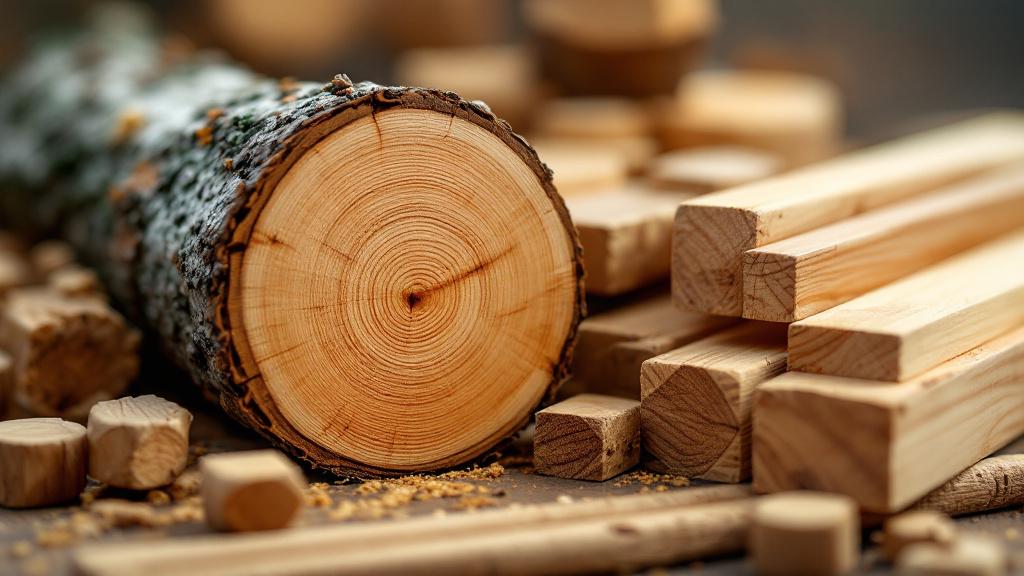
Eco-friendly and safe materials for modern wood production
Eco-friendly and safe materials for modern wood production In recent years we increasingly think about what the things around us are made of. A home, furniture, a floor, a kitchen, a

How to Correctly Choose Between Plywood, MDF, Particleboard, and MFC for Different Tasks
How to Correctly Choose Between Plywood, MDF, Particleboard, and MFC for Different Tasks In the world of woodworking and furniture making, every material has its own story. Plywood, MDF, particleboard, and

Cutting sheet wood materials at different angles: why and how it is done
Cutting sheet wood materials at different angles: why and how it is done Working with wood materials is not just sawing. To get a truly high-quality and durable product, you have

Recommendations for choosing sheet materials for indoor and outdoor projects
Recommendations for choosing sheet materials for indoor and outdoor projects In woodworking, choosing the right sheet material is like laying a foundation for a builder. What you pick at the very