
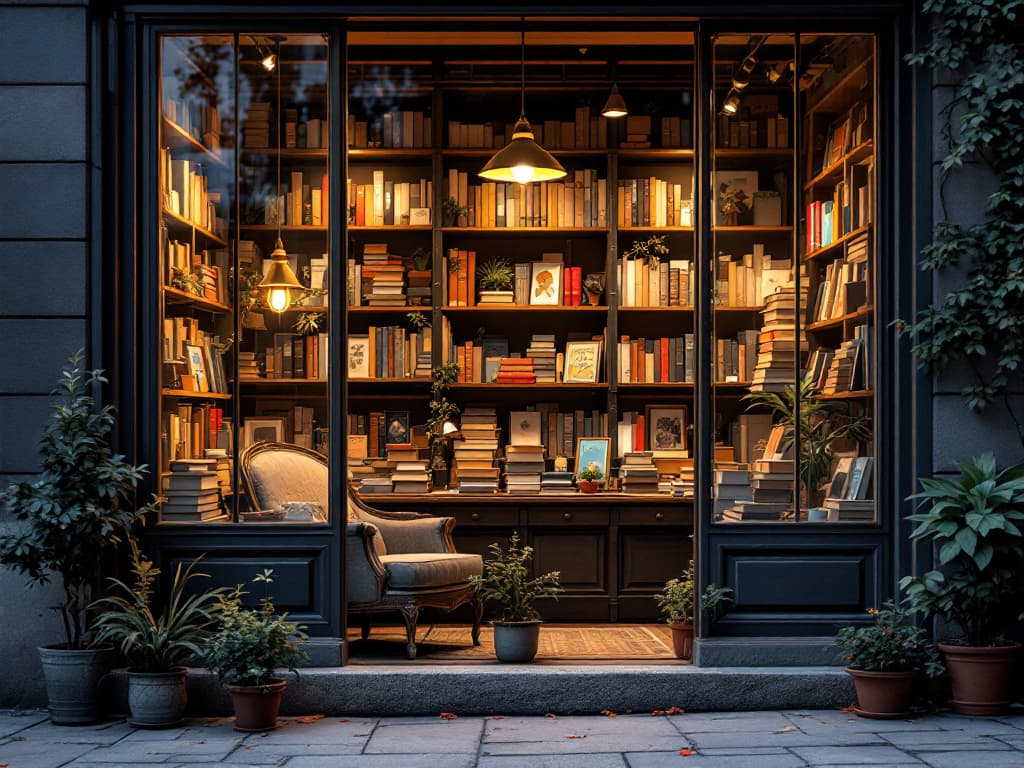
Retail store furniture
Wooden retail furniture means made-to-order display cases, counters, shelving units, checkout zones, island stands, reception desks and display modules built for a specific retail format — from a small boutique to a large chain. We work with MFC, particleboard, MDF, plywood, solid wood and veneer in a range of finishes and colours, engineered for heavy use and safety requirements. Below: what we make, the materials and stages that go into an order, how long it takes and what to look for when buying wholesale for a chain.
Functional solutions: wooden retail furniture
Retail furniture is a category of its own, with its own rules. Here a single item usually plays several roles at once: it presents the goods, serves as a work surface for the sales assistant, stores stock and works for the brand image at the same time. That is why the approach differs from home furniture: every piece is fitted to a specific product and to the sales-floor scenario, rather than pulled off a generic shelf. Wholesale production for retail and chains is exactly about this precise fit.
The formats vary — from modular stands and islands to lit display cases, partitions, counters, wall-mounted systems and information stands. The logic is simple: the furniture has to save floor space and guide the shopper through the store the way the merchandiser intended. It does not just hold the goods, it helps sell them, so the texture of the material, the colour and how the surface looks up close matter here just as much as the geometry.
Materials are chosen for wear, fire and sanitary standards and appearance all at once. The customers are retail chains, marketplace sellers and sole traders fitting out their outlets in batches. Production handles equally well a mass run for a chain with a single standard and one-off solutions for a specific brand where every design detail counts.

Shelves

Display cases

Shelving units
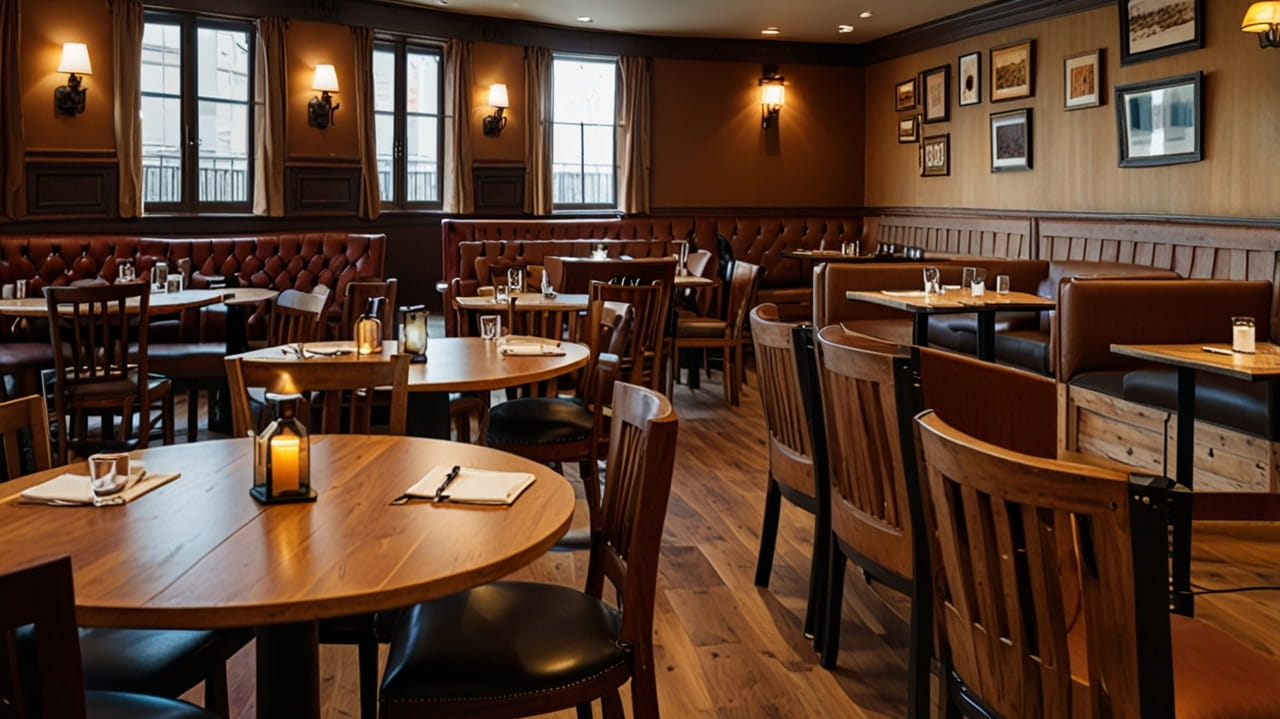
Stands
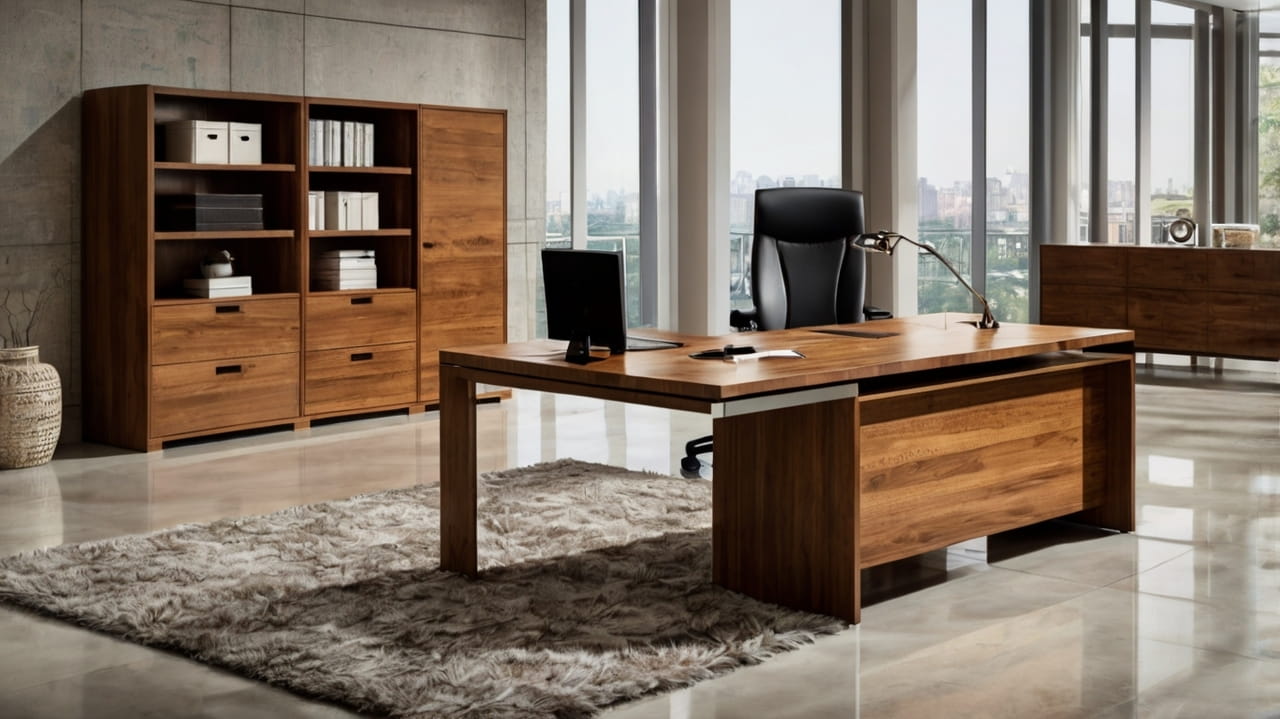
Podiums

Display stands
Panels
Holders
The specifics of making retail furniture: from brief to delivery
Retail furniture influences shopper behaviour more than it seems. It sets the mood of the space and the assistant’s comfort, so there are no trifles here. The first thing looked at in manufacturing is wear resistance. A display case or counter is touched by hundreds of hands a day, goods are constantly moved along the shelves, the checkout zone gets bumped by trolleys. All of this has to bear the load for years without working loose or peeling.
Second — function for a specific product. A clothing rack with rails and seasonal re-hanging is one thing; a module for groceries, where hygiene and easy cleaning matter, is quite another. Furniture is designed around what will lie or hang on it, not the other way round. The shelf height, the depth and the surface material all depend on it.
Third — appearance. The equipment has to fit the store concept and reinforce brand recognition. Wood and wood-based boards have the edge here: a warm texture inspires trust and looks good in high-traffic outlets, where cold metal and plastic feel institutional. Well-chosen edge and surface décor works for the image no worse than the signage.
Fourth — a design suited to the space and to mobility. In some places you need stationary modules, in others lightweight knock-down units that can be moved for a seasonal promotion or a re-layout. A store is alive: the range changes, new collections arrive, sales come and go. That is why retail furniture is designed with room for change, not as a monument fixed to one spot.
How wooden products are manufactured
The range of solutions: other subcategories of retail furniture
Retail furniture is a prominent but not the only direction within the broader furniture category. Alongside it run related types that are also very much in demand in retail and services, and they are often ordered as a single set together with the retail equipment.
For example, furniture for exhibition and presentation areas is close in its requirements: the same aesthetics and ease of showing the product. The difference is that here quick assembly-disassembly and transport matter even more — a stand is built for an event and then carried to the next one, and the structure has to survive that without losses.
Equipment for pharmacies, bookshops and gift shops calls for its own organisation of space and well-thought-out lighting. Glass display cases, checkout modules, cabinets with adjustable shelves and security features all come into play. Here practicality and protection of the goods on open display come first.
Furniture for cafés and mini-markets inside shopping centres is also in demand. It combines retail and restaurant specifics: bar counters, dining areas, display shelves, niches for refrigeration equipment. A single unit often combines all of this at once.
All these subcategories are made from the same wood-based materials and complement the main direction. For the customer this is convenient: you can outfit the entire space — from the presentation area to the checkout and the waiting corner — with a single supplier, without assembling a set piece by piece from different contractors.
Working with wood-based materials in the manufacture of retail furniture
Materials for retail furniture are chosen with the retail environment in mind. The basis is MDF, particleboard and MFC boards, plus veneer, solid wood and plywood. Each is put to use for its own properties: somewhere moisture resistance matters more, somewhere strength, somewhere looks, and somewhere price on a large run.
Commercial furniture has its own mandatory bar — fire and sanitary standards. Hence moisture-resistant coatings, abrasion-resistant surfaces, safe lacquers and paints. Something else matters too: the surface must clean easily and not lose its look after hundreds of cleanings, otherwise within six months the counter looks tired.
The work follows the principle of sensible material use and precise machining. Machines deliver a clean edge, reliable fastenings and minimal waste at cutting. For finishing, laminated coatings and PVC films with various textures are often used: from a smooth matt to a convincing imitation of natural wood that up close you cannot immediately tell from solid timber.
The structure is calculated taking into account the nature of the wood: how it absorbs moisture, how the fibres behave, how it holds fasteners. This is not fussiness but an insurance of durability — so that after a year of use in a room with fluctuating humidity and temperature the piece does not warp and the joints do not open up.
Working with wood also calls for updating the production itself: new hardware, new board formats, current coatings. This approach keeps the furniture’s properties stable even under heavy load, and not only on handover day.
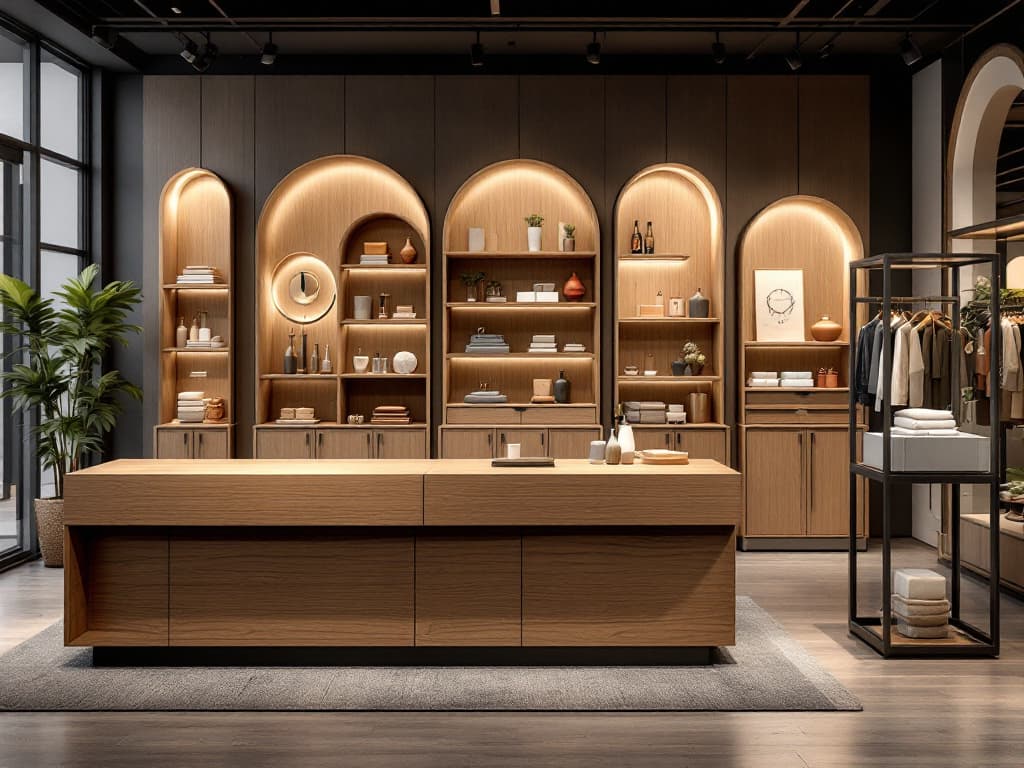
The benefits of working with professionals

Modern equipment
Panel saws, CNC and milling machines — precision, speed and quality guaranteed

Extensive experience and expertise
We know how to handle wood and sheet materials — reliably, precisely, professionally

Fast order fulfilment
Fast and without compromising quality. We value your time and our commitments

A full range of services in one place
Cutting to size, sawing, milling, sanding, painting, assembly — all in-house, with no middlemen

Trusted materials and consumables
We work only with quality materials, so you can be confident in the result

An individual approach to every client
We work to your drawings, create a machining program for the task and account for every detail
The manufacturing stages of retail furniture
It all starts with technical documentation. Drawings, sketches and, where needed, 3D visualisation are prepared — taking into account the specific premises, the batch size and the customer’s wishes. Materials, decorative surfaces, hardware and lighting, if it is part of the project, are chosen at the same point. The more precise the inputs at this step, the fewer revisions later.
Next — preparing the boards and solid wood. Blanks are cut to the parameters on machines, followed by edge machining, drilling and node assembly. Assembly uses presses, guides and fasteners sized specifically for commercial rather than domestic loads — the difference in service life here is fundamental.
Finishing is a key stage both for looks and for use. The options vary: from standard lamination to painting and lacquering. For stores, UV-resistant coatings are often taken — under bright display lamps ordinary paint fades, while such a coating holds its colour and texture.
After assembly and finishing, the items pass inspection: dimensions, stability, hardware operation, evenness of the coating. Finished furniture is packed in protective materials so that it arrives intact whether to the next street over or to another region, without chips on the corners.
The finale is logistics and support. The products are shipped and, where needed, assembly and maintenance instructions are enclosed. The whole route is built around one goal: for the retail furniture to arrive reliable, presentable and ready to work on the floor, not needing finishing on site.

Why it pays to order retail furniture from a manufacturer
For a wholesale customer, price is not the only thing. When ordering batches, production stability, project flexibility and technical precision at every step come to the fore. You have to be able to scale volumes, meet deadlines and hit the exact specifics of the particular site — otherwise the chain ends up with a mishmash instead of a single standard.
The interests of those who grow chains, open franchise outlets or assemble a non-standard range are taken into account. Configurations are developed individually, with customisation from the material to the dimensions and hardware. For a franchise, for example, sameness is critical: the tenth outlet must look like the first.
For large projects, transparent terms, support at every stage and a willingness to adapt matter. Cooperation is set up so that deadlines are met, drawings are executed without liberties, and the products meet retail-sector standards. Nobody needs surprises on acceptance.
Partnership here is not a one-off deal but a stable supply channel for market professionals. Predictable processes and the continuous development of production are the foundation on which long cooperation is built, not a single order and a goodbye.
Additional product categories: expanding the range of furniture solutions
Besides retail furniture, related segments made from the same wood-based materials are also available: office furniture, equipment for pharmacies, warehouse furniture, interior elements for public spaces and hotels. In essence, this is a single production base for different tasks.
Each direction has its own specifics, but the principle is shared — reliability, fit to the client’s task and attention to detail. For those outfitting a site comprehensively, having several categories in one place noticeably simplifies logistics, approvals and control: one contractor instead of five.
Office furniture needs a blend of ergonomics and presentability, retail equipment needs convenience and safety, public-area elements need increased durability and design. Projects are developed taking all these nuances into account, on proven technologies of working with wood and hardware.
As a result, cooperation goes beyond a single subcategory and opens the way to comprehensive interior solutions that fit into corporate and retail spaces as a single whole. This is what gives flexibility: options for almost any market segment are at hand.
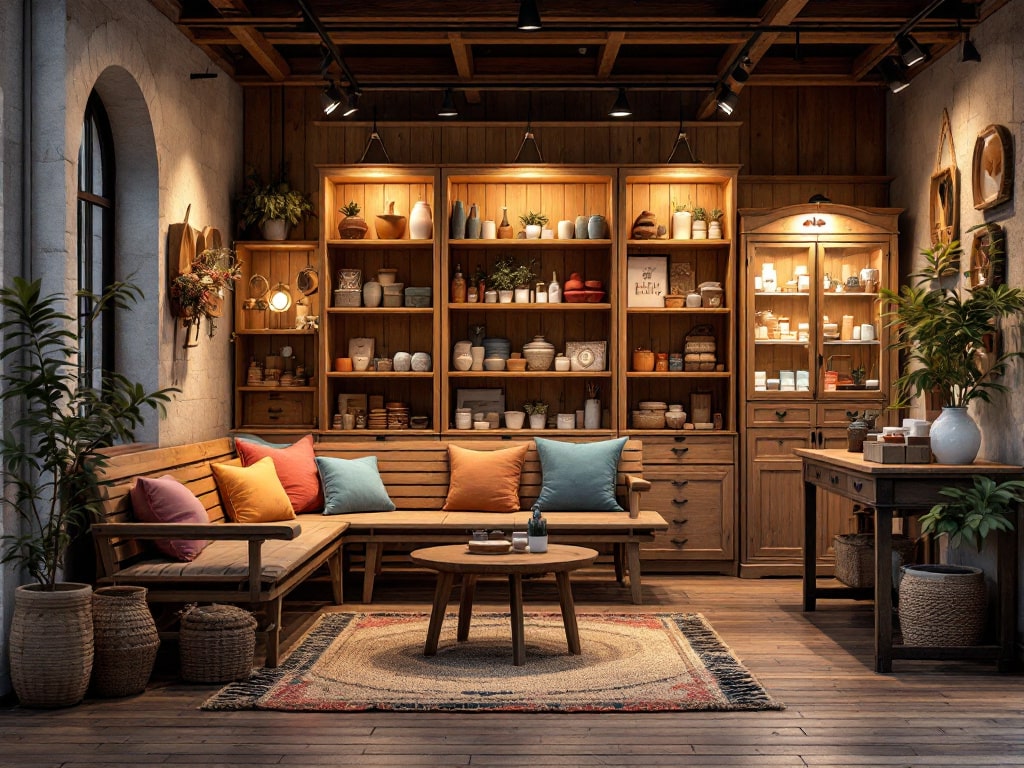
Our portfolio — finished products
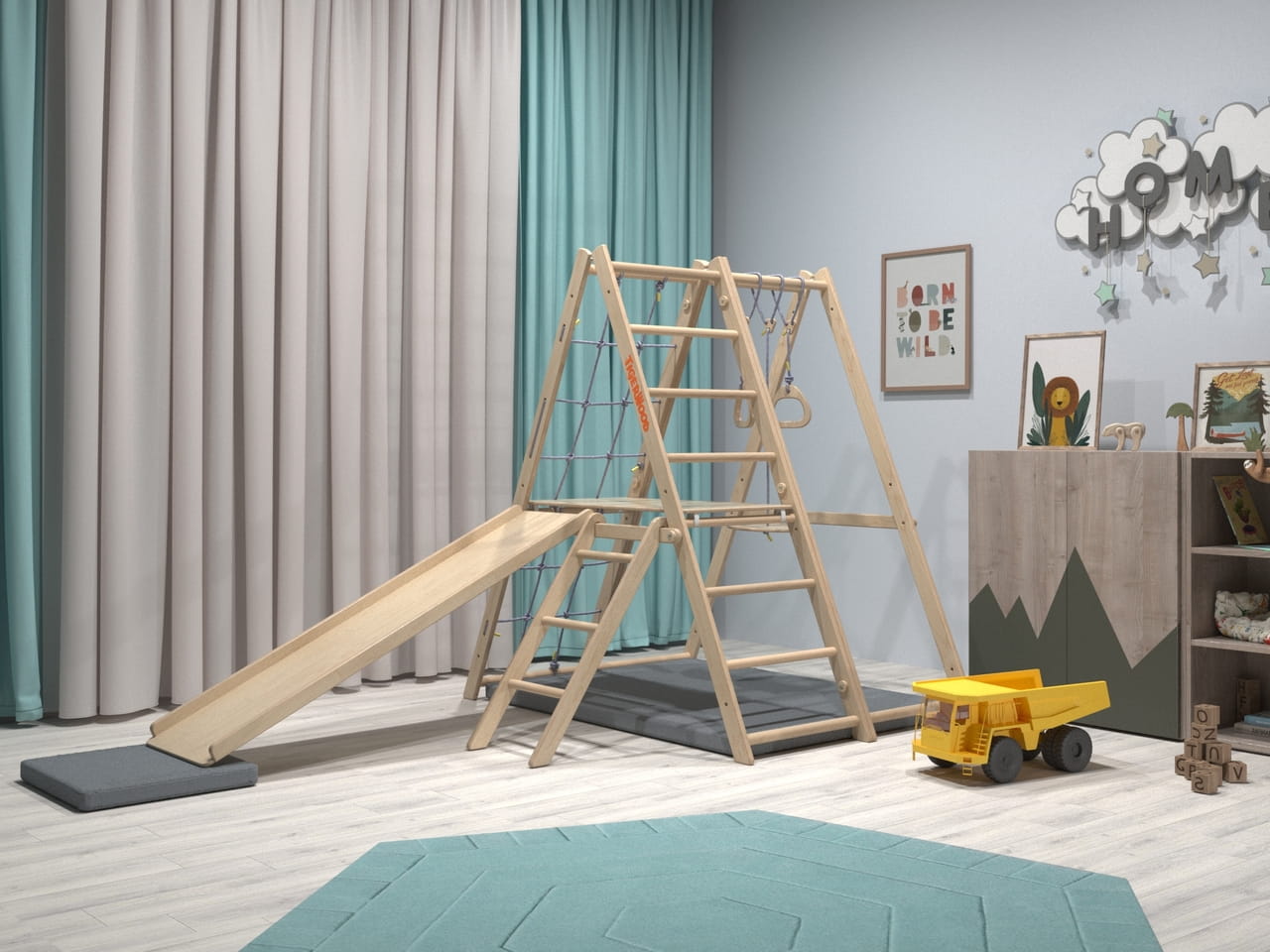
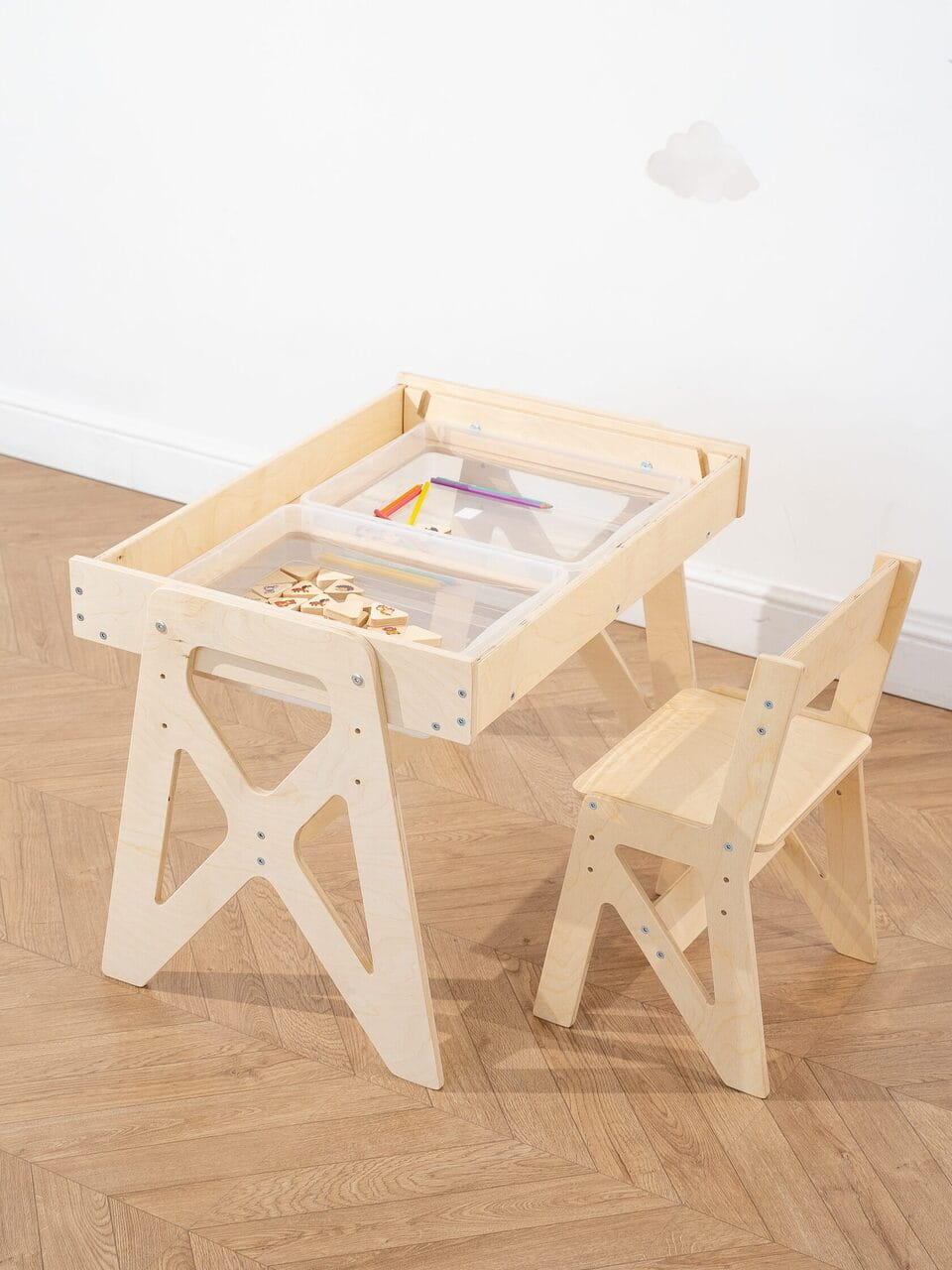


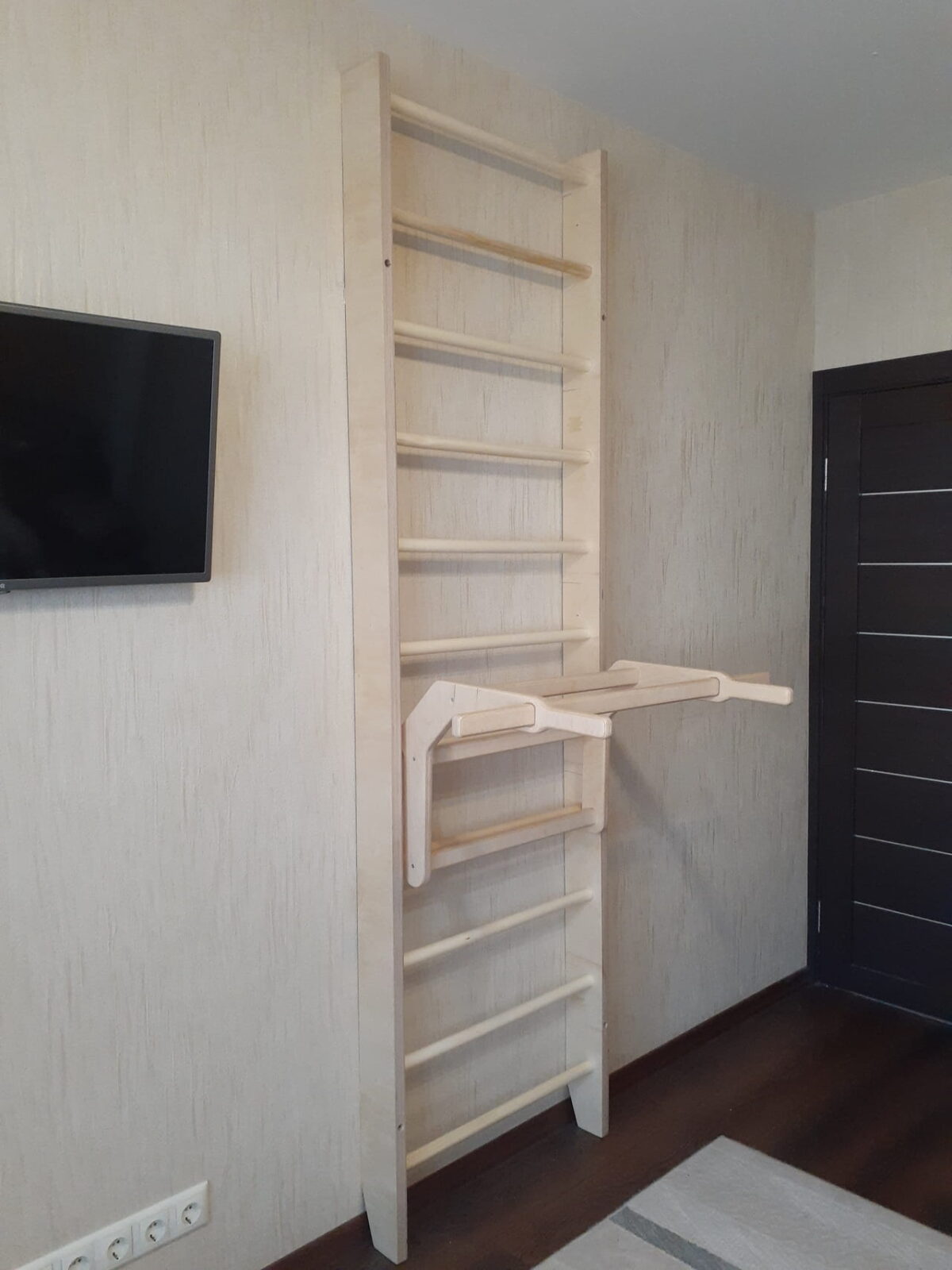
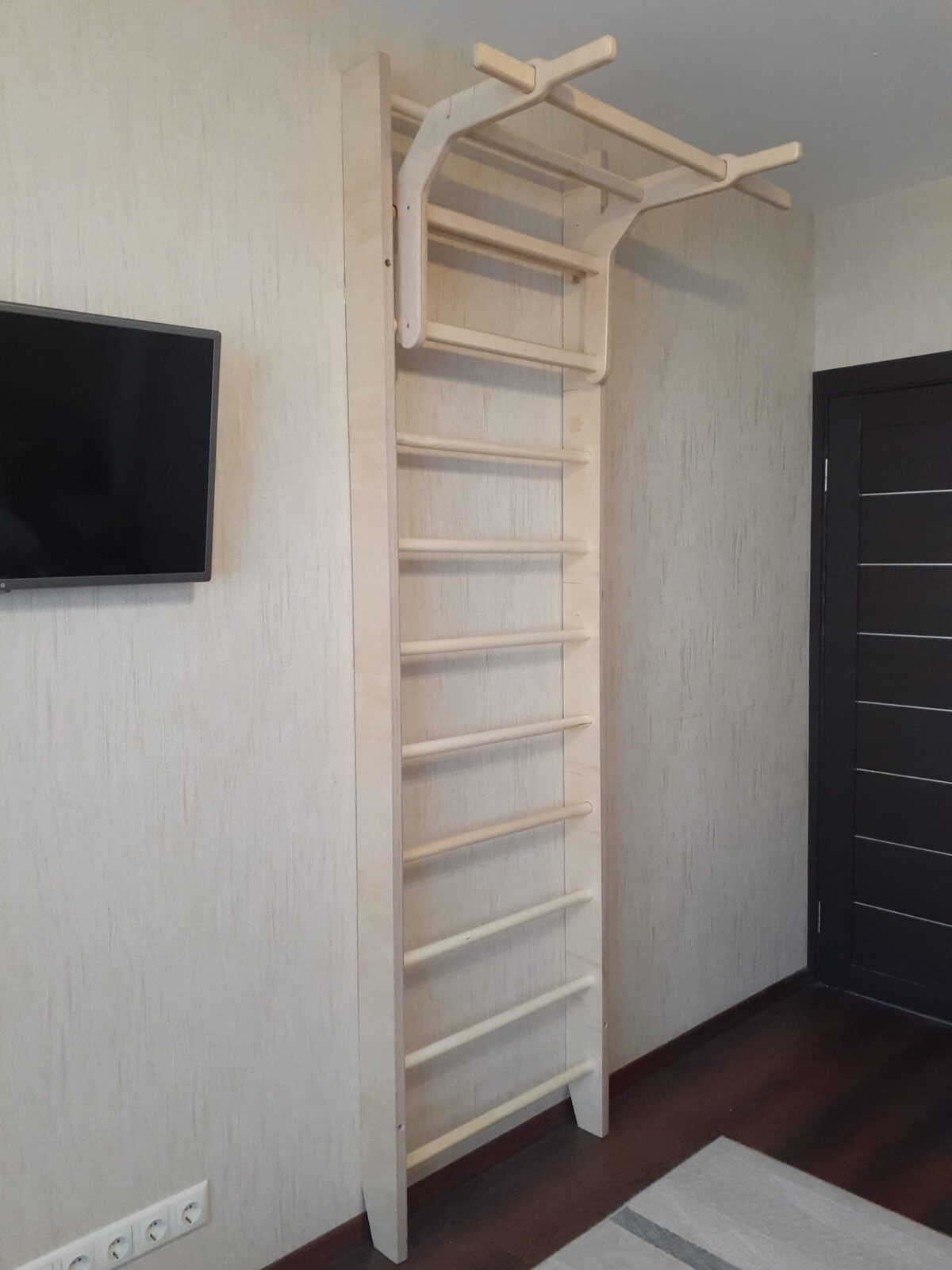
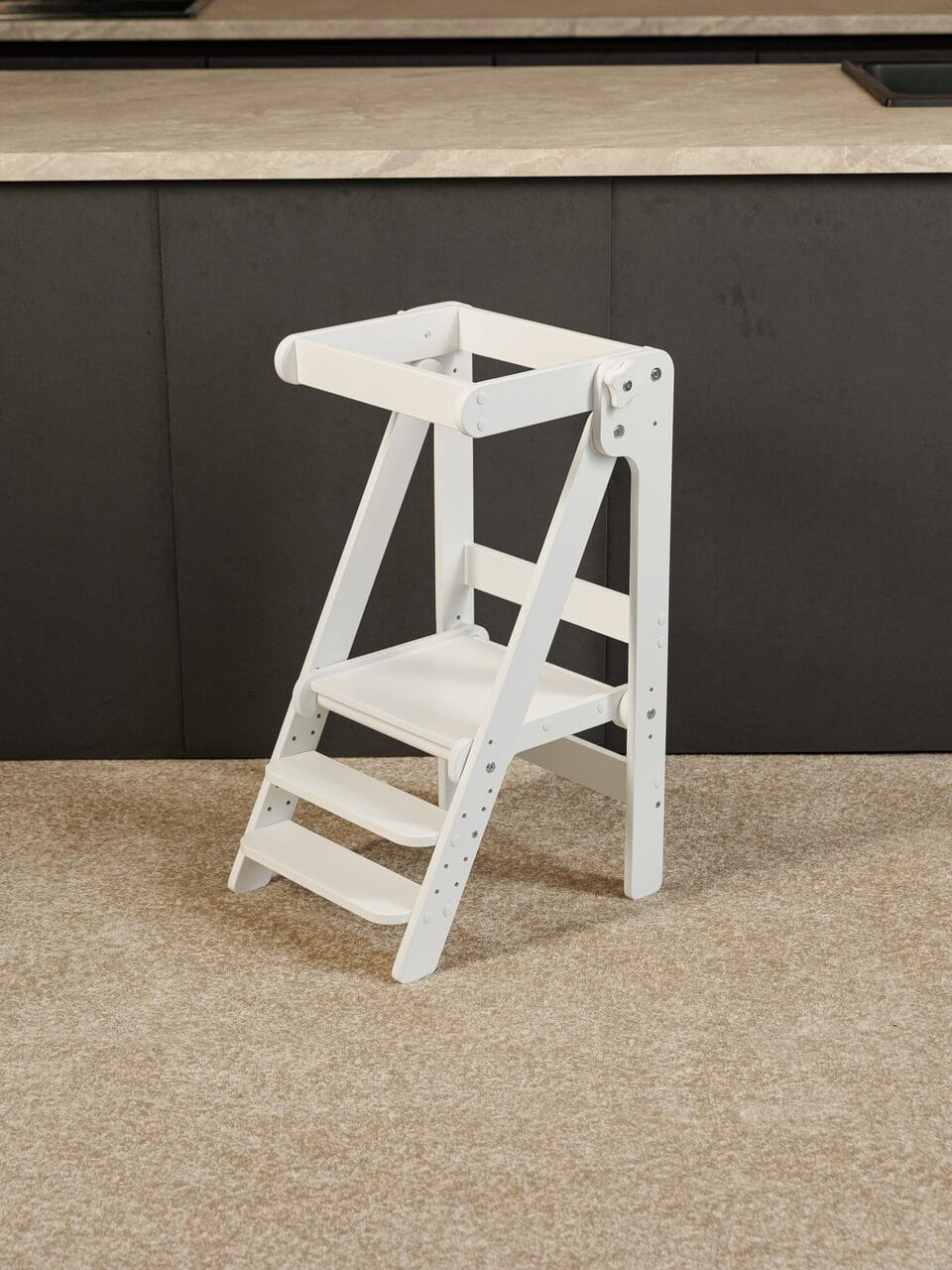
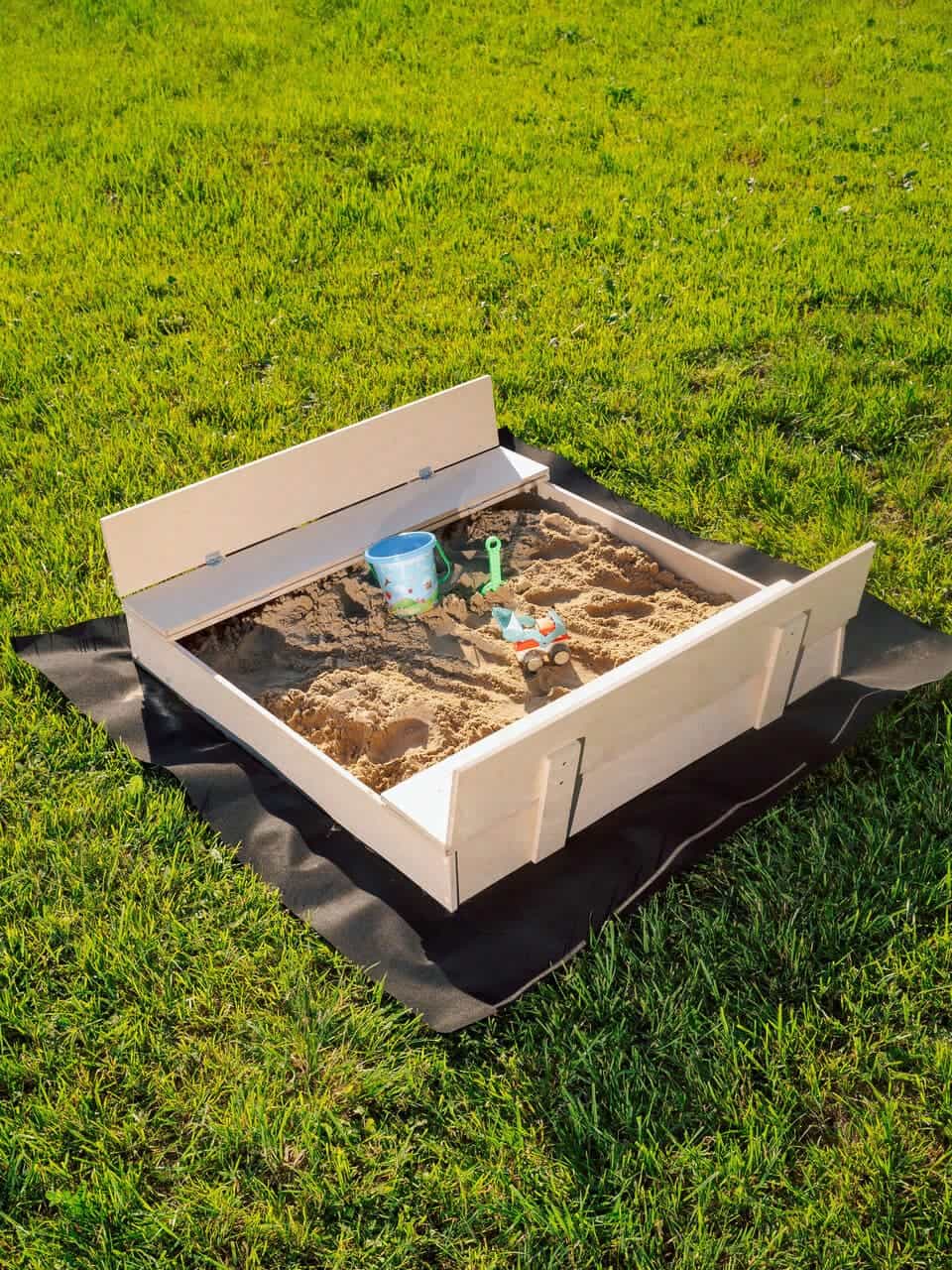

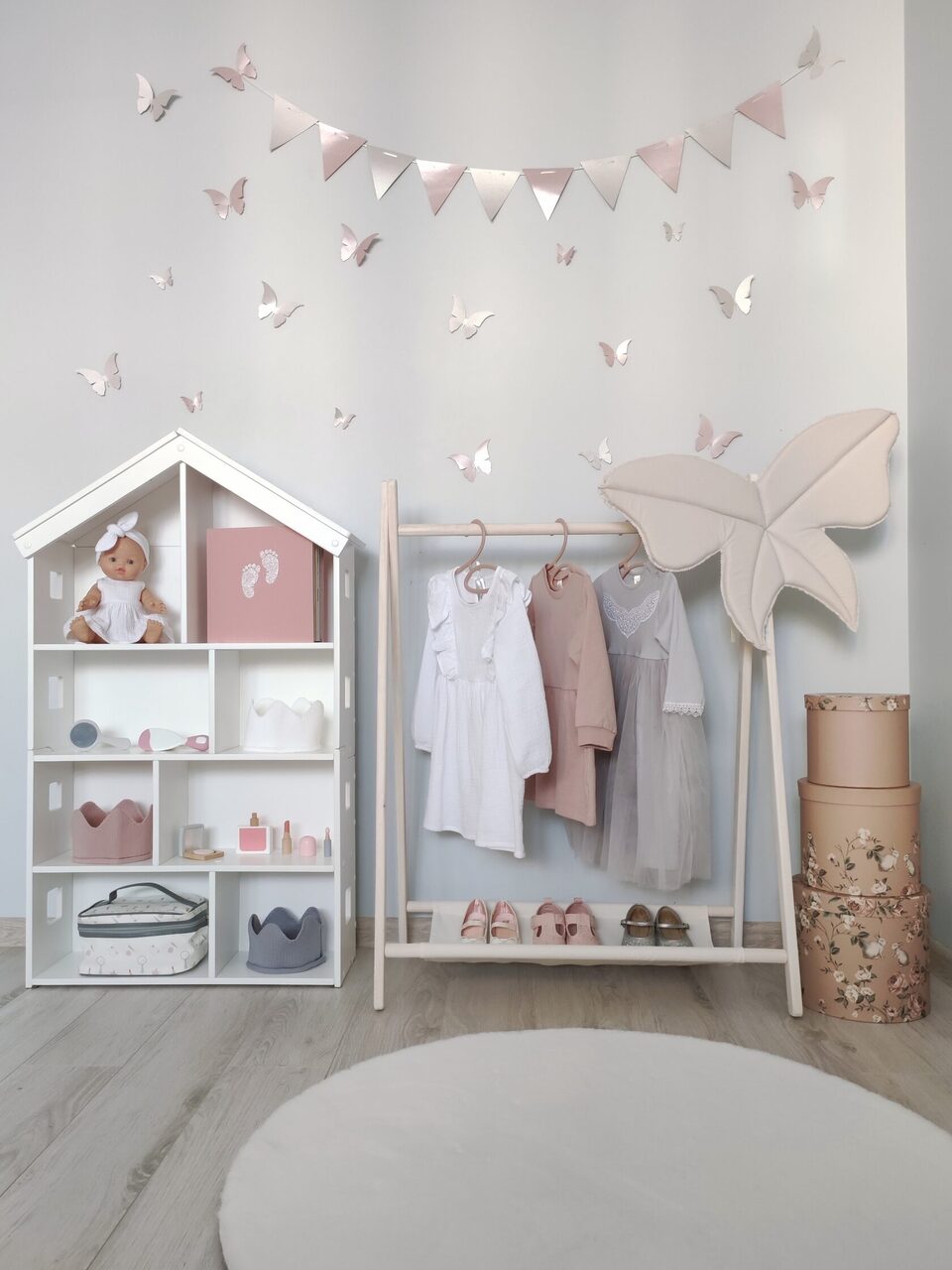

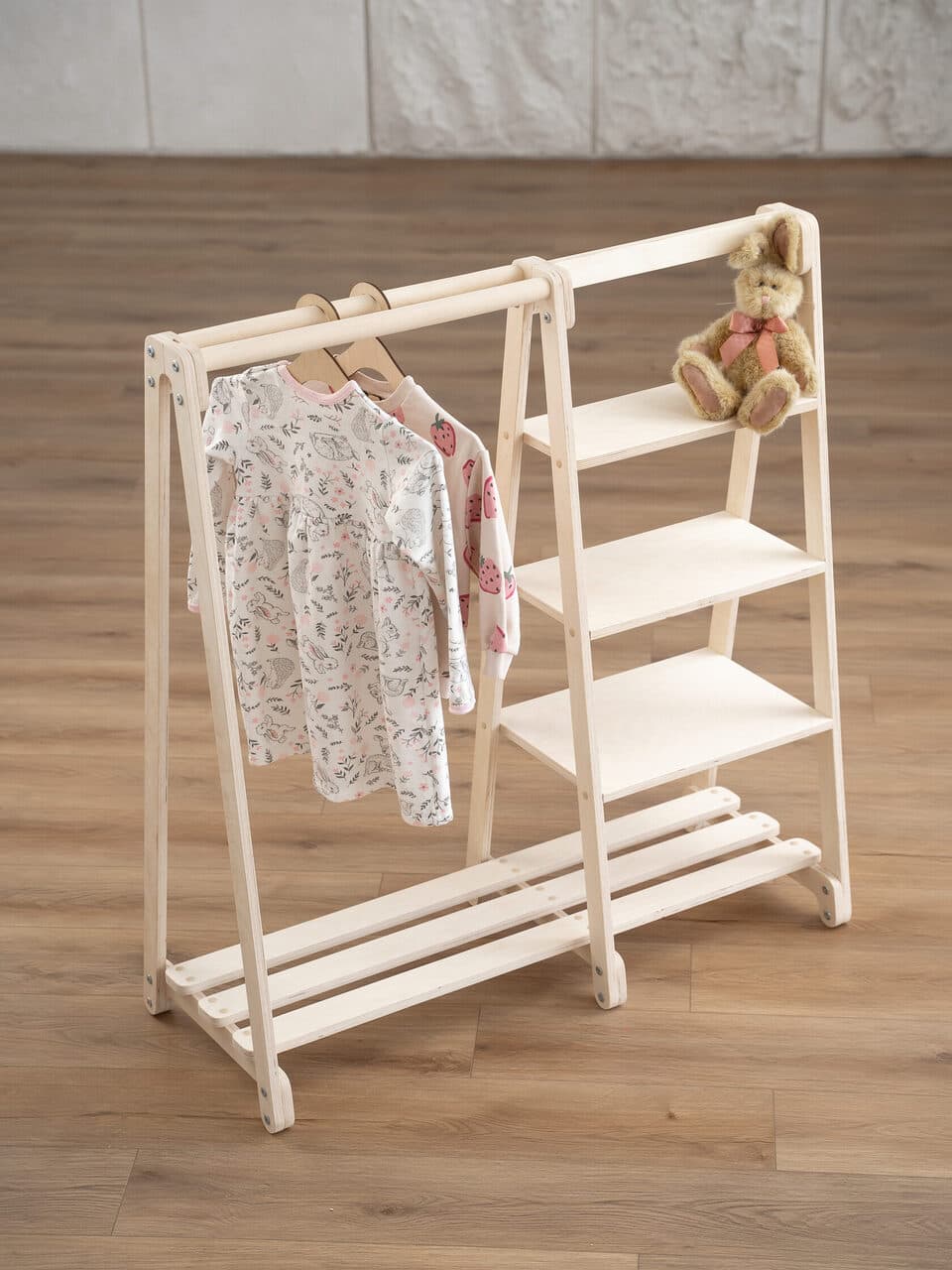
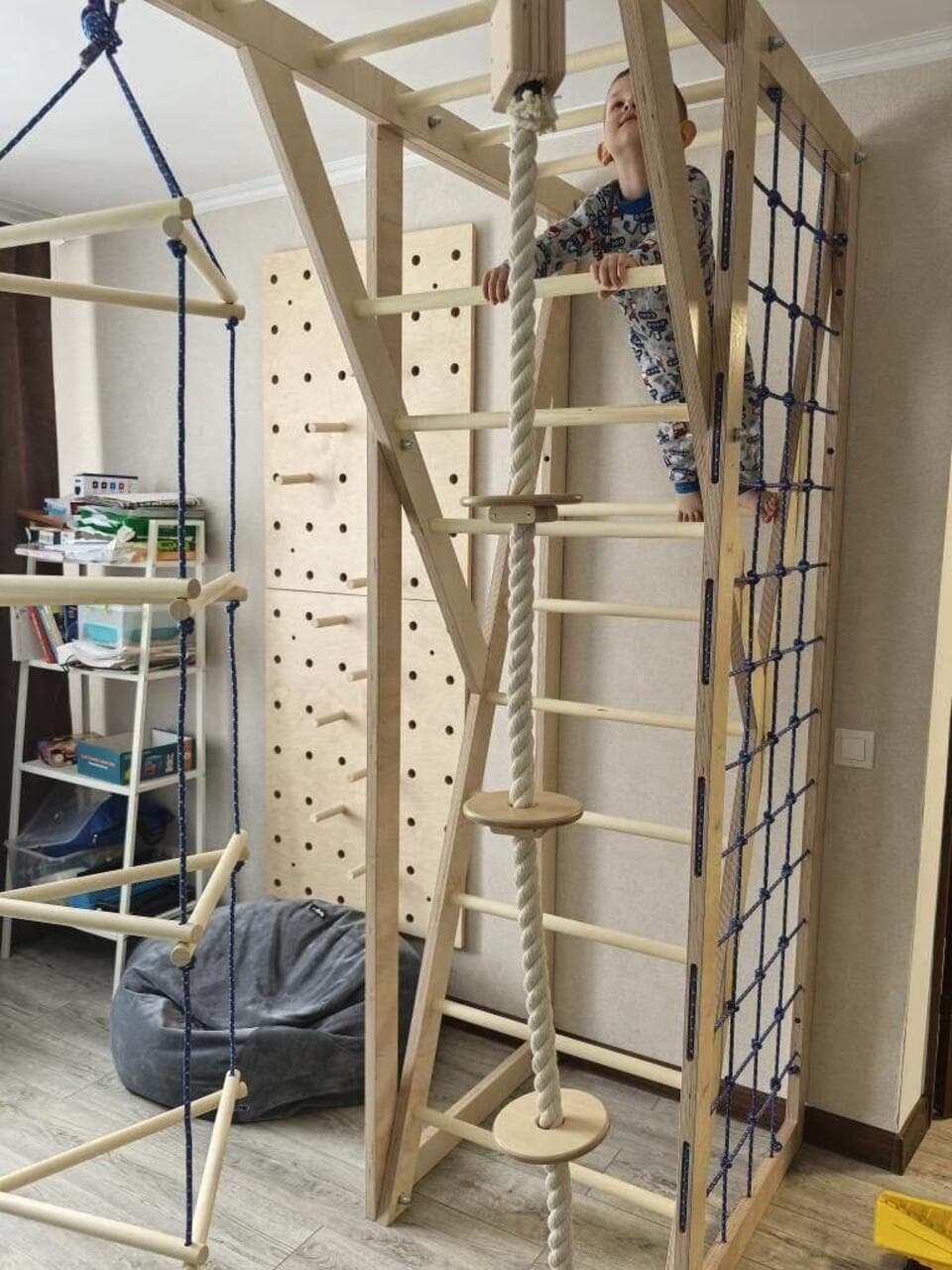
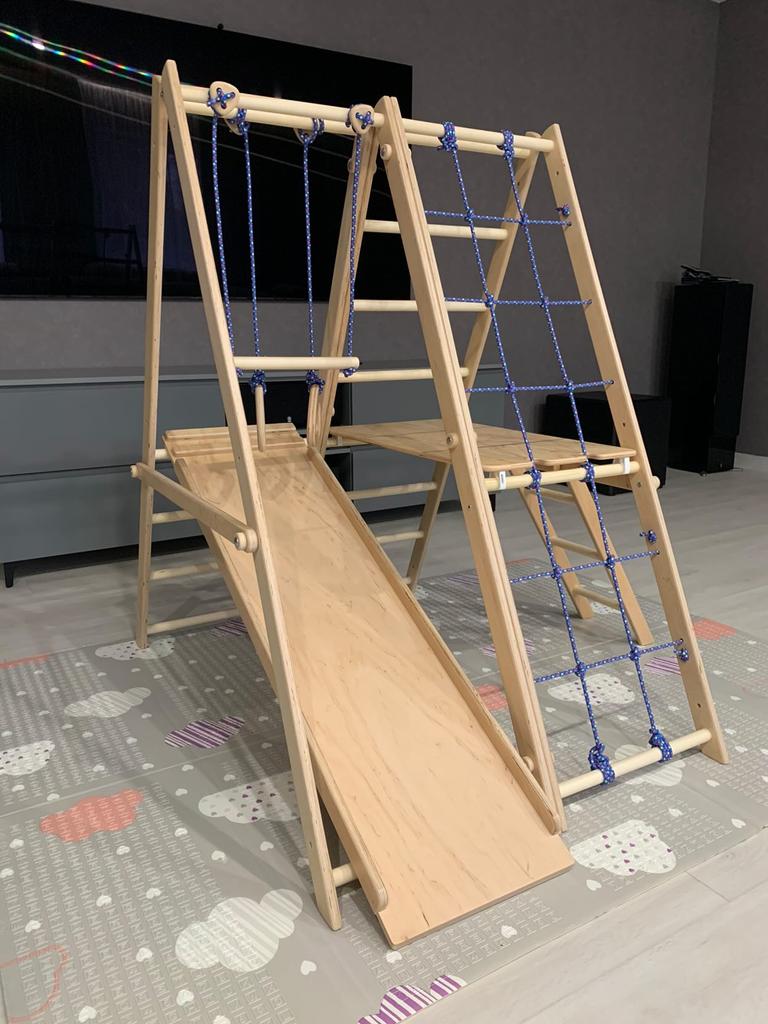

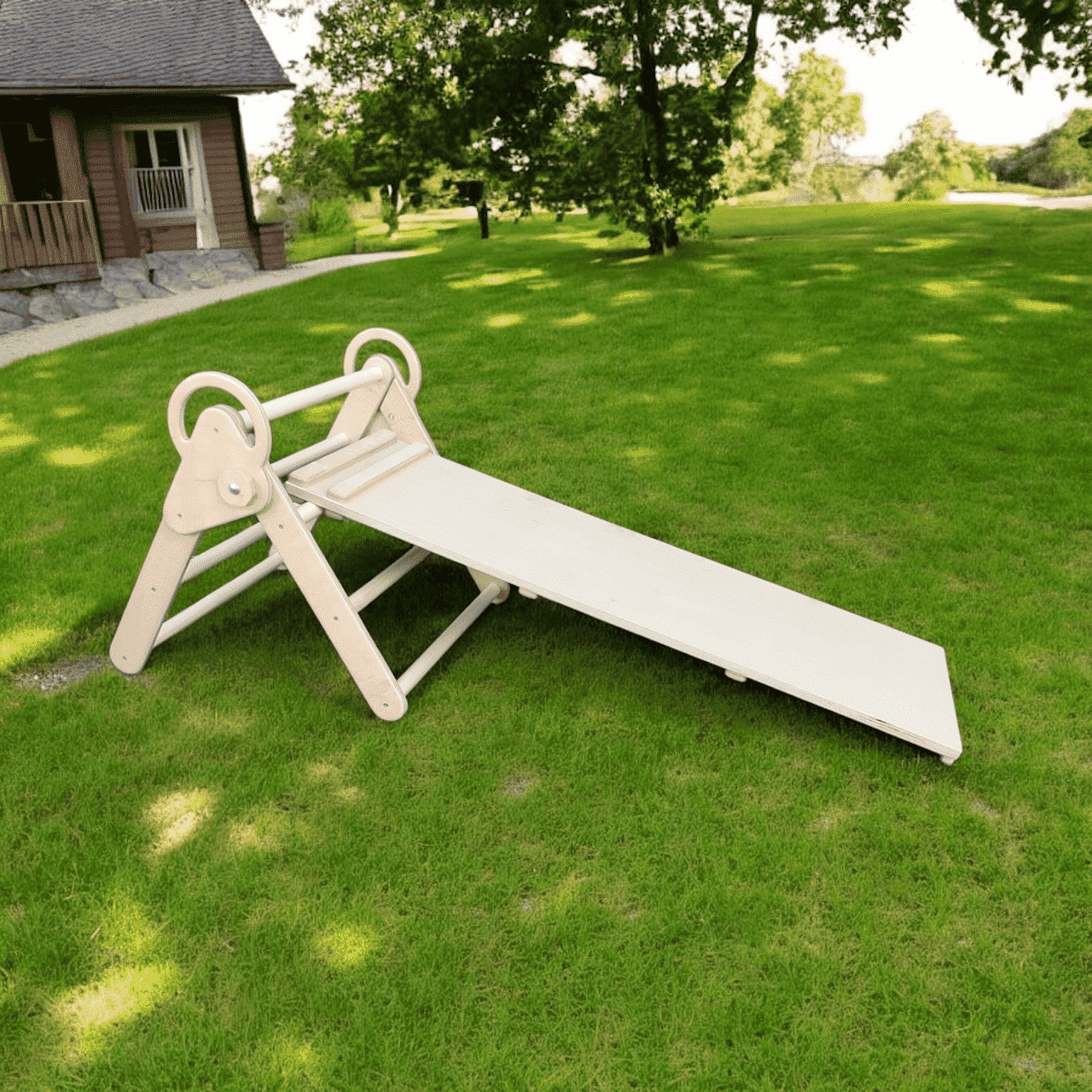



Portfolio: real examples of retail furniture
The portfolio holds many retail-furniture projects of varying scale, from boutiques to large chains. In each you can see an individual approach, compliance with technical requirements and adaptation to the customer’s design concept, rather than stamping to a single template.
The examples show clearly how wood and boards are put to use: lit display cases, sturdy counters, mobile island modules. Some have built-in hidden drawers, adjustable shelves, quick-change display systems — the sort of thing that makes life easier for the floor staff.
Especially valued are projects that account for an outlet’s logistics: compactness in transport, easy assembly and dismantling, the option to modify when the range changes. The portfolio is a convenient way to judge both the build quality and the variety of solutions — for a potential partner it says more than any words.
Work on new projects continues, and in them retail furniture increasingly becomes not just equipment but a working tool: it draws the shopper in, sets a comfortable atmosphere and ultimately helps sell.
Who uses a carpentry workshop’s services

Furniture makers

Interior designers

Advertising companies

Exhibition stand builders

Art studios

Cafés and restaurants

Construction firms

Retail equipment manufacturers
Furniture factories

Private craftsmen

Custom orders

Manufacturing companies

Museums and exhibition halls

Architects

Theatres and film studios

Educational organizations

Children’s products manufacturing

Repair specialists

Online stores

Sole proprietors
Who retail furniture is made for
The circle of customers is wide, and almost all of them are geared to wholesale purchases of retail furniture. These are large and medium chains, stores of various specialisation, distributors, as well as sellers and entrepreneurs opening their own outlets. Each has its own ordering logic.
The terms of cooperation differ by segment. Chains and distributors need stable volumes and on-time delivery. Individual stores need bespoke projects to fit the brand concept. Entrepreneurs more often choose flexibility: small batches and advice on how to optimise costs without losing quality.
For each type of client a tailored solution is chosen — not only production but also support: technical consultations, logistics, after-sales service. This closes the whole journey, from the first trial order to fitting out a growing chain.
An experienced team and a technological base make it possible to respond quickly to market demands and hold the level of service for all categories — both a large contract and a single outlet.
Wooden retail furniture — manufacture and wholesale
The manufacture and wholesale of retail furniture from wood-based materials is a lively and demanding segment. In it quality, durability, aesthetics and functionality come together at once, and not one can be failed. It is precisely specialising in this direction that lets us hold the bar for customers across Europe.
Every project starts with individual development: the features of the premises and the specifics of the product are taken into account. The furniture is made to squeeze the most out of the retail space, ease the display and draw the shopper’s eye to the right items.
Materials are taken for intensive use and safety standards. Modern technologies and high-precision machining deliver stable dimensions and an even surface — which means the parts of a batch match one another, and the chain gets a single look across all outlets.
The plus of wholesale purchasing is the ability to receive furniture in the required volumes with a guarantee of conformity to the specification. Stores can regularly renew their equipment and keep the presentation of goods at a high level, without assembling an order in bits and pieces from different makers.
Another plus is the wide range: from standard solutions to exclusive projects. This covers the needs of outlets of any format and direction, from a corner mini-market to a flagship salon in the city centre.
And finally, a comprehensive approach: technical support, consultations, flexible terms and adaptation to the market make working with retail furniture convenient and predictable — without surprises in the middle of a project.
Types of retail furniture and what people choose
The range of retail equipment is wide, and each zone of the floor has its own solution. To keep from drowning in terms, it helps to sort the main types by purpose — that way it is easier to understand what your outlet actually needs and where to start the conversation about an order.
| Type of item | What for | Where it goes |
|---|---|---|
| 🪟 Display case | Showing goods under glass, with lighting | Jewellery, optics, electronics |
| 🧱 Shelving unit | Open display and stock storage | Clothing, books, home goods |
| 🛒 Counter | Service and handing over goods | Groceries, pharmacy, bakery |
| 💳 Checkout zone | Payment, packing, small items at the till | Any format |
| 🏝️ Island module | Promo zone in the centre of the floor or a mall | Cosmetics, accessories, promotions |
| 🛎️ Reception / desk | Point of entry and navigation | Salons, showrooms, service |
In practice a floor is rarely fitted with just one thing. More often it is a set: display cases around the perimeter, shelving units along the walls, an island for a promotion in the centre and a checkout unit at the exit. When it is all made at one production facility to a single project, the elements match in style, colour and dimensions, rather than looking cobbled together from odds and ends.
Fitting out a chain to a single standard
For a chain the key word is sameness. The shopper must recognise the brand at any outlet, whether in the capital or in a district town, which means the tenth display case must look exactly like the first. Achieving this piece by piece is almost impossible: a mismatch in the board’s shade, the shelf height or the edge radius shows up at once the moment you place two counters side by side.
Series production for a chain solves this with tooling and saved documentation. A project agreed once becomes a template from which the whole batch and any subsequent top-ups are produced. A new outlet opens six months later — the equipment for it is made to the same drawings and in the same colour, without trying to guess what the original tone was. For a franchise this is critical anyway: the single standard is written into the contract, and deviations are unacceptable.
A separate benefit of a chain order is predictable deadlines and price. When the volume is known in advance, production plans its workload, buys material in bulk and holds a stable per-unit cost. This is more convenient than assembling equipment for each new outlet with a new contractor every time and explaining the requirements all over again.
Branding and corporate identity
Retail furniture is also a carrier of corporate identity. Facade colour to match the logo, a milled emblem on the end of a counter, lighting of the right temperature, decorative edging to match the overall design — all of this works for recognition no worse than the signage. Wood and quality films give plenty of freedom here: you can hit almost any corporate colour and texture, from a deep matt to a warm imitation of solid wood.
It is important that the brand elements are not a sticker slapped on in haste but part of the structure: engraving, an overlay, a built-in light box. Such details survive relocations and cleanings, whereas a vinyl sticker quickly loses its look. That is why it is better to build the corporate symbolism into the project from the start, rather than sticking it over a finished piece.
Materials for retail loads
Choosing a material for the sales floor is a compromise between wear, looks, safety and price on a run. There is no universal answer: what is ideal for a boutique display case is excessive for a storeroom shelving unit. Below is a short guide that helps you neither overpay nor cut corners where you must not.
| Material | Strong point | Where it fits |
|---|---|---|
| ⬜ MFC | Ready finish, many décors, price | Carcasses, shelving units, checkout modules |
| 🎨 MDF (painted) | Any colour, smoothness, milling | Display-case facades, brand elements |
| 🌳 Solid wood / veneer | Premium look, repairability | Boutiques, salons, jewellery |
| 🪵 Plywood | Strength, holds fasteners and load | Frames, retail islands |
Over the base almost always goes protection: moisture-resistant coatings, abrasion-resistant films, safe lacquers. In food outlets, sanitary requirements are added — easy-to-clean, pore-free surfaces where dirt cannot lodge. In the zones by display windows, UV resistance matters, otherwise bright light bleaches the facades in a couple of seasons. All of this is chosen for the specific zone, not by a single template for the whole store.
A glossary of retail-equipment terms
When discussing an order, words come up that are familiar to production and vague to the customer. A short explanation removes any misreadings before the start.
| Term | What it means |
|---|---|
| 🏝️ Island module | A free-standing structure in the centre of the floor |
| 🖇️ Edging | A band on the end of a board — protection and looks |
| 🔩 Drilling pattern | Holes for hardware and fasteners to a layout |
| 💡 Light box | A built-in illuminated element with a logo |
| 📐 Adjustable shelf | A shelf with re-settable height to suit the goods |
| 🧩 Modularity | Assembling a floor from repeatable, unified blocks |
What makes up the price
The question “how much does it cost to fit out a store” without details stays without a precise answer, and that is honest, not an excuse. The estimate is made up of several components, and each can be gauged in advance.
- 📦 Batch size. A single outlet or a chain — a series works out cheaper per unit.
- 🧱 Material and finish. MFC, painted MDF or solid wood — different budgets.
- 📐 Complexity of the structures. A simple shelving unit is cheaper than a display case with lighting and cut-outs.
- 💡 Extra fit-out. Lighting, glass, locks, brand elements.
- 🚚 Logistics and installation. Delivery to a region and assembly on site.
- ⏱️ Urgency. Work outside the general queue is counted separately.
The surest way not to be surprised by the estimate is to send a clear brief or a floor layout and not to rush the deadline. Rework due to imprecise inputs and a crash-mode schedule are exactly what add those percentages you wanted to avoid. A transparent calculation before the start is in the interests of both sides.
What an order looks like in practice
So that all of the above does not remain theory, here are three typical scenarios from the practice of fitting out retail outlets — different in scale but with a shared logic.
The first — a small clothing boutique. The customer brings the floor layout and a few style references. From them a project is prepared: wall shelving units with rails, an island module for accessories, a checkout desk with a milled logo on the end. The material is painted MDF in the corporate shade plus wood-look MFC for the carcasses. The result is a set that assembles on the floor in a couple of days and immediately looks like a single space, not a set of random furniture.
The second — a chain of ten outlets. Here sameness comes first: one agreed project is replicated across all the stores, and the tooling and saved drawings guarantee that the tenth display case will match the first in colour and dimensions. The batch is produced in waves to the opening schedule, and the material is bought in bulk, which keeps the per-unit price stable. When the eleventh outlet opens six months later, the equipment is made from the same files — without trying to guess the original tone.
The third — a specialised format, for example a pharmacy. Here its own requirements come into play: closed display cases, checkout modules with security features, cabinets with re-settable shelves for packages of different heights, easy-to-clean surfaces. The project accounts for both sanitary standards and the comfort of the staff behind the counter. Different tasks — but a single route: layout, project, cutting, assembly, finishing, inspection and delivery.
Lead times and what they depend on
Lead time is one of the first questions when fitting out an outlet, especially when there is an opening date. The exact date is named after the drawings and specification are agreed, but the benchmarks are clear: a simple set for a small floor is usually ready in a couple of weeks, a large batch for a chain is counted separately and planned to the opening schedule. The longest are complex structures with lighting, glass and brand elements, and also finishing that needs the coating to dry.
Preparation on the customer’s side helps to speed things up: a ready floor layout, certainty about materials and corporate colours, an agreed project without last-minute changes. If the opening is tied to a specific date, it is sensible to build in a margin and get in touch early, rather than counting on the equipment being assembled in three days. Haste in finishing almost always harms the look, and a display case with paint runs works against the store.
A one-off order, a batch and ongoing supply
Retail furniture is ordered in three formats, and each has its own logic. A one-off order — to fit out a single outlet: described, agreed, collected. A batch — several outlets at once to a single standard, with tooling and saved drawings. Ongoing supply — a stable channel for a growing chain, when equipment is bought as stores open.
The larger and more regular the order, the more noticeable the benefit: a lower per-unit price thanks to bulk material purchasing, more predictable deadlines, easier top-ups. A regular customer does not have to explain the requirements from scratch each time — the specifics are already known, and a new outlet is fitted out faster. This is exactly why chains and franchises more often choose long cooperation with a single manufacturer rather than one-off deals with different contractors.
Common mistakes when ordering retail furniture
Most slip-ups happen not in production but at the stage of setting the brief. Here is what most often gets in the way of getting the result right the first time and what is easy to foresee.
- ❌ Measuring the floor “by eye”. Unaccounted columns, pipes and wall offsets — and the module does not fit its spot.
- ❌ Cutting corners on the coating. Cheap film at the till and under the lamps loses its look within a season.
- ❌ Ignoring the product. Shelves not sized to the package height — and the display becomes a torment for the staff.
- ❌ A forgotten corporate identity. The logo is stuck on as a sticker instead of being built into the structure.
- ❌ Urgency at the last moment. Finishing and drying cannot be sped up at the snap of a finger.
It is no disaster if something was overlooked — that is exactly what the dialogue before the start is for. A competent production asks these questions itself before cutting, not after, when rework costs time and money. The layout, the product and the corporate identity up front are half the success of a project.
Quality control and a guaranteed result
Control is built into the process, not tacked on for show at the end. On intake, drawings, dimensions and material are checked: the wrong décor or an extra millimetre of thickness is caught before cutting. Along the way the edge, drilling pattern and node assembly are checked. At the output the item is looked at as a whole — dimensions, stability, hardware operation, evenness of the coating. For retail furniture this is especially important: a wobbly shelving unit or a skewed display-case door hits the store’s image at once.
If a contentious point arises, it is easier to resolve when the whole order has passed through one pair of hands: responsibility is not smeared across contractors, there is someone to ask. For a chain this is also a matter of service — where needed, individual components are replaced, and the outlet does not sit idle because of one broken hinge.
Delivery, packaging and installation
Finished furniture is packed in protective materials so that the corners, edging and glass do not suffer in transit. Shipping runs across Europe, with terms agreed to the volume and address. Large structures are often carried disassembled and put together on site — that way it is easier to get through doorways and lifts, and transport is cheaper.
For chains, phased delivery to the opening schedule is convenient: the equipment arrives exactly when the outlet is ready to receive it, rather than sitting in a warehouse for months. Where needed, assembly and maintenance instructions are enclosed with the set so that on-site installation goes without guesswork and extra phone calls.
Design and visualisation before production starts
A good result on the sales floor almost always starts with a project, not straight away with the machine. At this stage the drawings, the layout across the premises and, where needed, a 3D visualisation of the future floor are born. It is especially helpful when the customer wants to see how the equipment will sit in place and how the corporate colour will look under a specific light, before the first sheet of board goes into work.
Five minutes of attention to the project save weeks on rework. This is exactly where awkward shelf heights, forgotten sockets for lighting and narrow passages between islands are caught. Retail furniture is designed around the shopper’s movement scenario: where they will stop, what they will see first, where they will reach out. When this logic is built into the drawing, the floor starts working for sales rather than just storing goods.
Outlet formats and their features
Each retail format has its own fit-out logic. A clothing store needs rails, stands and fitting rooms with mirrors and reliable curtain systems. A grocery store needs hygienic, easy-to-clean surfaces and sturdy shelving units for the weight of the goods. Jewellery and optics — closed display cases with lighting and security features. A pharmacy — checkout modules and cabinets with re-settable shelves for varied packaging.
A separate story is outlets inside shopping centres, where retail and café specifics often combine: bar counters, display areas, niches for refrigeration equipment. And everywhere there are their own mobility requirements: in some places stationary structures are set up for years, in others lightweight knock-down ones for seasonal promotions and re-layouts. There is no universal set, but they are all made from the same wood-based materials on one base.
Use and service life
Retail equipment lives in a harsh regime: a daily flow of people, constant movement of goods, cleaning with chemicals. With the right material and quality hardware, retail furniture serves calmly for years without working loose or losing its look. The key is in the closed edging, a durable coating and reliable fasteners sized specifically for commercial rather than domestic loads.
Simple things help extend the service life: timely tightening of hardware that has worked loose, cleaning without aggressive chemicals, care during rearrangements. Individual components are replaced as they wear, and that is cheaper than ordering a module anew. For a chain such service is especially valuable: one outlet does not fall out of the single standard because of a broken hinge or a scuffed shelf.
Comprehensive fit-out from one source
The temptation to assemble a floor’s fit-out from the cheapest contractors is understandable: display cases cheaper here, shelving units at a discount there. On paper a saving, in practice a risk. A mismatch in shade and dimensions at the junction of different contractors shows up at once the moment you place the modules side by side, and arguing over who is to blame for the mismatch has to happen after installation.
When the whole set — from display cases to the checkout zone and the waiting corner — is made at one production facility to a single project, the floor comes out cohesive. On top of that, logistics and approvals are simpler: one contract, one responsible party, one delivery to the schedule. That is why fitting out the entire space from one source is a little dearer in the moment but usually wins out in the end — thanks to deadlines, a single look and predictability.
More questions about retail furniture
Will you make it to our brandbook and corporate colours? Yes, the facade colour is matched to a sample or catalogue, and the logo is built into the structure — by engraving, an overlay or a light box, rather than a sticker over the finished piece.
Can you reproduce a display case I liked in another store? Most often yes, adjusted for your dimensions and materials. A photo or sample serves as a starting point, then the structure is adapted to the specific floor and budget.
What do I do if I later need to add to an outlet? It is simpler if the order has already been through production: the drawings and colour are saved, and the added module is fitted to the existing one. That is exactly why many come back to the same maker.
Is this equipment suitable for marketplace pickup points and showrooms? Yes, the formats of pickup points, showrooms and service zones are covered by the same solutions: pickup counters, shelving units, reception, waiting areas for a specific scenario.
Is it realistic to keep within a modest budget? Usually yes — through a sensible choice of material: MFC for carcasses, painted MDF only on the visible facades, a well-thought-out layout on the sheet. What you should not cut corners on is the edging, hardware and the coating of visible surfaces — these are exactly what determine how long the equipment keeps its saleable look.
If your question is not on the list, it is easier to ask it during the project discussion. Discussing the task commits you to nothing: it is enough to describe the outlet format and attach a layout — and get a guide on the set’s composition, price and timeline before work starts.
How to prepare a brief for fitting out a floor
A clear brief saves time for both sides and noticeably speeds up the project. Putting it together is not hard if you keep a few points in mind — then the retail furniture is designed exactly for your outlet, not to an averaged template.
- 📐 A floor layout with dimensions, columns, windows and electrical points.
- 🛍️ What you sell and how you display it — the shelves and display cases depend on this.
- 🎨 Corporate colours, logo, style references.
- 🔢 The number of outlets: one, a batch or a chain to a single standard.
- 💡 Whether you need lighting, glass, locks, security features.
- 📅 The opening date, if there is one, and priority zones.
You do not have to come with a ready technical package — half the orders start with a layout and the words “we need to fit out a floor like this”. The manufacturer’s job is precisely to translate that into a drawing and a set composition. But the more inputs at the start, the shorter the path to finished equipment and the fewer revisions along the way.
Lighting, glass and extra fit-out
A display case without light and a display case with well-thought-out lighting sell differently. Built-in LED lines, lit shelves, light boxes with a logo make the goods more visible and work for the brand image. The only thing that matters is to choose the light temperature to suit the product: warm light shows off wood and clothing to advantage, neutral light shows the colour of cosmetics and food more honestly.
Glass adds lightness to display cases and protects the goods on open display, while locks and security features are needed where expensive items lie in view. All of this is built into the project in advance: wiring is laid for the lighting, grooves and holders are calculated for the glass. Retrofitting this on a finished item is harder and dearer than providing for it at the drawing stage.
Safety standards on the sales floor
Commercial furniture lives by stricter rules than domestic. Here fire and sanitary requirements matter: coatings and lacquers must be safe, surfaces in food zones easy-to-clean and pore-free where dirt lodges. The stability of the structures is also a safety question: a tall shelving unit must not topple, and sharp corners in a busy passage are rounded so the shopper does not get hurt in the crush.
These standards are not bureaucracy but a business insurance. Equipment made with an eye to them passes inspections without stress and serves longer. That is why materials and coatings are chosen with the requirements of the specific format in mind: what suits a boutique may not pass for a food outlet, and vice versa.
How to choose a manufacturer for your task
If you are choosing whom to trust with fitting out an outlet, here is a simple guide. By these signs you can see that in front of you is a contractor, not a lottery.
- ✅ Starts with a project and precise measurements, not straight away with a price “by eye”.
- ✅ Works with different materials and honestly says where each is more suitable.
- ✅ Handles both a single outlet and a series for a chain to a single standard.
- ✅ Builds the corporate identity into the structure, not as a sticker.
- ✅ Is responsible for the whole cycle — from drawing to delivery and service.
- ✅ Names the deadline and estimate in advance and keeps to them.
A good way to check is to start with a trial order for a single zone or outlet. It will show the build quality, the precision and how communication is set up. Many chains come this way: with a single test outlet, and then hand over the fit-out of all their retail on an ongoing basis, having satisfied themselves of the result.
Seasonality and planning the order
Fitting out stores has its own peaks. Before major holidays and in the opening season, the production queue is tighter and lead times stretch out a little. Those planning to launch an outlet by a specific date are better advised to get in touch early and book a slot, rather than counting on the set being assembled in the last week. Regular customers win here: their projects are already familiar to the production, and getting priority is easier for them.
To sum it all up briefly: retail furniture is a way to fit out a retail outlet turnkey, with a single style, a calculation for the load and predictable deadlines. It is enough to send a layout and describe the format — the rest will be broken into stages, designed for your floor and brought to finished equipment, whether it is a single boutique or a chain of dozens of outlets.
Navigation and a unified floor style
Equipment in a store does one more unnoticed job — it guides the shopper through the floor. The height of the shelving units, the placement of the islands, the location of the checkout zone add up to a route along which a person moves past the right goods. When retail furniture is designed with this in mind, the floor reads intuitively: it is clear where a theme begins, where the promotion is, where the till is. Chaotic placement, by contrast, loses sales for no reason.
A unified style amplifies the effect. When display cases, shelving units and stands are kept in one palette and texture, the floor is perceived as a whole space rather than a warehouse of assorted furniture. This works both for trust in the brand and for the average receipt: in a tidy, well-thought-out interior the shopper spends more time and browses the goods more willingly.
The checkout zone as a task of its own
The checkout unit is one of the most heavily used spots in a store, and there are more requirements for it than it seems. Here there is a work surface for payment and packing, room for equipment, shelves for small impulse goods at the till, and wiring routing for the hardware. All of this has to withstand constant friction, trolley bumps and daily cleaning without losing its look.
That is why the checkout zone is designed separately and with a strength margin. A well-thought-out desk speeds up service and reduces staff fatigue, and a tidy display at the till adds small purchases to the receipt. A trifle that is rarely thought about at the start, but which, on a flow of shoppers, noticeably affects the outlet’s revenue.
Series precision and repeatability
For a batch and a chain, repeatability is critical: all the items must come out identical to fractions of a millimetre. On modern equipment this is ensured by programmed cutting and tooling — the machine does not tire and its eye does not blur, so the hundredth shelf matches the first. It is precisely repeatability that makes it possible to assemble a floor from unified modules and to add elements later without trouble.
A mismatch in dimensions, by contrast, turns assembly into a torment: the modules do not fit together, the shelves do not sit in a single row, and the chain loses its unified look. That is why geometry control on a series order stands at every stage, from cutting to final acceptance. For the customer this is a guarantee that the equipment for the tenth outlet will sit as evenly as for the first.
Sensible material use
On a large batch, saving starts at the cutting. A well-thought-out layout of parts across the sheet means fewer offcuts and less material going to waste, and on a chain’s volume that adds up to a noticeable sum. Large offcuts, meanwhile, go into small parts of the same project — shelves, inserts, internal elements — so that the useful area of the sheet works to the maximum.
For the customer this is a direct benefit, and for production a clean and predictable process: it is clear how much material a batch will take, and there is no need to buy extra board at the last moment due to overuse. A careful approach to cutting is the small thing that, over the distance, keeps both price and deadlines within reasonable bounds.
Fitting rooms, waiting areas and service corners
A full-fledged store is not only display cases and shelving units. Auxiliary zones also live on the floor and strongly affect the impression. Fitting rooms with sturdy partitions, reliable curtain systems, hooks and mirrors; waiting areas with benches and small tables; service corners where returns are processed or customers are advised. All of this is retail furniture too, and it is convenient to make it as part of the same set and in the same style as the retail equipment.
When the auxiliary zones are kept in a single palette with the main floor, the store looks cohesive and well-thought-out. A mismatch here catches the eye no less than on the display cases: a shabby fitting room can spoil the impression of a perfectly designed floor. That is why such elements are better built into the overall project than bought later in haste from a random supplier.
Refreshing and re-equipping an outlet
A store does not stand still: the range changes, the concept is updated, a rebrand comes. Retail furniture is designed with an eye to this — modular structures are easier to rearrange, add to or partly replace than monolithic ones. When refreshing, you do not always need to change everything: sometimes it is enough to repaint the facades in a new corporate colour, add a couple of modules or replace the edging, keeping the sound carcasses.
This approach spares the budget and speeds up re-equipping: the outlet sits idle less, and the refreshed floor looks fresh without a full replacement of equipment. Chains especially value this, where a rebrand rolls out across dozens of stores and it is important to carry it out quickly, uniformly and without extra spending on what still serves.
Where to start if you have never ordered retail equipment before? With the floor layout and an understanding of the format: what you sell, what shopper flow there is, whether there is a corporate identity and an opening date. Even without a ready project, this is enough to gauge the set’s composition, materials and timeline. The rest is clarified in dialogue — you will be told where to take a sturdier coating, how to lay out the zones, what to build in for growth. The first order always seems harder than it is: in essence you just need to explain what floor you want to get, and the retail furniture will be designed for your scenario.
Ecology and safe materials
For a sales floor where people pass every day, the safety of the materials is not a formality but a requirement. Boards and coatings with acceptable emission levels, safe lacquers and paints, abrasion-resistant films all go into the work. This matters both for the shoppers and for the staff who spend all day surrounded by this furniture. Careful material use and the recycling of offcuts add an ecological side to this: less waste means less strain on both the budget and the environment.
A sensible choice of materials also pays off in use. A quality board with closed edging is not afraid of everyday moisture and cleaning, a durable coating holds its look under bright lamps, reliable hardware survives tens of thousands of openings. In sum this means that retail furniture keeps its saleable look longer and needs replacing less often — and for a chain of many outlets that is a tangible saving over the distance.
And the last thing worth keeping in mind: retail furniture pays off better when ordered as a set from the start and with growth in view. When the whole floor is designed as a single system and the drawings are saved, any expansion — a new outlet, an extra module, a seasonal refresh — costs less and is simpler than assembling equipment piece by piece from different makers. One well-thought-out project at the start saves both money and nerves over the store’s whole life.
What materials are used in the manufacture of retail furniture?
The basis is MDF, particleboard, MFC, solid wood and veneer. The specific material is chosen for the task: where strength and wear matter more, where moisture resistance, and where looks and price on a large run.
Can furniture be ordered to individual dimensions?
Yes. The project is developed to the exact parameters of the premises and the customer’s wishes — dimensions, configuration and finish are fitted to the specific floor rather than taken as standard.
What is the average duration of retail-furniture production?
The lead time depends on the batch size and the complexity of the project — usually from a few weeks to a month. The exact date is named after the drawings and specification are agreed.
Is it possible to order furniture wholesale?
Yes, this is the core format: wholesale production and supply across Europe, geared to batches for chains and several outlets at once.
How is product quality ensured?
Through modern technologies and multi-stage control at every step — from cutting to final acceptance for dimensions, stability and coating quality.
How is furniture delivery organised?
The furniture is packed in protective materials and delivered with its integrity preserved; delivery terms are agreed to the volume and address.
Can I get advice on choosing furniture?
Yes, specialists help select the optimal solutions for specific tasks — material, configuration and budget for your outlet’s format.
Is furniture servicing supported?
Yes, where needed, service support and replacement of components are available so that the equipment keeps its working look longer.
Reach us in whatever way suits you best
Call us, message us on a messenger app or reach out via social media — choose whichever way suits you
🗺️ We accept orders from customers all across Europe
💬 Useful information and articles

Eco-friendly and safe materials for modern wood production
Eco-friendly and safe materials for modern wood production In recent years we increasingly think about what the things around us are made of. A home, furniture, a floor, a kitchen, a

How to Correctly Choose Between Plywood, MDF, Particleboard, and MFC for Different Tasks
How to Correctly Choose Between Plywood, MDF, Particleboard, and MFC for Different Tasks In the world of woodworking and furniture making, every material has its own story. Plywood, MDF, particleboard, and

Cutting sheet wood materials at different angles: why and how it is done
Cutting sheet wood materials at different angles: why and how it is done Working with wood materials is not just sawing. To get a truly high-quality and durable product, you have

Recommendations for choosing sheet materials for indoor and outdoor projects
Recommendations for choosing sheet materials for indoor and outdoor projects In woodworking, choosing the right sheet material is like laying a foundation for a builder. What you pick at the very