

Wooden garden furniture
Wooden garden furniture means benches, tables, loungers, swings and pergolas built for a permanent life in the open air: rain, sun, temperature swings. Production for wholesale and retail chains is built around moisture-resistant species, drying, antiseptic impregnation and a durable finish, and it is assembled on hardware that will not work loose within a season. Below you will find which timber is used, how it is protected from moisture and UV, which products are made, the stages an order goes through, lead times, wholesale terms and the warranty.
Wooden garden and outdoor furniture — a production perspective
Wooden outdoor furniture covers a whole range of needs — from benches in a courtyard to full recreation areas in parks, on country plots and in public spaces. The requirement is twofold: on the one hand it has to be comfortable to sit on and pleasant to look at, on the other it has to take whatever nature throws at it. Moisture, summer heat, driving rain, winter frost and simply heavy use in a busy spot — the piece survives all of this for years, not a single season.
That is exactly why the material and the finishing are treated more strictly here than in indoor furniture: the part is in constant contact with water and ultraviolet, and any weak point will show up by the end of the first summer. The structure is calculated to be strong but not unmanageable — a bench or a table has to be moved around and loaded into a vehicle. And the finish is a story of its own: the coating seals the wood against rot, keeps it from cracking and fading, and preserves its look for years.
The range is broad: benches and tables, chairs and loungers, picnic and barbecue sets, swings, pergolas, landscaping elements. Each item has its own specifics — a swing carries a dynamic load, a tabletop has to hold up to water, a lounger depends on angle and weight. A wholesaler, distributor or seller looks at three things: will the piece survive season after season, how quickly the batch will arrive, and whether the model can be adapted to their climate and their brief.
Wooden garden furniture here is made precisely for this scenario — with an eye on outdoor use and on the needs of the party who resells. We ship across all of Europe. The key point: the work is not with the end customer at the cottage but with wholesale — retail chains, distributors and marketplace sellers who need a stable manufacturer, not a one-off craftsman working out of a garage. For them, predictable batches and the same quality from order to order matter.
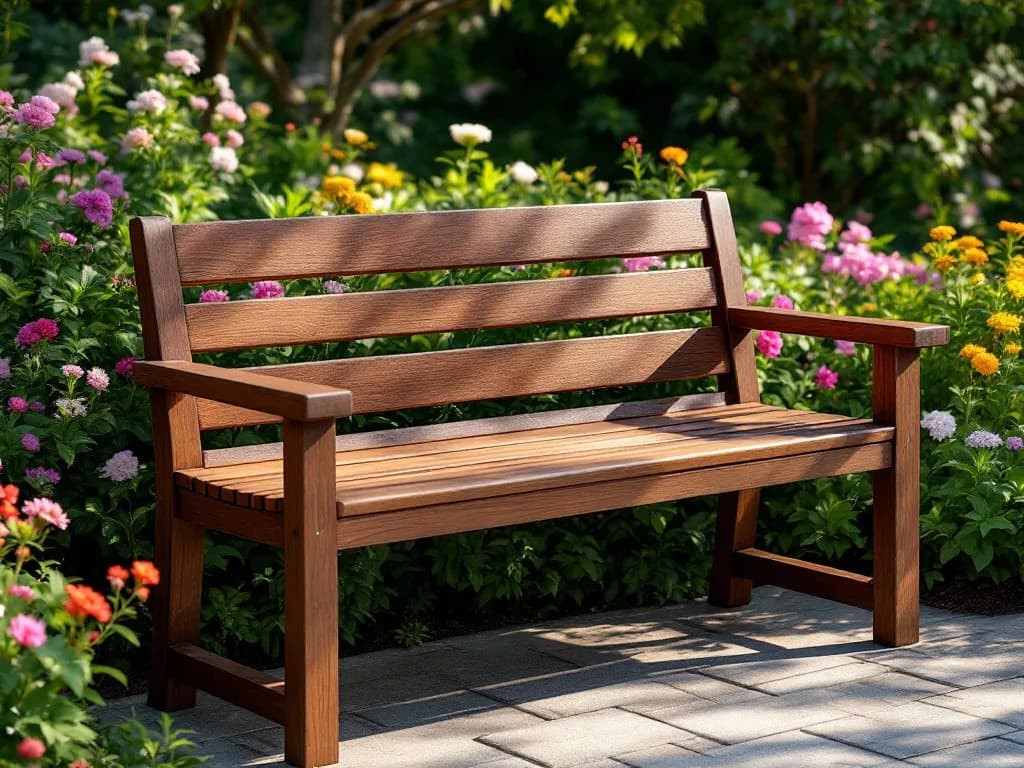
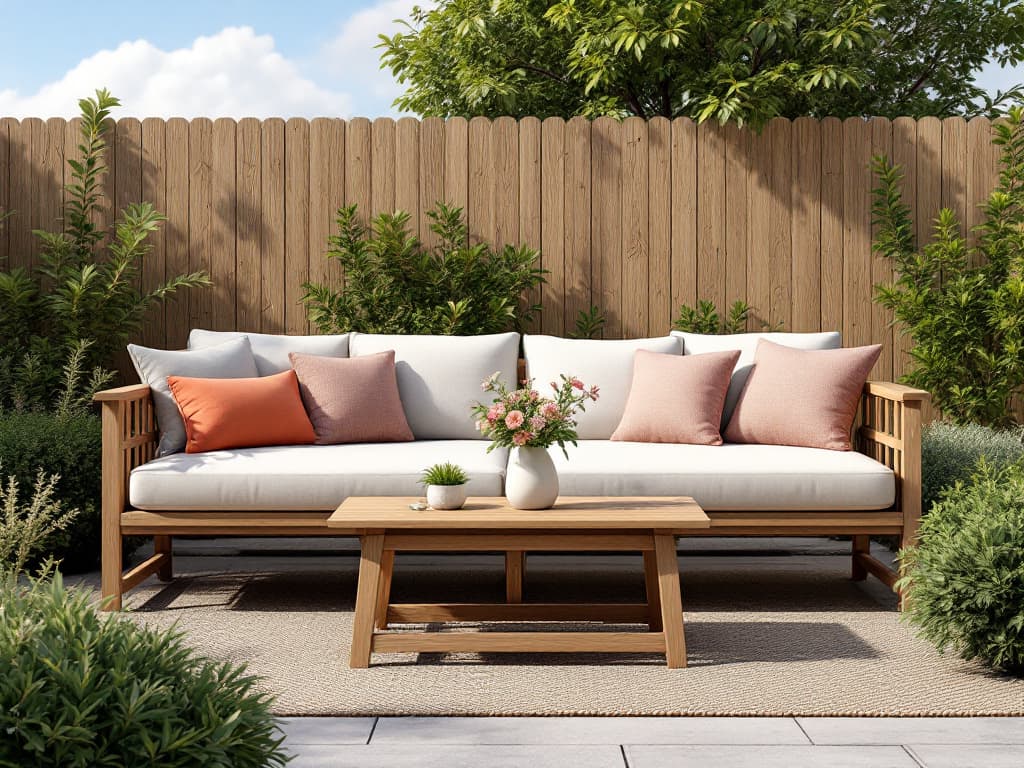
Benches
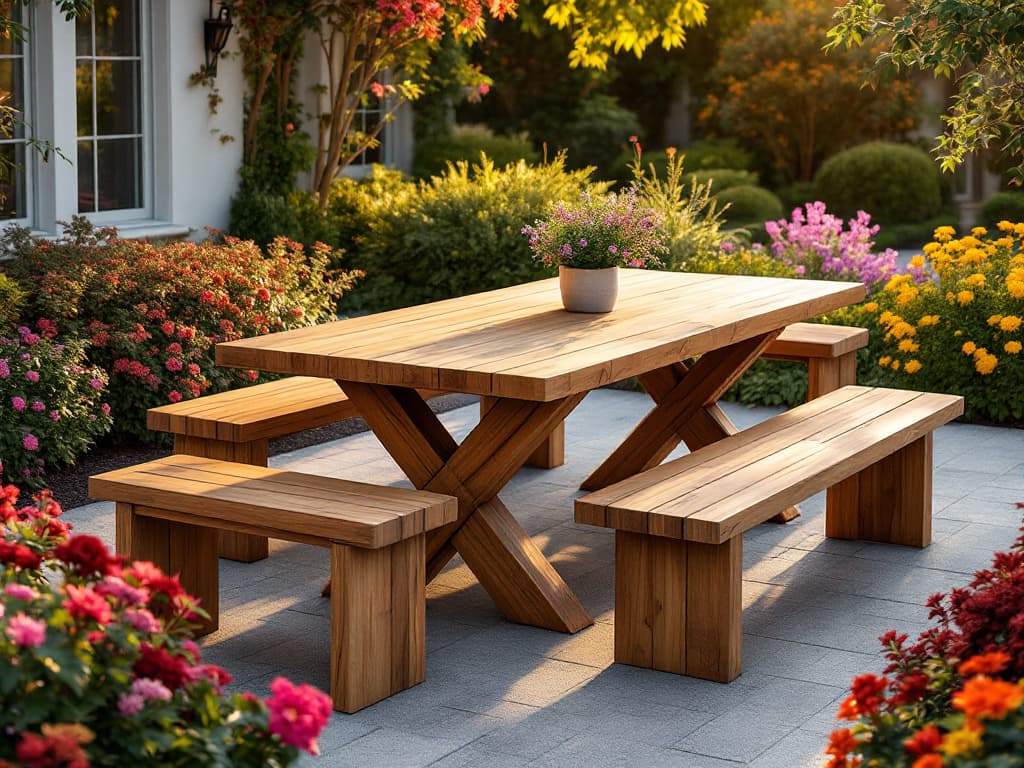
Tables
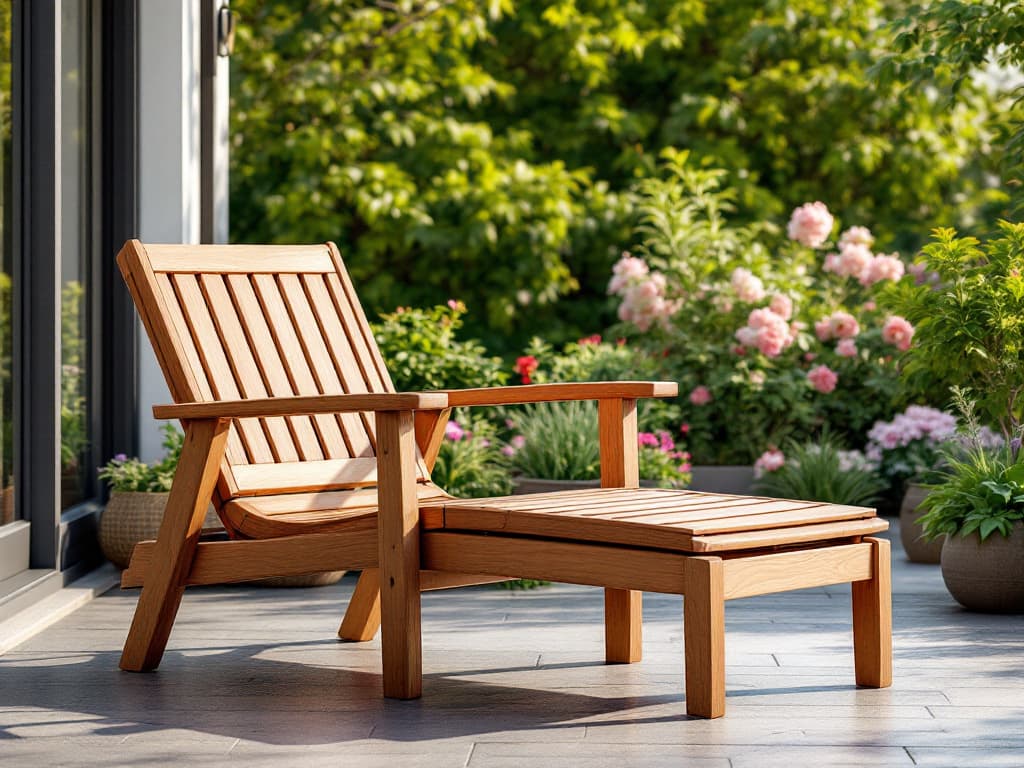
Loungers
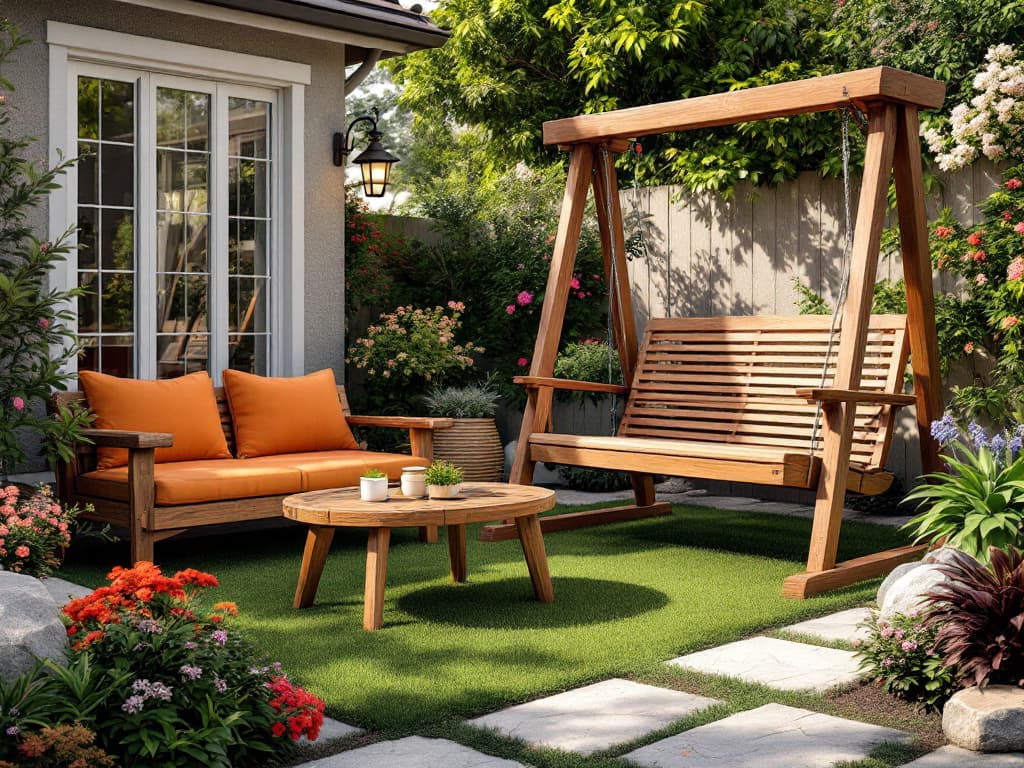
Swings
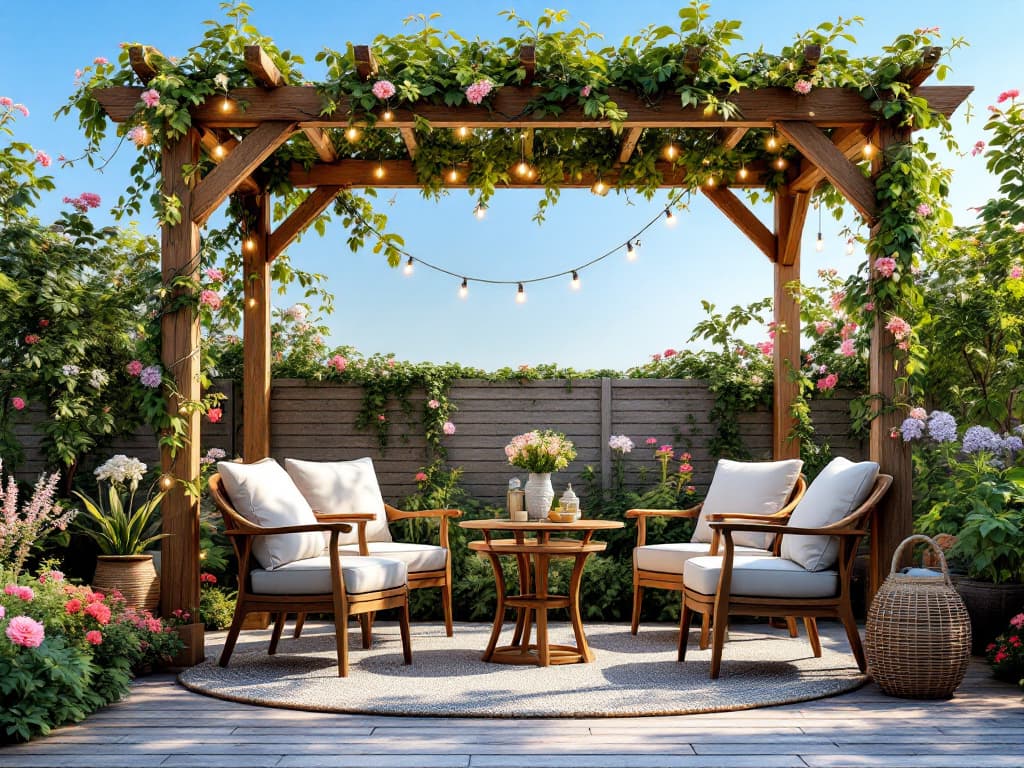
Pergolas

Log stores

Stools
What sets wooden garden and outdoor furniture apart — production features
The main difference between outdoor and indoor furniture is a safety margin against the elements. The material has to hold its shape and its look in high humidity, under direct sun and in frost — not only in a dry room. A mistake at this stage is costly: the wrong species or a scrimped coating, and within a year the bench warps, cracks and turns grey. So the choice of timber and protection here is not a detail but the foundation of the whole piece.
It starts with the species. We use kinds that naturally resist rot and mechanical wear reasonably well, and on top of that comes treatment — impregnation with protective compounds, an antiseptic. This pairing of the right wood plus protection is what delivers durability: the furniture needs touching up, repair and replacement less often, which for a wholesaler translates directly into fewer returns and complaints from their buyers.
Ergonomics are not forgotten either. A bench that is uncomfortable to sit on will not sell, however durable the coating. Seat height, backrest angle, tabletop width — all of it is calculated for a real person. Plus a balance of weight: the structure carries the load and stands securely, yet two people can genuinely move it rather than needing a forklift.
Finishing is done with compounds that are safe for people and the environment — for furniture that stands in parks, next to playgrounds and in cafés this is essential. The coating must neither reek of chemicals in the heat nor release harmful substances. For a wholesaler this is also a selling argument: eco-friendliness is asked about today by retail chains and municipal buyers alike.
The sum of it is furniture where strength, appearance and comfort are brought together for a single purpose — to serve long and with dignity outdoors, not merely to look good on a shop display.
A variety of subcategories of wooden garden and outdoor furniture — expanding the range
Within the category of wooden garden furniture the choice really is large. There are popular standard models that chains need for a broad assortment, and there are sets for a particular style or purpose — from restrained minimalism to massive classics for country estates. The latter is especially valued by those who want to stand apart from competitors’ generic offerings.
Inside are both simple benches with tables for parks and public gardens, and more complex things: swings, gazebos, pergolas, outdoor décor. Picnic and barbecue sets stand apart — they are designed for active use, on the assumption that they will be assembled, taken apart and transported often. Such furniture has to survive not only the weather but also less than careful handling.
A distinct layer is commercial: furniture for summer terraces of cafés and restaurants, for hotels and holiday resorts. Here intensity is added to the usual outdoor requirements. A chair on a café terrace goes through as many sittings in one season as a garden chair does in five years, so a margin of strength and repairability come to the fore alongside appearance.
Such a spread of product types makes it possible to cover very different markets from one platform — from municipal landscaping to garden-centre retail. A wholesale client across Europe gets not a single item but the ability to assemble a whole line-up for furnishing garden and outdoor spaces.
How wooden products are manufactured
A detailed breakdown of the production stages of wooden garden and outdoor furniture
The journey of a piece from board to finished bench runs through several stages, and slack at any of them drags defects further down the chain. It all starts with the raw material: timber arrives at production not “as it comes” but after selection and a check against requirements — moisture content, density, absence of hidden defects.
Next comes machining. The blanks are sawn, planed and sanded, bringing the parts to the required size and shape. Surface smoothness here is not cosmetic: a splintery or uneven part looks cheap, holds the coating worse and is simply unpleasant to the touch — and for furniture people touch by hand every day, that matters.
Then assembly. Elements are joined on sturdy hardware and at joints designed for a long-term load. The joints are exactly the most vulnerable spot of outdoor furniture: with constant changes in humidity the wood “breathes”, and a weak joint works loose within a couple of seasons. So the connections are designed to hold rather than start to wobble by the end of summer.
The final step is a protective and decorative coating. Here both the evenness of application and correct drying matter: an under-dried or carelessly laid layer will not save the wood from moisture and UV. Every finished piece is inspected — for joint strength, geometry and appearance — before it leaves for the customer. It is cheaper to catch a defect at the outlet than to deal with a returned batch.
This end-to-end, well-tuned route is what yields furniture ready for long service in the open air, rather than for a pretty photo shoot on day one.
The finer points of working with wood in the production of garden and outdoor furniture
Working with the wood itself deserves a separate conversation. Selecting and preparing the material is half the success of outdoor furniture. Timber is chosen for strength, density and weather resistance, and then it is dried — properly and without haste. Drying is critical here: a poorly dried board will later “warp”, develop cracks and gaps precisely when the piece is already standing at the client’s place in the rain.
Processing goes through several stages. First the mechanics — the blanks are given shape and size. Then sanding, which removes irregularities and prepares the surface for the finish. And only then protection: water-repellent and antiseptic compounds selected for outdoor conditions. They keep moisture from penetrating the wood’s structure and block fungus and mould — the very enemies that quietly eat furniture away from within.
But the coating works not only as protection. Oils and varnishes also bring out the wood’s natural texture — that living grain for which outdoor furniture is chosen in wood rather than plastic. A good finish withstands both sun and moisture, keeping colour and pattern rather than fading into grey by mid-season.
Some operations are automated — this raises precision and repeatability, which matters especially on batches where parts have to be identical. At the same time the natural properties of the wood and the character of each model are preserved: the machine helps hold the geometry rather than turning the pieces into a faceless stamp.
The benefits of working with professionals

Modern equipment
Panel saws, CNC and milling machines — precision, speed and quality guaranteed

Extensive experience and expertise
We know how to handle wood and sheet materials — reliably, precisely, professionally

Fast order fulfilment
Fast and without compromising quality. We value your time and our commitments

A full range of services in one place
Cutting to size, sawing, milling, sanding, painting, assembly — all in-house, with no middlemen

Trusted materials and consumables
We work only with quality materials, so you can be confident in the result
An individual approach to every client
We work to your drawings, create a machining program for the task and account for every detail
The specifics of cooperation in the wooden garden and outdoor furniture segment
Cooperation on wooden garden furniture is built around a simple pairing: a quality product plus reasonable wholesale terms. The work is done directly with production, without a chain of intermediaries — hence both the stability of supply and the flexibility on an order. It is easier to agree on a non-standard batch when you deal with the people who actually saw and paint rather than resell someone else’s work.
A wholesaler has access to a broad line-up for different styles and purposes, and it can genuinely be tailored. Sizes and shapes change, along with the choice of species, colour and type of finish, and extra options. For a reseller this is a trump card: they enter the market not with the same product everyone has, but with a product built for their audience — and compete on more than price.
The logistics are taken on as well: delivery across all of Europe. For wholesale this is no trifle — missed delivery deadlines hit their own sales, especially in the short summer season, when garden furniture flies off the shelves in a matter of weeks. A batch that arrives on time is worth more than one that arrives after the peak of demand.
Along with the goods comes consultation — help choosing models and technical solutions for the partner’s specific market. This approach is what turns a one-off deal into a long relationship: when the manufacturer understands the client’s task and gives sound advice, it is easier to build a business for the long term rather than looking for a new supplier every season.





An overview of other product categories — expanding the range for wholesale clients
Production is not confined to garden furniture. The same wholesale buyers also have access to other wooden categories that are convenient for broadening the range in a single purchase: office furniture, furniture for cafés and restaurants, interior items, decorative elements. One supplier for several product groups means fewer contracts, less logistics and one clear point of contact.
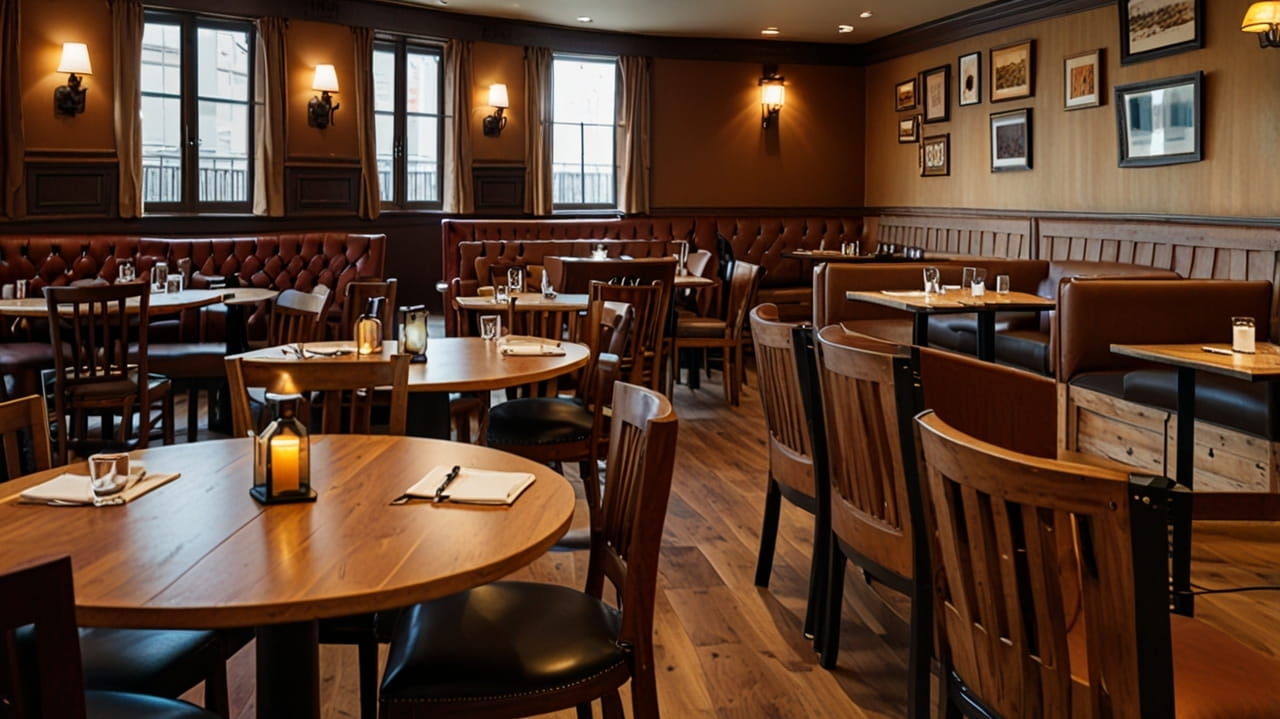
The office line is in demand thanks to ergonomics and tidy design — such furniture affects both employee comfort and how the company looks in a visitor’s eyes. Furniture for cafés and restaurants is a balance of looks and endurance: it upholds the venue’s image and survives the flow of visitors without falling apart by the end of the first year of operation.
Beyond furniture itself, the work includes wooden elements for fitting out premises and outdoor spaces: decorative panels, counters, shelving units. With such a set a wholesaler puts together a comprehensive offer for a client — furnishing the hall, the terrace and the entrance area from a single source. For the end customer this is convenient, and for the reseller it means a higher average order value.
All of this production is made to the same standards and on the same equipment as the garden furniture — that is, with the same durability and attention to appearance. So such production is convenient as a universal contractor for wooden furniture: there is no need to keep five different suppliers for five categories and reconcile their quality to a common denominator.

Our portfolio — finished products
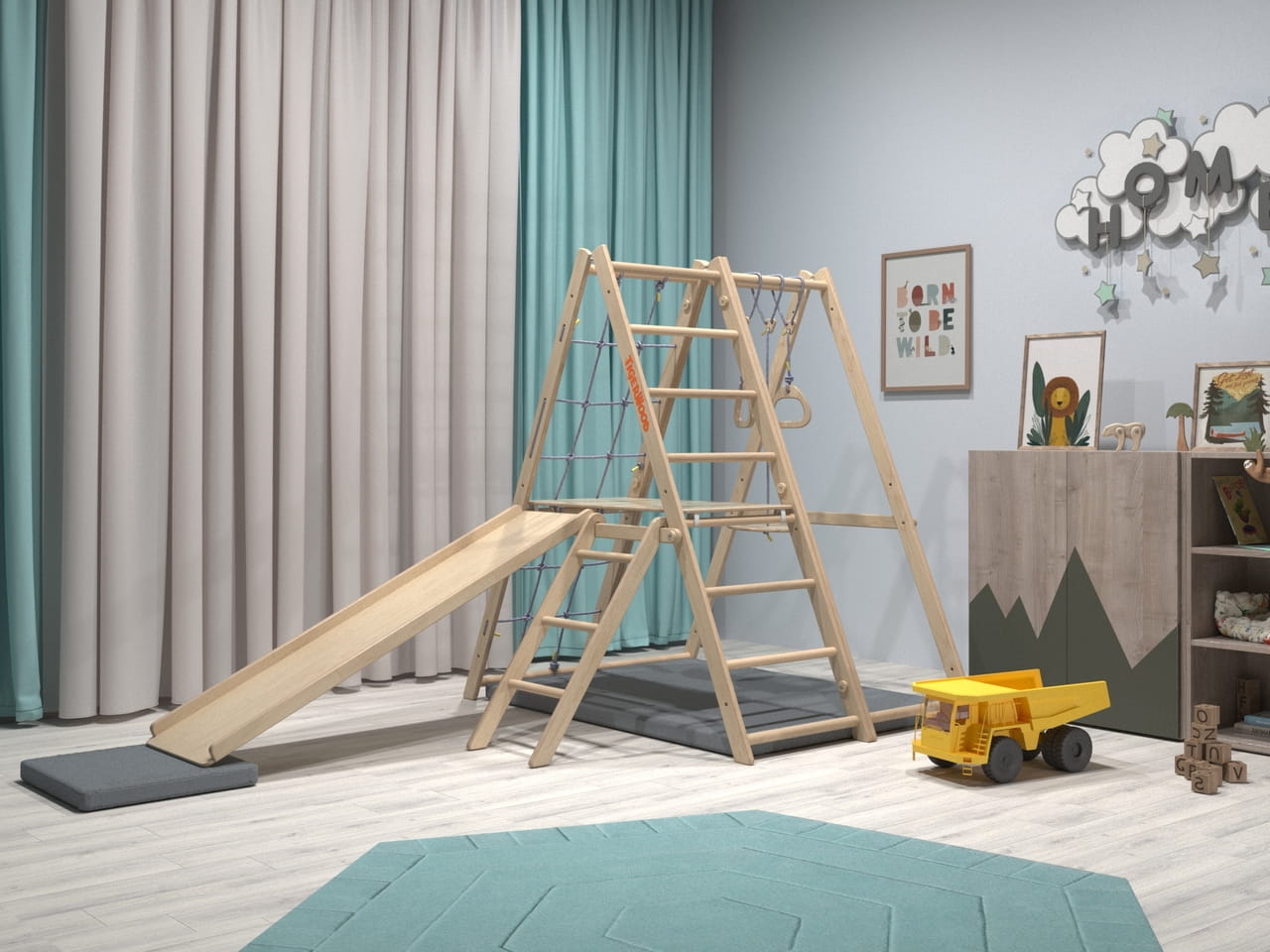
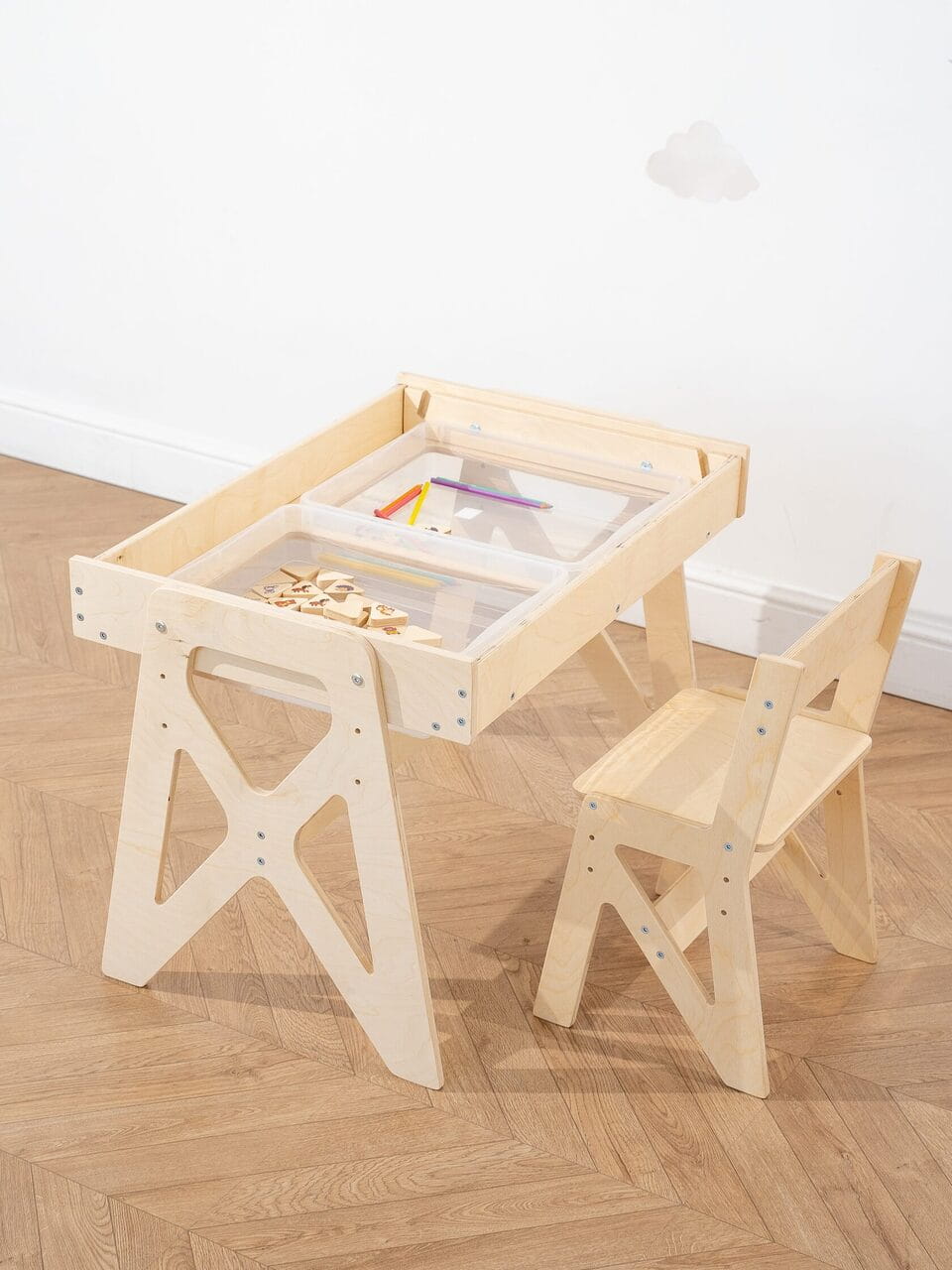


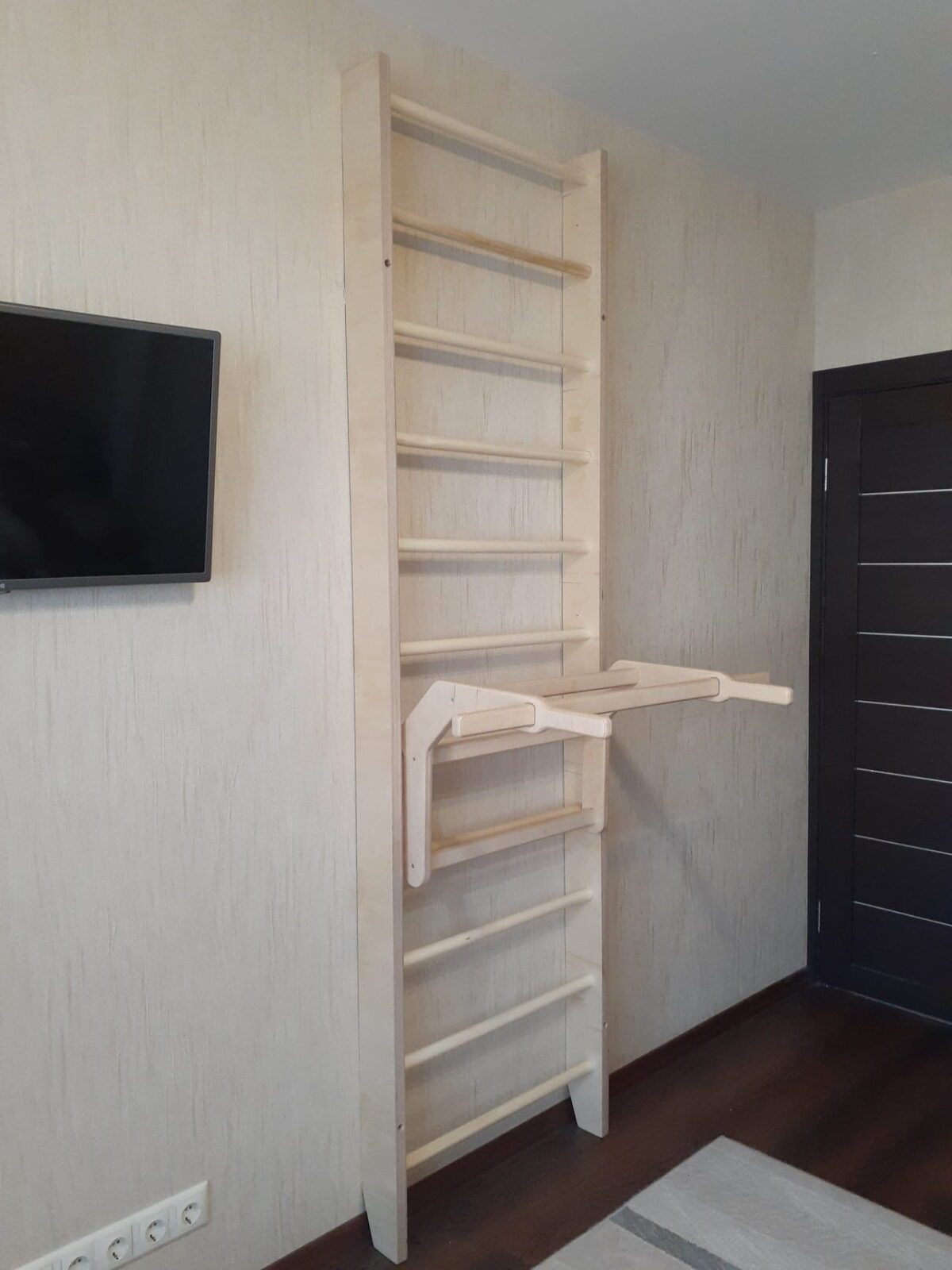
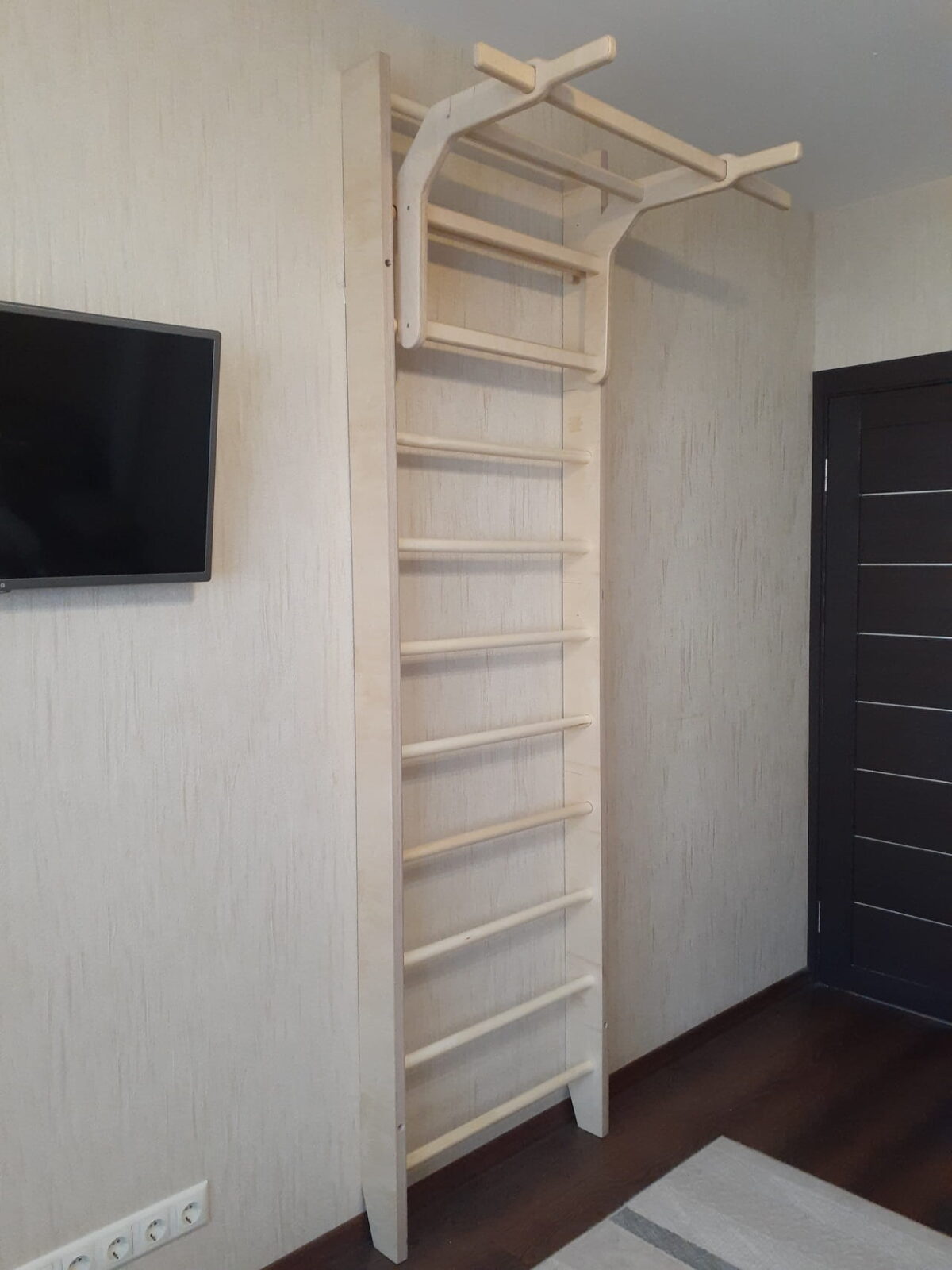
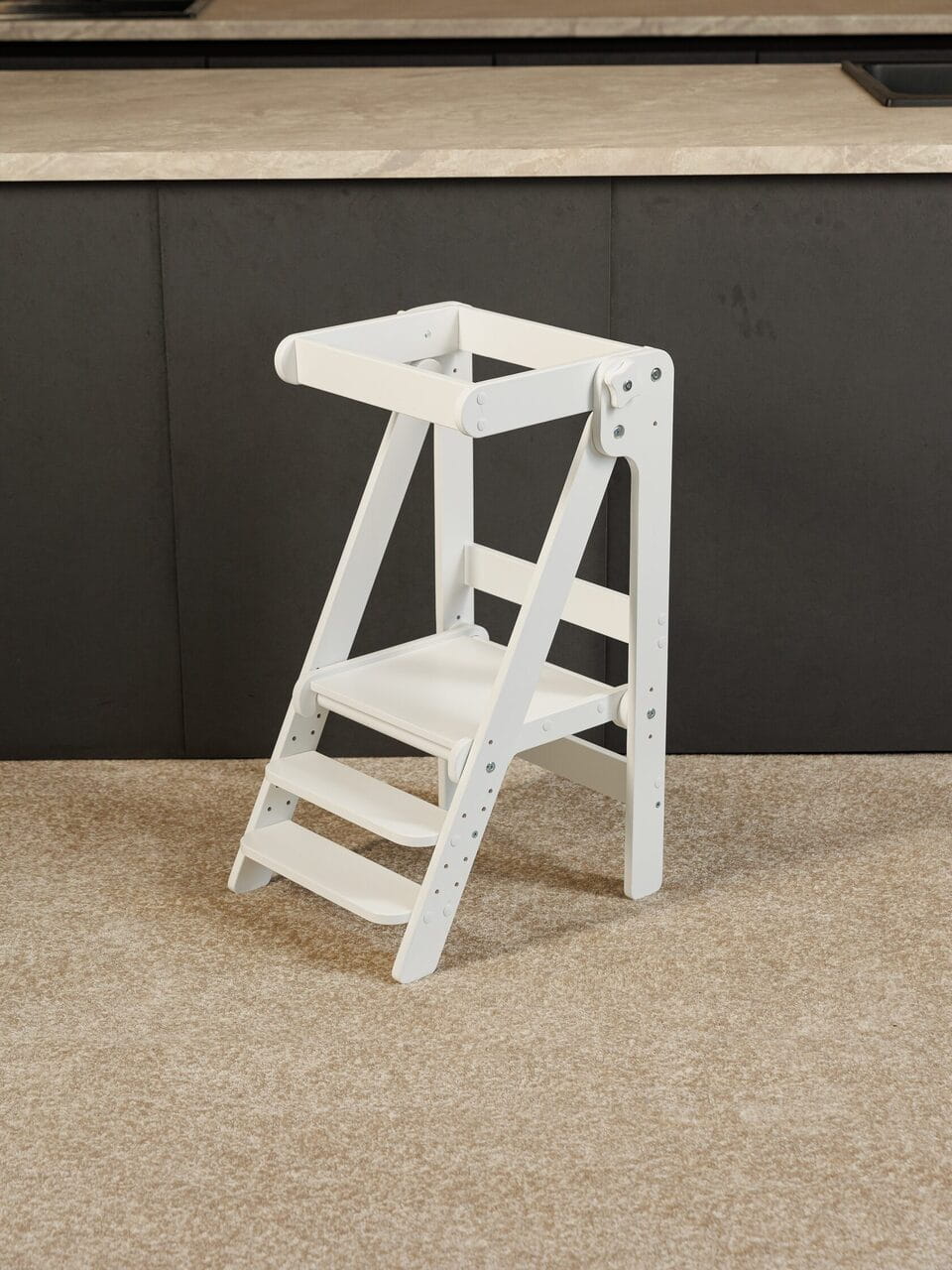
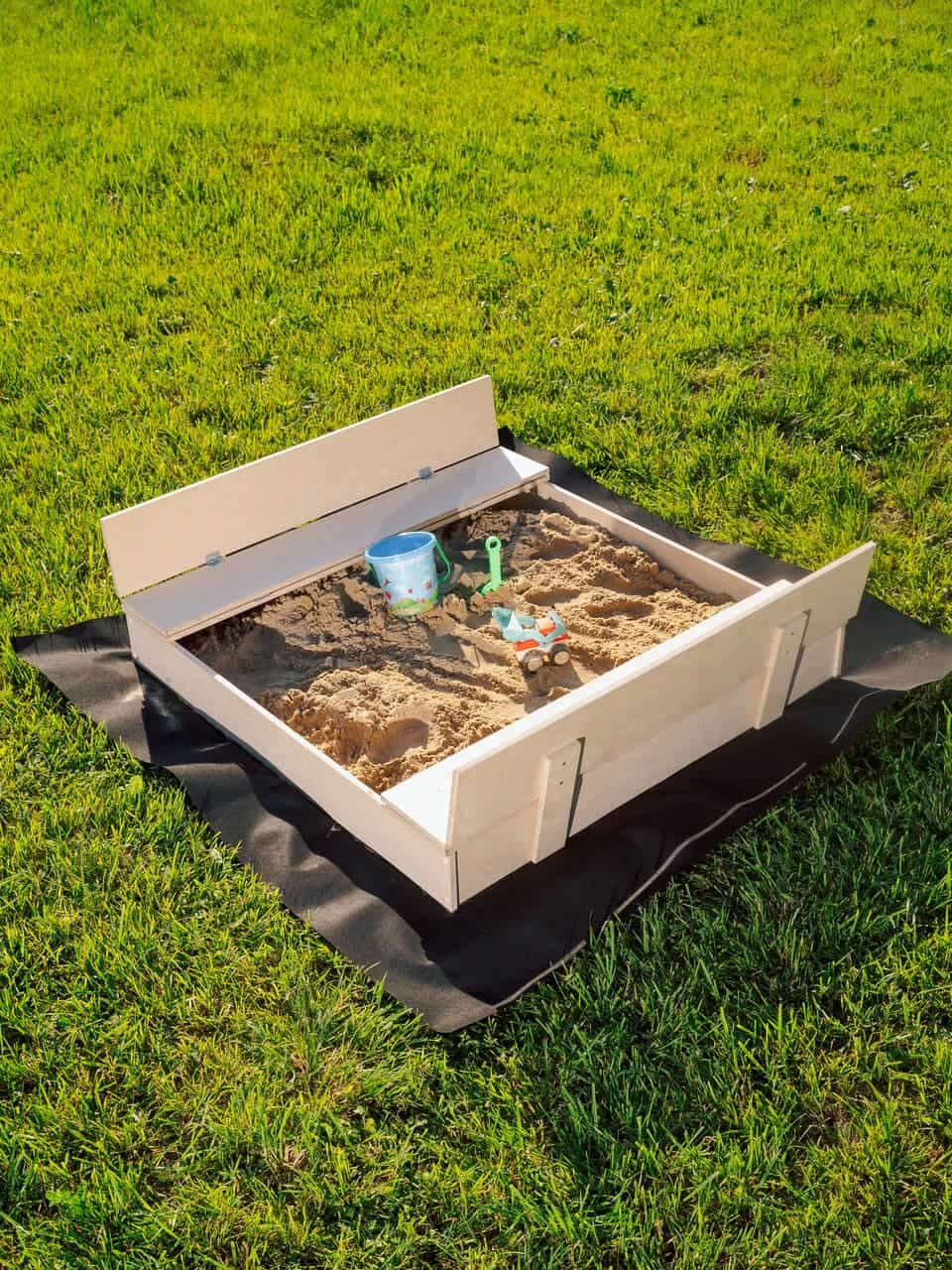

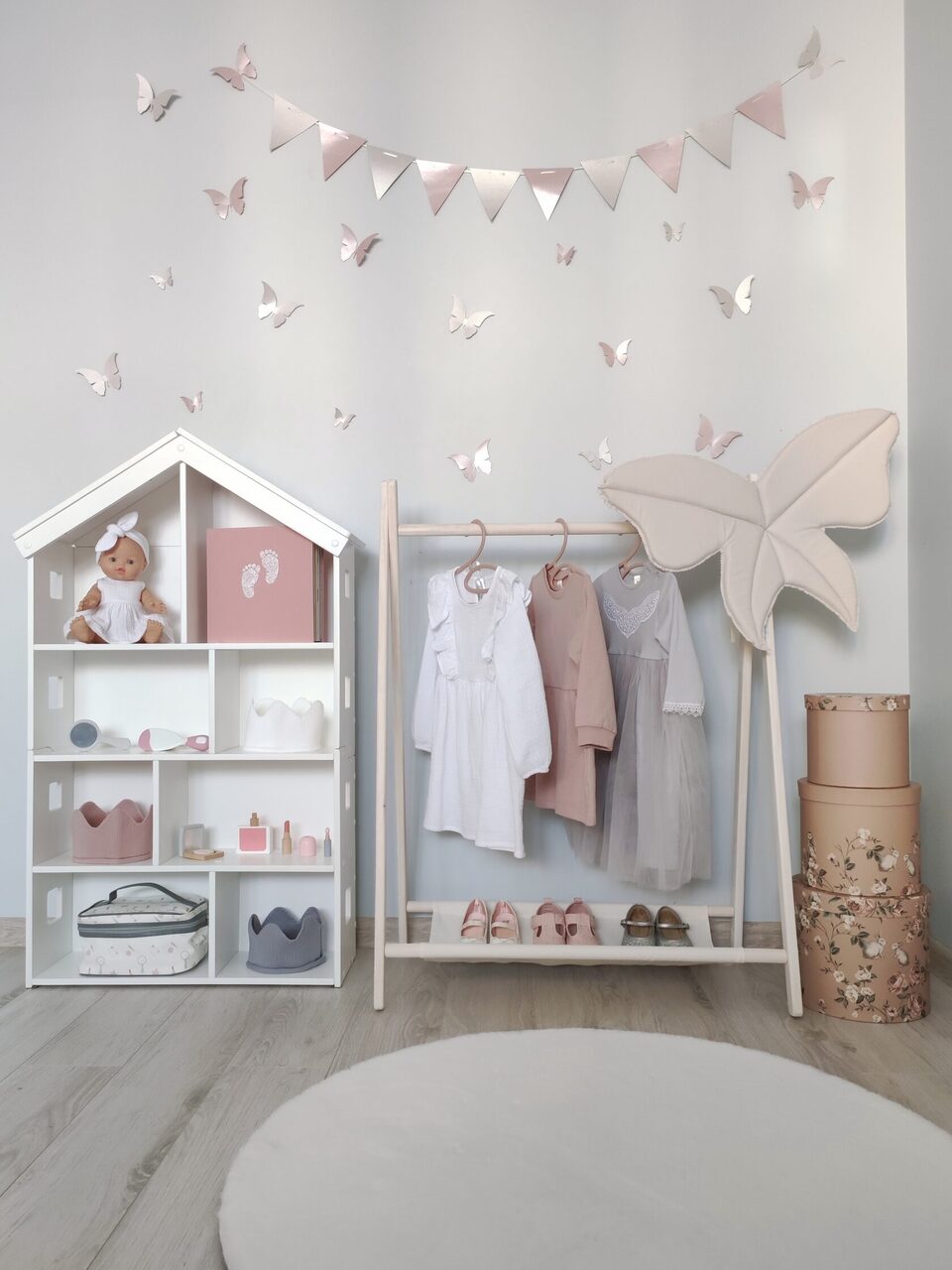

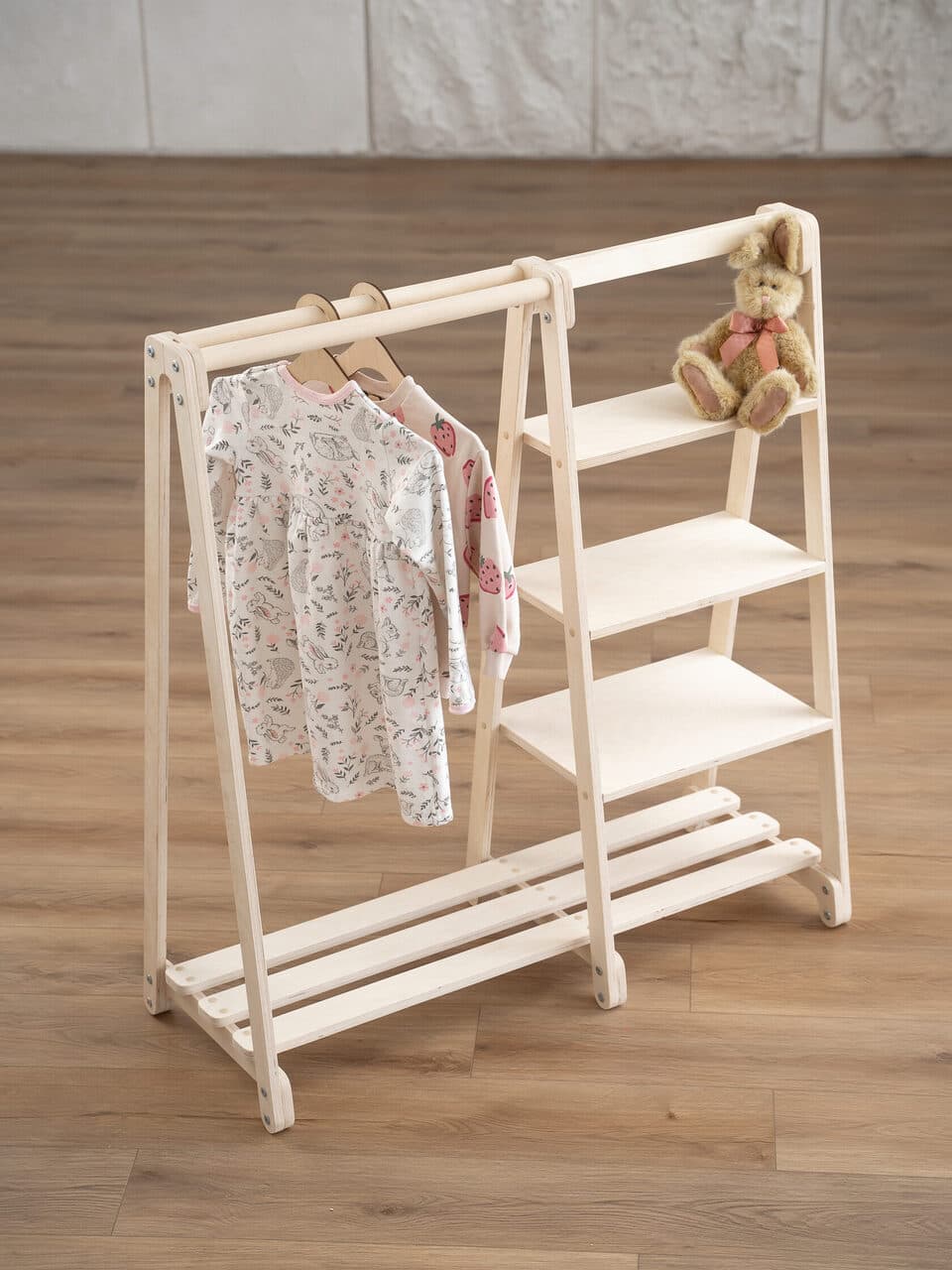
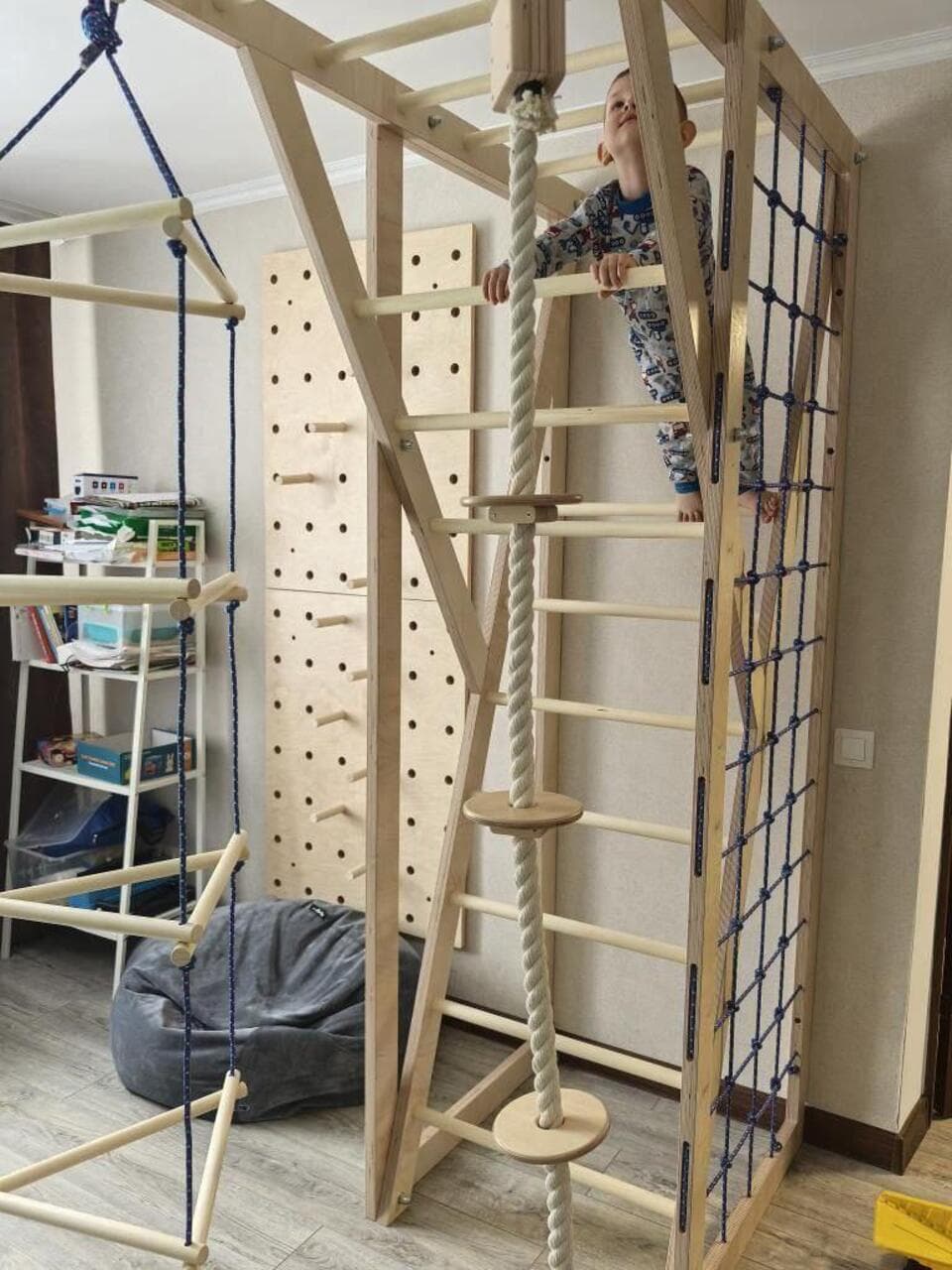
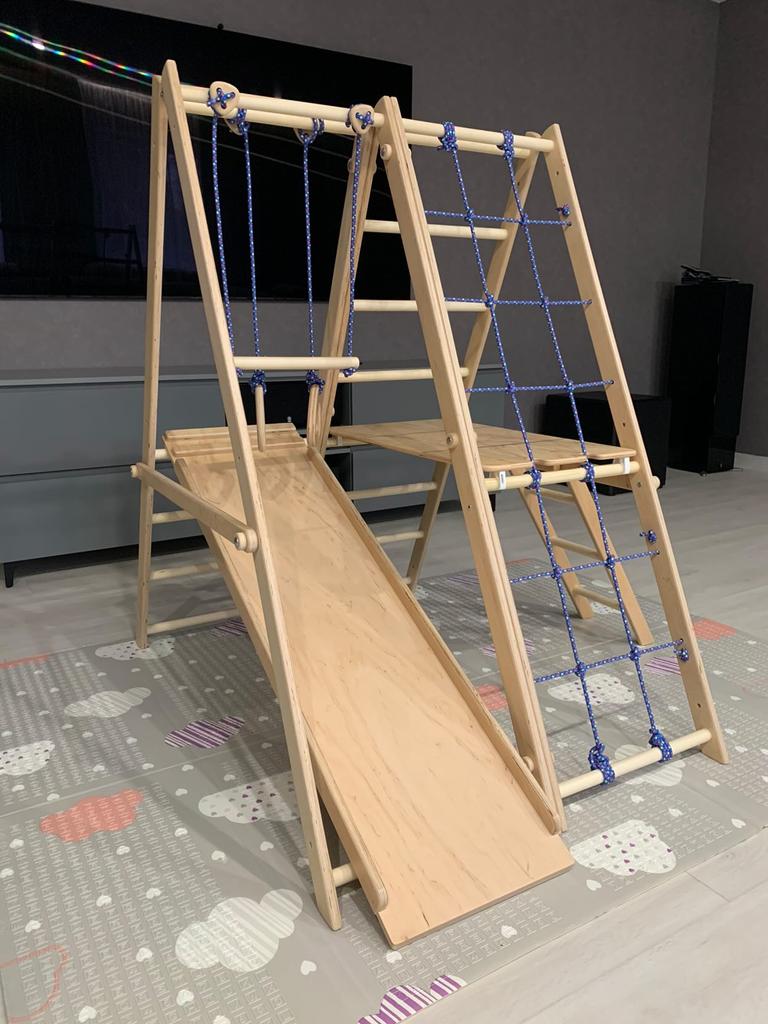

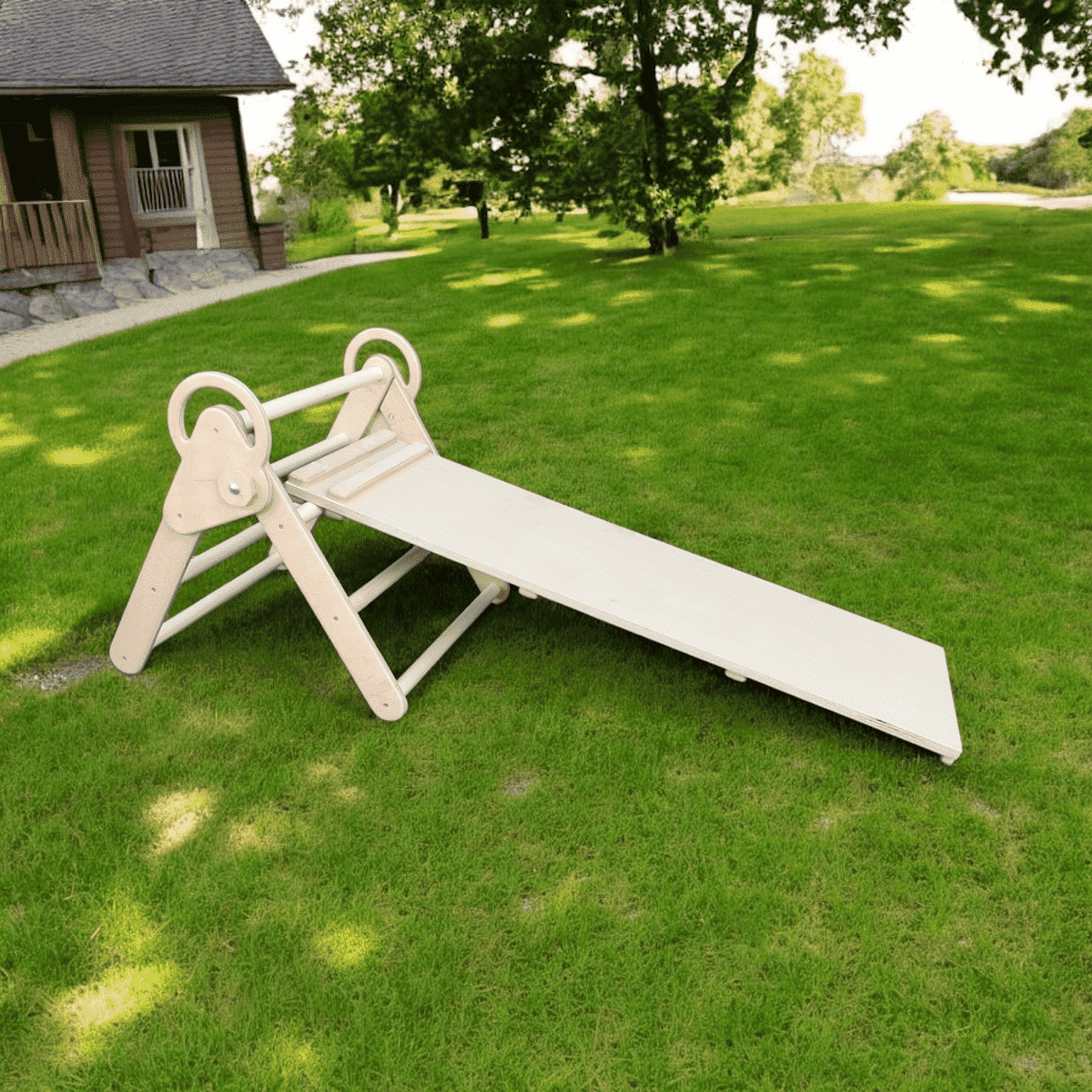

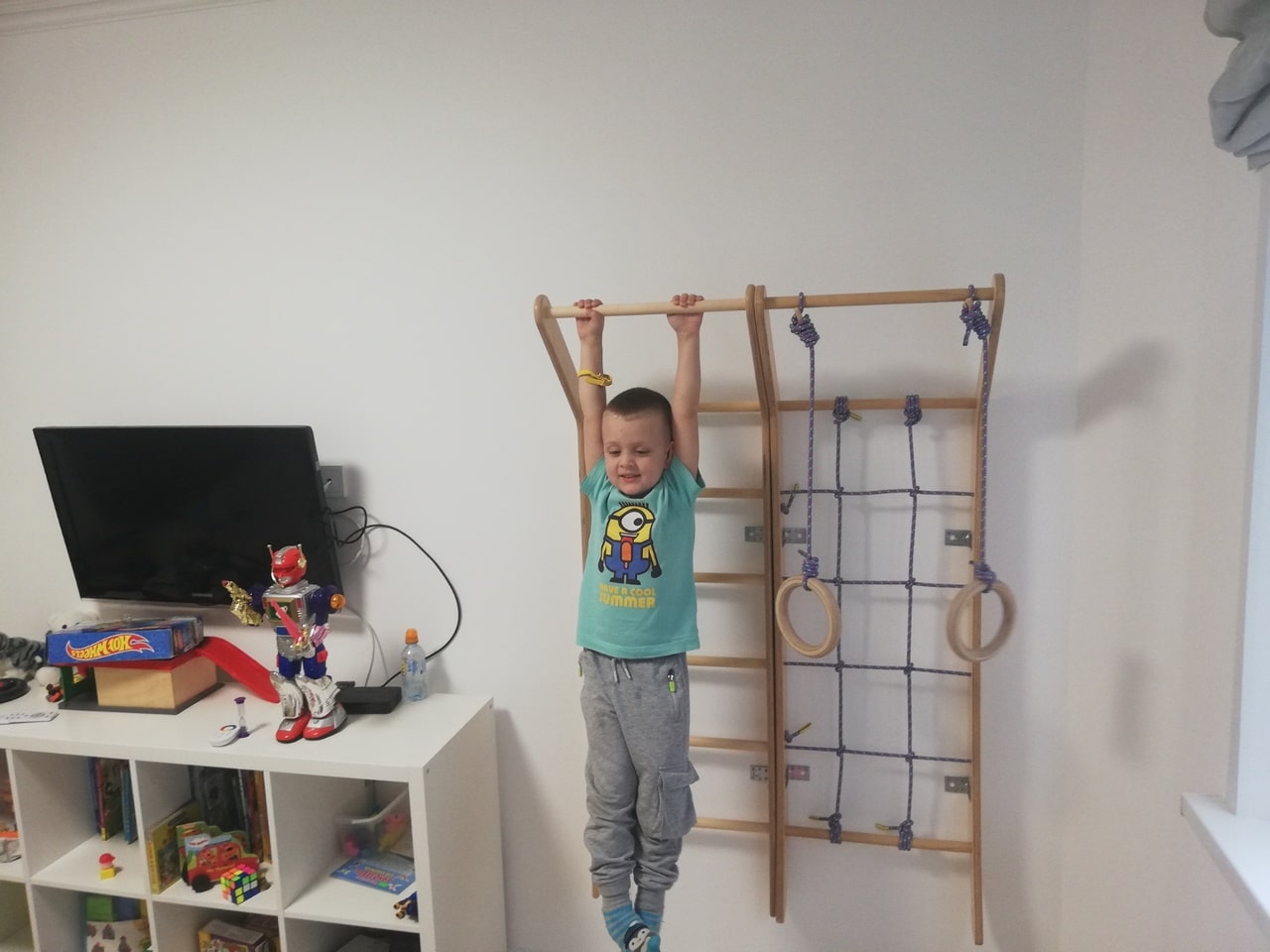


Examples of completed projects in garden and outdoor furniture
The completed works bring together projects that vary greatly in scale — from a small private garden to large public spaces and commercial sites. They show clearly both the level of execution and the fact that production handles a one-off order and a serial delivery to a large site with equal ease.
Every project was made for its own task — for the landscape, the style and the client’s requirements. For parks, for instance, sturdy benches of a classic form were made, designed for year-round outdoor life and a flow of people. For summer café terraces — compact tables and chairs that survive daily intensive use and frequent rearrangement without losing their looks.
The technological base makes it possible to combine comfort and appearance in a single piece rather than choose between them. Each object is built for specific wishes and conditions of use: what suits an enclosed restaurant terrace differs from what is placed in an open city square, and this is taken into account at the design stage.
For a wholesaler, a portfolio is not only about the picture but also about the engineering: how the piece bears a load, how easy it is to assemble and maintain. It is these things that later determine whether they will have a stream of returns or satisfied repeat customers. A reliable product works for the seller’s reputation no worse than a well-styled display.
Who uses a carpentry workshop’s services

Furniture makers

Interior designers

Advertising companies

Exhibition stand builders

Art studios

Cafés and restaurants

Construction firms

Retail equipment manufacturers

Furniture factories

Private craftsmen

Custom orders

Manufacturing companies

Museums and exhibition halls

Architects

Theatres and film studios

Educational organizations

Children’s products manufacturing

Repair specialists

Online stores

Sole proprietors
The target audience of the products — who needs wooden garden and outdoor furniture wholesale
Who buys this furniture? First of all wholesale companies, distributors and shops that trade in outdoor and garden goods. Among them are retail chains with a broad assortment for both private customers and business. They need a supplier who will cover both volume and stable quality, so they do not have to blush before their own buyers over defects.
A separate important group is landscaping and landscape-design companies. They place furniture on sites for which they answer to the client for years, so durability in harsh weather combined with a modern look is critical to them. A bench that falls apart after a season is a blow to their reputation, not merely a warranty case.
Venues with open areas also buy — cafés, restaurants — as well as hotels and health resorts that need to furnish their grounds with comfortable, durable furniture. In this segment the speed of delivering a large batch comes to the fore, along with a guarantee that the whole volume will arrive identical and matching what was stated — not “the first half good, the second as it turns out”.
In the end the circle of clients is professional buyers, for whom quality, reliability and the ability to work directly with a wooden-furniture manufacturer matter more than a one-off low price and not with a middleman.
Wooden garden furniture — a comprehensive production approach
Production and wholesale supply of wooden garden furniture is one of the key directions, and it works for partners across all of Europe. Products made of selected and properly processed timber find a place everywhere — from a private plot to a large public site, where furniture is tested by both the weather and people.
The main principle in production is strength and appearance in one piece. Furniture must withstand moisture, heat and frost while remaining beautiful and comfortable. For this, modern materials and processing technologies are put to work: they seal the wood against rot, wood-boring insects and mechanical damage — the three main reasons outdoor furniture usually fails.
The range is assembled so that a ready recreation zone can be composed from it: benches, tables, chairs, swings, picnic sets and other solutions. For a wholesale client this makes it possible to offer their buyers not disparate items but a coherent set for a garden, a park or a commercial site — and a set sells more readily than a lone bench.
Quality control is built into the entire process — from receiving the raw material to the final finishing — rather than reduced to a quick glance at the finished piece. For outdoor furniture this is essential: most defects that surface a year later in the rain are laid in precisely at the early stages, and they have to be caught there, not upon a return.
To partners, production gives two things important for wholesale: stable supply and the ability to adapt the product to their brief. The first shields their sales from disruptions, the second helps them stand out on the shelf. Experience with large clients and an understanding of how a reseller’s business works make the cooperation predictable — and a supplier’s predictability is sometimes more important to wholesale than a couple of percent of price.
Wooden garden furniture: what a wholesale buyer needs to know
What follows is a practical breakdown for those who buy wooden garden furniture for resale or for a site: which species stands up to the outdoors, how it is protected, what kinds of products there are, how to care for them and where people most often trip up when ordering. All of it from real practice, not from an advertising brochure.
Wood species for the outdoors
The choice of species for outdoor furniture decides half the matter. Wood that lives perfectly well in a dry apartment can delaminate outdoors after a single season of rain. So for the open air a material with a dense structure and natural moisture resistance is chosen, while soft and loose species are either screened out or reinforced with extra protection.
Softwoods are the workhorse of garden furniture. They contain resins that in themselves resist moisture reasonably well, they are affordable and easy to process. Their downside is relative softness, so such pieces always go through impregnation and need a careful finish. Hardwoods are more expensive but noticeably stronger and more refined in appearance: they are used for premium benches, tables and furniture for representative areas, where both service life and a prestigious look matter.
A separate topic is heat-treated wood. After heating in special chambers the wood loses its ability to absorb moisture and becomes far more resistant to rot and deformation, while also gaining a handsome dark shade. It is a sound solution for a humid climate and places near water. Which species is appropriate in a particular batch depends on the budget, the region’s climate and where the furniture will stand — in a park in the open air or under the canopy of a terrace.
| Type of wood | Its strengths | Where it fits |
|---|---|---|
| 🌲 Softwood | Affordable, resinous, easy to process | Mass-market benches, tables, sets |
| 🌳 Hardwood | Strong, durable, refined look | Premium, representative areas |
| 🔥 Thermowood | Does not absorb moisture, resistant to rot | Humid climate, places near water |
Moisture-resistant coatings and protection from rot and UV
Even the most resistant species will not last long outdoors without a coating. Protection is not a single coat of varnish but a well-thought-out system. First comes the antiseptic, which penetrates deep and blocks fungus, mould and wood-boring insects. It is they, rather than rain itself, that most often kill outdoor furniture from within, staying unnoticed until the part begins to crumble.
Over the antiseptic goes a finishing coat — oil, varnish or a special paint for exterior work. Each has its own logic. Oil penetrates the pores and brings out the texture, leaving the wood “alive” to the touch; it is easy to refresh by simply applying a new coat without complex preparation. Varnish forms a durable film and gives a gloss, but when damaged it calls for a more serious repair. Paint fully covers the surface and protects to the maximum, but hides the natural grain of the wood.
UV protection stands separately. The sun is more dangerous to wooden furniture than it seems: it burns out the colour, dries the top layer and makes the surface grey and rough. That is why UV filters are added to outdoor compounds; they work like a sunscreen — taking the hit themselves and preserving the colour and structure of the wood. Without such protection a bright bench turns pale within a couple of seasons, and no species will save it here.
Types of wooden garden furniture
The range of wooden garden furniture is broad, and each type of product has its own production specifics. Benches are the most mass-market item: they are bought by parks, private customers and commercial sites alike. Here stability, a comfortable height and strong joints matter, because a bench in a busy spot is sat on hundreds of times a day.
Tables and picnic sets are the next popular group. A table’s main load is on the tabletop: it has to hold up to water, not warp and be easy to clean. Loungers and chairs are valued for ergonomics — here the angle of recline and balance matter, so a person is comfortable and the structure does not tip over. Swings and hanging models require special attention to dynamic load and hardware: the joints work under constant swaying, and a weak connection reveals itself quickly.
Larger structures — gazebos, pergolas, canopies — are already almost small-scale architecture. They are designed with wind and snow loads in mind, not just rain. A separate category is outdoor décor and functional details: flower boxes, log stores, fencing. Such a range lets a wholesaler assemble a whole recreation zone for a client from a single source, and a comprehensive offer sells noticeably more readily than disparate items.
Care and winter storage
The service life of outdoor furniture depends heavily on care, and this is worth conveying to the end buyer — there will be fewer unjustified complaints. The basic rules are simple. Once a season the surface is wiped clean of dirt and dust with a soft brush or cloth, without aggressive chemicals that eat away at the coating. An oil finish is refreshed every year or two — this takes a couple of hours and extends the furniture’s life by years.
In winter wooden furniture is, where possible, moved under a canopy or indoors. If that is not possible, it is covered with breathable covers — breathable, precisely, and not a solid film under which condensation gathers and mould takes hold. The legs should ideally be raised off the ground so they do not stand in meltwater and snow. These simple measures separate furniture that serves ten years from furniture that falls apart in three.
Common mistakes when ordering
Most disappointments with outdoor furniture are laid in at the ordering stage, not during use. Let us go through the typical slip-ups that are easy to avoid.
- ❌ Scrimping on the coating. Bare or carelessly treated wood outdoors is doomed, however good the species.
- ❌ The wrong species. Soft wood without reinforced protection quickly delaminates in the rain.
- ❌ Solid covers for the winter. Under a film without ventilation, moisture builds up and mould takes hold.
- ❌ Flimsy hardware. Weak joints work loose from the wood’s seasonal movement.
- ❌ Ordering right up against the season. In summer demand for garden furniture peaks, and it is easy to miss the deadline for a batch.
There is nothing to worry about if you overlooked something on the list — that is exactly what a dialogue before launching a batch is for. A competent manufacturer asks these questions in advance, advises on species, coating and timing, and this is precisely the case where advice at the start saves money and nerves later.
What an order looks like in practice
To make the theory clearer, here are three typical scenarios. A city park orders a batch of classic-form benches — here anti-vandal strength, stability and a coating that survives both the rain and the less-than-careful handling of passers-by come first. The pieces are made sturdy, with reinforced joints and a durable finish, while the design is kept restrained and fitting for the urban environment.
A chain of country cafés fits out its summer terraces — a different task. Here looks, weight and speed of service matter: tables and chairs have to be attractive, easy to rearrange and able to withstand a daily flow of guests all season. And a garden centre trading at retail takes a varied assortment — from budget sets for the cottage to premium hardwood sets, to cover buyers with different wallets. Three different orders, but the production logic is one: choose the material and protection for the use scenario.
Lead times and what the price is made up of
The production time depends on the batch volume and the complexity of the pieces and is usually measured in weeks, not days — outdoor furniture needs time for drying and for quality application of protective layers, and rushing this process costs more in the end. At the height of the season, in spring and early summer, the queue is tighter, so a large batch is sensibly planned in advance rather than a couple of weeks before the sales peak.
The price is made up of several clear components, and knowing this arithmetic helps you avoid being surprised by the quote and to see where you can genuinely save and where you should not.
- 🌳 The wood species. Softwood is cheaper, hardwood and thermowood are more expensive but more durable.
- 🎨 The type of coating. Simple oil or a complex multi-layer protection with a UV filter — different budgets.
- 📐 The complexity of the model. A simple bench or a carved gazebo with a canopy differ many times over.
- 🔁 The batch volume. A series works out cheaper per piece than a one-off order.
- 📦 Packaging and delivery. Bulky furniture requires careful packaging and logistics.
The most sensible way to save without losing quality is not to cut the budget on coating and hardware, but to choose the species wisely for the task and order in a series. Saving on protection and joints always comes back as returns and complaints from end buyers.
A one-off batch or regular supply
The format of cooperation is flexible. A one-off batch suits when you need to cover a specific site or test demand for a new item: you describe the task, approve a sample, receive the run. No obligations for the future — just a specific order and a result.
Regular supply is more convenient for chains and distributors that keep wooden garden furniture in their range year-round. With regular work it is easier to plan volumes for the season, keep the same quality from batch to batch and get priority in the queue in spring, when demand soars. Many come in exactly this way — with a single trial batch, and stay for several seasons, having become convinced of the consistency.
Quality control and warranty
Control is built into the whole cycle rather than reduced to a cursory inspection of the finished piece. At intake the raw material is checked — moisture content, density, absence of defects. Along the way the quality of drying and processing is monitored, since most outdoor-furniture defects are laid in precisely at the early stages and show up a season later in the rain. At the outlet every piece is examined for joints, geometry and coating before shipment.
The warranty covers manufacturing defects and lapses in processing quality. It is important to understand the difference: the warranty covers manufacturing faults, not natural wear or the consequences of improper use. With simple care rules observed, the furniture serves its stated term, and disputed situations are settled under the warranty terms — and for a wholesaler this is protection from mass returns that hit both the money and the reputation.
Delivery and assembly
Finished products are shipped across all of Europe. Bulky furniture is packed so that neither edges, nor coating, nor protruding elements are damaged in transit. Depending on the type of product, some furniture is transported assembled and some disassembled, to optimise transport volume; large structures such as gazebos are more sensibly delivered as a kit of parts and assembled on site.
For a wholesaler, logistics is not a trifle but part of the product. A batch that arrives on time and undamaged is worth more than the same batch arriving after the peak of demand or with battered corners. So delivery terms are agreed in advance, for the volume, dimensions and address, rather than decided at the last moment.
Why wood and not plastic or metal
Outdoor furniture has three main competing materials: wood, plastic and metal. Each has its own niche, and it is fairer to compare them on the merits than to insist that wood is always better. Plastic is cheap and unafraid of moisture, but it fades in the sun, grows brittle in frost and looks cheap — it is hard to build a premium offer on it. Metal is strong and durable, but heats up in the sun to uncomfortable temperatures, feels cold in autumn and rusts without a coating.
Wood wins where looks and feel matter. It is pleasant to the touch in any weather — it neither scorches nor chills — looks warm and prestigious, and fits both a natural landscape and an expensive terrace interior. With proper protection, wooden garden furniture serves for a long time, and when damaged it is easier to repair and refresh than plastic or rusted metal. That is exactly why in the mid and premium segments wood remains the first choice, despite the higher price.
Combined solutions
The best result is often given by a combination of materials. A wooden seat on a metal frame unites the warmth of wood and the strength of metal: the frame bears the load and is unafraid of working loose, while the wood provides comfort and looks. A solid-wood tabletop on wrought supports, a bench with cast-iron sides and wooden slats — a classic of park furniture proven over decades.
Such hybrid pieces are also part of the work: each material is processed in its own mode, and everything is assembled into a single structure. For a wholesaler this is a way to offer the buyer a more durable and at the same time more striking product than an all-wood or all-metal analogue. The combination covers the weak spots of each material taken on its own.
A glossary of terms for the client
When discussing an order, words come up that are familiar to production but hazy for a buyer. A short glossary will remove misreadings and help you set the task more precisely.
| Term | What lies behind it |
|---|---|
| 🛡️ Antiseptic | An impregnation that blocks fungus, mould and insects |
| ☀️ UV filter | An additive in the coating that protects the colour from fading |
| 🔥 Thermowood | Wood after heat treatment — resistant to moisture and rot |
| 🫒 Oil | A finish that brings out the texture and is easy to refresh |
| ✨ Varnish | A film coating with a durable surface and shine |
| 🔩 Joint | The connection of parts — the most loaded spot of the structure |
More questions about wooden garden furniture
Can a sample be ordered before a large batch? Yes, for a series this is a sensible step. First one example is made, the client examines it and approves the species, coating and design, and only then is the whole run launched. That way corrections are caught while they cost nothing.
How long does wooden garden furniture last? With the right species, quality protection and minimal care — many years. There are three key factors: a suitable material, a full coating refreshed once every season or two, and sensible storage in winter. Bare wood without care will not last even a couple of years, while treated and cared-for wood serves a decade and longer.
Is such furniture suitable for a humid climate or a waterside? Yes, but with a caveat on the material. For places with constant high humidity it is more sensible to take thermowood or hardwoods with reinforced protection — they are far less afraid of water. A suitable option for a specific climate will be suggested at the order-discussion stage.
Is it realistic to maintain a single style across a large area? Yes, that is exactly why furniture is ordered as a series from a single manufacturer. Benches, tables, bins and fencing in one design and colour bring the area together into a coherent ensemble — a jumble of items from different suppliers does not achieve that effect.
What to do if part of the batch is damaged in use? Wooden furniture is easier to repair than its analogues: a damaged slat is replaced, the coating is refreshed, a joint is tightened. For a wholesaler with regular supply this is convenient — repair parts are made for the already-known model, without guesswork.
Eco-friendliness and safety
For furniture that stands in parks, next to playgrounds and on café terraces, the safety of coatings is not a formality but a requirement. Compounds are chosen so that they release no harmful substances either in the heat or on contact with skin. This is doubly important where children use the furniture and where people eat nearby. Wood in itself is a natural, renewable material, and a sound, eco-friendly finish preserves this advantage rather than crossing it out with chemicals.
For a wholesale buyer, eco-friendliness is also a selling argument. It is asked about ever more often by retail chains, municipal buyers and venue owners who care about the image of a responsible business. The ability to tell the buyer honestly that the furniture is safe and made of a natural material adds value beyond its direct consumer qualities.
Personalisation and branding
Wooden garden furniture is easy to turn into a carrier of corporate identity. A logo is applied to a bench back, the name of a park or venue is engraved, a corporate colour is maintained in the coating. For a café chain or a hotel complex this is a way to fit out the grounds recognisably, and for a municipal buyer — to mark the object’s ownership. Such personalisation is done at the production stage and costs less than trying to add branding to finished furniture after the fact.
For a reseller, customisation is also a way to stand apart from competitors. The same generic product is available to everyone, and they have to compete on it by price alone. Furniture in their own design, size or colour takes the seller out of the price race: they offer what their market neighbours do not have, and justify a higher markup.
Precision and uniformity across a series
When it comes to a batch of dozens or hundreds of pieces, it is critical that the last bench is no different from the first. A mismatch in size, coating shade or geometry immediately catches the eye if the furniture stands together in one area, and spoils the impression of the whole ensemble. So series use templates and jigs, and some operations are automated — this holds a single standard across the whole batch.
Uniformity matters for service too. If all pieces in a batch are made to the same patterns, repair and spare parts fit them without adjustment, and topping up an order a season later does not turn into a quest. For a wholesaler with regular supply this noticeably simplifies life: they know the new batch will match the old one rather than differing by a couple of centimetres and half a tone.
Seasonality and supply planning
Garden furniture has a pronounced seasonality. The peak of demand falls on spring and early summer, when retail and sites prepare en masse for the warm season. At this time the production queue is naturally tighter, and a batch ordered in April is physically harder to have ready for early May than the same batch ordered in winter. Outdoor furniture also needs time for drying and quality multi-layer protection — this process cannot be sped up without harming the result.
Hence a simple conclusion for a wholesaler: it is sensible to order for the season in advance, in winter or early spring. This is both a guarantee that the goods will arrive by the sales peak rather than after it, and usually calmer terms than in the heat of demand. Partners on regular supply win in this sense — their volumes are planned ahead, and a place in the queue for the season is booked without haste.
One supplier for several categories
The temptation to assemble a range from the cheapest offers for each item is understandable, but in practice fragmenting across a dozen suppliers is costly. Different contracts, different logistics, different quality that has to be reconciled to a common denominator, and constant disputes over who is to blame for a delay. One manufacturer covering both garden furniture and adjacent wooden categories removes most of this headache.
If it all comes together: wooden garden furniture is a durable and prestigious product, provided the right species, full protection and sensible care. For a wholesale buyer it matters to get not a single item but a predictable partner with stable quality, flexibility on the order and clear timing. It is enough to describe the task and the volume — the rest, from material selection to packaging, production will take on, and the partner is left to sell a finished, proven product.
How to prepare an order for a batch
A clear brief speeds up the work and removes most misunderstandings right at the start. Putting it together is not hard if you keep a few points in mind.
- 🎯 Describe the task: what kind of furniture, for what site and conditions of use.
- 🔢 State the batch volume and the desired timing, especially if the order is tied to a season.
- 🌳 Decide on the species and budget — or ask for a recommendation for the task.
- 🎨 Choose the type of coating and the colour, if it matters.
- ✏️ Attach a drawing, reference or photo if you need a specific model.
- 🏷️ Let us know about branding — a logo, engraving, a corporate colour.
You do not have to come with a ready technical package — many orders start with the phrase “I need garden furniture for such-and-such a site, help me sort it out”. Production’s task is precisely to translate this into a specific project with species, coating and timing. But the fuller the input, the shorter the path to a finished batch.
How to choose a reliable manufacturer
If you are choosing whom to trust a batch to, here is a simple checklist. It works for any outdoor-furniture manufacturer and helps tell a serious contractor from a random one.
- ✅ Clearly explains which species and coating it offers and why.
- ✅ Is willing to make a sample before a large series.
- ✅ Names real timing, accounting for drying and seasonal load.
- ✅ Gives a warranty and explains exactly what it covers.
- ✅ Takes on the packaging and delivery of bulky furniture.
- ✅ Works directly as a manufacturer rather than reselling someone else’s work.
Discussing an order commits you to nothing. It is enough to describe the task and the volume, attach a reference — and get a guide on species, coating, timing and price even before launch. At this stage useful details usually surface: where thermowood is more appropriate, that part of the batch is cheaper to ship disassembled, how to build in a time margin for the season. Such a conversation saves both money and nerves, and removes half the questions the client came with.
Wood across different climate zones
Europe spans very different climates, and the same piece behaves differently in the south and in the north. In hot regions the main enemy is the sun: it quickly burns out the colour and dries the top layer, so a UV filter in the coating and species resistant to drying out are especially important here. In humid coastal zones, protection from water and rot comes to the fore — thermowood or hardwoods with reinforced impregnation are more sensible.
In regions with a harsh winter and sharp temperature swings, the material’s stability is critical: poorly dried wood cracks in the frost, and weak joints work loose from constant movement. That is exactly why it is worth stating the region of use when ordering — the species, the type of protection and the construction solutions are all chosen for the specific climate. What serves perfectly under the canopy of a southern terrace and what stands in an open northern square are different technical tasks, even though the furniture may look the same on the outside.
Accounting for the climate at the ordering stage is not a complication but an insurance. It spares both the seller and the end buyer unpleasant surprises a season later and makes the furniture’s service life predictable. And predictability is exactly what a wholesale buyer values in working with a manufacturer who understands the task rather than simply shipping a generic product.
Which wood is used in the production of garden and outdoor furniture?
The work uses hardwood species with natural weather resistance. But the species alone is not enough: the material is always dried and impregnated. It is precisely correct drying and protective impregnation that seal the wood against rot and wood-boring insects — the two main reasons outdoor furniture usually fails ahead of time.
How is the furniture protected from moisture and temperature swings?
After processing, water-repellent and antiseptic compounds are applied to the surface. They keep moisture from penetrating the wood’s structure and block the development of fungus, which causes the material to darken and break down. It is exactly such a coating that lets the furniture calmly survive rain, sun and temperature swings season after season.
Can furniture be ordered to an individual design?
Yes, manufacture to the client’s technical brief is common practice. Sizes, construction, design and type of finish change to the brief. This is convenient for a wholesaler who wants to enter the market with a model for their audience rather than a generic item that all competitors already have.
What are the production and delivery timelines for the products?
The timing depends on the batch volume and the complexity of the pieces — as a rule, production fits within a few weeks. Delivery goes across all of Europe, with packaging that protects edges and coating in transit. An exact date is named for the specific order; at the height of the season a batch is sensibly planned in advance.
How is wholesale conducted — is there a minimum order?
Yes, for wholesale there is a condition on minimum volume, but there is no single rigid figure — it is discussed individually and depends on the type of product and the partner’s needs. For some items the threshold is lower, for others higher, so it is simpler to state your intended volume and get specific terms for it.
How is quality control carried out?
Before shipment every piece is checked against three parameters: joint strength, conformity to dimensions and appearance. Such outgoing control screens out defects before the batch leaves for the client — for wholesale this is protection from mass returns that hit both the money and the reputation.
What additional services are provided?
Beyond the manufacture itself, packaging, logistics and technical support at the stage of choosing and placing an order are available. In essence, the partner gets not only the goods but also help in matching those goods to their market and delivering them to the warehouse without losses.
What warranties are given on the products?
The warranty is given to the standards for outdoor products and covers manufacturing defects and lapses in processing quality. That is, it concerns precisely manufacturing faults, not natural wear; with the conditions of use observed, the furniture serves its stated term, and disputed cases are settled under the warranty.
Reach us in whatever way suits you best
Call us, message us on a messenger app or reach out via social media — choose whichever way suits you
🗺️ We accept orders from clients across all of Europe
💬 Useful information and articles
Eco-friendly and safe materials for modern wood production
Eco-friendly and safe materials for modern wood production In recent years we increasingly think about what the things around us are made of. A home, furniture, a floor, a kitchen, a

How to Correctly Choose Between Plywood, MDF, Particleboard, and MFC for Different Tasks
How to Correctly Choose Between Plywood, MDF, Particleboard, and MFC for Different Tasks In the world of woodworking and furniture making, every material has its own story. Plywood, MDF, particleboard, and

Cutting sheet wood materials at different angles: why and how it is done
Cutting sheet wood materials at different angles: why and how it is done Working with wood materials is not just sawing. To get a truly high-quality and durable product, you have

Recommendations for choosing sheet materials for indoor and outdoor projects
Recommendations for choosing sheet materials for indoor and outdoor projects In woodworking, choosing the right sheet material is like laying a foundation for a builder. What you pick at the very