

Custom kitchen furniture
Custom kitchen furniture means manufacturing cabinet sets, cabinets, fronts, countertops and islands from wood and panel materials (MDF, MFC, plywood, particleboard) to your dimensions and drawings, as a full cycle: from cutting and edge-banding to drilling, painting and assembly. The format suits both retail with design studios and wholesale partners — shops, chains, sellers — with production batches to spec. Below: which materials go into fronts and carcasses, what stages the production consists of, how long manufacturing takes, how to choose hardware and what to look at when ordering a kitchen.
Custom kitchen furniture: how production works
The kitchen is the hardest-working place in the home, and furniture here lives the toughest life: steam from the stove, splashes by the sink, dozens of door openings a day. That is why custom kitchen furniture is designed at the intersection of three requirements — it has to be comfortable, beautiful and durable all at once. One without the other does not work: a beautiful front that swells from moisture within six months makes a poor kitchen. Manufacturing is done both for private customers for a specific room and for wholesale — shops, chains, manufacturers who need a reliable contractor for a series.
The concept of a kitchen covers a whole range of items: floor and wall cabinets, tall units, countertops, islands, as well as smaller things like pull-out storage systems and drainers. Materials are selected for the task — plywood and MDF where strength and painting matter, MFC for carcasses and internal parts. Every element is calculated not only for looks but for ergonomics too: countertop height to suit stature, cabinet depth to fit dishes, drawer travel — the things you do not notice in a picture but feel every day.
The main enemy of a kitchen is moisture. By the sink and dishwasher, above the stove and kettle, the air is constantly humid, and an unsealed panel edge is the first to swell. That is why edges are banded tightly, joints are sealed, and more resistant materials are used for the risk zones. Assembly is thought through too: parts arrive with ready-made hardware drilling so the set assembles in place without filing to fit or extra holes.
The custom kitchen furniture format is equally convenient for a single project for an apartment and for a batch for a chain of shops. For the wholesaler it matters that the hundredth set matches the first in quality and dimensions — this is ensured by tooling and control at every stage. For retail, flexibility matters more: fitting a non-standard opening, changing the front colour, adding the module needed. Both scenarios are covered by a single production line.

Tables

Chairs

Shelves
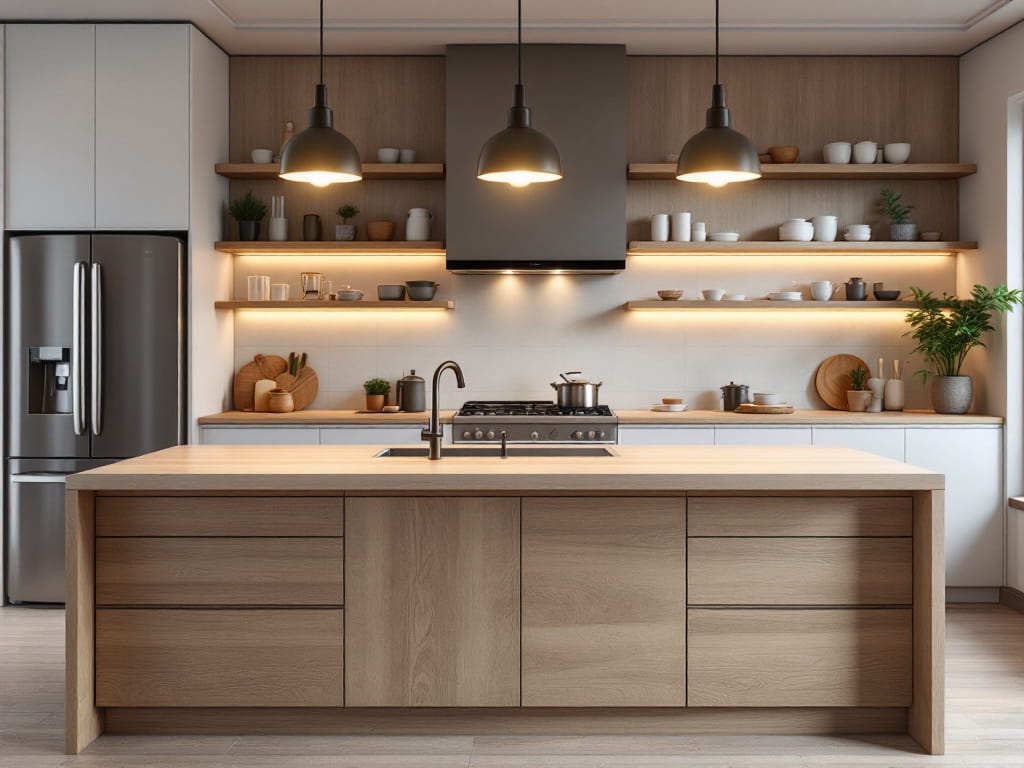
Counters

Cabinets
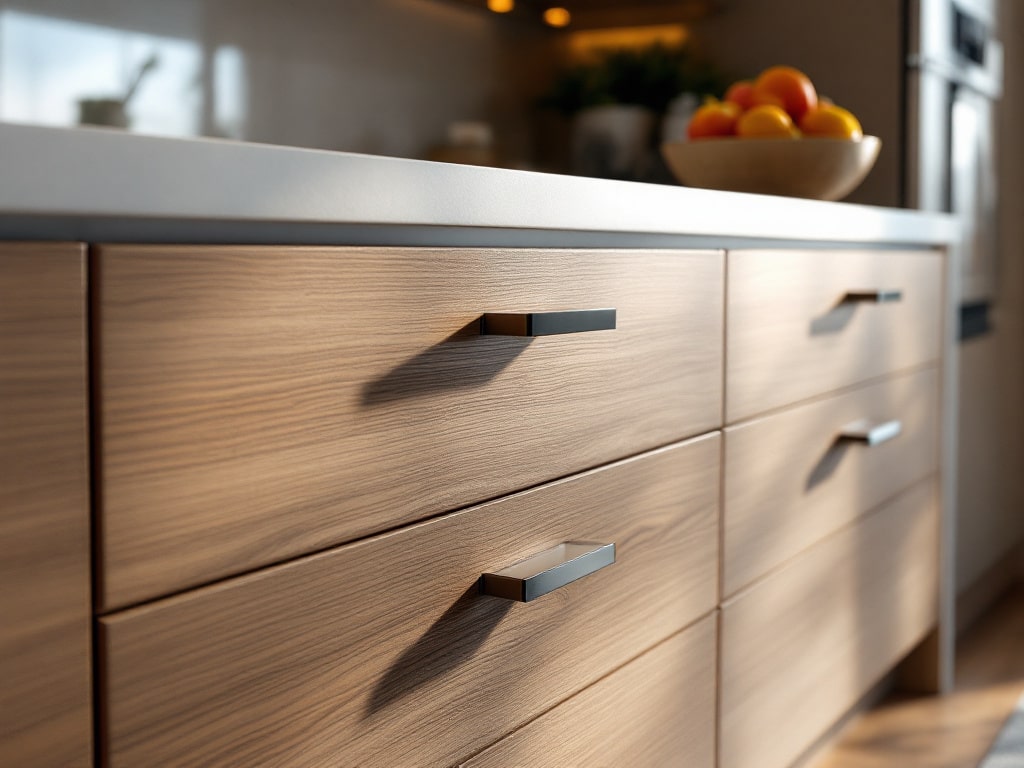
Drawers

Cutting boards
Technical features of custom kitchen furniture
A kitchen has specifics that an ordinary living-room cabinet does not. The furniture works in a damp, hot microclimate, it gets washed, hot items are set on it, doors are yanked hundreds of times. All of this is factored in at the material-selection stage: in one place you need a moisture-resistant panel, in another a wear-resistant surface, in another reinforced fasteners. Cutting corners here shows up a year later as swollen edges and loose hinges.
Plywood and MDF go where stable geometry and painting are needed: MDF mills beautifully for relief patterns and holds paint, plywood is strong and unafraid of fasteners. MFC and particleboard are more often used for carcasses and internal parts — there their ready-made coating saves budget without losing quality. Edging is a separate topic: a neat, tight seam from an edge-banding machine is not only good-looking but also the main defence of the panel edge against moisture.
A kitchen is dozens of parts that must come together with no gaps or misalignment. Half a millimetre of error on one cabinet adds up with the neighbours and shows as a crooked line of fronts across the whole wall. CNC holds dimensions in a series, while reducing waste and speeding up cutting. Fronts open up scope for finishing: matte or gloss painted MDF, wood-look foil, milled relief for a classic look — for any interior style.
Ergonomics in a kitchen is not an abstraction but centimetres you feel in your back and hands. Standard countertop height, cabinet depth to fit plates, smooth drawer travel, handles at the right height — these small things add up to a kitchen you do not get tired cooking in. Visible parts are additionally sanded and painted so the surface is not only durable but also pleasant to the eye and touch.
How wooden products are manufactured
What a kitchen set includes
A set is conveniently broken down into several groups of parts — this makes it easier both to order and to cost. Each group solves its own task and influences the final look and price of the kitchen in its own way.
The first group is the carcasses: floor cabinets, tall units, wall modules. This is the skeleton of the kitchen that carries the whole load, so panel strength, reliable fasteners and quality hardware matter here. It is the carcasses that determine whether the set will stand straight for years or start to sag and skew.
The countertop is the most heavily loaded surface in the kitchen: you cut on it, you set hot and wet things on it. That is why the demands on material and coating are special — moisture resistance, scratch resistance, an even seam at the joints. The right coating keeps its look even after several years of active cooking.
The fronts are the face of the kitchen, what is visible and what sets the mood for the whole room. There are many technologies: smooth painting for modern minimalism, wood-look foil, milled relief and panelling for the classic style. The same carcass with different fronts turns into either a strict, laconic kitchen or a warm classic with framed doors.
A separate story is the non-standard elements: corner cabinets with pull-out mechanisms, islands, bar counters, open shelves and niches. They add both convenience and character to a kitchen but require precise calculation for the specific room. The ability to make them in the same place as the main set spares you from assembling a kitchen piece by piece from different makers.
How the materials of kitchen furniture are handled
Material for a kitchen passes through several hands and machines, and each stage has its subtleties. How neatly each operation is done determines both the strength and the look of the finished set. Cheap carelessness always surfaces here — as chips on the edge, a crooked joint, a loose hinge.
It all starts with checking the material: geometry, moisture content, absence of hidden defects. Then the panels go to the panel saw and CNC, where they get their exact dimensions and a clean edge. The decorative coating is selected separately — in a kitchen it must hold moisture, not fear household chemicals and not fade from sun through the window.
The chain of operations is familiar: sawing and cutting, milling, sanding, protective coating. But the settings for each material differ — what suits solid wood will ruin an MFC edge. Sanding before painting goes in several passes, from coarse grit to fine: it is what determines whether the paint lays down like a mirror or reveals every scratch.
Software optimisation of the cut lays parts out on the sheet more densely and cuts with less waste — on a batch this is noticeable material savings. Well-tuned processes give a second effect too: quality does not jump from order to order but stays stable. For wholesale this is fundamental — a batch must be even from the first set to the last.

The benefits of working with professionals

Modern equipment
Panel saws, CNC and milling machines — precision, speed and quality guaranteed

Extensive experience and expertise
We know how to handle wood and sheet materials — reliably, precisely, professionally

Fast order fulfilment
Fast and without compromising quality. We value your time and our commitments

A full range of services in one place
Cutting to size, sawing, milling, sanding, painting, assembly — all in-house, with no middlemen
Trusted materials and consumables
We work only with quality materials, so you can be confident in the result

An individual approach to every client
We work to your drawings, create a machining program for the task and account for every detail
Stages of manufacturing custom kitchen furniture
A kitchen is not born in a single pass of a machine but goes through several stages in a row, and skipping any of them without losing quality is impossible. Below is what the path from drawing to assembled set usually looks like.
The start is the technical documentation: drawings, and often a 3D model that shows the future kitchen before the first cut. At this stage the dimensions, construction and module layout are fixed. In parallel, the material is selected and checked, so that a warped panel or the wrong decor does not go into production.
Next come sawing and cutting on precise equipment — this is where the repeatability is laid down, without which a series cannot be assembled evenly. Then milling: grooves and cut-outs for joints, sockets for hardware, and decorative relief on the fronts. The neater these operations, the easier and tighter the set comes together afterwards.
After the machining comes sanding and preparing the surface for the finish. A kitchen contacts food and moisture, so the demands on coatings are stricter than usual: they must be safe and durable. Painting is done in a booth with clean drying, so the layer lays down evenly, without dust or runs.
The finale is assembly, inspection and packing. The finished set or kit of parts is checked for dimensions, fit and appearance, the travel of doors and drawers is tested. Then comes packing designed for transport: corners and fronts are covered so the kitchen reaches the customer without chips or scratches.




Why it pays to order kitchen furniture as a full cycle
Ordering a kitchen as a full cycle at a single production site gives the customer tangible advantages — especially the wholesale customer, for whom predictability matters more than a one-off stroke of luck. When all stages are under one roof and one control, the partner gets ready-to-sell products with no surprises at the joins.
The first advantage is flexibility. The same site handles both an individual project for a specific apartment and a production batch for a chain. This lets the customer build their own range for their market: budget MFC kitchens here, painted MDF for the premium segment there.
The second is precision thanks to machines. The less defect and mis-sorting, the fewer returns and complaints, and for a seller that is direct money: a returned kitchen eats into both profit and reputation. Stable output quality reduces the partner’s costs and makes selling easier for them.
The third is lead times. In furniture trade a missed date wrecks the sale: the buyer will not wait. That is why production is tied to real, not vague, deadlines, and the customer sees a clear process from order to shipment, without the contractor vanishing halfway.
Together, flexibility, precision and predictable lead times make production a convenient partner for wholesalers, dealers and retail chains that need to replenish their range with quality wooden kitchens without extra risks.
Other categories of custom furniture
The range is not limited to kitchens — wood and panels are used to make furniture for the most varied segments, residential and commercial. For the customer this is a chance to cover several niches through one contractor rather than seeking a new maker for each category.
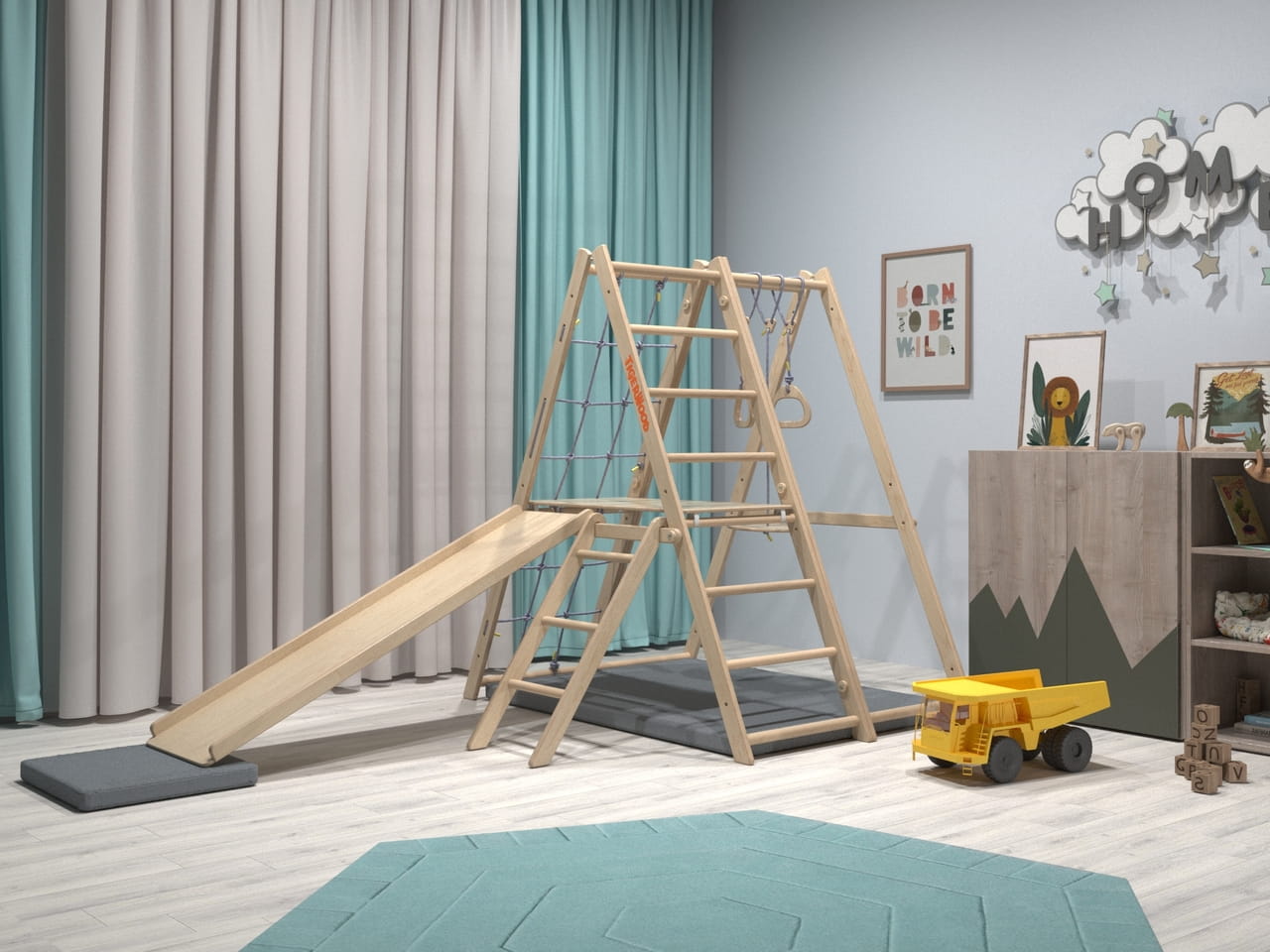
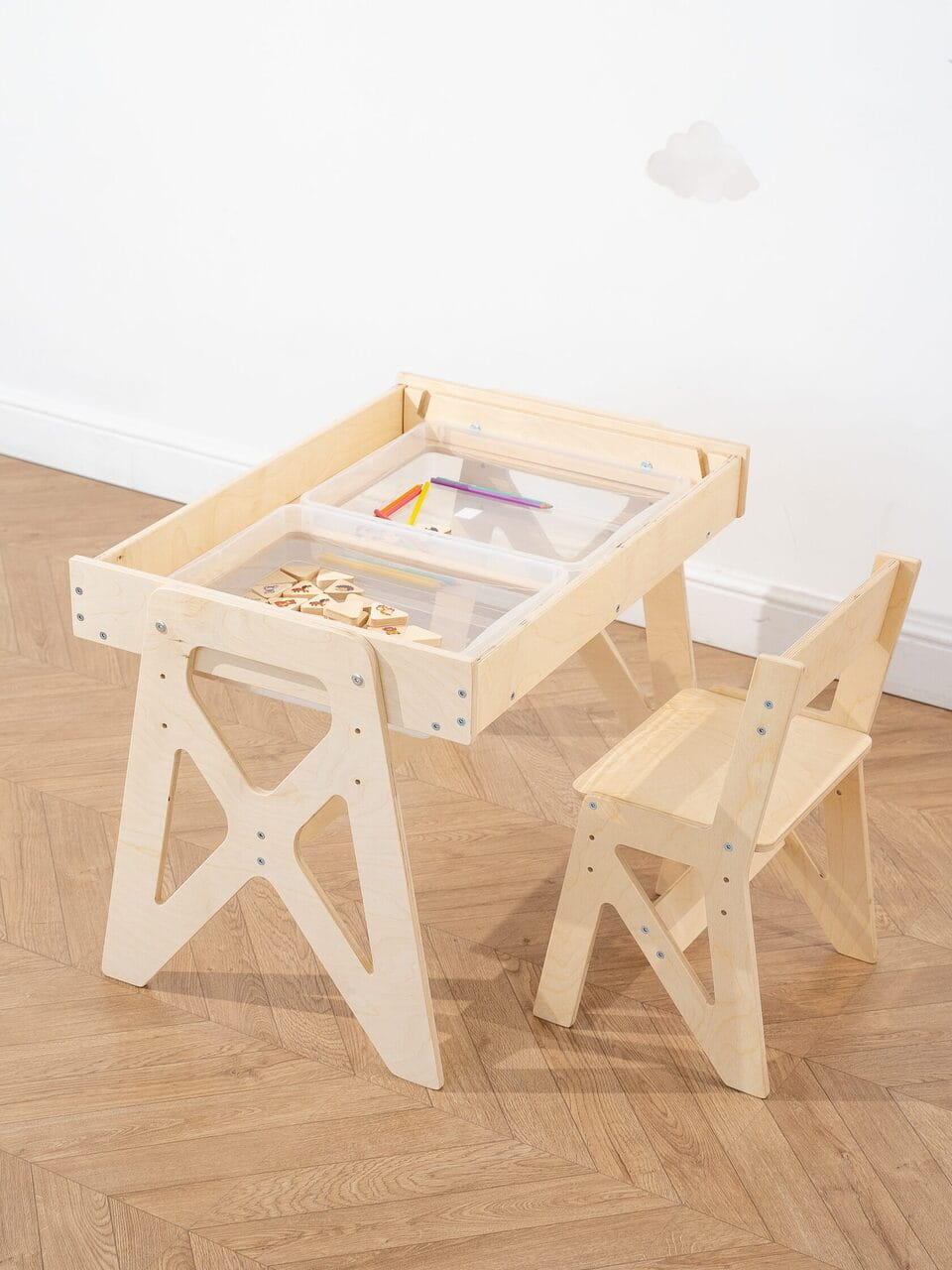
Alongside kitchens goes children’s furniture — beds, wardrobes, desks, where strength and material safety come first: no sharp corners or dubious coatings. For a parent this is criterion number one, and it becomes the argument for the seller of such furniture too.
There is also cabinet furniture for the living room and bedroom: wardrobes, chests of drawers, cabinets, shelving units in various styles and colours. Modern panel materials with quality finishing let you strike a balance between reliability and appearance, without overpaying for solid wood where it is not needed.
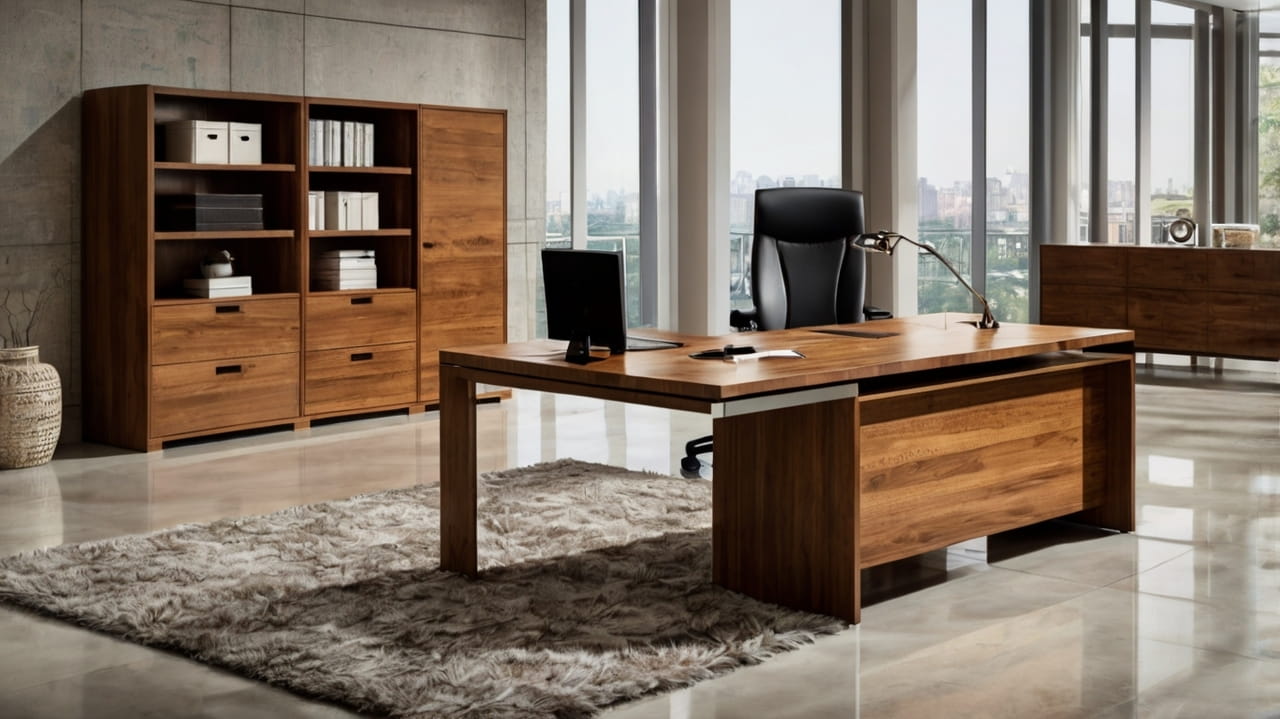
A separate direction is office furniture: desks, cabinets, pedestals, partitions. It has its own specifics: a workspace is used hard and every day, so the emphasis is on ergonomics and wear resistance. Such furniture must withstand a flow of people and years of use without losing its look.
The ability to order several furniture categories from one contractor noticeably simplifies life: one logistics, one contract, one person responsible for quality instead of five. For a growing business this means less administrative fuss and more time for its own sales.
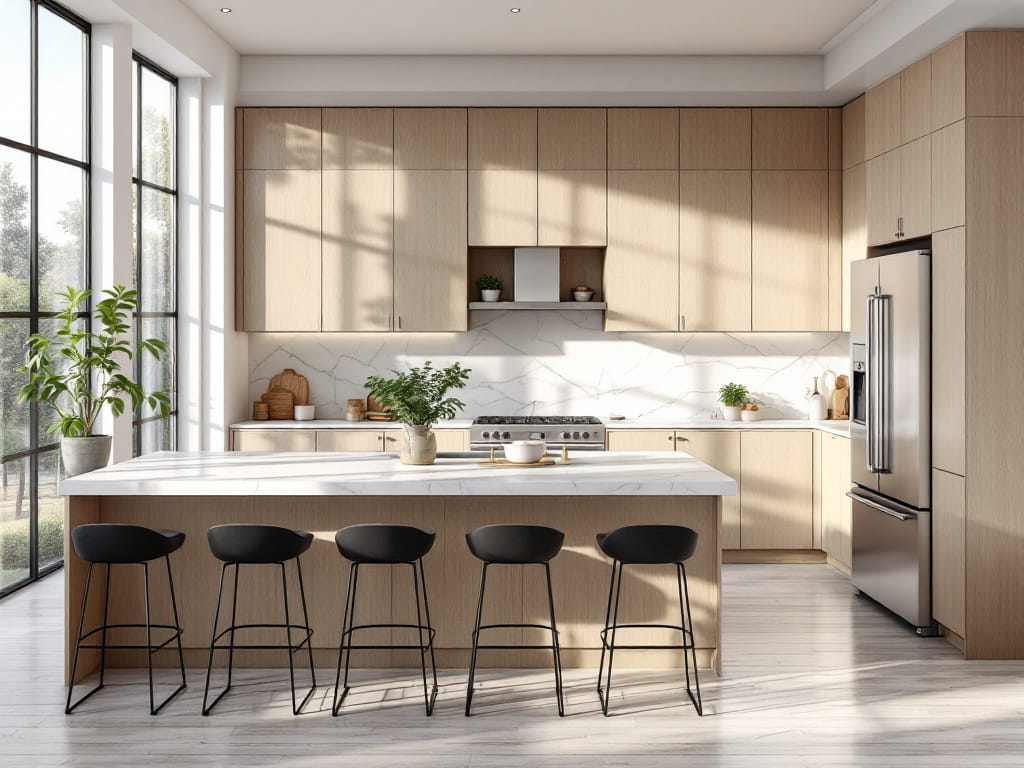
Our portfolio — finished products


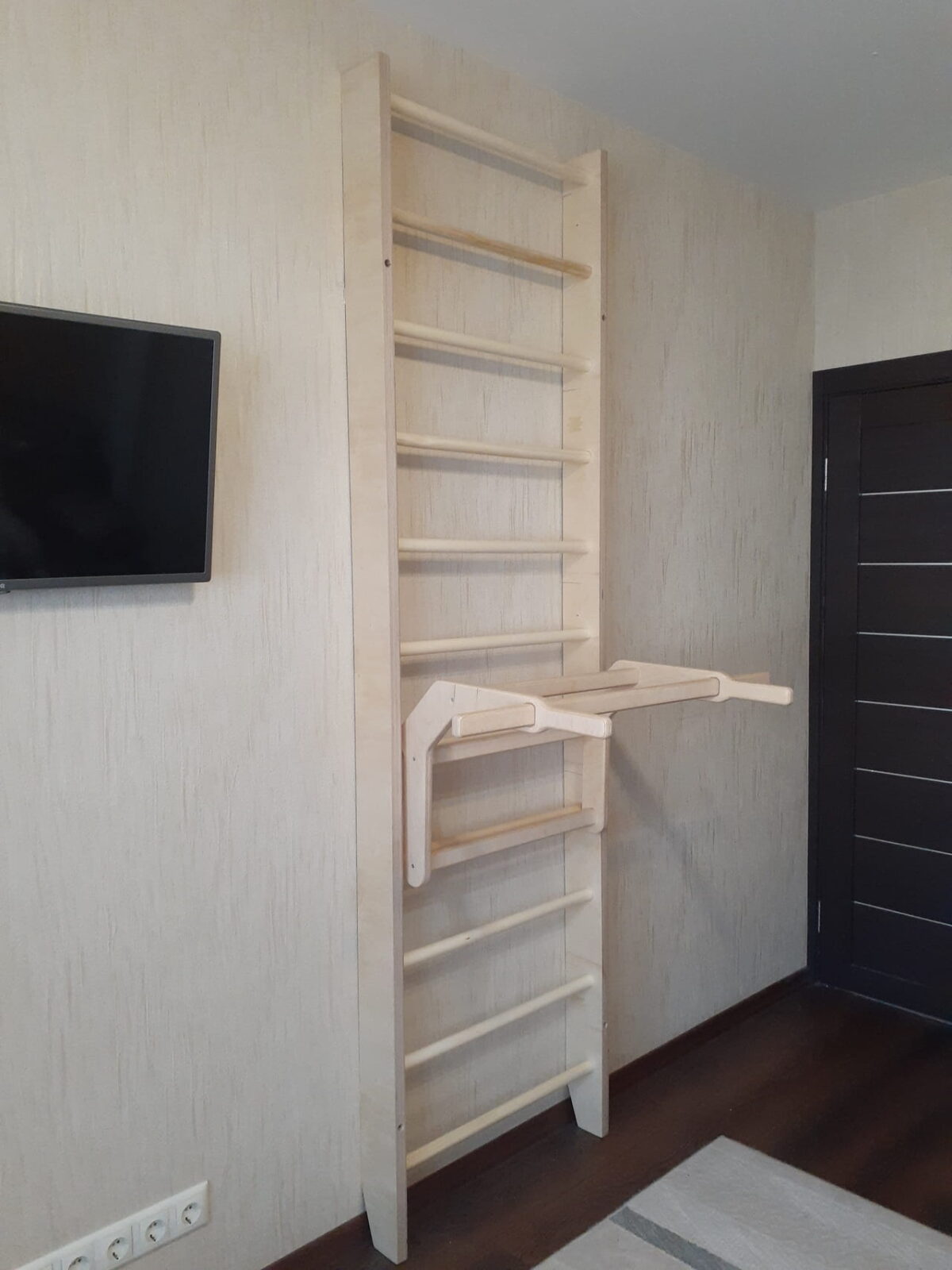
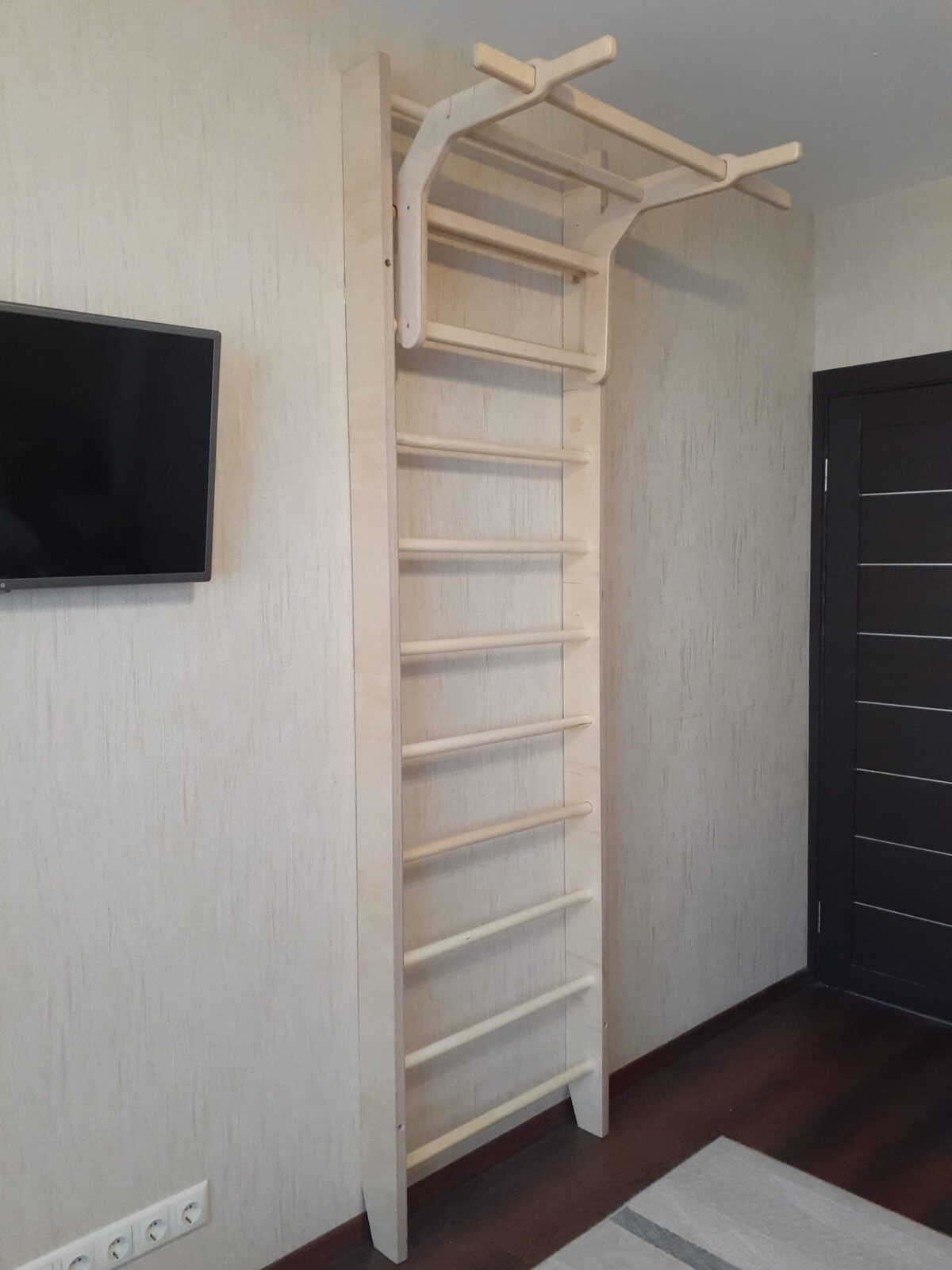
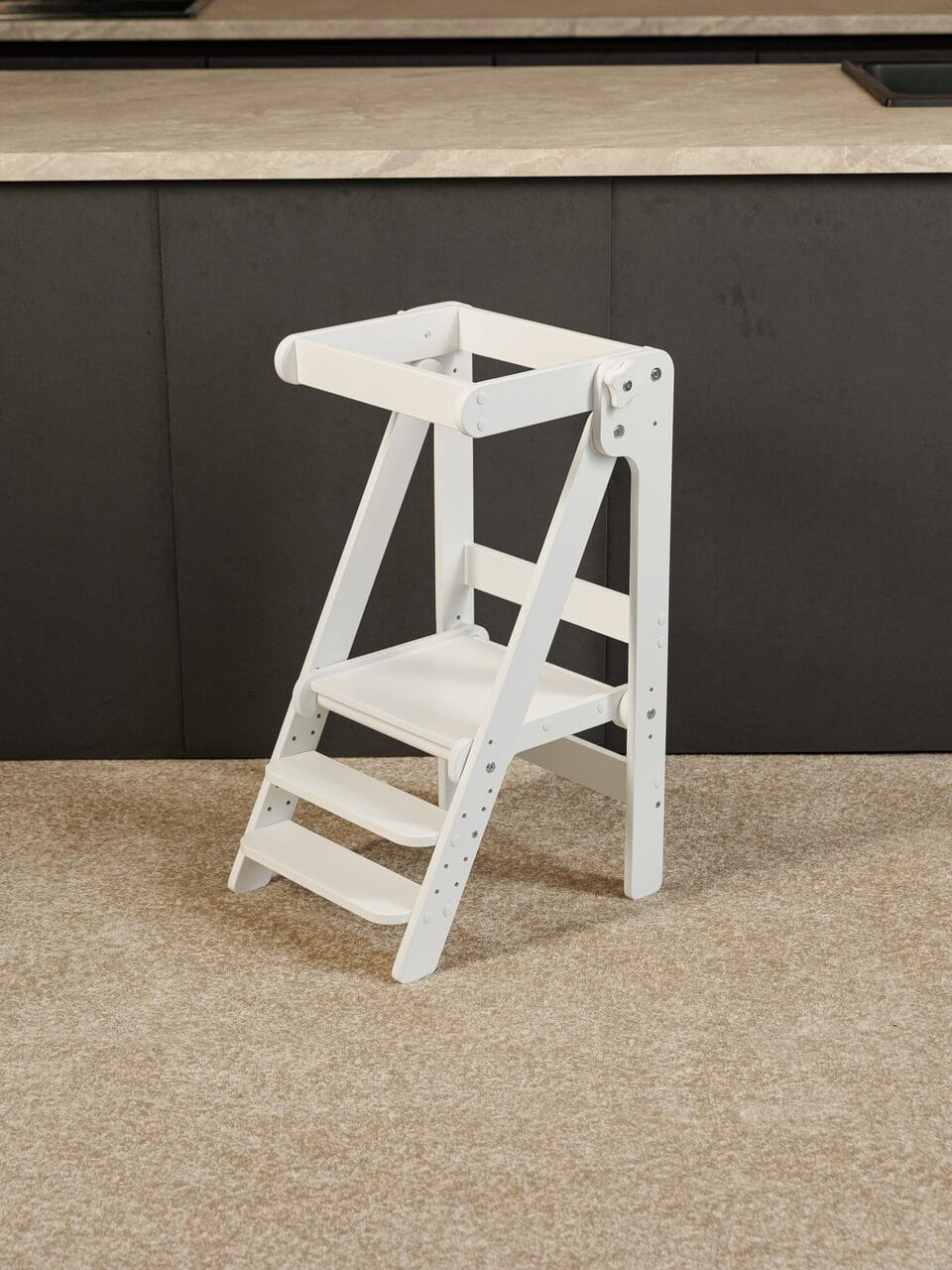
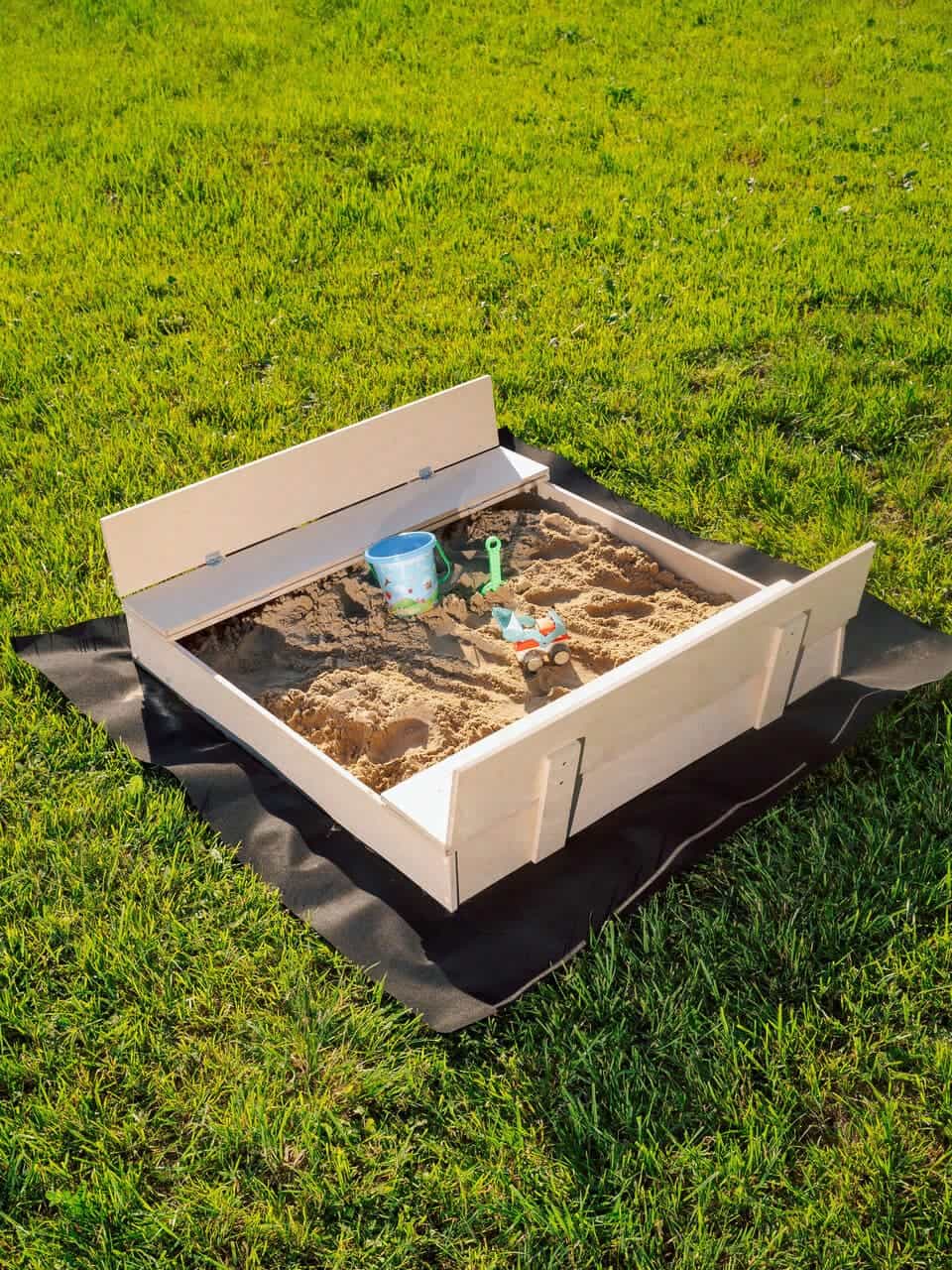

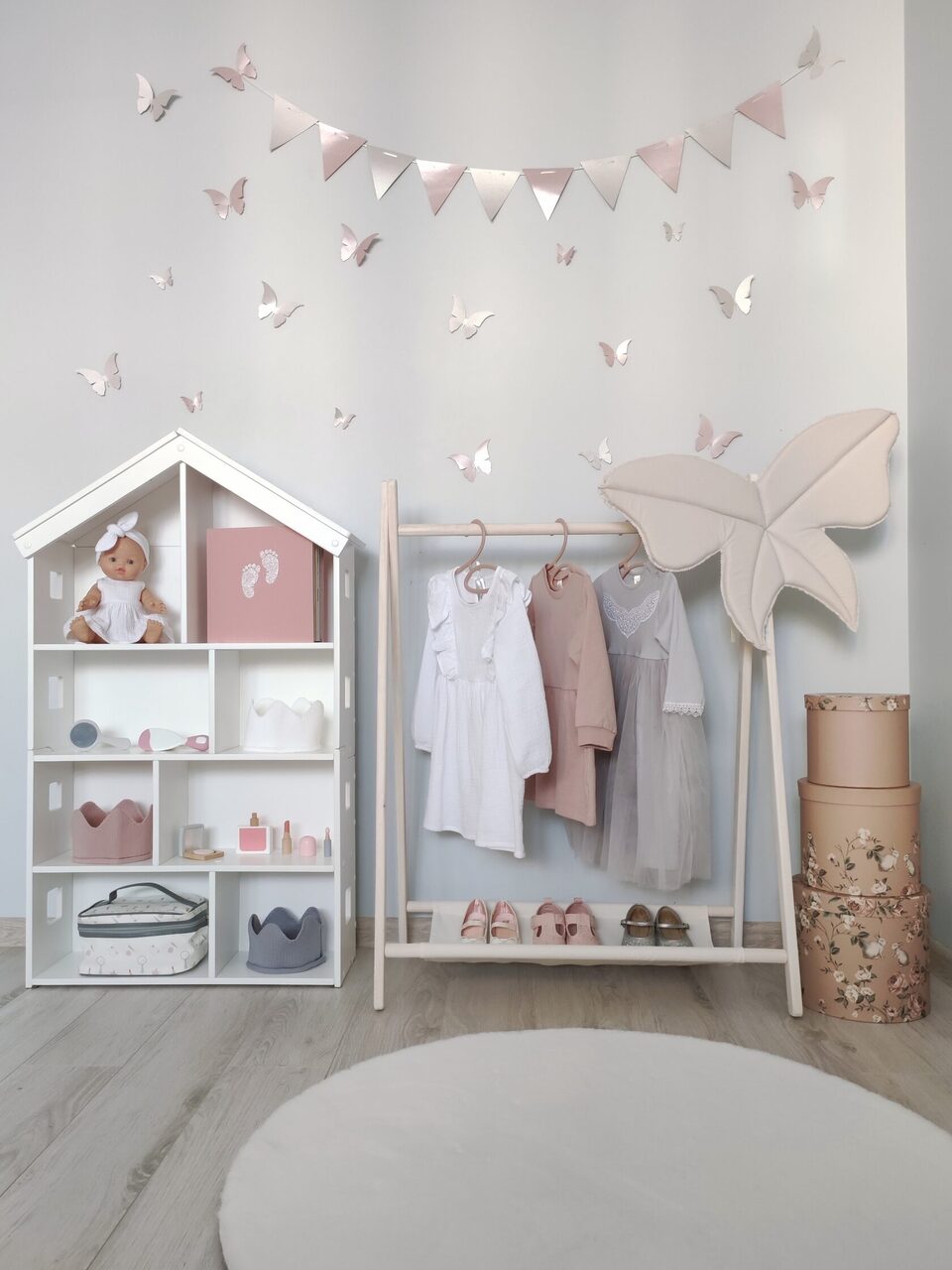

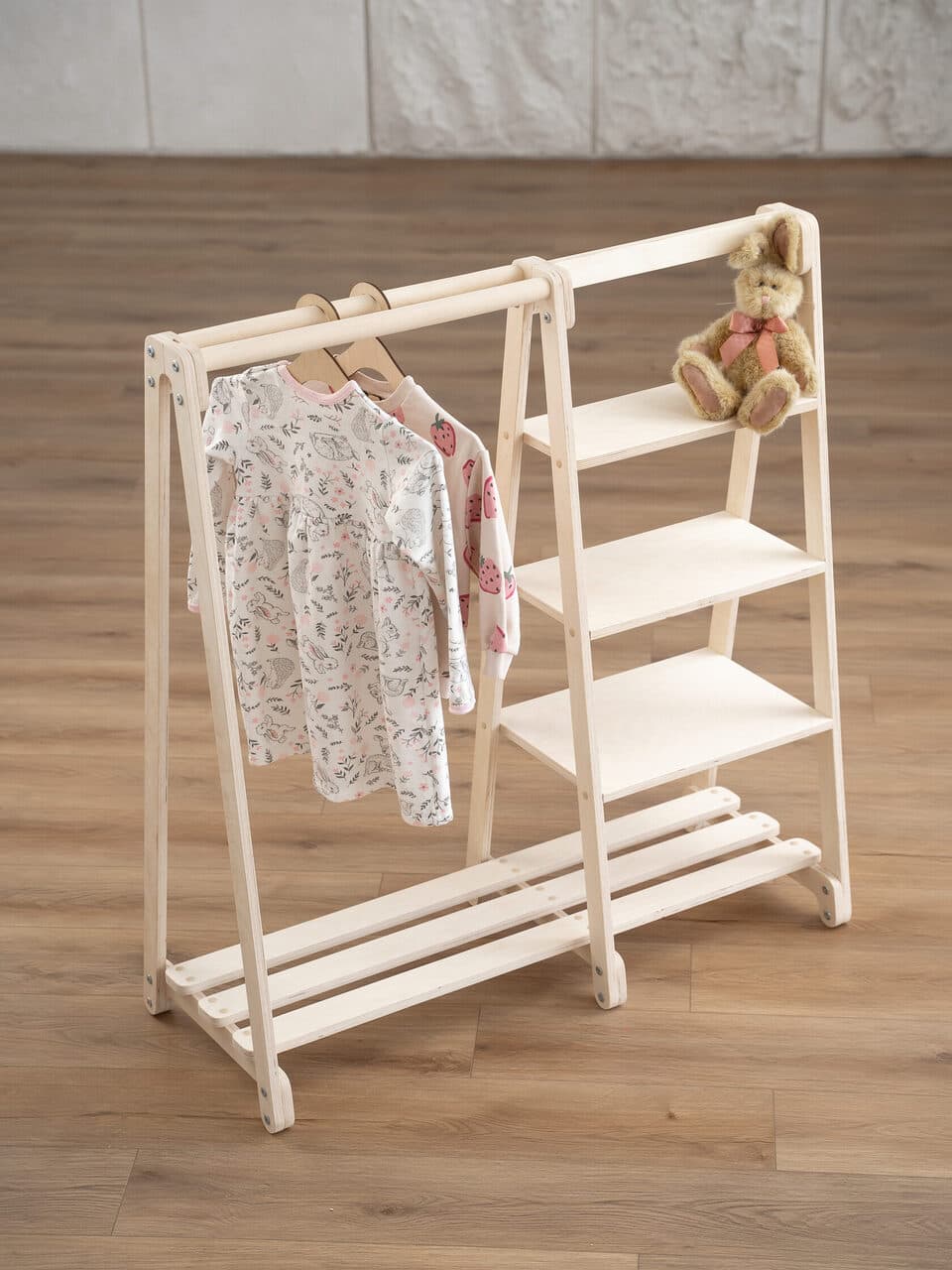
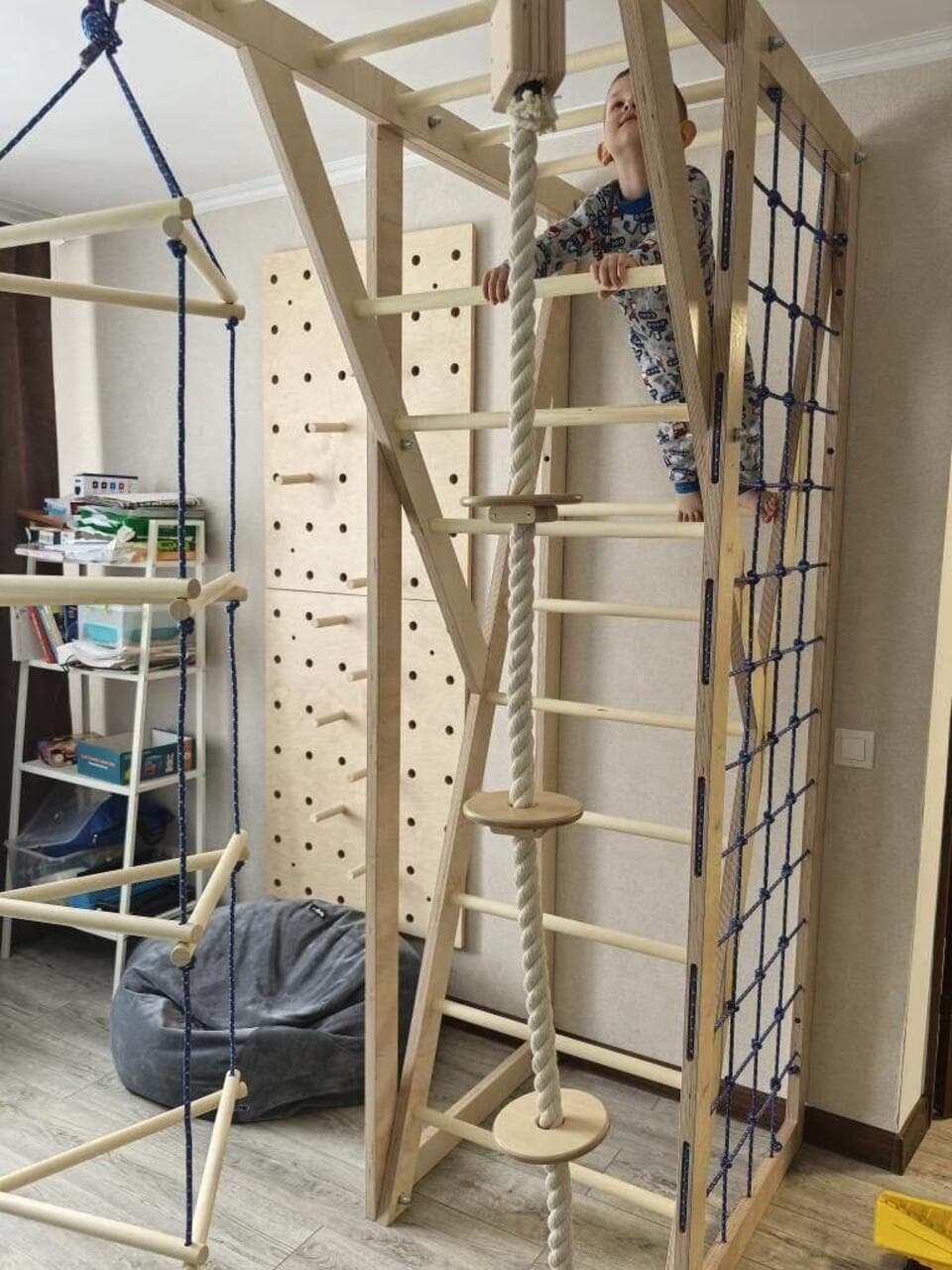
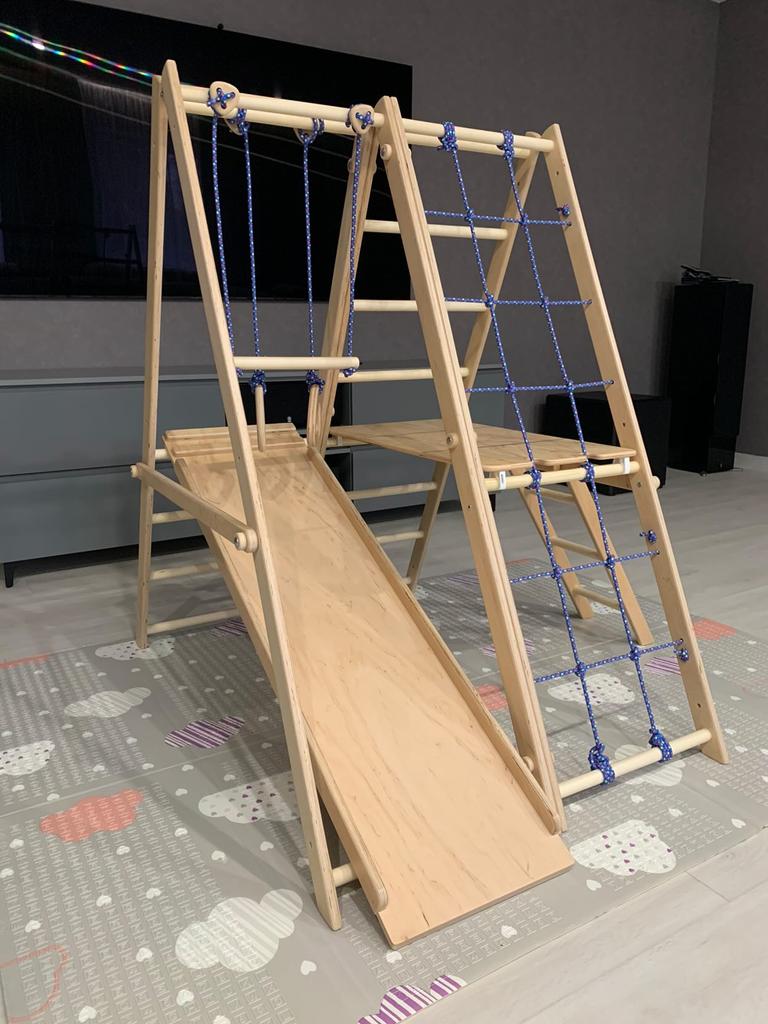

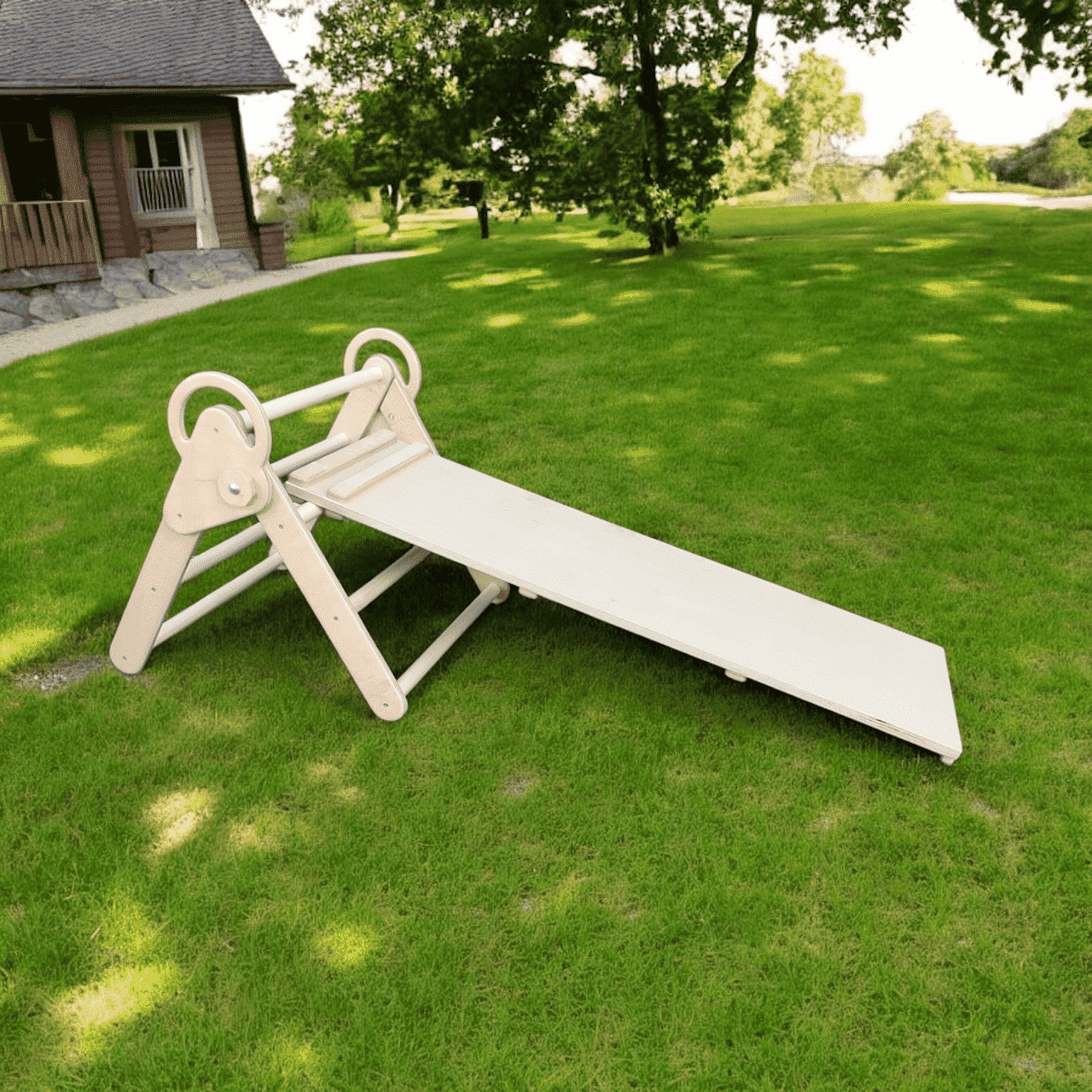

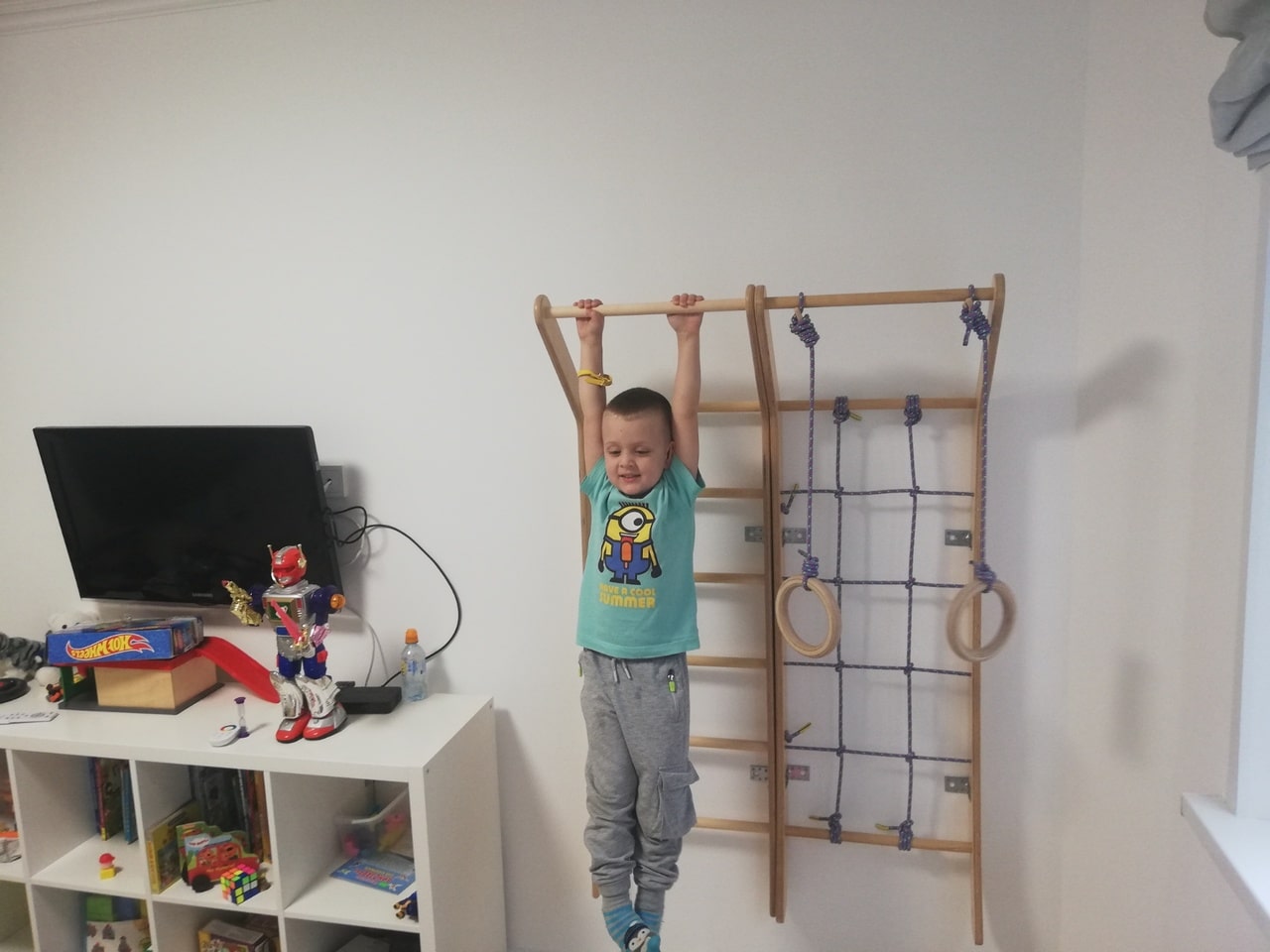


Examples of custom kitchen furniture projects
Before entrusting a series, the customer wants to see what has already been done — and that is reasonable. Projects of various scales pass through production: from a single kitchen for an apartment to large series for a chain of shops. They show both the level of execution and the range of possible solutions.
Among the examples are sets in different styles: from strict matte fronts to a classic with milling, from warm wood texture to dense gloss. Such a spread shows that for a specific buyer’s request there is almost always a suitable solution, not one template for all.
The quality of a kitchen is visible in the details: how the fronts line up, how softly the doors close, how evenly the colour lays. The examples make it clear that furniture is made both for private homes and for cafes, restaurants, retail outlets — where the load on the kitchen is even higher than at home.
Photos and technical descriptions of completed projects help the customer understand in advance what to expect and choose a supplier not blindly. Such openness usually grows into long relationships: when you can see a real result, trust builds faster.
Who uses a carpentry workshop’s services

Furniture makers

Interior designers

Advertising companies

Exhibition stand builders

Art studios

Cafés and restaurants

Construction firms

Retail equipment manufacturers
Furniture factories

Private craftsmen

Custom orders

Manufacturing companies

Museums and exhibition halls

Architects

Theatres and film studios

Educational organizations

Children’s products manufacturing

Repair specialists

Online stores

Sole proprietors
Who custom kitchen furniture suits
The main circle of custom kitchen furniture customers is retail shops, retail chains, design studios and manufacturers who need a reliable supplier for their own sales. What matters to them is a combination of quality and flexible terms: not just to “make it”, but to fit into their timelines, volumes and range.
A separate group is construction and renovation companies that hand over turnkey projects. They need a comprehensive supply with a quality guarantee and strict adherence to deadlines: a kitchen that did not arrive on time delays the handover of the whole project. For them transparency and reliability matter more than a couple of percent discount.
Distributors and sellers from markets across Europe come for range expansion and exclusive models with non-standard finishes. They especially value work under their own brand and manufacturing to their drawings — this way they offer the buyer what competitors with generic goods do not have.
There are also agents and intermediaries who buy wholesale for resale. For them competitive price and ease of working come first — clear terms, stable lead times, minimal surprises. Good service here is valued no less than the furniture itself.
Such a spread of customers — from a private individual to a large chain — rests on one thing: terms are tailored to each rather than a single template imposed. It is precisely flexibility combined with stable quality that makes custom kitchen furniture in demand in wholesale.
Custom kitchen furniture: the key points in brief
Custom kitchen furniture is a full cycle under one roof: from material selection to delivery of the finished set across Europe. The task is multi-layered, and it rests on a combination of technology and attention to detail, where every stage influences the outcome.
The foundation is CNC machines that give precision and repeatability of parts. Proven materials (plywood, MDF, particleboard, MFC) let you keep a reasonable balance of price and quality: not overpaying for solid wood where painted MDF is enough. And neat machining and finishing are responsible for the durability and look of the finished kitchen.
Everything about a kitchen is handled: carcasses, fronts, countertops, islands — so the offer comes out flexible and coherent, not assembled from pieces. Wholesale is guaranteed that a large batch will keep its quality and arrive on time. The partner’s requirements and wishes are taken into account at the approval stage, not after the fact.
The ultimate value for the partner is reliable supply, an individual approach and modern technology in combination. This is what a business that wants to grow relies on: expanding its range, entering new niches and offering the buyer quality furniture to be proud of.
To sum it all up: custom kitchen furniture is a comprehensive solution for those who work in the furniture market seriously and for the long term. Describe the task and volume — get finished sets or kits of parts made to size, on time and with predictable quality.
Front materials: what to choose from
The front is half the cost of a kitchen and practically its entire appearance, so it is reasonable to start with the choice of front material. Painted MDF is the universal option: it gives a smooth surface in any colour, holds both a matte and gloss finish well, and relief for the classic style can be milled from it. Foil-wrapped MDF is cheaper than painted and can imitate wood or stone thanks to decorative foil, but it fears strong heat near the stove and oven. MFC is the most budget path: a ready-made coating, a huge choice of decors, but relief cannot be milled on it, only straight doors. Solid wood and veneer are the top segment: a warm, living texture, repairability, a solid look, but both price and care requirements are noticeably higher.
There is no universal “best” front — there is one suited to the specific task and budget. For a rented apartment or a budget series MFC is logical, for a family kitchen for years — painted MDF, for a classic interior with character — a framed front or solid wood. It is often reasonable to combine within one kitchen: upper cabinets in gloss, lower in matte, an island with a wooden insert. This approach keeps the budget under control without sacrificing looks where it matters most.
| Front | Pros | Cons |
|---|---|---|
| 🎨 Painted MDF | Any colour, relief, smoothness | Pricier than foil, fears hard impacts |
| 🪞 Foil-wrapped MDF | Inexpensive, wood imitation, milling | Fears heat near stove and oven |
| ⬜ MFC | Cheap, many decors, practical | Straight doors only, no relief |
| 🌳 Solid wood and veneer | Warm texture, premium look, repair | Price and demanding care |
Countertops: what to look at
The countertop in a kitchen lives harder than any other surface: you cut on it, set hot and wet things on it, wash it several times a day. So here it is not so much beauty that matters as resistance to moisture, heat and scratches. Wood countertops made of MFC or MDF with a durable plastic coating are a practical and inexpensive choice for most kitchens: they take the everyday load and offer a mass of decors, from stone to wood imitation. The weak spot of any such countertop is the edges and the cut-out for the sink, so they are sealed especially carefully: that is where water penetrates first.
A separate detail is the joint of countertops at the corner of the kitchen. A poorly fitted seam takes on moisture over time and swells, a good one is almost invisible and holds for years. That is why the length, shape and cut of the countertop are calculated in advance, together with the whole set, rather than fitted in place. If a wooden countertop of solid wood or edge-glued panel is planned, the question of coating is added: oil, which is easy to renew yourself, or lacquer, which is stronger but harder to repair.
Hardware: unnoticeable but decisive
Hardware is rarely thought about at the start, and in vain — it is precisely what determines whether the kitchen will be comfortable every day. Hinges, drawer runners, lift mechanisms of upper cabinets, soft-close dampers — all of this opens and closes thousands of times a year. Cheap hardware gives itself away quickly: doors sag, drawers begin to stick and rattle, dampers stop closing softly. Good hardware, on the other hand, works quietly and unnoticeably for years, and that is precisely what you should not skimp on, even if you want to trim the budget.
Modern kitchen hardware is not only hinges and runners but also well-thought storage systems: pull-out baskets in corner cabinets, dividers in drawers, lifts that lock in any position. They turn awkward deep cabinets into a workspace where everything is at hand. For the chosen hardware, parts immediately get precise drilling — holes for hinges and runners are drilled to the marking so that everything fits at assembly without adjustment.
The choice of hardware is worth agreeing in advance, because both the construction and the price depend on it. Simple surface hinges and roller runners make a kitchen cheaper, concealed hinges with a damper and ball-bearing full-extension runners make it noticeably more comfortable but also pricier. A reasonable compromise usually lies in the middle: reliable mid-level hardware where the load is high, and simpler where a cabinet is opened once a week.
Measurement and design: why nothing works without them
Custom kitchen furniture starts not with a machine but with an accurate measurement of the room. Walls are rarely perfectly straight, corners rarely square, the floor rarely level, and all of this must be accounted for in advance, or the finished set will not stand in place. Measurement records not only the length of the walls but also the position of pipes, sockets, ventilation, protrusions and niches. One unnoticed protrusion or an unaccounted pipe — and a beautiful project runs into reality at installation, when fixing it is too late and expensive.
From the measurement a project is put together, and often a 3D visualisation, where the kitchen is seen as a whole before the material is cut. This is a key stage: this is where it is cheapest to make changes. Moving a cabinet, changing the front colour, adding a drawer instead of a door, recalculating the height — all of this on paper costs five minutes, but on a finished kitchen turns into a rework. So it makes sense not to rush the approval but to go carefully through the project: where everything stands, how it opens, whether there is enough room for appliances and storage.
A good project also accounts for how the kitchen will be used. The working triangle of “sink — stove — fridge”, the countertop height to suit the owner’s stature, the placement of sockets for appliances, the width of the passage — these details add up to a kitchen that is comfortable to cook in, not just a beautiful row of cabinets. The more thoroughly the usage scenario is discussed, the fewer “should have done it differently” moments afterwards.
Moisture resistance and durability
The kitchen is the dampest place in the home after the bathroom, and it is precisely moisture that most often kills furniture before its time. Steam from pots, splashes by the sink, condensation on doors under the window — all of this seeks an unprotected panel edge to soak into. That is why so much attention is paid to the edge in custom kitchen furniture: a tightly banded edge does not let water inside, while an open one swells within months. The zones around the sink and dishwasher are especially vulnerable, and there the protection is done with a margin.
Proper use also helps extend the kitchen’s service life. A hood over the stove reduces the amount of steam, regular wiping of splashes by the sink keeps water from stagnating in the joints, and a gap between the plinth and the floor protects against accidental puddles. Small things, but it is precisely they that determine whether the set will look fresh in five years or start to swell along the bottom row. Quality furniture forgives everyday slips longer, but not forever — care is still needed.
Kitchen styles and how they are achieved
A kitchen’s style is set primarily by the fronts and hardware, not by complex construction. Modern minimalism is smooth handleless fronts with push-to-open, calm matte or gloss colours, clean lines. Classic is framed fronts with panelling, milled relief, warm wood shades, decorative cornices. The Scandinavian style leans towards light wood and simple shapes, loft towards a combination of wood with metal and open shelves. The same carcass base under different fronts turns into kitchens of completely different mood.
That is exactly why custom manufacturing beats ready-made solutions from a shop: the style is selected for the specific interior rather than chosen from three standard collections. You can recreate a kitchen you liked from a magazine adjusted for your room, match the front colour to the shade of walls or appliances, add a non-standard element like open wooden shelves. Flexibility here is almost unlimited — the only question is the budget and the agreed project.
What makes up the price of a kitchen
The price of custom kitchen furniture is made up of several terms, and understanding this arithmetic helps you not be surprised by the estimate and see where you can really save. The main thing is not to chase cheapness at the expense of what is loaded most heavily: the carcasses, the edge and the hardware.
- 🚪 Fronts. The most noticeable item: MFC is cheaper, painted MDF and solid wood are pricier.
- 📦 Carcasses and their number. More modules — higher cost of both material and labour.
- 🔩 Hardware. Simple or premium — a difference of several times, and it is felt every day.
- 🪵 Countertop. Material, length, joints and cut-outs for the sink and hob.
- 🎨 Finishing. Smooth painting, relief, gloss — different amounts of work.
- 📐 Non-standard. Bevelled corners, niches, non-typical dimensions add to the price.
Reasonable saving is choosing material by location: budget MFC for carcasses and internal parts that are not visible, and decent fronts with good hardware for what is on display and in use every day. Saving the other way round — cheap hardware and thin edging — almost always turns into repair or replacement within a year or two.
Manufacturing lead times
A kitchen’s lead time depends on its complexity, the chosen finish and the production load, so an exact date is named for the specific project. A simple MFC set with straight fronts is made faster, a kitchen with painted fronts, relief and non-standard elements — longer, because stages of milling, painting and drying are added. Usually it is the coating that takes longest to dry and gain strength — rushing it is harmful, or both the look and the durability suffer.
If a kitchen is tied to a date — a move, a project handover, a sales launch — it is reasonable to order it in advance and allow a small time margin. This especially applies to the high season, when the queue is tighter. Last-minute haste almost always costs more: either you have to pay extra for urgency out of turn, or sacrifice stages like full drying of the coating, which hits quality.
Common mistakes when ordering a kitchen
Most disappointments with a kitchen are laid down not in production but at the decision stage. Here is what most often lets customers down.
- ❌ Measuring by eye. An unaccounted pipe or a crooked corner — and the set does not stand in place.
- ❌ Skimping on hardware. Cheap hinges and runners are the first to fail.
- ❌ Open edging in wet zones. Edges by the sink swell fastest.
- ❌ Too few sockets. Their placement is easier to build into the project than to add later.
- ❌ Chasing fashion at the expense of comfort. A beautiful but un-ergonomic kitchen wears you out.
- ❌ Rushing the project approval. Changes on paper are free, on a finished kitchen they are not.
There is nothing wrong if you do not understand all these subtleties — that is what the dialogue before the start is for. The competent approach to ordering is precisely to talk through the usage scenario and the weak spots in advance, rather than run into them on an installed kitchen.
What an order looks like in practice
So that all of the above does not remain theory, here is a typical scenario. A family orders a kitchen for a new apartment: they come with a layout and a couple of photos of kitchens they liked. A measurement is taken of the room, a project with 3D visualisation is put together, where it is immediately clear how the cabinets will stand and whether there is enough room for appliances. After the front colour and hardware are agreed, the set goes into production: cutting, edge-banding, drilling, painting the fronts in a matte shade. After the agreed period the kitchen is delivered and assembled in place — the family gets a finished space, not boxes of parts.
Another example is a chain of cafes that needs identical bar and work areas in several locations. Here it is not individuality that comes first but repeatability and durability: identical modules to a single standard, reinforced materials for commercial load, a batch where the twentieth counter is no different from the first. A third typical case is a furniture shop ordering a series of kitchens under its own brand for the display and for sale. Three different tasks are covered by a single production line, only the scale and emphasis change.
A one-off kitchen or a batch for business
Custom kitchen furniture is equally open both to a single set for an apartment and to regular supplies for business. A one-off order is an individual project for a specific room: measurement, approval, manufacturing, installation. Here everything revolves around one kitchen and its owner.
A batch is a different logic. A shop or chain cares not about the uniqueness of each item but about stability: identical quality, predictable lead times, the ability to repeat a model in a month without inconsistency. Tooling is prepared for this and a single standard is kept, and cooperation often becomes ongoing — it is easier to work with one proven production site than to seek a new contractor each time and explain the requirements anew.
Delivery and installation
The finished kitchen is shipped across Europe. Oversized fronts, countertops and glass elements are packed separately and with a margin, so the set arrives without chips or scratches — on a long stretch of road this is especially important. A large kitchen is usually transported disassembled as parts and assembled on site: this is both safer for the furniture and easier to bring into the room.
On-site assembly is a separate stage on which the final look depends. It is at installation that the set is levelled on adjustable feet, compensating for uneven floors and walls, gaps are adjusted, fronts are hung and aligned. A well-made kitchen assembles predictably and quickly, because all parts arrived with precise drilling and to size, rather than being fitted on the fly.
Combined materials in one kitchen
A good kitchen is almost always assembled from several materials at once, and this is not a compromise but a sensible calculation. Carcasses are made of MFC, which is not visible behind the fronts anyway — there it saves budget without losing reliability. Fronts are taken from painted MDF or solid wood, because it is precisely they that are on display and in use. The countertop is selected for the load, the back panel — from thin fibreboard. Each material stands where its strengths matter more than its weaknesses.
Manufacturing such a set is convenient at a single production site: each material is machined in its own mode, and the output is a set matched in dimensions and colour. When the carcass, fronts and countertop are made in different places, there is a high risk that at assembly they will not match in shade or size. A single site removes this problem — all parts of one kitchen come out of one point to a single project.
Glossary of custom kitchen terms
A few words that come up when discussing a kitchen and often stump the customer. A small glossary will clear up any misreadings.
| Term | What it is |
|---|---|
| 🚪 Front | The face door of a cabinet — what is visible from outside |
| 📦 Carcass | The frame of a module: sides, bottom, top, shelves |
| 🖇️ Edging | Tape covering the panel edge from moisture and chips |
| 🎯 Drilling | Holes for hinges and fasteners, drilled to the marking |
| 🔩 Damper | A mechanism for smooth and quiet door closing |
| 🍽️ Countertop | The working surface above the lower cabinets |
More questions about a custom kitchen
Can existing appliances be built into the kitchen? Yes, and this is the norm. Dimensions for the hob, oven, dishwasher, hood and fridge are built into the project in advance, to the appliances’ spec-sheet dimensions. So it is important to settle on models before manufacturing — then everything fits evenly, with the right gaps and cut-outs.
What to do with a non-standard room? Bevelled walls, niches, protrusions, low windowsills — this is exactly the case for which a kitchen is ordered rather than bought ready-made. The set is designed for the room’s real geometry, and complex joints are worked out separately so as to use every useful centimetre.
Is it realistic to recreate a kitchen you liked online? Most often yes, adjusted for your dimensions, materials and budget. A photo or link serves as a starting point, then the construction and finish are adapted to the specific room. A full match down to the details depends on the availability of the same fronts and hardware.
How to care for a kitchen so it lasts longer? Wipe splashes by the sink and steam off the fronts, do not leave puddles on the countertop joints, use the hood, avoid aggressive chemicals on painted and wooden surfaces. Oil coatings can be renewed yourself when needed. Simple habits noticeably extend the life of the set.
Can an additional module be bought later? It is easier if the kitchen has already gone through production: the parameters, colour and materials are known, and an added cabinet will be fitted to the existing set. That is precisely why many return to the same maker when they change the layout or expand the kitchen.
If your question is not on this list, it is easier to ask when discussing the project. Custom kitchen furniture differs from a standard box from a hypermarket precisely in that every joint can be talked through in advance — and you get exactly the kitchen your space and your cooking scenario need.
Quality control and a guaranteed result
Control in a kitchen is built into the process, not tacked on for show at the end. On intake the material, decor and dimensions are checked against the project: the wrong front shade or an extra millimetre of panel thickness are caught before the cut, while it still costs nothing. During manufacturing the key operations are checked — edge quality, drilling accuracy, cleanliness of painting. At the output the set is assembled and looked at as a whole: how the fronts line up, whether the doors close softly, whether the colour lays evenly, whether there are gaps at the joints. Such end-to-end control cuts off most problems before the kitchen reaches the customer.
For wholesale, quality control is especially critical: a return of a defective kitchen from another region eats into both profit and the seller’s reputation. So a batch is checked not selectively but systematically — it is important that all sets in a series are identical, without variation in shade and dimensions. If a disputed point does arise, it is easier to resolve precisely because the order went through one pair of hands: responsibility for the result lies with production, not smeared between contractors. This is the meaning of a guarantee — it is clear whom to ask.
Safety of kitchen materials
The kitchen is the only furniture in the home that directly neighbours food, so the demands on material safety here are higher than for an ordinary cabinet. This concerns both the panels themselves and the coatings: they must not release an unpleasant smell or harmful substances into the warm, humid air. Quality materials meet these requirements and are confirmed by documents, and painting is done with compounds intended for domestic use. For a family kitchen with children around this is not an abstract checkbox but a very tangible selection criterion.
Neatness of machining is also linked to safety. A well-banded edge not only protects against moisture but also releases nothing from an open edge, and smoothly sanded and painted surfaces are easier to wash and keep clean. Cheap carelessness is more dangerous here than in other furniture: gaps and open edges in a kitchen quickly turn into a place where moisture and dirt collect. So the quality of execution in a kitchen is also a matter of hygiene, not only appearance.
The equipment on which quality rests
Behind an even, neat kitchen there is always a combination of machines, and each is responsible for its part. The panel saw gives a clean cut of the panel without chips — the basis of precise carcasses and fronts. The edge-banding machine bands the edge tightly and neatly, and in a kitchen this is not cosmetics but the main defence against moisture. CNC handles milling and drilling by program, ensuring repeatability: sockets for hardware and decorative relief come out identical on the first and the hundredth front alike. The paint booth is responsible for an even layer and clean, dust-free drying.
No single machine makes the whole kitchen on its own — the value is precisely in their combination under one control. A part passes without losses from cutting to edge-banding, from there to drilling and painting, and at the output is assembled into a finished set. When all these operations live at one site, dimensions do not “drift” at the joins between makers, and quality does not depend on how the next contractor in the chain performed. This is precisely what distinguishes full-cycle production from assembling a kitchen piece by piece from different craftsmen.
Why a single site pays off in the end
The temptation to assemble a kitchen from the cheapest makers is understandable: cutting is cheaper here, fronts at a discount there, order the countertop separately, entrust assembly to a friend. On paper it is savings, in reality it is risk. Every join between contractors is a place where time is lost, mis-sorting surfaces and an argument begins about who is to blame for a mismatch of shade or size. A kitchen whose parts are made in three different places too often “does not come together” at installation, and the rework eats up the whole price difference plus extra weeks.
A single cycle at one site is a touch more expensive at the moment but usually wins in the end — thanks to the lead times, the integrity of the result and one party responsible for everything. When carcasses, fronts, countertop and assembly go under common control, the shade and dimensions are matched to each other, and the customer does not have to reconcile the work of several makers. So many, having once tried to assemble a kitchen piece by piece, entrust it whole the next time — it is calmer and, in the end, cheaper.
A kitchen as outsourcing for a furniture business
For a furniture shop or brand, keeping its own kitchen production makes sense only with constant high load. Machines, floor space, operators, maintenance — all of this is justified when the flow of orders is stable. But if kitchens are needed in batches from time to time, it is wiser to outsource manufacturing: this is cheaper than idle equipment and lets you scale to seasonal demand without inflating staff and rent. The seller then focuses on what they do best — sales and working with the buyer.
Such outsourcing also gives the business flexibility of range. You can offer the buyer different lines — budget MFC kitchens and premium ones with painted fronts — without investing in equipment for each. Work under your own brand and to your own drawings lets you stand out against competitors with generic goods. And stable quality from batch to batch removes retail’s main headache — returns and complaints that hit both money and reputation.
To sum it all up: custom kitchen furniture is a way to get a kitchen precisely fitted to the room and the cooking scenario, with well-thought hardware, a reliable edge and predictable quality. It is enough to describe the task, take a measurement and agree the project — the rest will be broken into stages and taken through to an assembled set, on the agreed date and without surprises at installation.
Cabinet interiors and the small comforts
The real comfort of a kitchen hides in the interior fittings, which are rarely thought about at the start. Pull-out baskets in corner and lower cabinets reach the far corner your hand cannot get to. Dividers and trays in drawers keep order among cutlery and small items. Rails and open shelves bring within reach what you use constantly. Built-in lighting of the work area removes the shadow from the upper cabinets, which people complain about almost most of all. All of this is built into the project in advance, because each solution needs its own dimensions and drilling.
Thinking through the fittings before manufacturing is much cheaper than reworking a finished kitchen. Adding a pull-out system or lighting to an already assembled cabinet is technically possible, but it means extra costs and time, and sometimes it shows in the result. So it makes sense at the project stage to honestly gauge your scenario: where the dishes are stored, where the groceries, where the appliances, what is taken out daily and what once a month. From these answers is built a kitchen that is truly comfortable, not just a row of beautiful doors.
Visualisation before work begins
One of the main advantages of custom manufacturing is the chance to see the kitchen before the first sheet is cut. The project and 3D visualisation show how the set will stand in the specific room, how the colour of the fronts, countertop and walls combine, whether there is enough room between cabinets and appliances. In an image it is easy to spot what you do not read in your head: that the island blocks the passage, that an open door hits the wall, that the upper cabinets hang too far over the work area. Fixing this on the visualisation is a matter of a minute.
That is exactly why you should not rush the approval or treat the project as a formality. This is the last moment when changes are free. It is worth mentally living in the future kitchen: opening the cabinets, taking out the dishes, imagining where the kettle will stand and how it is more convenient to cook. The more attentively this stage is gone through, the fewer regrets afterwards along the lines of “should have done it differently”, and the more precisely the finished kitchen will match expectations.
It is worth remembering about seasonality too. Before house-warmings, at the height of the renovation season and towards the end of the year, the queue for kitchens is naturally tighter, and lead times stretch a little. In the quiet months a simple set goes through with almost no wait. Knowing this rhythm helps with planning: if a kitchen is tied to a move or a project handover in the high season, it is wiser to order it in advance and book time, rather than count on it being made and delivered in the last week before the deadline.
What materials are used in the production of kitchen furniture?
The basis is plywood, MDF, particleboard and MFC. The choice is by task: MDF for painted fronts and relief, plywood where strength and fasteners matter, MFC and particleboard for carcasses and internal parts. For wet zones, more resistant materials are used.
Can kitchen furniture be ordered to an individual project?
Yes, this is the main format. The kitchen is made to your drawings and technical specification, and if there is no ready project — it will be prepared on site to your dimensions and wishes. This way the set stands precisely in the room rather than being forced to fit at installation.
How is product quality ensured in wholesale supplies?
Control is built into the process: on intake the material and dimensions are checked, along the way the key operations, at the output the geometry, fit and appearance are checked. For wholesale this is a key point — a batch must be even, without variation from set to set.
What are the manufacturing and delivery lead times?
The lead time depends on the volume and complexity of the set and is calculated for the specific order. A realistic date is named, accounting for all stages including coating drying, and then it is kept — especially if the order is tied to a project handover or a sales launch.
Is individual marking or a logo possible?
Yes, for wholesale partners work under their brand is possible — from marking to manufacturing models for their own line. This lets the seller offer the buyer furniture that competitors with generic goods do not have.
How is the furniture packed for transport?
The packing is designed for long-distance transport: corners, fronts and glass elements are protected separately so the kitchen arrives without chips or scratches. The packing method is selected for the dimensions and the delivery distance.
Is there a warranty on the products?
Yes, the products are covered by warranty obligations under the contract. This is not a formality but confirmation that the manufacturer is responsible for the quality and reliability of the furniture, not the buyer alone with a defect.
How is cooperation with new clients arranged?
It all starts with discussing the task and terms: volumes, lead times, materials. Then the technical documentation is prepared and a contract is concluded, which fixes the price and lead times. After approval the order goes into production — without surprises along the way.
Reach us in whatever way suits you best
Call us, message us on a messenger app or reach out via social media — choose whichever way suits you
🗺️ We accept orders from clients across all of Europe
💬 Useful information and articles

Eco-friendly and safe materials for modern wood production
Eco-friendly and safe materials for modern wood production In recent years we increasingly think about what the things around us are made of. A home, furniture, a floor, a kitchen, a

How to Correctly Choose Between Plywood, MDF, Particleboard, and MFC for Different Tasks
How to Correctly Choose Between Plywood, MDF, Particleboard, and MFC for Different Tasks In the world of woodworking and furniture making, every material has its own story. Plywood, MDF, particleboard, and

Cutting sheet wood materials at different angles: why and how it is done
Cutting sheet wood materials at different angles: why and how it is done Working with wood materials is not just sawing. To get a truly high-quality and durable product, you have

Recommendations for choosing sheet materials for indoor and outdoor projects
Recommendations for choosing sheet materials for indoor and outdoor projects In woodworking, choosing the right sheet material is like laying a foundation for a builder. What you pick at the very