
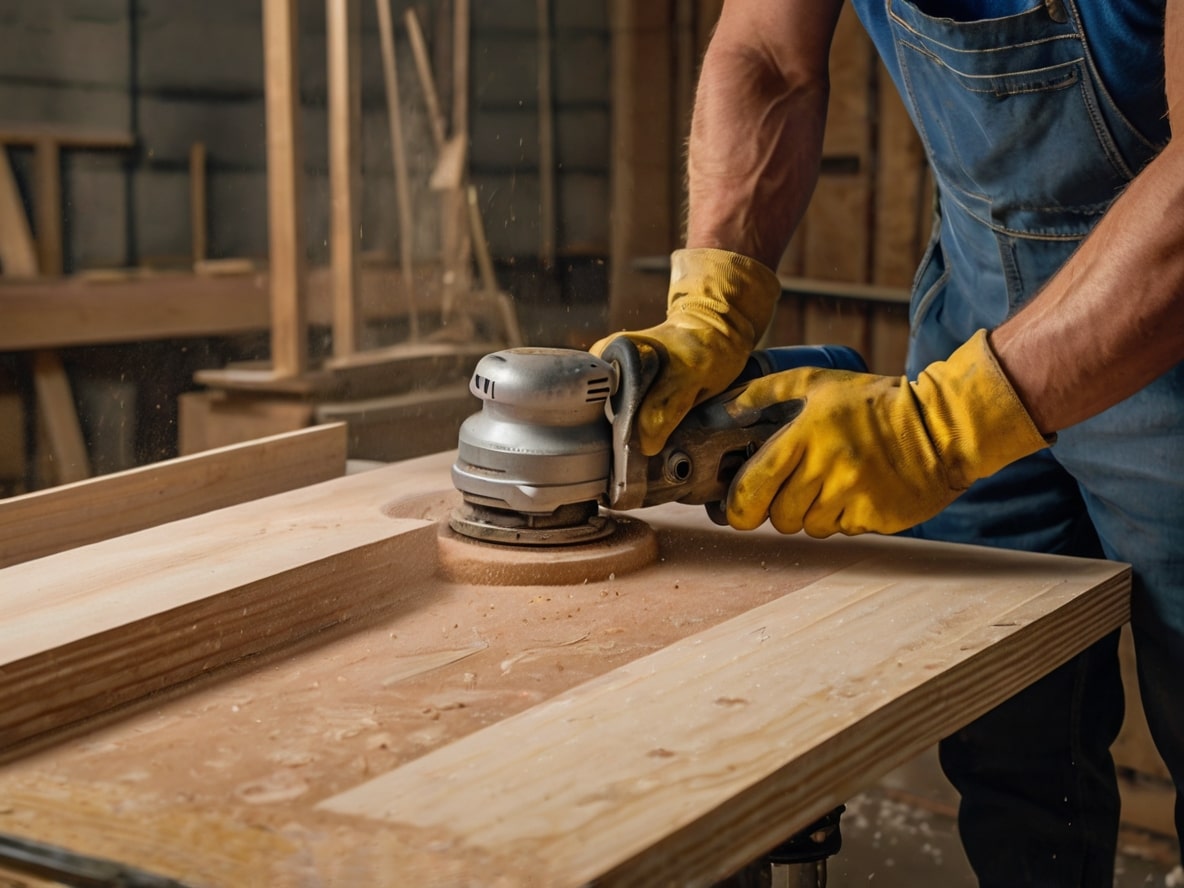
Sanding wood and products
Sanding wood and products means bringing the surface to a smoothness free of fuzz, scratches and chips before painting, varnishing, veneering or assembly. The work runs on production equipment on solid wood, plywood, MDF, particleboard, MFC, OSB and edge-glued board, with the grit selected to suit the material and a stable result even on large batches. Below: which materials are sanded, what stages the process involves, why this step is needed before finishing, how long it takes and who needs the service most often.
Sanding sheet materials for a perfect surface
Almost no order in woodworking goes without sanding, especially when MDF, plywood, particleboard, MFC, OSB or edge-glued board is involved. The idea is simple: to remove everything unnecessary from the surface and bring it to a smoothness ready for the next step. Scratches, tear-outs, tool marks, small dents from transport all disappear. And most importantly, it is precisely after sanding that a coating, varnish, paint, film, lies evenly rather than gathering in grains on the bumps.
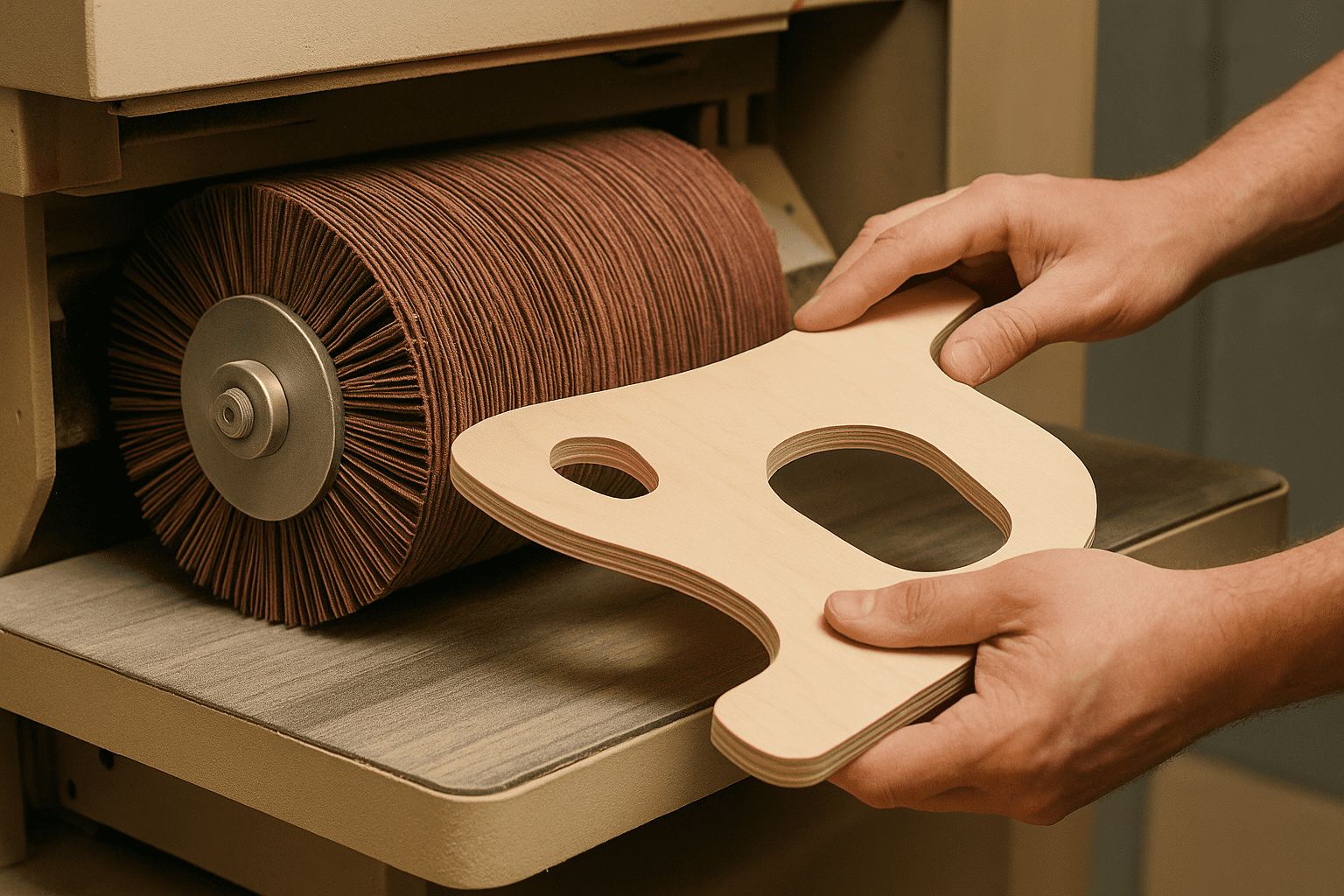
The work runs on specialised machines, not with sandpaper on the knee, hence the repeatability from part to part. The look of the finished product depends directly on how the blank is sanded: an under-cleaned spot will surely show through the paint. With MDF, sanding prepares a perfectly even base for painting, so the layer lies uniformly and holds for years. With plywood and particleboard, careful treatment of the edges and the surface at the same time reduces the risk of tear-outs and delamination at later stages.
Each material has its own technology, and this is not a formality. MDF, with its dense uniform structure, is sanded differently than layered plywood: different grit, different speed, different pressure. Mix up the approach, and instead of smoothness you get a scorched patch or a top layer worn right through. A correctly selected mode gives both a beautiful surface and a longer life for the part.
The benefits of working with professionals

Modern equipment
Panel saws, CNC and milling machines — precision, speed and quality guaranteed

Extensive experience and expertise
We know how to handle wood and sheet materials — reliably, precisely, professionally

Fast order fulfilment
Fast and without compromising quality. We value your time and our commitments

A full range of services in one place
Cutting to size, sawing, milling, sanding, painting, assembly — all in-house, with no middlemen

Trusted materials and consumables
We work only with quality materials, so you can be confident in the result

An individual approach to every client
We work to your drawings, create a machining program for the task and account for every detail
Features of the service: important points when sanding wood-based materials
Removing unevenness is only half the job. Real sanding requires attention to the character of the material, otherwise it is easy to do harm. MDF, plywood, particleboard, MFC, OSB and edge-glued board have different habits, and what is good for one is ruinous for another. Let us go through each, briefly and to the point.
MDF is dense and already smooth in itself, but deceptively delicate: with a coarse abrasive or at high speed it is easy to wear through or overheat it to scorch marks. So sanding MDF goes gentler, fine grit, moderate speed, careful pressure. But the result is worth it: there is no better base for painting, the layer lies as if poured on.
Plywood is assembled from layers of veneer, hence its strength but also the main danger when sanding. The top layer is thin, and if you overdo it you wear through to the next one, and that is already a defect. You have to work attentively, going around knots and small cracks that occur in natural veneer. The task is to level and freshen the surface without removing too much.
Particleboard and MFC are pressed chip on resin, and they behave capriciously. They give off a lot of dust, and with careless work it is easy to get delamination or a loose, crumbling zone. MFC additionally has a ready decorative coating, which is sanded only where truly needed, there is no point stripping it off entirely. Here caution and correctly set-up equipment come to the rescue.
OSB comes from the building site, and it has its own logic. A surface of large chips is textured from the start, so sanding here levels it before painting or a protective impregnation. The task is to smooth the protrusions and remove the dips so that the compound lies evenly and holds. Nobody expects a perfect mirror from OSB, but an even base for coating is entirely achievable.
Edge-glued board is already almost finished beauty: worktops, shelves, fronts. Here sanding is the most demanding, because the surface stays in view and often goes under a clear varnish or oil, which hide nothing. What is needed is precisely a perfect smoothness, pleasant to the touch, without a single mark. Whether the finished furniture looks expensive or cheap depends directly on this step.
Stages of sanding for wood and panels
Consultation
Receiving drawings or developing a plan
Agreeing lead times and cost
Launch into production
Quality control at every stage
Finishing
Packaging and preparation for shipment
Delivery or pickup
Stages of the service: how the sanding process runs
Behind a smooth surface stands not a single pass but a chain of steps, and skipping over them will not work. Each stage solves its own task and requires its own grit, and sometimes its own machine. Going from a rough blank to the finish in one go is impossible, an attempt to save on the stages usually shows up as a defective finish.
It starts with a rough pass. A coarse abrasive removes everything large: noticeable unevenness, burrs, saw marks, dents and scratches picked up on the road or in previous operations. The task of this stage is not beauty but geometry: to quickly bring the surface into a plane so there is something to work with next.
Next comes an intermediate pass, already more careful. A finer grit is taken, and what remains after the rough stage is removed from the surface: small marks, roughness, traces of the coarse abrasive. The surface becomes noticeably more even and gets ready to receive the finish. To skip this step is to leave under the last layer those very scratches that will later show up in the light.
The finish is now jewellery-fine work. The finest grit brings the surface to the smoothness at which the coating lies perfectly, and to the touch the part becomes silky. At the end the dust and fine haze are always removed: even a single stuck grain under varnish will turn into a noticeable bump. It is precisely this stage that separates “fine” from “flawless”.
A separate topic is the choice of abrasive to suit the material. One grit suits MDF and MFC, another suits plywood and edge-glued board, and this is not interchangeable. Plus the machine itself is set up to suit the task: speed, pressure, type of belt or wheel. The right pairing of abrasive plus setup carries each stage and reduces the risk of spoiling the part to a minimum.
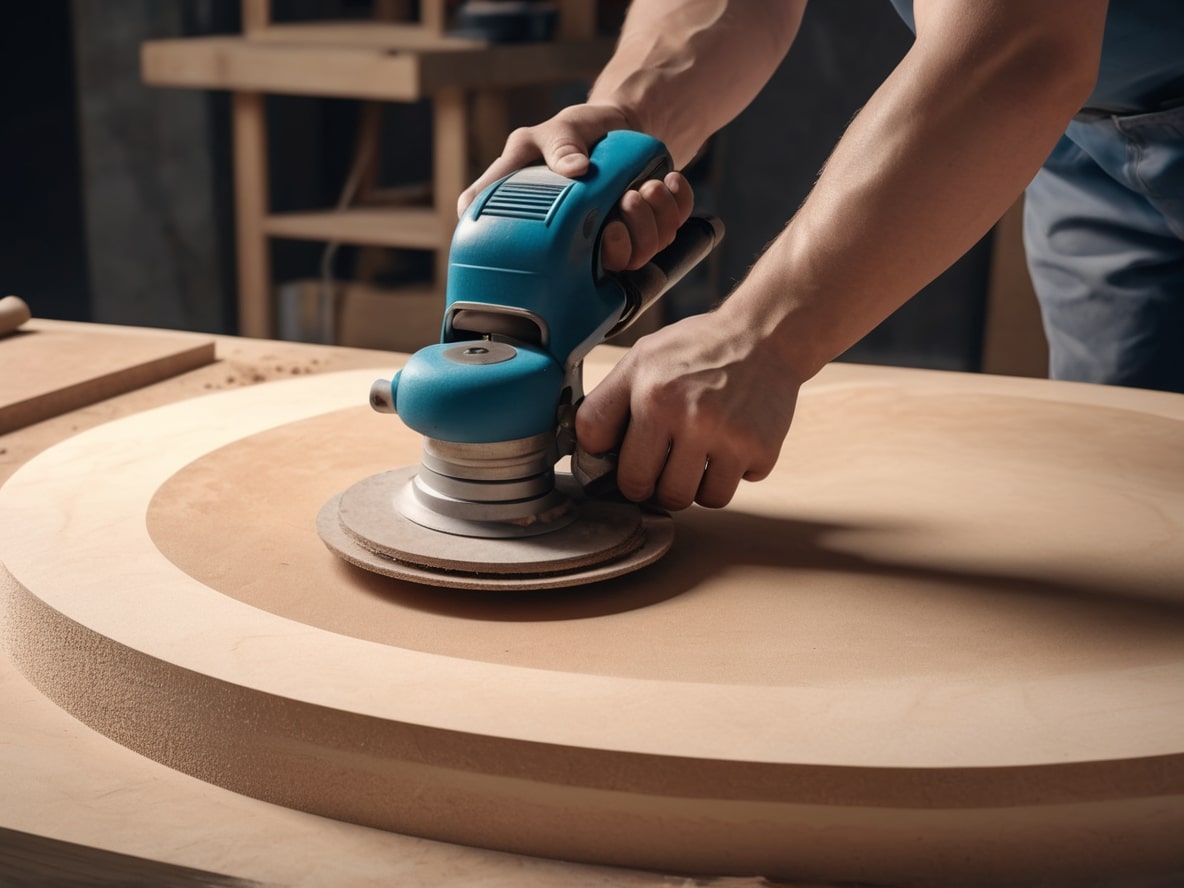
Why sanding wood is an important step in woodworking
It is easy to take sanding for cosmetics, but in reality the fate of the whole product depends on it. A well-sanded part of MDF, plywood, particleboard, MFC or edge-glued board both looks decent and lasts longer. Unevenness, tear-outs and open pores disappear, which would otherwise draw in moisture and spoil the look. In essence, this is the foundation on which everything else stands.
The main practical plus is the adhesion of the coating to the surface. Paint and varnish hold on an even smooth base far better and distribute uniformly, without runs and bald patches. Take the same MDF: well sanded, it then wears for years a coating that does not crack or wear off. Save on sanding, and you overpay on redoing the finish.
It is not only about the appearance, the working properties change too. Evenly treated plywood warps less and holds its shape longer, and MFC with a closed and smoothed surface resists moisture and minor impacts better. A trifle at first glance, but it is precisely from such trifles that the difference is made between a product that lives long and one that quickly loses its look.
There is also a not-so-obvious bonus, the cleanliness of the surface. After sanding, minimal exuded resins and glue traces remain on the panel, which particleboard and MDF are prone to. For furniture, and all the more for children’s or kitchen products, this matters: the less open chemistry there is on the surface and the more tightly it is sealed, the safer it is to use in daily life.
Advantages of cooperation: how correct sanding contributes to quality
When sanding is entrusted to those who have long mastered it, the gain is noticeable not at once but at the following stages. A carefully brought-out surface saves from costly mistakes further down the chain: the painter does not have to repaint, the assembler to adjust. In other words, good sanding saves not only the look of the part but also time and money on painting, varnishing and finishing.
Modern machines and correctly selected abrasives give what is hard to achieve by hand, stability. The first part of a batch and the hundredth come out identical. For those who run large volumes this is critical: where quality floats from piece to piece, problems begin with assembly and with painting the whole series.
An experienced contractor also speeds up the process: fewer reworks, less material scrapped, a predictable lead time. In furniture and construction work, where everything rests on precision, this directly affects the outcome and whether the customer ends up satisfied. Outsourcing the sanding is often more profitable than tinkering with it yourself and then redoing it.


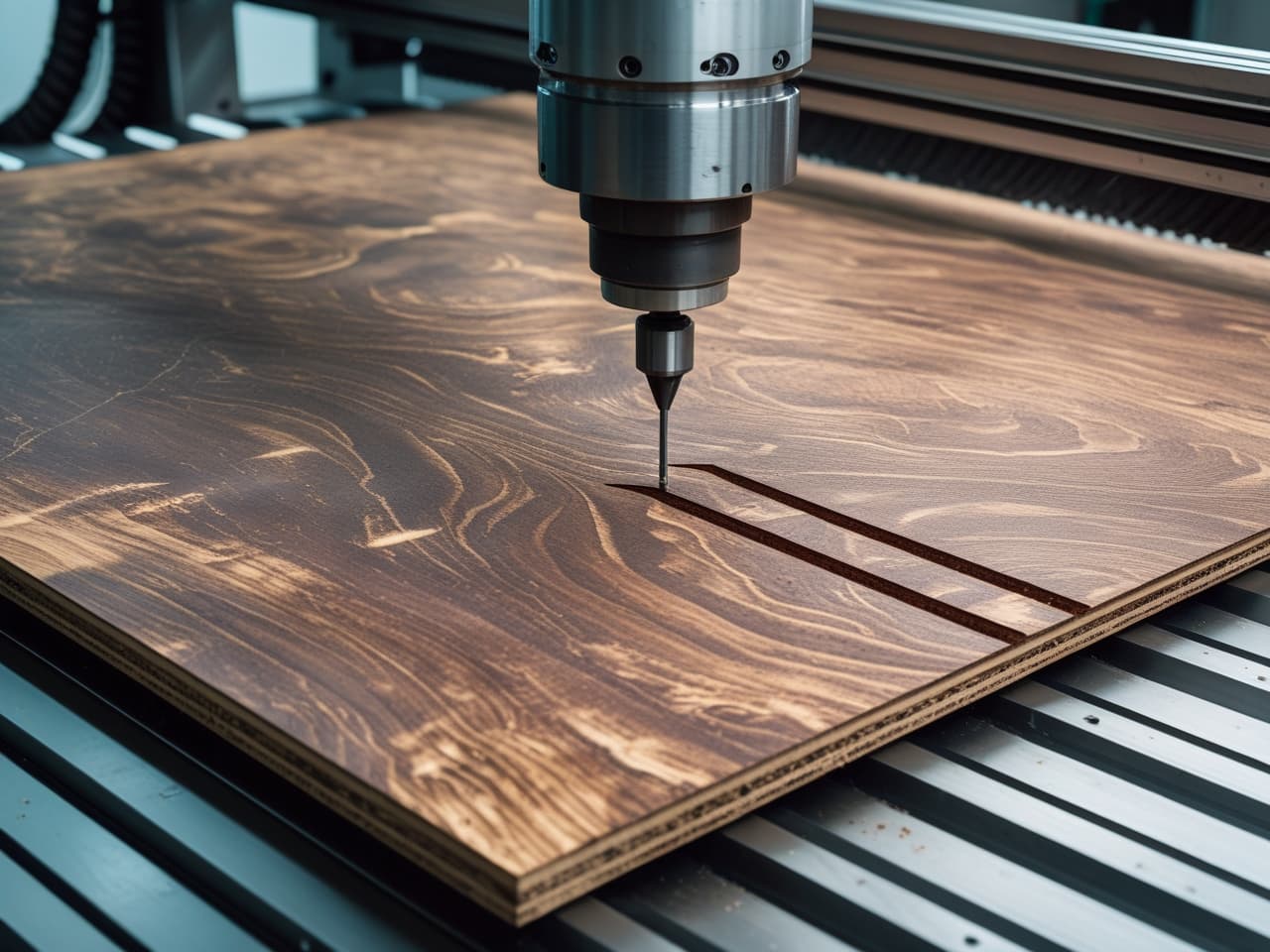


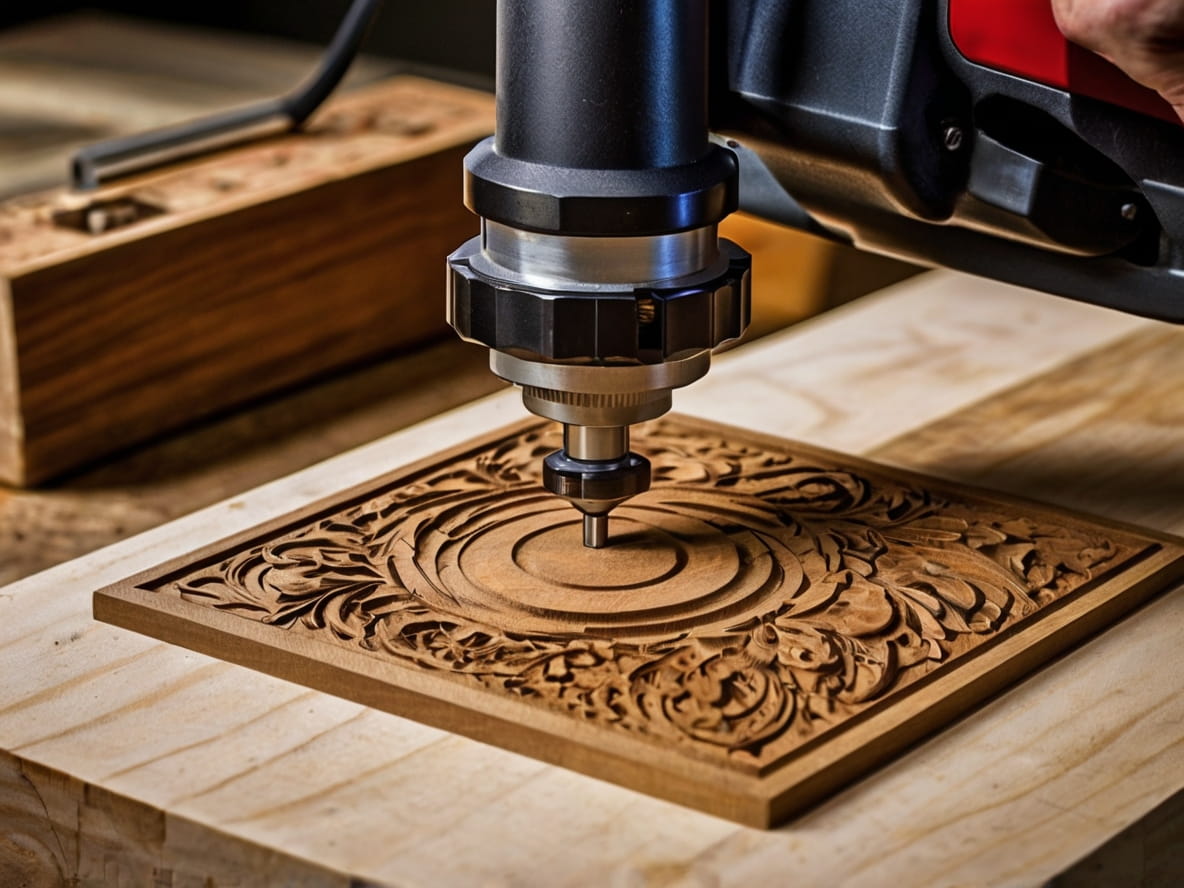





An overview of all types of services: a wide range of woodworking possibilities
Sanding rarely lives on its own, usually it is part of a larger order. Besides it, the whole range of operations on MDF, OSB, plywood, particleboard, MFC and edge-glued board is in the works. The convenience is that the part does not need to be hauled between contractors: each stage takes into account the properties of the material, and everything is done under one roof, from the blank to the finished surface.
Alongside sanding, cutting to size, sawing, drilling and milling are available. Together they cover the blank’s path to a finished look, for furniture, building structures or anything else. Demand for cleanly treated material is growing, and to competently take it through all the stages is beyond just anyone: it takes experience, equipment and an understanding of how which material will behave.
Both sanding and the other operations rest on one thing, the pairing of machinery and hands. The machine sets the precision, while the master’s experience prompts where to ease off the revolutions and where to change the grit. For each project and each material, plywood, particleboard, MDF, MFC, its own approach is chosen, not a universal one-size-fits-all template.
Our portfolio — finished products
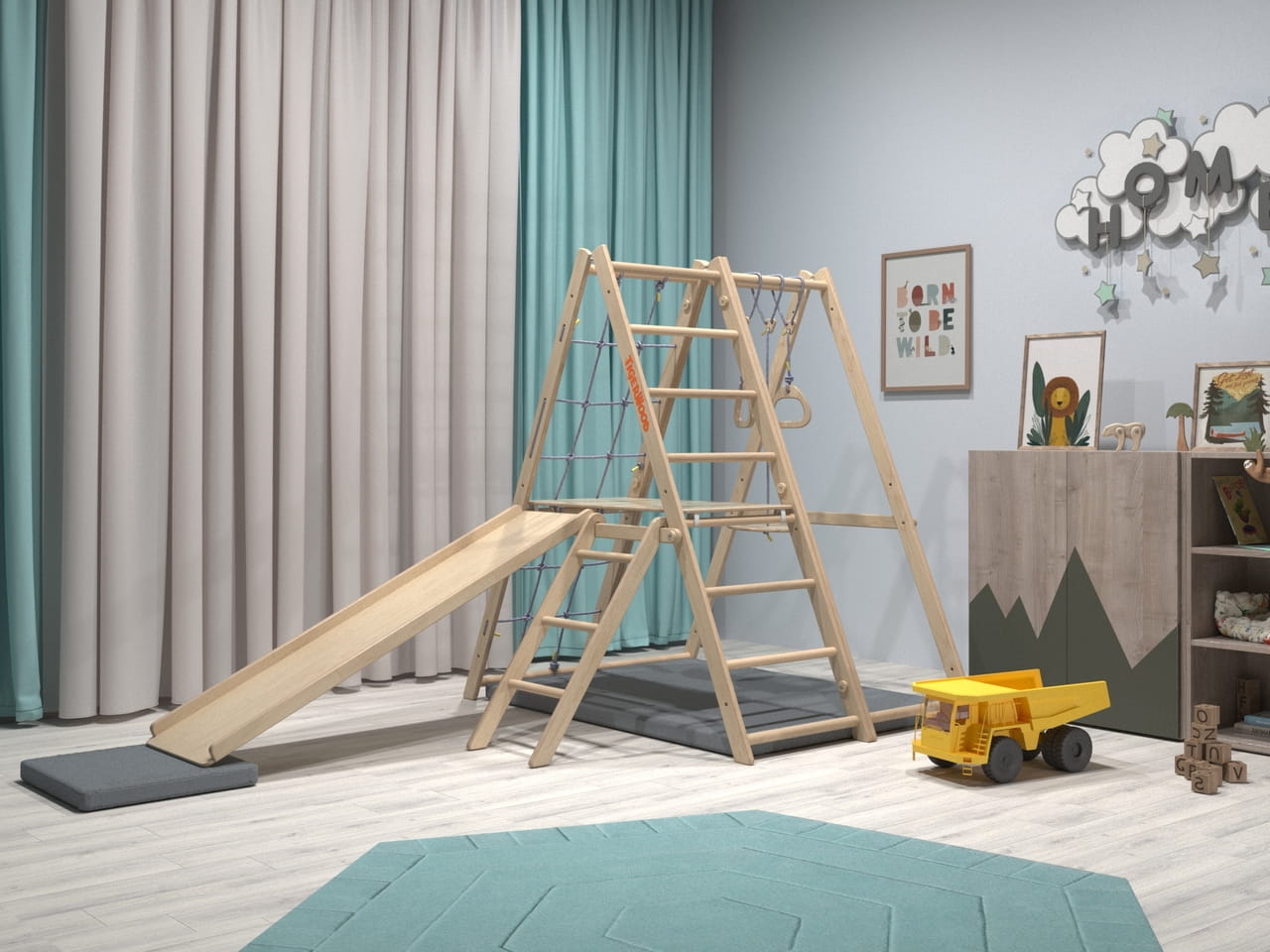
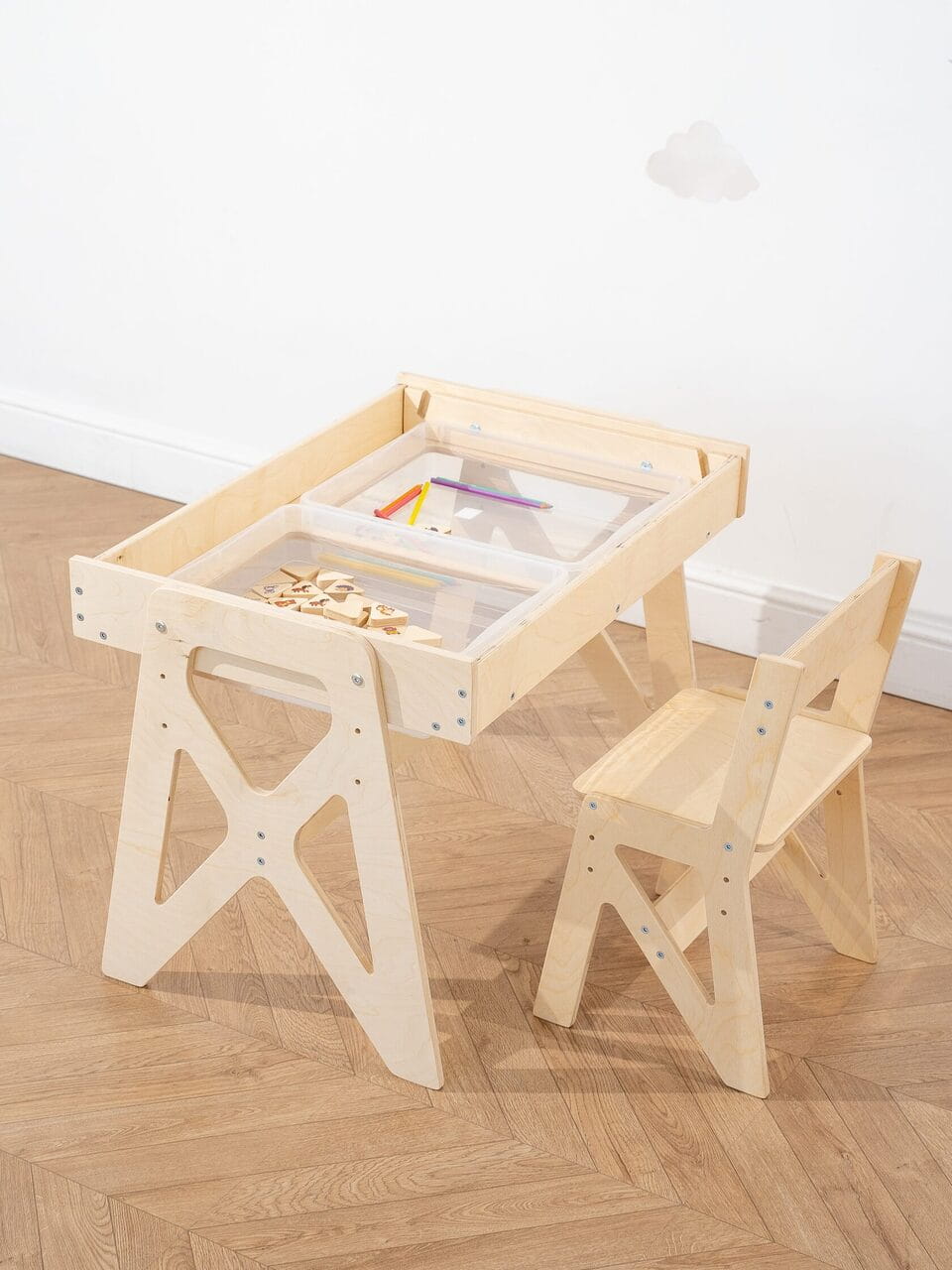


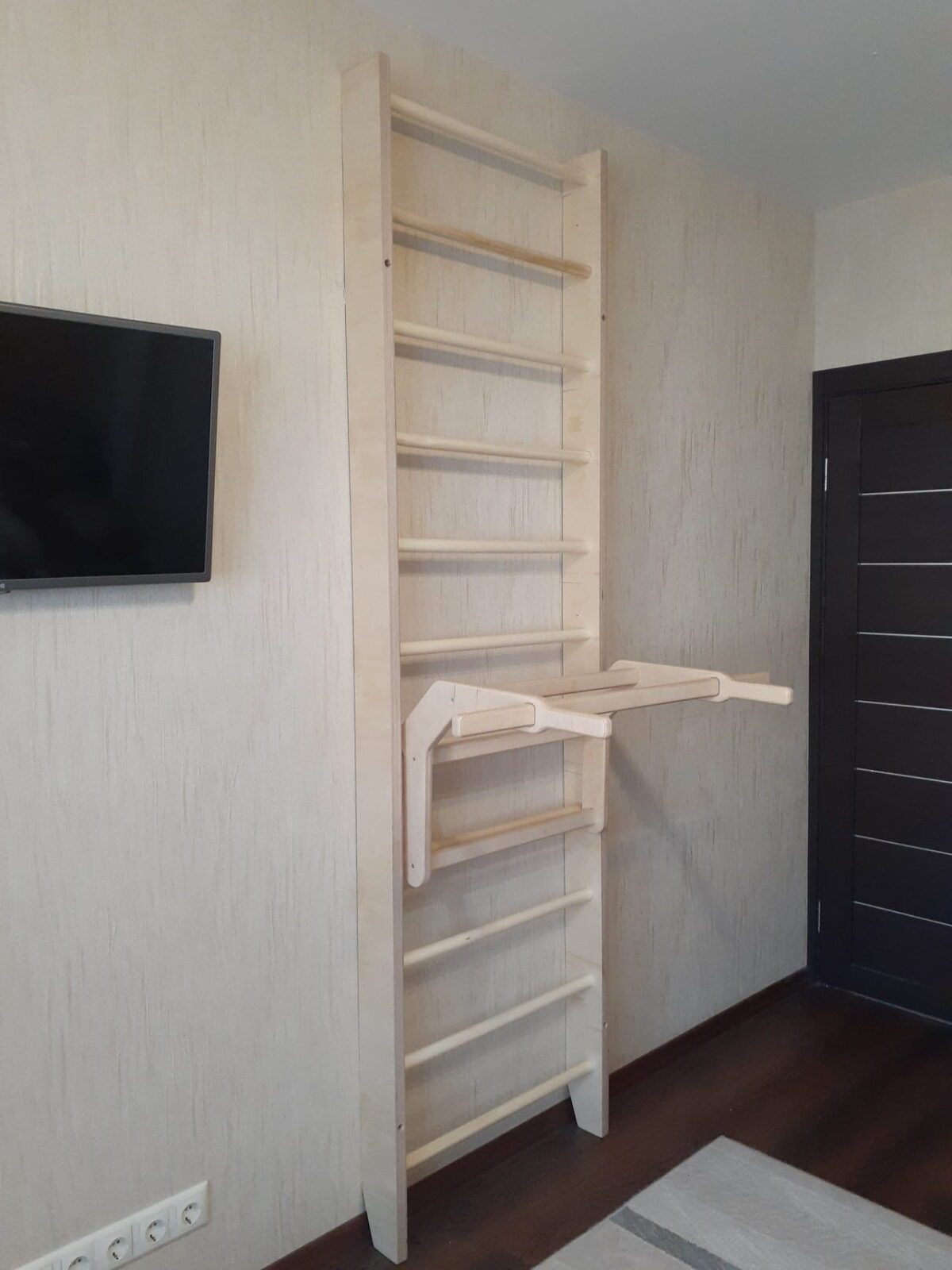
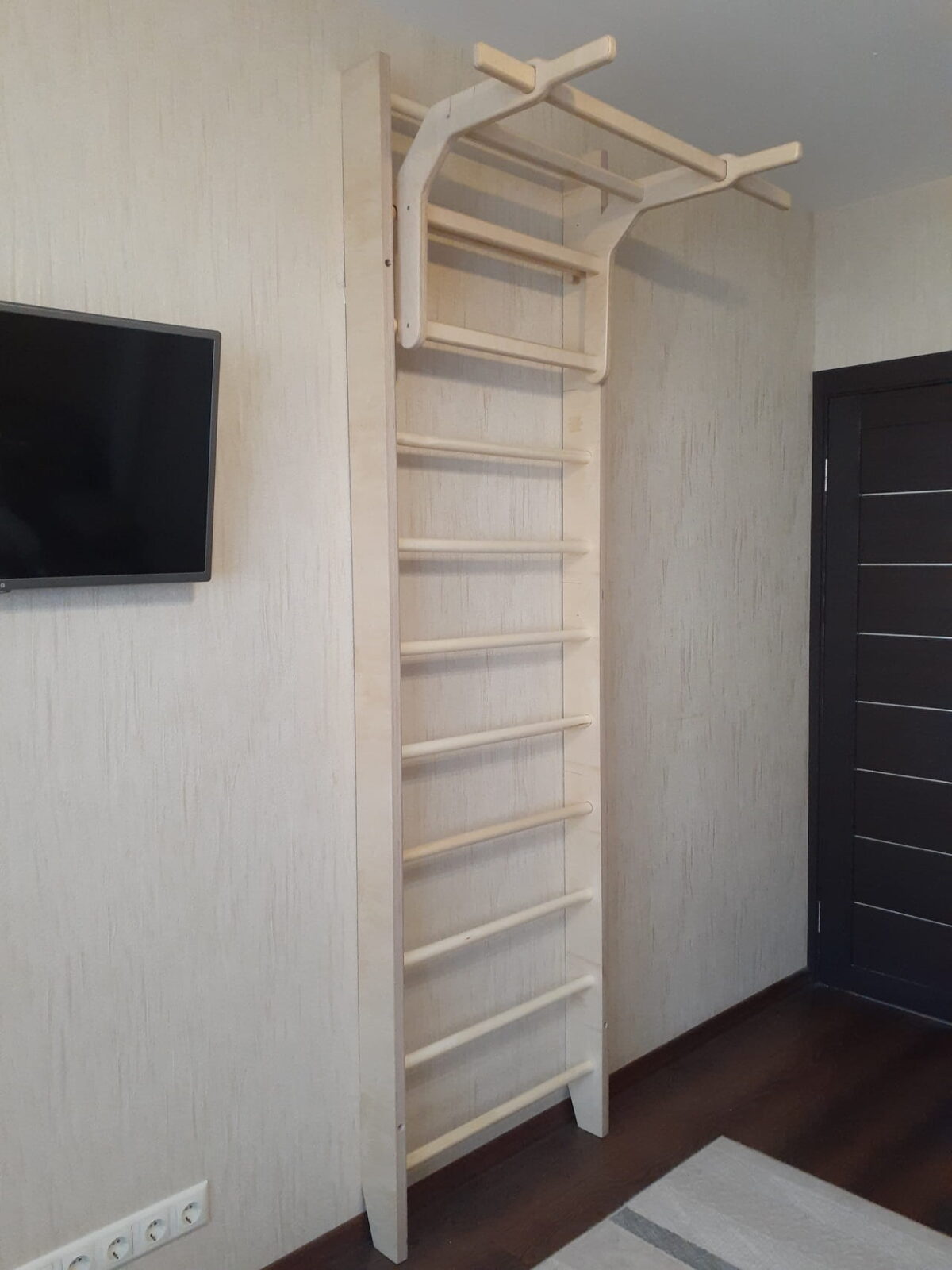
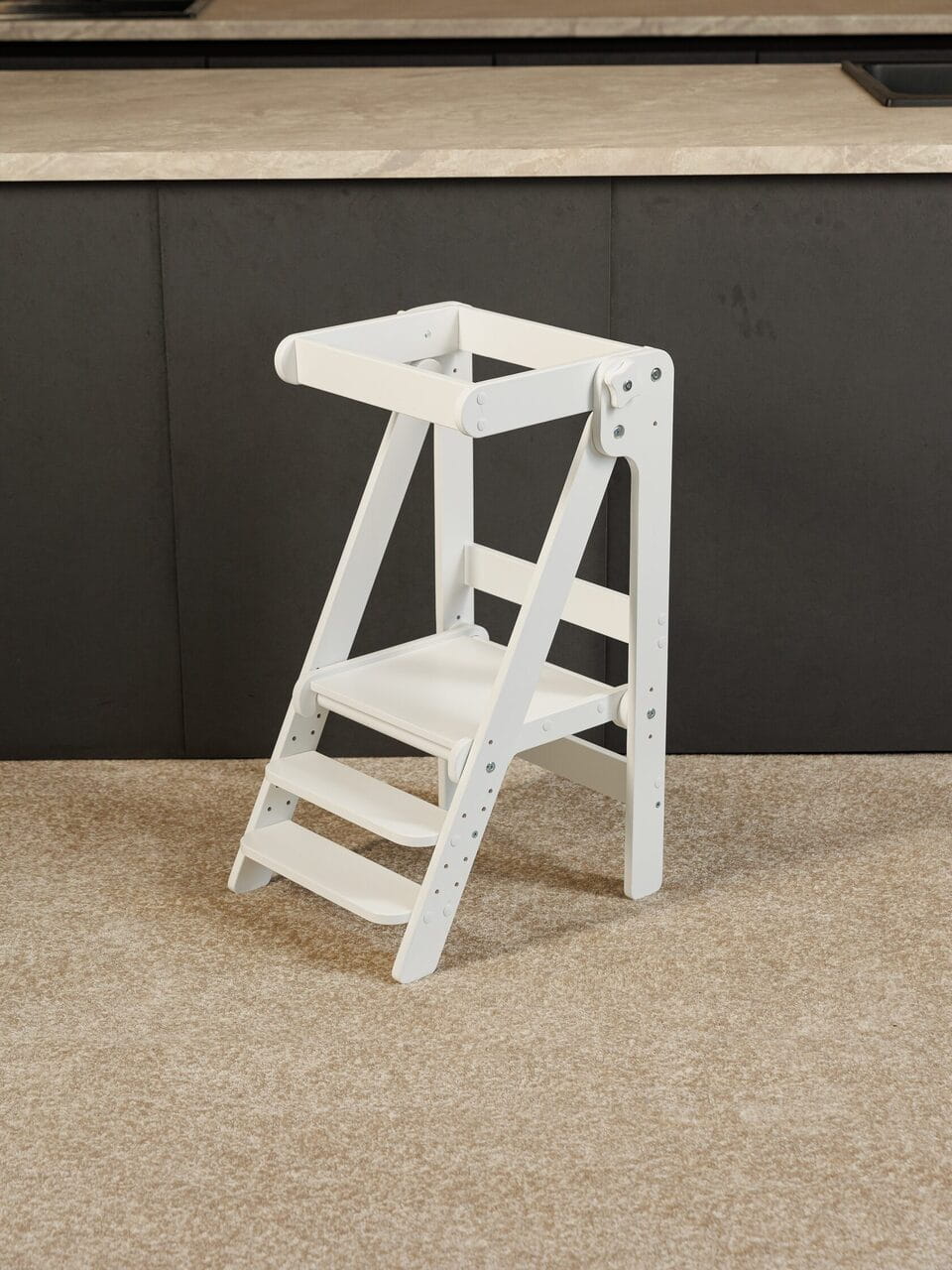








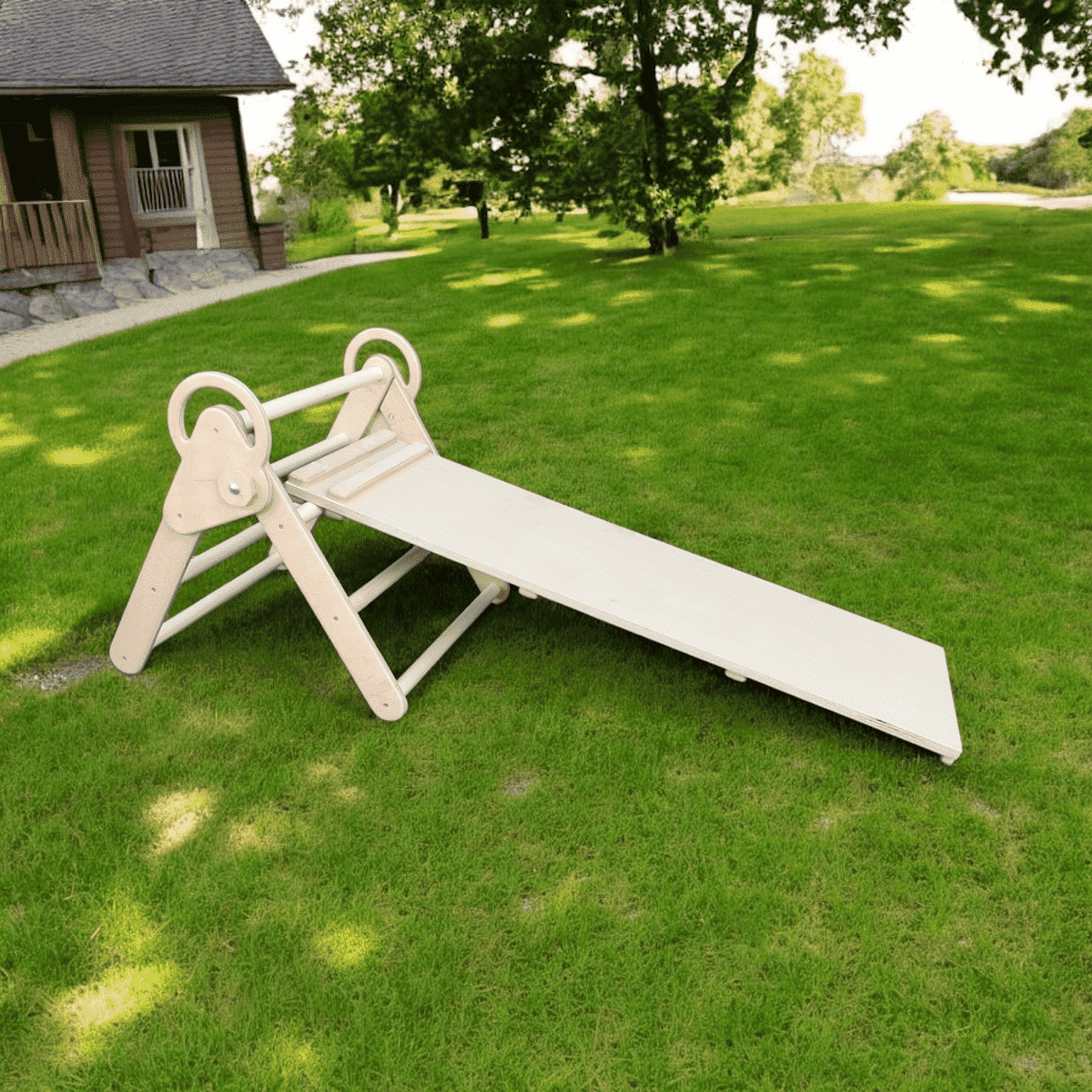

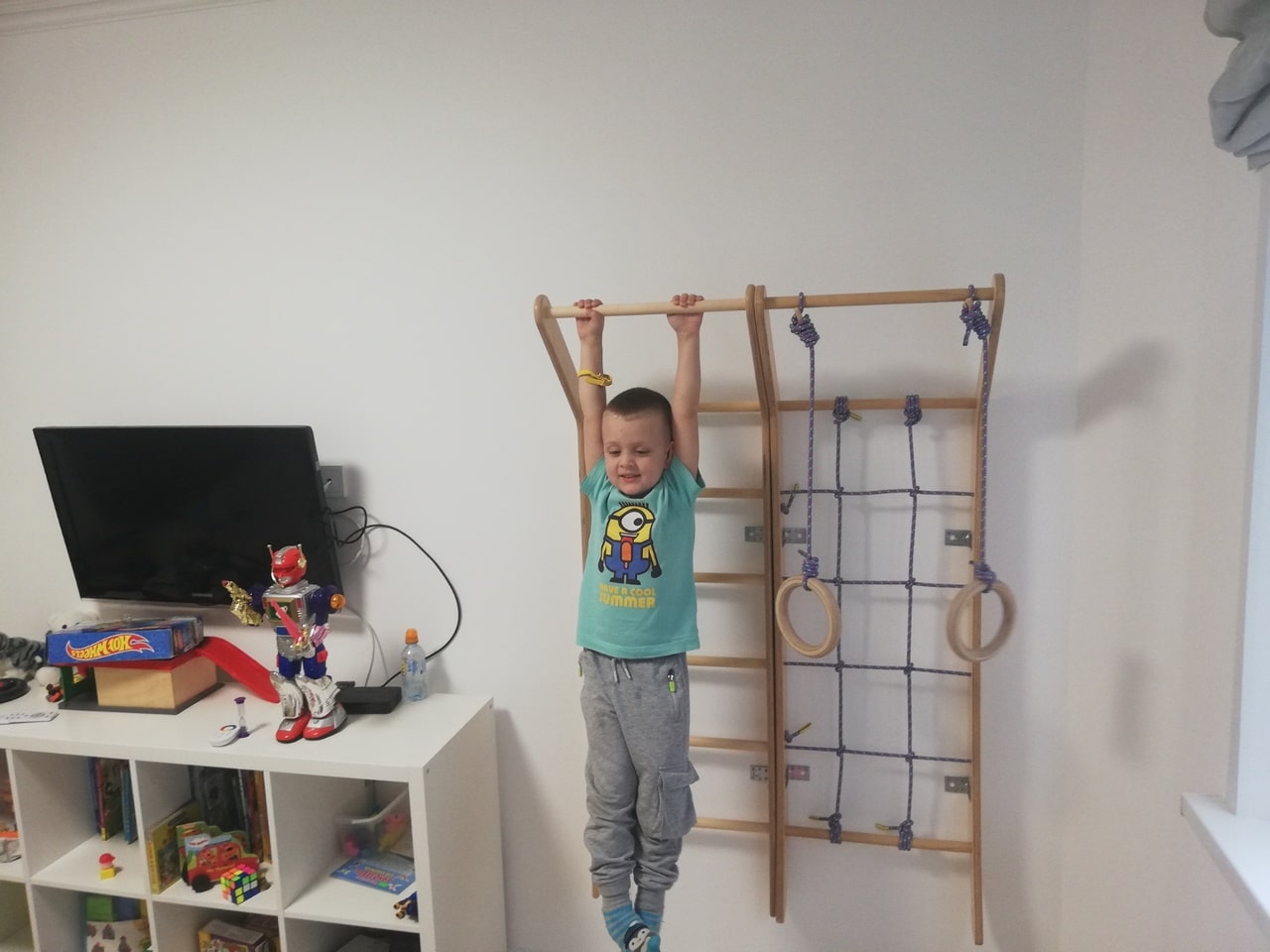


Examples of our work: how sanding quality affects the final result
Finished products speak best about the work. Take MDF, plywood or particleboard that have been sanded: the difference is visible to the naked eye, from a furniture front to a construction part the surface becomes smooth and ready for coating. And the customer values it: it is precisely at this step that both the appearance and how long the product will last are laid down.
On a furniture order, sanding brings the surface to an ideal so that varnish or paint lies flawlessly, without a single blemish in view. In construction and finishing, the same operation gives both durability and a decent look, be it panels, fronts or sheathing. The result is one: after thorough sanding the material is ready for use, and its characteristics are noticeably higher than those of untreated material.
Such work clearly shows a simple thing: the way the surface is treated determines how the product is perceived. Cheap sanding, and the thing looks cheap even if the material is expensive. For those who make furniture, finishing or construction elements, where every detail matters, this is not abstract theory but a matter of reputation before their own client.
Who uses a carpentry workshop’s services

Furniture makers

Interior designers

Advertising companies

Exhibition stand builders

Art studios

Cafés and restaurants

Construction firms

Retail equipment manufacturers

Furniture factories

Private craftsmen

Custom orders

Manufacturing companies

Museums and exhibition halls

Architects

Theatres and film studios

Educational organizations

Children’s products manufacturing

Repair specialists

Online stores

Sole proprietors
Who needs sanding of wood and products
The circle of customers is wide: from large construction companies to small furniture workshops and private craftsmen. Such variety is only to the good, working with different industries teaches you to understand what each needs. A builder cares about durability, a furniture maker about perfect smoothness under varnish, and an advertiser about an even base for painting a board. Experience is precisely in delivering something tailored to each request.
Both large furniture producers and building-material suppliers come, and one thing unites them all: quality and predictability of the result matter to them. The reason is simple. A reliable sanding contractor removes the headache: no need to re-check every batch and fear that a part will arrive with a tear-out right before the finish. That is what they value and come back for.
A wide circle of regular customers is itself a sign. People do not return where they have been let down. Long relationships are built on something simple: to understand what a specific industry needs and to deliver it consistently. That is exactly why many start with a trial order and then outsource the sanding on a permanent basis, having satisfied themselves as to the result.
The service of sanding wooden products and materials
The whole set of operations on MDF, plywood, particleboard, MFC, edge-glued board and OSB is in the works, with an eye to the character of each material. Attention is paid to the whole chain, from sawing to the final sanding, not only to the showy last step. And sanding takes a special place here: it both brings out the look of the part and extends its service life.
Sanding changes not only the appearance but also how the part works. In furniture this is especially clear: a smooth even surface is the basis for a good coating, and that already gives both a long service life and a pleasant look. To arrive at this, different grit and different techniques are used at different stages, there is no universal “run over it with sandpaper” here.
For each material, its own approach, and the outcome depends on it. MDF is sanded on suitable machines and soft abrasives, so as not to damage the surface and to give an even base for painting. Plywood is handled more carefully, the veneer layers are preserved. Particleboard and MFC require patient levelling, so as not to provoke crumbling and deformation. The same machine, but with different settings each time.
Along the way the working qualities grow too: a treated part is stronger and better withstands minor impacts. In sum this gives products that last longer and require less repair. For furniture makers and building-material producers this is a direct argument, the end user gets a thing that will not disappoint in six months, and that means fewer complaints too.
To bring it down to the essence: sanding wood and products here covers the needs of the most varied fields, from furniture production to construction and finishing. One needs a mirror surface under varnish, another an even base for paint, a third simply a clean part free of tear-outs. And for each request its own solution is found.
Glossary: sanding terms in plain words
When discussing an order, the master now and then throws in a word that means nothing to the customer. There is nothing wrong with that, the trade simply has its own language. A short decoding will remove misreadings and help you understand what is being talked about when you are told the grit or told about finishing.
| Term | What lies behind it |
|---|---|
| 🔢 Grit | The coarseness of the abrasive: the higher the number, the finer the grit and the smoother the surface |
| 🧻 Abrasive | The cutting material, a belt, wheel or paper with grit |
| 🪵 Fuzz | Raised wood fibres that are removed by sanding |
| ✋ Finishing by hand | Manual final treatment in places the machine cannot reach |
| ⚙️ Sanding machine | A machine for mechanical sanding, belt, drum, calibrating |
| ✨ Final sanding | The last pass with fine grit before coating |
The customer does not have to memorise all this. It is enough to grasp the logic: the closer to the finish, the finer the grit and the more careful the work. And if some term remains unclear, it is easier to clarify it during the discussion, a normal contractor will explain without condescension.
How the grit is selected
Grit is the heart of all sanding. You always start with a coarse grit, which quickly removes defects and brings out the plane, and finish with a fine one, which gives that very smoothness under coating. Skipping steps is not allowed: if after a coarse abrasive you go straight to a fine one, the coarse marks will remain, they just become less noticeable to the eye until the first layer of varnish.
The step between the stages matters too. Too abrupt a transition, and the fine grit does not manage to remove the traces of the previous one, too small a step, and time is lost to no benefit. An experienced sander selects this ladder to suit the material: solid wood holds a coarser finishing grit, while MDF under painting requires truly fine finishing.
The final grit also depends on what comes next. Under an opaque paint there is no point bringing the surface to a mirror, the pigment will cover it anyway. But under a clear varnish or oil, which hide nothing, you sand more thoroughly: here every flaw is visible. So before the start it is always clarified what finish is planned.
Hand and machine sanding
These two approaches are not rivals but partners. The machine is indispensable on flat surfaces and large volumes: it treats a sheet or a batch of identical parts quickly and evenly, without tiring or losing its way. Where the count runs to dozens of identical blanks, hand work simply cannot keep up in speed and consistency.
But the machine has a limit. Internal corners, carved relief, a shaped edge, narrow grooves, a belt or drum does not reach here. This is where the hands come in: the master finishes by hand what the machine has left, feeling the material with their fingers. It is precisely hand finishing that often separates a decent product from a perfect one.
In practice these methods almost always go together. The part is first run through the machine to bring out the main surface, and then the complex spots are gone over by hand and the last roughness removed. This combination gives the result: the speed of the machine plus the care of live work.
Sanding for painting, varnish and oil
The surface is prepared differently for each type of finish. Under an opaque paint, especially on MDF, an absolutely even plane without waviness matters, the pigment will hide the colour but not the relief. Here the geometry is brought out thoroughly, and sometimes small flaws are filled beforehand so that the front reads as perfectly smooth.
Under a clear varnish the requirements are the strictest of all. Varnish works like a magnifying glass: it emphasises both the texture and any scratch. So sanding for varnish goes down to the very finest grit, with special attention to direction, the finishing passes are made along the grain so that no cross marks remain, which the varnish would highlight.
Under oil the surface is prepared a little differently. Oil soaks into the wood and leaves the texture alive, so there is no need to bring it to a glassy finish, uniformity matters more, so that the compound soaks in equally across the whole area. An over-polished surface will take oil worse. These nuances decide whether the finish lies beautifully or in patches.
The equipment that the result rests on
Fine words about quality are worth nothing without the machines that deliver that quality. The core of the fleet is belt and calibrating-sanding machines: they bring large planes into an even surface and calibrate parts by thickness, which is especially important for boards and panels. On them a part is treated quickly and with a predictable result.
For profiles, edges and shaped elements, brush and oscillating machines are brought in, which follow the shape of the part rather than only the plane. And where machinery is powerless, in internal corners, on fine relief, hand sanders and hand finishing do the work. It is precisely the set of different equipment that makes it possible to take on both a simple sheet and a complex carved part.
The question of dust stands apart. Sanding generates a lot of it, and the fine haze is dangerous both for health and for the finish, dust settled on a part spoils the coating. So the machines work with extraction and dust collection, and the sanding zone is separated from the painting one. This is not a luxury but a condition of a clean result.
Solid wood, MDF and MFC: practical nuances
With solid wood the main rule is to work along the grain, especially on the finish. A cross mark on wood under varnish looks like a scratch across the whole part. Solid wood forgives more than a panel: it can be sanded deeper, a noticeable layer removed, a worn surface restored almost to like-new. This is exactly what makes it good for furniture you want to renew over the years.
MDF behaves predictably on a plane but is capricious on a milled edge. In the cut spots the material is looser and greedily absorbs paint, so the edge is sanded and primed especially thoroughly, otherwise it will differ in tone from the plane. There are no trifles here: it is precisely on the edges that unprofessionalism is most often visible.
MFC is a special case, because it already has a ready laminated coating. It is not sanded entirely: there is no point, and it is a shame to spoil the decor. It is treated selectively, ends, spots for gluing, zones where the surface needs matting for coating. Here it is important to remove exactly as much as needed, without touching the decorative layer in the other spots.
Industries and who orders sanding
Most often it is furniture makers who come for sanding. Fronts, worktops, carcass parts, all of it goes under painting or varnish, and without a clean surface the finished product loses its look. For them sanding often becomes the stage that is easier to outsource than to keep a dedicated section and operator for.
The second large customer is advertising and display production. Boards, letters, decorative panels for painting require an even base, and how the brand colour lies depends on the quality of the sanding. Here too belong design studios and architects with their one-off interior parts, where a flawless surface matters.
The third category is builders and manufacturers. They need sanding not for beauty but for the work: to prepare OSB and plywood for a protective coating, to level a part, to remove burrs before assembly. Plus private customers who need to finish off a blank or renew an old thing. The requests differ, but the essence is one, an even, clean surface.
How sanding solves the task: three examples
Kitchen fronts for painting. A batch of milled MDF fronts arrives. The plane is brought out on a calibrating machine, the relief and edge are finished by hand, with special attention to the ends, which would otherwise absorb paint differently than the plane. The output is a perfectly even base on which a matte enamel lies without a single blemish.
A solid-wood worktop for oil. Here the task is to preserve the living texture of the wood. The surface is sanded in stages along the grain, brought to a pleasant smoothness but not polished, so that the oil soaks in evenly. The result is a worktop warm to the touch, where both the texture and the handwork are visible, rather than a soulless gloss.
A batch of plywood advertising boards. Dozens of identical blanks for a brand colour. Here the machine wins: it runs the whole batch with the same grit, and the hundredth board is no different from the first. An even base, and the paint on all the parts lies in one tone, without patches or discrepancy.
Three different orders, but one logic: to understand what will happen to the surface next, and to select the grit, technique and mode for that. The material and finish change, so the approach changes, but not the principle.
Lead times and what the price depends on
The exact cost of sanding is calculated for the specific order, but it is useful to understand its components, that way it is easier to see where you can save and where you should not. The price is made up of several things, and each can be estimated in advance.
- 📐 Area and number of parts, the more surface, the higher the volume of work.
- 🎯 The required smoothness a base for paint is cheaper than finishing for a clear varnish.
- 🪵 Material solid wood, MDF and MFC require different time and approach.
- ➰ Complexity of shape a plane is faster, relief and edge, longer and by hand.
- ⏱️ Urgency work outside the general queue is counted separately.
The simplest way not to overpay is to say in advance what finish is planned. Bringing a part to a mirror under an opaque paint is pointless, it is extra work and extra money. But you should not skimp on sanding under varnish: what is saved will show up as scratches under the clear coating.
Common mistakes when sanding
Most slip-ups happen from haste and a desire to save on the stages. The most common is to jump over the grit, taking a fine grit straight after a coarse one. The coarse marks go nowhere in that case, they just become invisible until the first layer of varnish, which mercilessly reveals them.
The second mistake is overheating and over-drying, especially on MDF and thin veneer. Too long a stay on one spot or a high speed scorches the material or wears the top layer right through. The third is to ignore the grain direction on the finish, leaving cross marks. And the fourth, almost always fatal, is to paint over an un-vacuumed surface: settled dust turns the finish into sandpaper.
The good news is that all these mistakes are predictable, and therefore easy to avoid with careful work. A professional approach means precisely not to rush, to observe the grit stages and to keep the surface clean right up to the coating.
A one-off order or ongoing cooperation
Sanding is equally open both to those who came with a single part and to those looking for a long-term contractor. A one-off order is simple: brought the blank, discussed the required finish, picked up the finished one. No obligations for the future, just the work and the result.
Ongoing cooperation is already another level of convenience. Furniture shops and advertising producers come to realise over time that it is easier to keep one trusted source than to explain their surface requirements to a new contractor each time. When the contractor knows a client’s specifics and their finishes, the work goes faster: fewer approvals, predictable quality, priority in the busy season.
Many arrive exactly this way, with a single trial part. They looked at how the surface was brought out, how their coating lay, and thereafter outsource the sanding as a stream. This is a sensible path: first test the result on something small, and only then build a long relationship.
Quality control and a guarantee of the result
Control in sanding is not a final tick but a habit at every stage. After the rough pass they check whether the large defects have gone and whether the plane has come out. After the intermediate one, whether coarse marks remain. And only after making sure do they move on to the finish. Such step-by-step control catches a problem where it is still easy to fix.
The final surface is checked not only by eye but also by touch, and sometimes under raking light at an angle, that is the best way to see residual marks and waviness. Parts destined for a clear varnish are examined especially fastidiously, where any flaw will become noticeable after coating. The aim is simple: to hand the customer a surface that neither the painter nor the end client will find fault with.
If a disputed point does arise, it is easier to resolve when the work was done in one place under one control. There is no need to work out at whose stage the mark appeared, responsibility for the surface lies with the contractor. For the customer this is the real guarantee: it is clear who to hold to account.
Delivery and repeat orders
Finished parts are shipped across all of Europe. A sanded surface is packed with care: a fresh smooth part easily picks up scratches and dents on the road, so it is padded and protected, especially if painting still lies ahead. For a customer in another region the process looks just as simple as for a neighbouring city.
With repeat orders everything is simpler than the first time. If a part has already gone through treatment, the parameters are known: material, finishing grit, the required result. A repeat batch is made exactly the same, which matters for those who buy additional elements for already-finished furniture or continue a series. An identical surface on all the parts is exactly what they come back for.
How to prepare a sanding order
A good order begins with a couple of clarifications that save time for both sides. The first and main one is what finish is planned: paint, clear varnish or oil. On this depends to what smoothness the surface is brought, and therefore the volume of work and the price.
Next it is useful to say something about the material and its condition: a new blank or a part for restoration, whether there are deep defects that need filling before sanding. If the part goes in a bundle with other operations, cutting to size, milling, painting, this too is worth talking through, so that the whole chain is built in the right order. And if you do not know some of this, it is nothing to worry about: what is missing will be clarified during the discussion.
Myths about sanding
There are plenty of misconceptions around this operation, because of which customers either save in the wrong place or get the wrong thing. The most persistent myth is that sanding is just “running over it with sandpaper”, a trifle that can be done any which way. In reality it is precisely on it that how an expensive coating lies depends, and carelessness here costs the most.
The second common misconception is that the harder you press and the coarser the grit, the faster and better. On the contrary: excessive pressure leaves deep marks and tears the fibre, and on MDF it also scorches the surface. The third myth is that MFC needs to be sanded entirely. No point: it has a ready coating, you only touch it where truly needed. And the fourth, that the finish will hide the flaws of the sanding. It will not hide them but emphasise them, especially varnish.
Sanding the edge and end faces
The edge is the trickiest spot, especially on panel materials. After cutting and milling the end of MDF is looser than the plane and absorbs paint more greedily, so it is sanded and prepared separately, otherwise it will be noticeably darker or more matte than the face. On solid wood and board the edge is brought out just as thoroughly as the plane, since it often stays in view.
Often a light chamfer or rounding is taken off the edge, not only for the look but also so that the coating holds. On a sharp corner paint and varnish thin out and chip first during use, while on a soft rounding they lie in an even layer and last longer. This is a case where a small detail tangibly affects the life of the product.
Restoration and renewal of products
Sanding can not only prepare the new but also bring the old back to life. A worn solid-wood worktop, a scratched door, a front greyed with time can often be renewed: remove the worn top layer along with the scuffs and prepare it anew for coating. With solid wood this is especially rewarding work, its thickness allows the surface to be renewed more than once.
With parts that have a thin decorative layer, laminate, veneer, old enamel, one acts more carefully. Here the task is not to remove the coating but only to freshen it or prepare it for over-coating, without wearing it right through. What can really be done with a specific item is assessed by its condition: sometimes light treatment is enough, sometimes it is more honest to say it is easier to replace the part.
More questions about sanding
Is sanding necessary if the part will go under film or laminate? More often yes, but differently than under varnish. Under a veneer overlay an even, clean surface without bumps and dust matters, one the material will adhere to well. A mirror smoothness is not needed here, but the absence of unevenness is a must, otherwise the film will repeat every defect.
Can an already-assembled product be sanded? Sometimes yes, but it is more complex and takes longer: the internal corners and joints are harder to reach, and the risk of touching neighbouring parts is higher. So where possible sanding is done before assembly, while there is free access to each surface. Finished products are treated when they cannot be taken apart.
Does sanding remove dents and deep scratches? Small ones, yes, they go away in the process. Deep dents and chips are first filled with filler, allowed to dry, and only then brought into the common plane. Trying to “sand out” a deep defect without filling means making a noticeable depression in the part.
Why it is profitable to outsource sanding
Keeping your own sanding section makes sense only with constant workload. Machines cost money, take up space, require extraction and an operator who knows how to work with them. If sanding is needed from time to time, all of this stands idle, while the costs go nowhere.
Outsourcing the operation in such a case is usually cheaper and calmer. There is no need to invest in equipment and train people for rare tasks, and you get stable quality because they do this every day. In the season, when your own capacity is overloaded, outsourced sanding covers the peak without a rush and missed deadlines.
So even those who have their own shop turn to sanding: to unload the section at a hot moment, to treat a non-standard batch, to get a finish of a level they cannot manage themselves. This is normal practice, not a sign of a weak production.
Sanding before gluing and assembly
Not all sanding goes under coating, part of the work prepares parts for joining. Before gluing, on the contrary, surfaces are not polished to a mirror: glue holds worse on too smooth a plane, it needs a light roughness for adhesion. Here sanding levels the geometry so that the parts fit tightly, without gaps into which the glue would go.
Before assembly it is more important to remove burrs, chips and unevenness at the joints, so that the parts sit against each other precisely. A misalignment of a fraction of a millimetre on an untreated edge turns, at assembly, into a gap or a warp of the whole product. So preparatory sanding is also about the precision of fit, not only about beauty.
What the customer gets in the end
The output is not promises but a part with a surface exactly for the task that was set. Under painting it is a perfectly brought-out base, under varnish a smoothness the eye finds nothing to catch on, under gluing correctly prepared planes. Sanding wood and products is valuable precisely in that it sets the quality of everything that comes after.
To bring it all together: it is enough to bring the part and say what the result should be. The rest, the selection of grit, technique, mode and control at the stages, is taken on by the contractor. That, in essence, is what people pay for: a predictable, clean surface without surprises at the next stage.
How to check the sanding quality yourself
You can assess the surface without instruments, by simple methods. The first, run your palm over it: the hand feels the roughness and transitions the eye may miss. The second, look at the part under raking light from a window or lamp: the grazing light reveals waviness, marks and traces of the previous grit, invisible under direct lighting.
The third method, lightly wet the surface before varnishing: moisture temporarily raises the fuzz and reveals defects, showing how the part will look under coating. If after drying the surface is rough, it is gone over once more. These simple checks are exactly what is done in production before handing the part on, so that a defect does not surface under the finish.
The place of sanding in the overall woodworking cycle
Sanding is rarely the first and almost never the only operation. Usually it is preceded by cutting to size, sawing, milling, everything that gives the part its shape and size. And only then is the surface brought to a clean finish. Such an order is logical: there is no point polishing a part that will still be cut or milled.
After sanding the finish most often follows, painting, varnishing, oil coating or veneering. So it is convenient to order sanding not separately but in a bundle with the next stage: then the surface is prepared exactly for the coating that will be applied, and no time is lost handing the part between contractors. When the whole cycle runs in one place, the result is more predictable, and there are fewer joints where something could go wrong.
For the customer this means a simple thing: you can bring a raw blank and pick up a finished painted part, without assembling the process piece by piece from different craftsmen. Sanding fits into the overall chain as its natural link, not as a separate service you have to go somewhere for separately.
Large batches and stability of the result
On large volumes the main value is uniformity. When there are hundreds of parts, it is critical that the last is no different from the first: the same smoothness, the same readiness for coating. A machine with a set mode gives this repeatability, because it does not tire and does not change its pressure from fatigue, as would inevitably happen with purely manual work.
For a series the mode and grit are selected in advance, and sometimes a trial part is run to approve the result before launching the whole batch. Then the process runs smoothly, and the whole series comes out at one quality. For furniture brands and advertising producers, where the parts are then painted in a single colour, this stability is not a whim but a condition without which the batch cannot be assembled beautifully.
A few questions in closing
Is sanding necessary if the part will stay without a coating? Often yes, for the sake of feel and safety. Even without a finish a smooth surface is pleasanter to the touch and leaves no splinters, which matters for shelves, children’s items and anything touched by hand. It is another matter that the degree of finishing here can be chosen more modestly.
Where to start if you have never ordered sanding before? With something simple: bring or describe the part and say what will happen to it next. The rest will be advised, which finish is more sensible, to what smoothness to bring it, whether to fill the defects. The first order always seems harder than it is; in reality it is enough to explain the desired result, and the technique will be selected for you.
Planning lead times and workload
Lead times largely depend on how dense the queue is at the current moment. In the season, when furniture makers and decorators are preparing for peak orders, the workload is higher, so a large batch is wise to plan in advance. A small part is usually taken quickly, but a series for painting to a specific date is better agreed with a buffer.
The work time itself is largely in the customer’s hands. A clear understanding of the finish, prepared material with no surprises, no last-minute rush, all of this speeds up the process. If the order is tied to assembly or installation, it is worth allowing a small buffer: final finishing and especially preparation for varnish tolerate no rushing, and a defect from haste costs more than a couple of days saved.
Cleanliness and safety of the process
Surface treatment inevitably gives off a lot of fine dust, and handling it is part of a professional approach. The machines work with dust collection that draws the dust straight from the cutting zone, and the section itself is separated from the painting one so that the haze does not settle on fresh coating. For the customer this means two things: the part arrives clean, and the finish on it lies without inclusions.
There is a domestic aspect too. A well-treated part sealed under a coating gives off less dust and leaves no splinters, which is especially important for furniture, children’s products and anything touched often. A neat surface is not only about beauty but also about how pleasant and safe the item is to use every day.
The bottom line on all the above is simple. An even, clean surface is the foundation on which both the look of the product and how long it will serve rest. It is enough to bring the part and state what the result should be, the suitable mode, grit and order of operations will be selected for the task and the surface brought to the required condition.
Your own material or turnkey preparation
The part for treatment can be brought in yourself or ordered together with manufacture. If the blank is yours, it is inspected before the work: the condition of the surface, moisture, and the presence of defects worth filling beforehand are assessed. This is an honest step, it is easier to agree the nuances before the start than to deal with surprises along the way.
When the treatment is turnkey, the previous stages, cutting to size, sawing, milling, are available together with it. In this case the part comes to the finishing stage already in the required shape and size, and the surface is brought out for the coating agreed in advance. This format relieves the customer of the worry of matching up different craftsmen and makes the lead time and result more predictable.
In any variant the starting point remains an understanding of the end goal. Describe what should come out and where the part will work, and the process will then be built so that the surface suits both the finish and the conditions of use, be it a damp kitchen, a dry living room or an outdoor structure.
And the last point to the matter: discussing an order commits you to nothing. You can simply describe the part, show a photo and say what finish is needed, and get a benchmark for the timeline, the volume of work and the suitable method of treatment. At this stage useful trifles often surface: where light finishing will suffice and where full preparation for varnish is needed, whether to fill the defects in advance. Such a conversation saves both time and money and removes half the questions before the work even begins.
What does the material sanding service include?
The service covers the whole chain: a rough pass to remove large defects, intermediate treatment and final finishing to a smoothness for coating. If necessary, the dust is removed and the surface prepared for painting, varnish or veneering. The set of stages is selected to suit the material and the task.
What materials can be treated by sanding?
We work with solid wood, plywood, MDF, particleboard, MFC, OSB and edge-glued board. Its own grit and mode is selected for each: dense MDF, layered plywood and coated MFC are sanded differently. Sturdy metals have nothing to do with wood sanding.
How long does the sanding process take?
The lead time depends on the volume, the surface area and to what smoothness the part needs to be brought. A small batch is often sanded in a day, large volumes and a finish for a mirror varnish are counted separately. The exact time is named for the specific order.
Can MDF and plywood be sanded at the same time?
They can be treated in one order, but not in the same mode. MDF and plywood have different density and structure, so its own grit and its own machine setup are used for each. In practice, parts of different materials are simply sanded to their own parameters within a common order.
What abrasive materials are used for sanding?
Sanding belts and wheels of different grit are used, from coarse for the rough pass to the finest for the finish. The type of abrasive is selected to suit the material: one grit for soft MDF, another for plywood and edge-glued board. The grit is built up in stages, from coarse to fine.
Can sanding be used to restore damaged materials?
Yes, sanding often brings a worn or roughened surface back to life. Here one acts carefully, especially with the decorative layers of MFC and already-painted parts: it is important to remove the defect without wearing the coating right through. For such a task a soft abrasive and a gentle mode are used.
How to prepare material for sanding?
Special preparation is usually not required, it is enough for the part to be dry and free of coarse dirt. Large chips or deep dents are filled with filler beforehand if necessary, so that sanding brings the surface into an even plane. The rest is taken on by the process itself, from the rough pass to the finish.
What technologies are used in sanding?
At the core is multi-stage treatment on machines: rough, intermediate and finishing passes with a gradual reduction of grit. Where needed, hand finishing is added in hard-to-reach places and on complex shapes. A coarse abrasive removes defects, a fine one brings out the smoothness for the finish.
Why is it important to choose quality sanding?
Cheap sanding backfires: scratches show through the paint, the coating holds worse, and the part loses its look faster. Quality treatment, on the contrary, gives an even base for the finish and extends the service life of the product. Redoing a poor result is almost always more expensive than doing it right the first time.
What are the advantages of sanding over other treatment methods?
Sanding does not replace milling or painting, it complements them and prepares the surface. Its strength is that it removes micro-unevenness inaccessible to coarse methods and creates that very smooth base without which the finish will not lie evenly. In essence it is the connecting link between rough treatment and the final coating.
Reach us in whatever way suits you best
Call us, message us on a messenger app or reach out via social media — choose whichever way suits you
🗺️ We accept orders from clients across all of Europe
💬 Useful information and articles

Eco-friendly and safe materials for modern wood production
Eco-friendly and safe materials for modern wood production In recent years we increasingly think about what the things around us are made of. A home, furniture, a floor, a kitchen, a

How to Correctly Choose Between Plywood, MDF, Particleboard, and MFC for Different Tasks
How to Correctly Choose Between Plywood, MDF, Particleboard, and MFC for Different Tasks In the world of woodworking and furniture making, every material has its own story. Plywood, MDF, particleboard, and

Cutting sheet wood materials at different angles: why and how it is done
Cutting sheet wood materials at different angles: why and how it is done Working with wood materials is not just sawing. To get a truly high-quality and durable product, you have

Recommendations for choosing sheet materials for indoor and outdoor projects
Recommendations for choosing sheet materials for indoor and outdoor projects In woodworking, choosing the right sheet material is like laying a foundation for a builder. What you pick at the very