Technological aspects of sawing and ripping timber and sheet materials
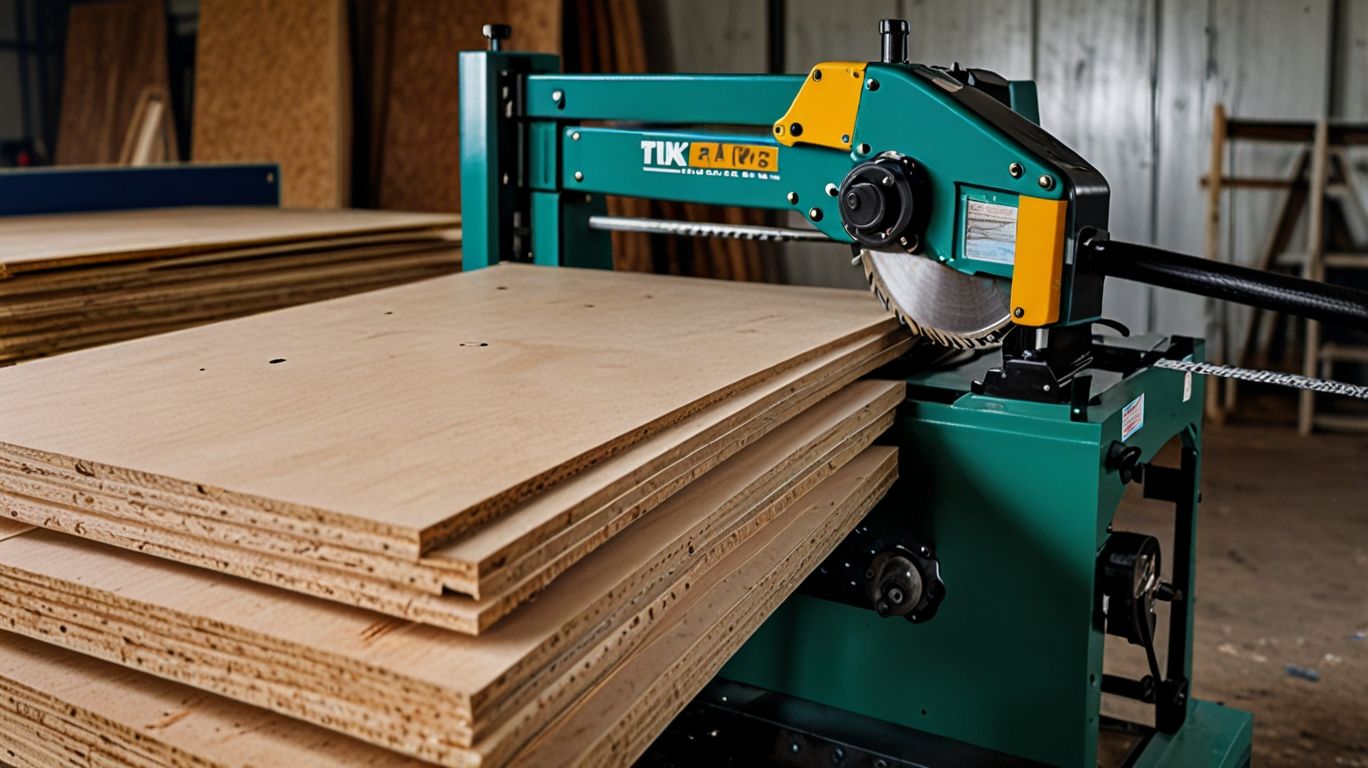
When we work with wood, we often forget that behind every beautiful product — whether a chair, a table or even an intricate decorative panel — lies a whole world of processes invisible to the layperson. One of the most fundamental and, perhaps, most important stages in this world is the sawing and ripping of timber and sheet materials. It may not sound terribly exciting, but believe us, there are so many subtleties here that it is genuinely astonishing. It is not simply a matter of picking up a saw and cutting. It is a whole science that directly affects the quality of the finished product, its durability and, of course, the cost-efficiency of production.
Remember cutting something with a handsaw as a child? That was simple. In industrial woodworking, everything is far more complex. Here the main task is to obtain blanks of the required dimensions from a large log or a solid sheet with minimal waste, while taking into account all the characteristics of the material. It is this stage that determines how flat your future table will be, how well a joint will hold and how much material ends up as shavings.
When it comes to timber, it is a living material. It has its own structure, its own fibres, its own “habits” of shrinking or warping. Sheet materials, though more predictable, also call for a special approach. We will talk about all of this.
Timber: from log to board
Let us start with the classic — sawing timber. Imagine a huge log being delivered to the production floor. It looks so monolithic, yet hidden inside it are future boards, battens and laths. And this is where the most interesting part begins.
Preparation: judging a log by its cover
Before sawing, the log needs to be prepared. Sometimes it is stripped of bark — this is known as debarking. Why? First, the bark may be dirty and contain sand or small stones that quickly blunt the saws. Second, unpleasant surprises such as insects or fungus sometimes hide beneath the bark. Third, debarking makes subsequent operations easier and sometimes allows the bark to be used as fuel or for other needs.
Another important point is log sorting. Logs are sorted by species (oak, pine, birch — each with its own characteristics), by diameter, by length and, crucially, by quality. Logs with knots, cracks or rot are sawn differently from perfect, “clean” specimens. The goal here is simple: to squeeze the maximum amount of usable material from each log.

Sawing methods: each good in its own way
Once the log is ready, sawing itself begins. And there is no single solution here — it all depends on what we want to obtain in the end and on the species of timber.
- Through-and-through sawing (or sawing into unedged boards): This is the simplest and fastest method. The log is simply cut into boards parallel to its axis. The boards come out with unsawn edges and bark. They are called unedged boards. This is an excellent option when high output is needed and further edge processing can be postponed. Timber is often sawn this way for subsequent drying, and only then are the boards edged. The advantage is minimal waste at the initial stage.
- Cant sawing: Here the log is first sawn into several cants (the central part) and two or four slab boards (the edge parts with one flat and one rounded side). These cants are then ripped into edged boards. This method allows better control of lumber quality, since the core of the log (where cracks often occur) can be rejected or used for less demanding products.
- Quarter sawing (or radial / semi-radial): This is a more complex and labour-intensive method, but it produces the highest-quality lumber. The log is rotated around its axis and sawn tangentially or radially.
- Tangential sawing produces boards with a beautiful, expressive growth-ring pattern. They are well suited to decorative purposes. But there is a catch: such boards are more prone to warping and shrinkage.
- Radial sawing is when the cut runs through the core of the log, parallel to the wood rays. Such boards are the most stable, warping and shrinking the least. They are ideal for load-bearing structures, parquet and window frames. The yield of radial lumber from a log is, however, far lower than that of tangential lumber, which makes it more expensive.
The choice of sawing method depends on the purpose. Through-and-through sawing is fine for rafters or rough finishing. For furniture, parquet or joinery, radial or semi-radial is more likely the way to go.
Equipment for sawing timber: toothed helpers
Various machines are used to saw logs:
- Band sawmills: These use a long, thin band saw. An excellent option for gentle sawing, they produce a thinner kerf (and therefore less waste in sawdust) and allow the cutting pattern to be changed flexibly to suit the characteristics of each log. They are especially good for valuable wood species.
- Circular sawmills: These use large circular saws. They are highly productive and precise but produce a thicker kerf. They are often used for the primary breakdown of logs into cants or unedged boards.
- Frame sawmills (sash gang saws): These are essentially several saws fixed in a single frame that moves back and forth. Very high output but less flexibility in changing the cutting pattern. They are usually used to saw large volumes of uniform logs.
After sawing into boards, they are often sent for cross-cutting (trimming the ends to even out the length) and edging (removing bark and uneven edges to obtain straight, rectangular boards).
Sheet materials: precision and economy
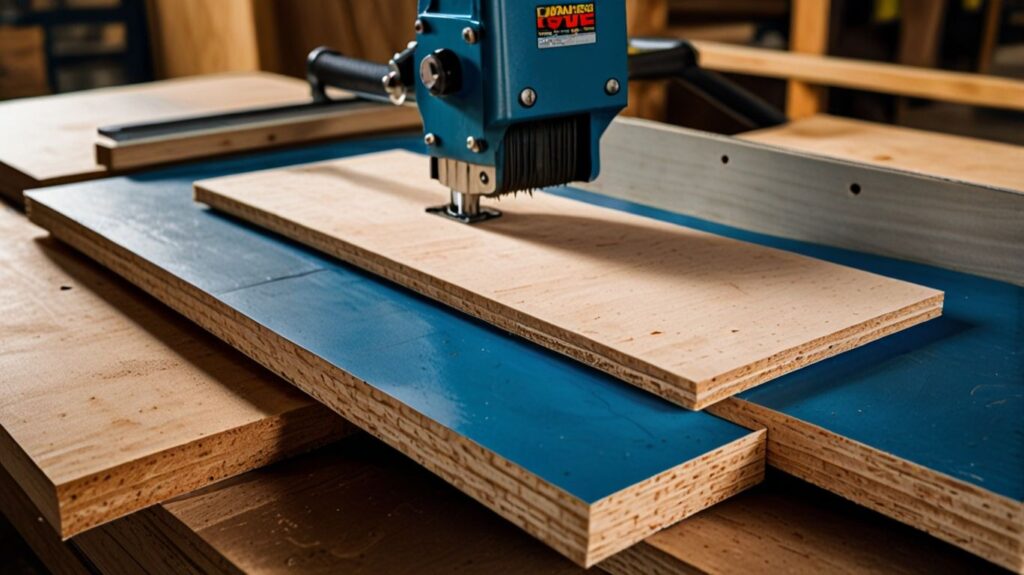
Now let us turn to sheet materials. These are plywood, particleboard, MDF, OSB and other wood-derived products supplied as large panels. They have their own specifics, because there are no “fibres” in the usual sense, almost no knots, and the material already has a flat geometry from the outset. The main tasks when working with them are cutting precision, waste minimisation and a clean, chip-free edge.
Types of sheet materials: each with its own quirks
Each material behaves differently under the saw:
- Plywood: A multi-layer material made of glued veneer. It can chip at the edges, especially if the saw is blunt or improperly set up. It is very important that the saw teeth exit the material cleanly, without tearing out the top veneer layers.
- Particleboard: Pressed chips bonded with glue. A very abrasive material that quickly blunts tooling. Chipping is a problem here too, especially when working with melamine-faced particleboard, where the decorative facing must be preserved.
- MDF (medium-density fibreboard): Denser and more uniform than particleboard. Sawing MDF produces less chipping but a great deal of fine dust, which is harmful to health and clogs equipment. It requires good dust extraction.
- OSB (oriented strand board): Large strands oriented in different directions. It can be quite “stringy” when sawn, producing an uneven edge if the saw is unsuitable.
Ripping sheet materials: from panel to part
The process of ripping panels often begins with a cutting map. This is essentially a drawing showing how to cut all the required parts from a large panel as efficiently as possible. Modern cutting-optimisation software saves a great deal of material by minimising offcuts. This is very important, because sheet materials are not cheap.
The main methods of cutting panels:
- Panel sizing: This is when the panel is ripped into blanks of the required size.
- Detailed cutting: Specific parts of complex shape are then cut from the blanks.
Equipment for cutting sheet materials: precision is everything
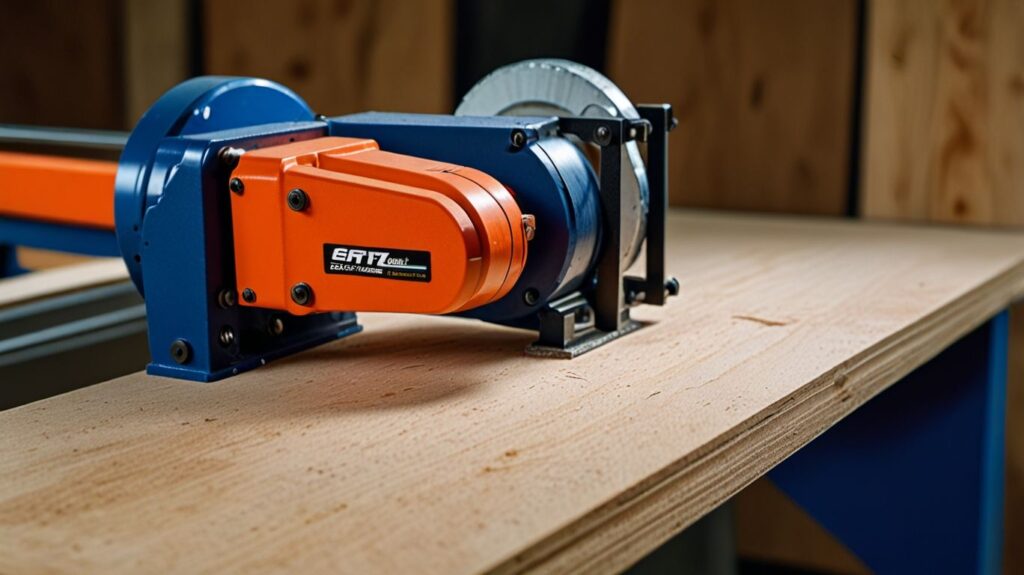
Machines capable of ensuring high precision and a clean cut are used to work with panels.
- Panel saws (sizing saws): These are perhaps the most common machines in furniture manufacturing and other fields that work with sheet materials. Their key feature is two saws:
- Scoring saw (scorer): A small saw that goes first and makes a shallow cut on the underside of the panel. This is needed to prevent chipping when the main saw exits the material.
- Main saw: A large saw that makes the main cut. This “two-saw” system guarantees a perfectly clean, chip-free edge, which is critical for laminated and veneered materials. Panel saws come with either manual feed (the operator moves the carriage with the panel) or automatic feed.
- CNC (computer numerical control) cutting centres: This is the pinnacle of the technology. Huge automated systems that, following a set program, pick up the panels themselves, cut them into parts of any complexity and shape with fantastic precision and minimal waste. All the operator has to do is load the panels and collect the finished parts. This means very high output and precision, but the cost of such machines is correspondingly high. They are indispensable for large-scale production.
- Vertical panel saws: They take up less space, since the panel is set up vertically. They are good for smaller workshops or when many long but narrow parts need to be cut.
Choosing the saw and cutting parameters: the devil is in the detail
You cannot just grab any saw and start cutting. Each material and type of cut calls for its own saw blades. They differ in:
- Tooth material: Carbide tips are the standard for particleboard and MDF; they stay sharp for a long time.
- Tooth shape: There are trapezoidal, flat, conical and alternating shapes. Each shape is optimal for its own tasks. For melamine-faced particleboard, for example, blades with alternating trapezoidal and flat teeth are often used.
- Number of teeth: The more teeth, the cleaner the cut, but the slower the feed. Fewer teeth means faster cutting, but the cut may be rougher.
- Tooth sharpening angle: A positive angle for fast cutting, a negative one for a cleaner cut, especially when working with fragile surfaces.
Besides the saw itself, the cutting parameters:
- Saw rotation speed: The faster the saw rotates, the cleaner the cut.
- Material feed speed: Too fast a feed can cause chipping; too slow a feed leads to the saw overheating and the material scorching. An experienced operator always finds the golden mean.
So what does it all come down to? Why does it matter?
One might think — well, they saw away, and that is that. In reality, the quality and technological soundness of sawing and ripping are the foundation of the entire woodworking process.
- Product quality: Incorrect sawing can lead to inaccurate part dimensions, chips and cracks. This means the furniture will not fit together, doors will be crooked and the floor will squeak. A clean, precise cut is the key to a beautiful, durable product.
- Material savings: This is especially true of sheet materials. Correct cutting allows the maximum number of parts to be obtained from each panel, minimising waste. With rising raw-material prices, this becomes critically important. Even a few percent saved on volume can translate into significant sums of money.
- Reducing the cost of subsequent processing: If a part is cut evenly and without chips, less time and fewer resources are spent on its further processing (sanding, edge-banding, milling). Fewer defects and fewer reworks — all of this directly affects the cost price.
- Production safety: Working with sawing equipment requires strict compliance with safety rules. Correct setup, tool sharpening and the use of extraction systems are about not only quality but also the health and safety of workers.
At our company we approach sawing and ripping with the utmost responsibility. We invest in modern equipment, monitor the condition of our tooling and continuously train our specialists. Because we understand: it is at this stage that the path to your perfect wooden product begins.