Comparing wood materials for furniture making: pros and cons
Furniture making is always a delicate balance between aesthetics, practicality and technological possibilities. In our trade, when it comes to working wood and crafting products from it, we feel especially keenly how important it is to choose the right material. It determines not only the look of a piece, but also its service life, ease of use, and sometimes even the mood of its owner, because wood is more than just a material. It is living, warm, in some ways even soulful raw material that you have to know how to work with.
Today we will talk about the wood materials most often used in furniture making. We will figure out which ones are best for different purposes, where you can save, and where it is better not to cut corners. We will speak frankly, from the standpoint of professional woodworking production, with real examples and an understanding of the process from start to finish.
In woodworking there is no universal recipe. Every material has its strengths and weaknesses. But the more you know, the easier it is to make a sound choice.
Solid wood: a timeless classic
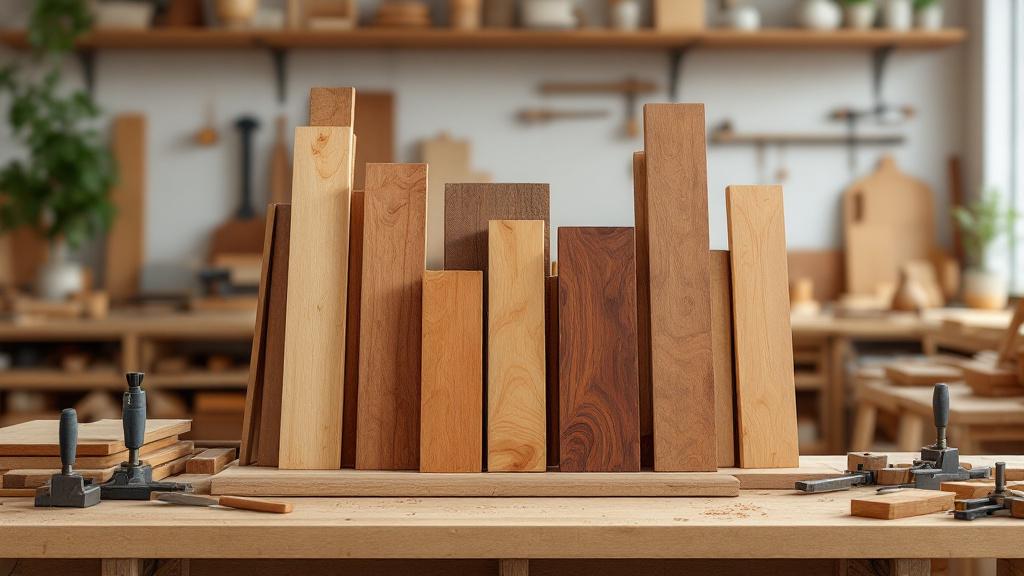
Solid wood is a single piece of timber, with no additives or fillers. It is oak, ash, birch, beech, pine, larch and other species that go through machining, drying and sometimes gluing (in the case of a furniture panel), yet still remain that genuine wood.
Why does everything begin with solid wood? Because it is the material with which the history of furniture making began in the first place. Even today, when technology allows us to produce incredibly complex and high-quality composites, natural wood loses none of its appeal.
The main advantage of solid wood is its strength and durability. Well-dried and properly machined solid wood can last for decades, even centuries. This is especially relevant for furniture that has to withstand heavy loads, such as tabletops, beds and massive wardrobes. On top of that, over time wood acquires a noble patina; its colour may shift slightly, but this change is most often for the better, as the material «matures» like fine wine.
Another undeniable advantage of solid wood is its aesthetics. No other material conveys the texture, depth and character of the grain the way natural wood does. Every cut, every board is unique.
But solid wood also has drawbacks that are important to keep in mind. First, the price. Natural timber costs noticeably more, especially the hardwoods. Second, its dimensional instability. Wood «breathes», it can change size with fluctuations in humidity and temperature. This calls for careful, expert work at every stage, from drying to the final assembly of the furniture. Miss the moment or make a mistake, and the piece can crack, warp or delaminate.
It is also worth understanding that solid wood is a heavy material. When it comes to large furniture, it is hard to move, especially if the piece is made for a private house or a flat with no freight lift.
In production we use solid wood where reliability, prestige and natural beauty are required. It is always a special category of furniture, both in how it feels and how it is made.
Plywood: flexibility and strength in one
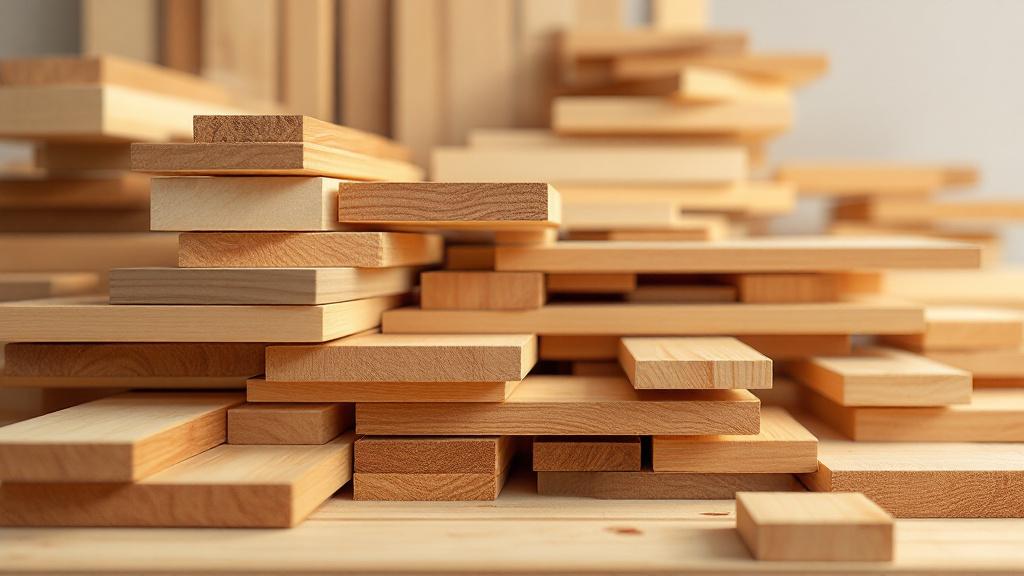
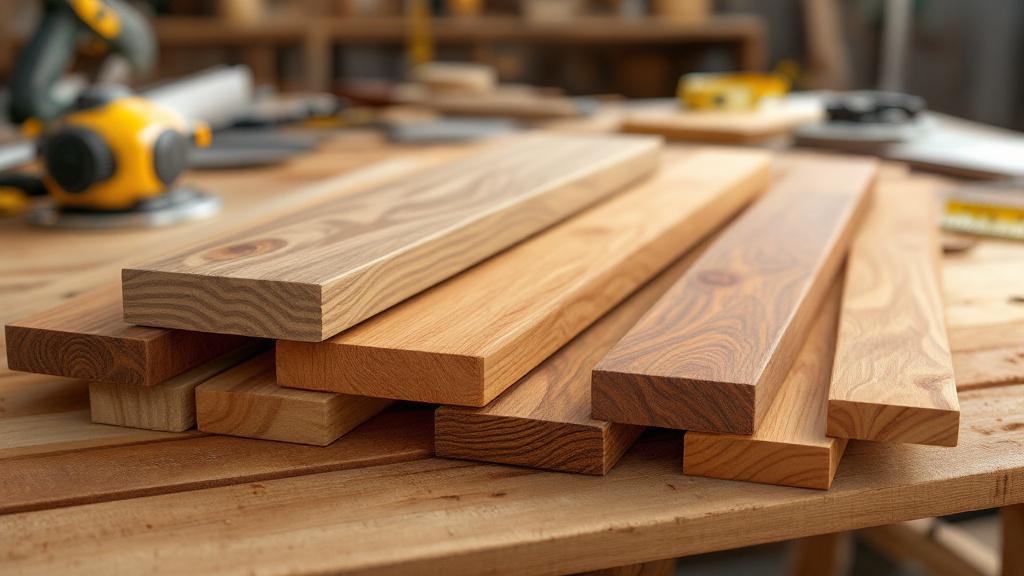
Plywood is essentially a layered pie of wood veneers glued together under pressure. Each layer runs crosswise to the previous one, which gives plywood exceptional bending strength and resistance to deformation.
This material has long and firmly held its niche in furniture production. Largely because it offers an excellent balance between strength and stability, while being lighter than solid wood and often cheaper.
Good plywood is not just an alternative to wood. It is a material in its own right, with advantages of its own. It does not warp or crack and is practically unaffected by changes in temperature and humidity.
Woodworkers love plywood for its versatility. You can use it both for internal furniture parts (drawer bottoms, back panels, dividers) and for main structures, especially in furniture with modern design, where precise shapes and stable geometry matter.
Another advantage of plywood is how easy it is to machine. It cuts, mills and drills well. And unlike MDF, plywood does not crumble during machining.
Plywood does have its drawbacks, though. First, not all plywood is the same. On the market you can find both high-quality birch plywood with a minimum of defects and budget options with voids, chips and unstable glue lines. For furniture it is important to use plywood no lower than grade 2, otherwise the piece can lose its presentable look within a couple of years.
The second drawback is aesthetics. The face side of plywood most often needs to be faced or finished. The surface veneer on its own is not always attractive, especially if it is of low quality. But with good finishing or veneering, plywood turns into a very worthy material.
We often use plywood in producing case furniture, where precision, structural rigidity and minimal weight are needed. It pairs especially well with a furniture panel: a plywood carcass and solid-wood fronts make an excellent combination of price and quality.
MDF: the perfect base for finishing
MDF (medium-density fibreboard) is wood dust pressed into boards at high temperature with the addition of binders. The result is a dense, heavy and uniform material, ideally suited to furniture where a smooth, even surface is important.
The main merit of MDF lies in its structure. It has no knots, cracks or fibres. This makes it an ideal base for painting, laminating or veneering. MDF is exactly what kitchen fronts are made of, which are then coated with enamel or film. Its evenness and uniformity make it possible to achieve a perfect gloss or a deep matte finish.
In addition, MDF is resistant to deformation; it does not warp like wood, does not split like particleboard, and does not require the kind of complex preparation that plywood does.
There are drawbacks too. The first and most obvious is its fragility to physical damage. MDF crumbles easily on impact, especially at the edges. That is why such pieces need to be protected with PVC edging or aluminium profiles.
The second point is weight. Although the material is uniform and machines well, it is quite heavy. Large MDF panels can put extra load on the fasteners and require reinforced mounting.
Besides, MDF is still a derived product. It uses resins, and although modern technology minimises the harm, it is still not a 100% eco-friendly material like solid wood. For children’s furniture, for example, we always recommend considering natural timber first.
In our work with MDF we often use it to make fronts, decorative panels, sliding-door wardrobes and other elements where neatness, visual precision and a wide choice of colours matter.
MFC: quick solutions for volume furniture
MFC is melamine-faced particleboard. Its core is coarse chips glued together under pressure and heat, with a decorative film on top imitating wood, fabric, stone or even a plain enamel.
In terms of cost and production speed, MFC is second to none. It is the most widely used material in case furniture, especially in the mid-price and economy segments.
The main advantages of MFC are its price, huge choice of decors and availability. Today you can find boards that look very much like natural wood, with texture, colour depth and imitation grain. And all of this at a price significantly lower than solid wood or even plywood.
In production, MFC is especially convenient in projects that require a fast launch of series: kitchens, office furniture, wardrobe systems. Everything is cut precisely to size on panel saws, edged and milled.
Edging is a topic of its own. For an MFC piece to look neat and not fall apart, all exposed cuts must be edged without fail. And it is important to do this well: 2 mm PVC edging protects the edge better than a thin melamine one.
But there is a price to pay for everything, and in the case of MFC it is eco-friendliness and strength.
The board contains formaldehyde resins, and although modern boards are made with minimal emissions (within the E1 class and above), it is still not a natural material. That is why MFC is used less often for furniture in children’s rooms or bedrooms, and even then only with verified certificates.
It is also important to understand that MFC does not like moisture. When wet it swells, especially along the cuts if they are unprotected. This makes it a poor choice for bathrooms or rooms with high humidity.
And of course, visually even the highest-quality imitation wood is still not real wood. This has to be taken into account, especially if you want not just furniture, but a piece with a «soul».
Furniture panel: a compromise between solid wood and stability
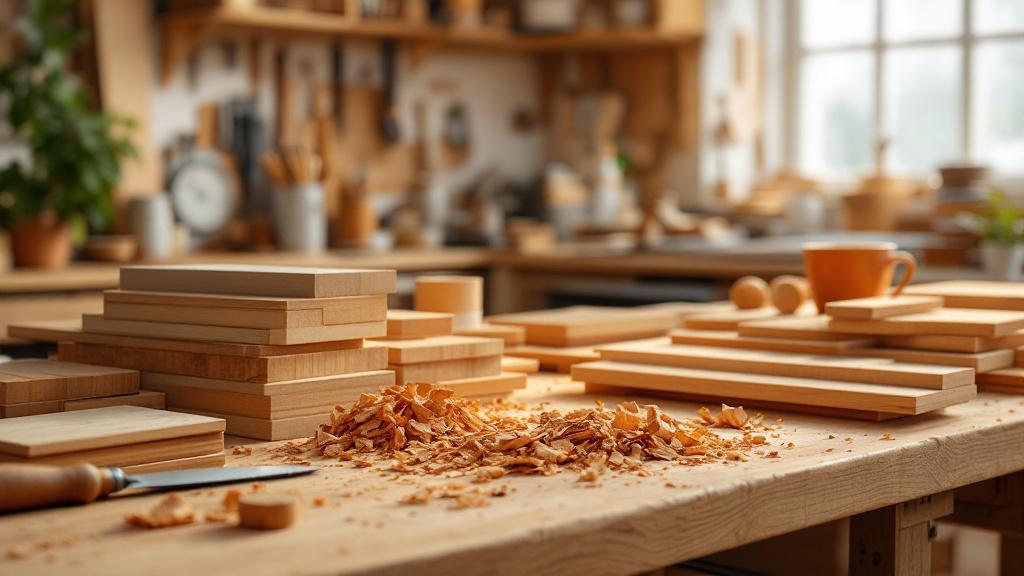
A furniture panel is a material assembled from individual lamellas of natural wood glued together edge to edge. In essence it is still solid wood, only «assembled», not a single board but a set of strips.
This material combines strength, natural character and stability. Thanks to the gluing and correctly oriented grain, a furniture panel is less prone to deformation than a single board. It is easier to machine, has less shrinkage and cracks less.
The most commonly used panels are pine, birch, beech and oak. Each of them has its own features:
- Pine is light and affordable, but soft, easily scratched and dented.
- Birch and beech are denser and take toning well.
- Oak is expensive but strong, durable and with a very expressive grain.
The main merit of a furniture panel is its «liveliness». Unlike plywood and MDF, here all the features of natural wood are preserved: the pattern, the smell, the density. And yet it is more stable than a single board.
The drawback is visual unevenness. Since the lamellas can differ slightly in tone and texture, this will show in the piece. For some this is a plus, for others not. In any case, with careful sorting and painting this effect can be controlled.
Panels are widely used for tabletops, shelves, fronts and bed elements. We often offer them as an option for clients who want «real wood» but at a more affordable price.
Veneered materials: the golden mean
Veneer is a thin slice of natural wood glued onto a substrate (MDF, plywood, particleboard). In essence it is a way to get the look of solid wood at a more affordable price and with a stable shape.
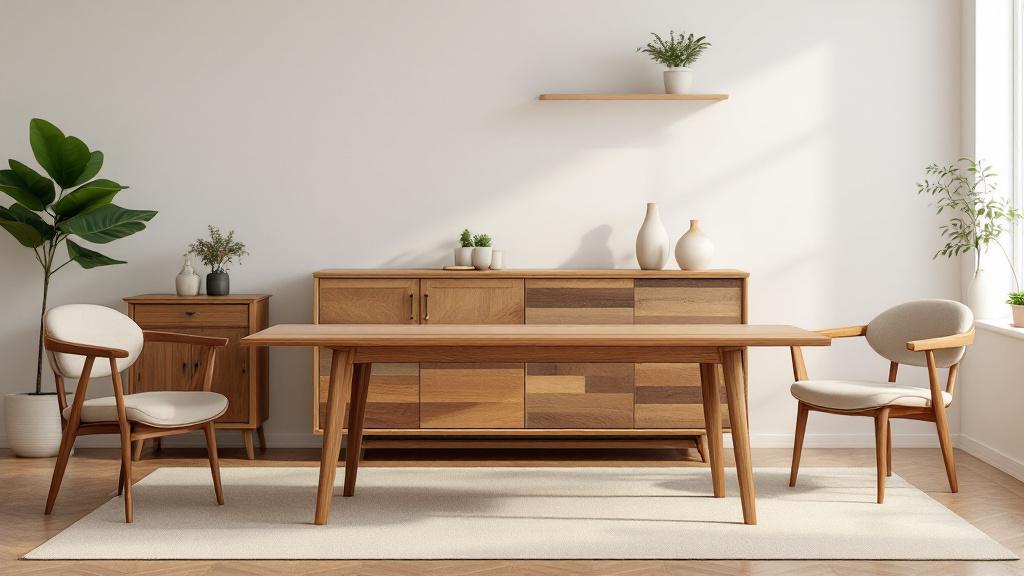
Veneered panels make it possible to create furniture with the effect of noble wood while avoiding its capriciousness. Such fronts can be toned, lacquered and patinated. Visually they look very close to a natural board, especially if noble species are used, such as oak, walnut and ash.
The main advantage of veneer is its appearance. If everything is done right, with a quality substrate, good glue, expert pressing and a fine finish, such a material is hard to tell apart from solid wood.
In addition, veneer saves valuable species. A single tree trunk yields tens of square metres of veneer, whereas solid-wood pieces from the same timber would be far more expensive.
The downside lies in how demanding the technology is. If a mistake is made during gluing or coating, the veneer can peel, bubble or spoil. It is also more sensitive to mechanical damage: unlike solid wood, which can be sanded, here sanding can damage the veneer itself.
We use veneered materials in the premium segment, where appearance matters but the shape and stability of the piece must be strictly maintained. These are, for example, study and library furniture, large wardrobes and decorative panels.
Summing up: which material to choose?
As you can see, every material has its own niche. There are no bad or good ones, only those suited or unsuited to a specific task. It all depends on the result you need, your budget and the conditions of use.
If you are ordering furniture that should last for decades and become a family heirloom, it is worth paying attention to solid wood or a furniture panel. Yes, more expensive, but you get a piece that only gets better with time.
If you need strong, stable furniture for a modern interior, especially with clean-lined fronts or complex geometry, MDF and veneered panels are an excellent solution. They let you play with shape, colour and texture without sacrificing quality.
For budget solutions, especially in projects where speed and volume matter, MFC and quality plywoodare the way to go. Plywood in particular is an underrated material capable of a great deal when worked with skill.
And if you want wood but without all its «whims», a furniture panel or veneer will give an excellent compromise between price, appearance and stability.
In woodworking, the choice of material is always more than just numbers and properties. It is the philosophy of the piece. What matters is that furniture not only stands and serves, but also brings joy, creates an atmosphere and conveys the warmth of the wood and the care of the craftsman. And when we understand which material will give exactly the result the client expects, furniture becomes not just an object, but a part of the home.
If you are pondering your choice, come to us. We do not just work with wood. We feel it. And that means we can select the very material from which your furniture, and yours alone, will take shape.