How to choose materials and technologies for making wooden kitchen furniture: the professional woodworker’s approach
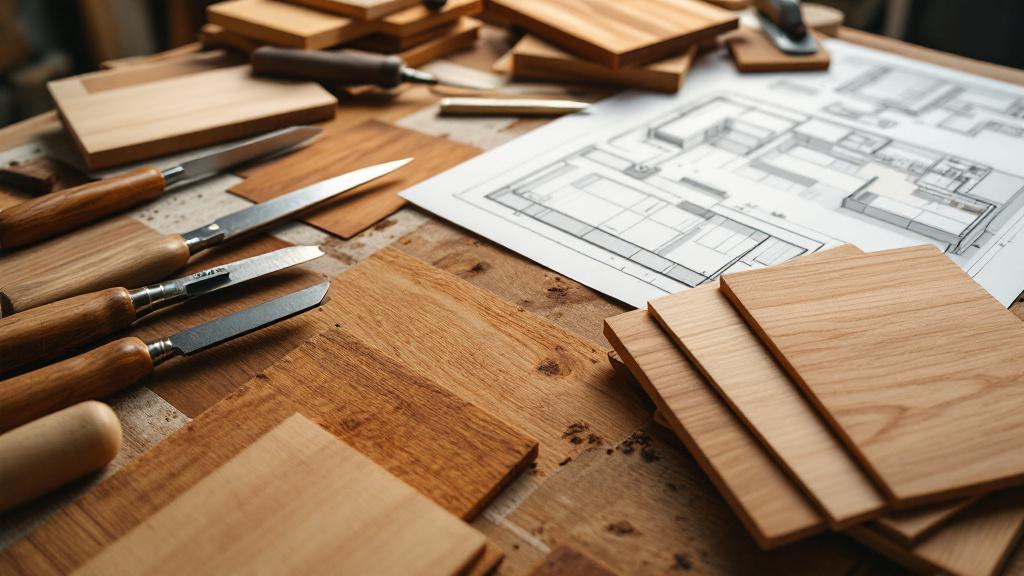
The kitchen is the heart of any home, and choosing the materials for its fit-out calls for particular care. When it comes to wooden kitchen furniture, it is important to understand that this is not merely an aesthetic decision; it is an investment in the durability, functionality and unique microclimate of your space. Wood, as a natural material, requires not only the sound choice of species but also the use of specialised processing and finishing technologies in order to withstand the demanding service conditions of a kitchen — temperature fluctuations, humidity and constant contact with grease and cleaning agents.
This article is intended to be a detailed guide for those seeking a quality, professional solution in the field of making wooden products for the kitchen. We will go through in detail how to choose the ideal wood species, which construction solutions ensure reliability and which modern finishing technologies guarantee a long service life for the furniture. Our aim is to give you a clear picture of the process so that you can make informed decisions when working with woodworking specialists.
Choosing the wood species: hardness, stability and aesthetics
Choosing the main wood species is the first and perhaps most critical step in creating durable kitchen furniture. The kitchen is a room with an aggressive environment, so the wood must have high density, hardness and, especially importantly, stability under changes in humidity and temperature.
Oak: a classic of reliability and durability
Oak is rightly considered the benchmark for kitchen furniture. It is one of the hardest and densest hardwoods widely used in joinery. Its high strength provides excellent resistance to mechanical damage, which is critical for fronts and carcasses subject to daily wear.
A key advantage of oak is its low hygroscopicity after proper drying and processing. This means it reacts minimally to changes in humidity, preventing warping, cracking and loss of the geometry of elements. Thanks to its tannin content, oak also has a natural resistance to rot and fungal attack, which makes it ideal for a humid kitchen environment.
Oak wood has a pronounced, beautiful texture that gives furniture a solid and respectable look. It responds well to various types of finish: from staining and patinating (for classic interiors) to oiling or lacquering while preserving the natural pattern (for modern styles). Working with oak requires high skill and the use of professional equipment, since its density makes cutting and milling more difficult.
Ash: elasticity and striking figure
Ash is another high-quality species, often competing with oak in terms of strength and durability. Its wood is slightly lighter than oak and stands out with more expressive, contrasting growth rings, which makes it a favourite for furniture where a striking texture.
matters. Ash surpasses oak in terms of elasticity and impact toughness, which makes it less prone to splitting under mechanical loads. This property is especially valuable when making thin profiles or frame fronts, where the strength of the joints matters.
Ash wood takes staining and bleachingwell, which allows it to be used across a wide palette of design solutions — from light Scandinavian to rich dark tones. Working with ash requires precise drying, since with incorrect preparation it can be slightly less stable than oak, but with adherence to the process standards it provides outstanding durability.
Beech: uniformity and an ideal base for painting
Beech is a dense, hard species that is excellent for kitchen furniture, especially when solid painting or the creation of smooth surfaces is planned. The main difference of beech from oak and ash is a more uniform, less pronounced texture.
Thanks to its dense, fine-pored structure, beech, after special steam treatment becomes very pliable, which makes it possible to create bent elements from it — an advantage when making designer fronts or radiused cabinets. This same uniformity makes it an ideal base for applying enamels and paints, ensuring a perfectly even coating with no sinking.
It must be borne in mind that beech is more sensitive to moisture than oak. Therefore, when making kitchen furniture from beech, particular attention is paid to waterproofing preparation and protective finishing (for example, multi-layer lacquering or the use of special primers) to prevent swelling and deformation in conditions of high humidity.
Pine and other softwoods: economy and application features
Softwoods such as pine or sprucehave a number of advantages, including affordability and ease of processing. They are often used for making carcasses, internal elements or furniture in country/Provence styles.
Pine, however, is a relatively soft species, which makes it more vulnerable to dents and scratches on fronts and worktops. In addition, pine wood contains a large amount of resin, which can complicate the finishing process. Before applying lacquers or paints, mandatory de-resining and the use of special insulating primers are required.
The main plus of softwoods is their environmental friendliness and the release of natural phytoncides, which has a positive effect on the microclimate. If the choice falls on pine, its use should be limited to elements not subject to high loads, or it should be reinforced with the glued panel technology and protected with especially durable finishes.
Larch: exceptional moisture resistance
Larch deserves special attention as one of the most moisture-resistant softwoods. Thanks to its density and high gum content, it is practically not subject to rot and only becomes harder over time when in a humid environment.
Although larch is rarely used for visible fronts because of its pronounced texture and resin content, it is an ideal material for making the carcasses of base cabinets or plinths, which are most exposed to moisture from the floor and leaks. Its use in concealed but critically important elements significantly increases the overall durability of the set.
Structural materials: solid wood and glued furniture panels
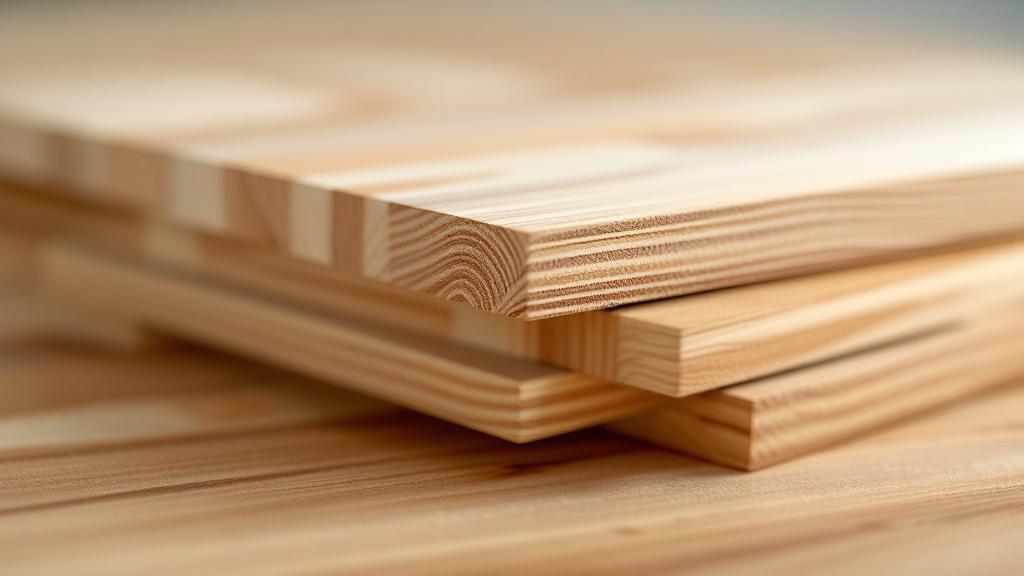
Making wooden kitchen furniture rarely relies on solid timber alone. Modern woodworking makes active use of various forms of glued materials to ensure maximum stability and efficient use of raw material.
Solid wood
Solid wood is a material made from a single piece of wood, without gluing along the length or width (except for gluing along the thickness to obtain the required thickness). Its main advantage is its authentic appearance and prestige.
However, solid wood is most subject to warping, shrinkage processes and cracking under the influence of humidity fluctuations, especially on large areas such as doors or side panels. In professional front production it is used to a limited extent, with preference given to more stable constructions.
When using solid wood (for example, for carved decorative elements or panels in frame fronts), the correct drying of the wood to the optimal moisture level (6–8%) is critical, as is the use of special constructional techniquesthat compensate for stress, such as grooves, panel joints or free seating in a frame.
Glued furniture panel: stability and strength
The glued furniture panel (or solid wood glued from lamellae) is a technologically more advanced material for making furniture. It consists of individual strips (lamellae) glued together under high pressure.
- Full-lamella panel: The lamellae are glued only along the width. The appearance of a single piece of wood is retained, since there are no end joints.
- Finger-jointed (parquet) panel: The lamellae are glued both along the width and along the length using a finger joint (mini finger joint). This makes it possible to use short lengths of wood, reduces the cost and significantly increases stability due to the multidirectional grain.
Using a glued panel is a technologically justified solution for kitchen fronts and carcasses. The mutual arrangement of the grain in the glued lamellae compensates for the internal stress of the wood. This minimises the risks of deformation, warping and the appearance of cracks that are inevitable when using large elements of solid wood.
Application in kitchen construction
In the production of wooden kitchen furniture, the glued panel is the basis for most elements:
- Fronts: Using the panel to make frame fronts (frames and panels) or solid flat fronts ensures their perfect geometry throughout their service life.
- Visible side panels: The panel guarantees the absence of warping on large surfaces.
- Worktops: For wooden worktops the glued panel is essential, since it provides the necessary rigidity and resistance to the deformation that is inevitable in contact with water and hot objects.
The choice between a full-lamella and a finger-jointed panel is usually determined by budget and aesthetic requirements. The full-lamella panel looks more “natural”, but the finger-jointed one is more stable and economical.
Technologies for making fronts: from frame to carving
Fronts are the face of a kitchen set, and their making requires strict adherence to joinery technologies that ensure strength and aesthetics. In woodworking for the kitchen, two main types of construction are used.
Frame fronts (panel doors)
Frame fronts are a classic construction consisting of a frame (surround) and a panel (the inserted central part).
- The frame: It is made from four vertical and horizontal elements (rails) joined together. The most reliable and professional joint for a frame is the mortise-and-tenon joint or a double dowel using a quality moisture-resistant adhesive. This ensures maximum strength and durability of the construction.
- The panel: The central part, which is inserted into a groove milled around the inner perimeter of the frame. The panel must be installed loosely (in a floating manner) so that it can slightly expand and contract with changes in humidity without breaking the frame. This is a key technological point that prevents the front from cracking.
The panel can be flat, shaped (with milling around the edge) or even made from other materials (for example, glass, in the case of display cabinets). The choice of panel shape and frame profile determines the style of the whole set — from strict classic to a light Provence style.
Solid fronts (flat)
Solid (flat) fronts are a panel made from a glued furniture panel. Their advantage is a modern minimalist look and maximum stability.
When making solid fronts it is important to ensure perfect sanding and edge preparation for edge-banding or applying a finish. The manufacturing technology includes:
- Cutting the furniture panel taking allowances into account.
- Sizing (cutting exactly to dimension) on high-precision equipment.
- Milling of holes for the hinges (cups) and handles (if a milled handle is provided).
- Sanding in several stages with decreasing grit for perfect smoothness.
Solid fronts are often used to create integrated handles (for example, a Gola profile or a handle milled directly into the edge of the front), which requires high milling precision and careful finishing.
Decorative machining and carving
Within the scope of woodworking services , various decorative machining techniques can be applied:
- Milling: Creating decorative profiles on frames, chamfering, forming shaped panels. The use of CNC machines (computer numerical control) ensures perfect repeatability and high precision of complex profiles.
- Wood carving: For creating unique elements (columns, pilasters, cornices, capitals). This can be either handwork (for exclusive projects) or high-precision machine carving on CNC.
- Brushing: Artificial ageing of the wood by removing the soft fibres with special brushes. This emphasises the texture of the wood (especially oak and ash) and gives the furniture a vintage, aged look.
Wooden worktops: functionality and protection
The worktop is the most used and vulnerable element of a kitchen, so its making requires particular attention to the material and protective coatings.
Material for the worktop
As already mentioned, only high-density glued furniture panel (oak, ash, beech, larch) is used for worktops. The panel must be sufficiently thick (usually 40 mm or more) to provide the necessary rigidity and visual solidity.
- Hardwoods (oak, ash): The ideal choice. They provide high wear resistance and resistance to scratches.
- Extremely dense species (merbau, iroko): Can be used for additional moisture resistance and an exotic look, but require specialised processing because of their hardness and oiliness.
Manufacturing and processing technology
Making a worktop involves several critical stages:
- Gluing and sizing: Making a panel of the required size with a minimal number of joints and perfect flatness.
- Cut-outs for the sink and hob: These cut-outs are the “weak points” of the worktop, where moisture can penetrate into the body of the wood. All the edges of the cut-outs must be carefully sanded and waterproofed — either with epoxy resin or with repeated application of a special oil or wax.
- Edge treatment: Chamfering, rounding or profiling the edges to increase comfort in use and reduce the risk of chipping.
Protective coating: oil vs. lacquer
The choice of finish for a worktop determines its performance characteristics and appearance.
- Hardwax oil:
- Advantages: Penetrates deep into the pores of the wood without forming a surface film. Preserves the tactility and natural look of the wood. Creates a “breathable” coating.
- Maintenance: Allows local restoration of damaged areas (sanding and reapplication of oil) without the need for a full re-sanding.
- Features: Requires periodic renewal (every 6–12 months) and does not provide absolute protection against strong stains (for example, from red wine, which can leave a mark if not wiped off immediately).
- Polyurethane lacquer:
- Advantages: Creates a durable, impermeable film on the surface, providing maximum chemical and moisture protection.
- Maintenance: Requires no regular care.
- Features: A damaged area requires complete re-sanding and re-lacquering of the whole surface. Lacquer can look less “natural” and over time may yellow or crack at the joints.
For kitchen worktops, hardwax oilis most often recommended, since it simplifies use and restoration in the event of inevitable damage.
Carcass elements: combination and cost optimisation
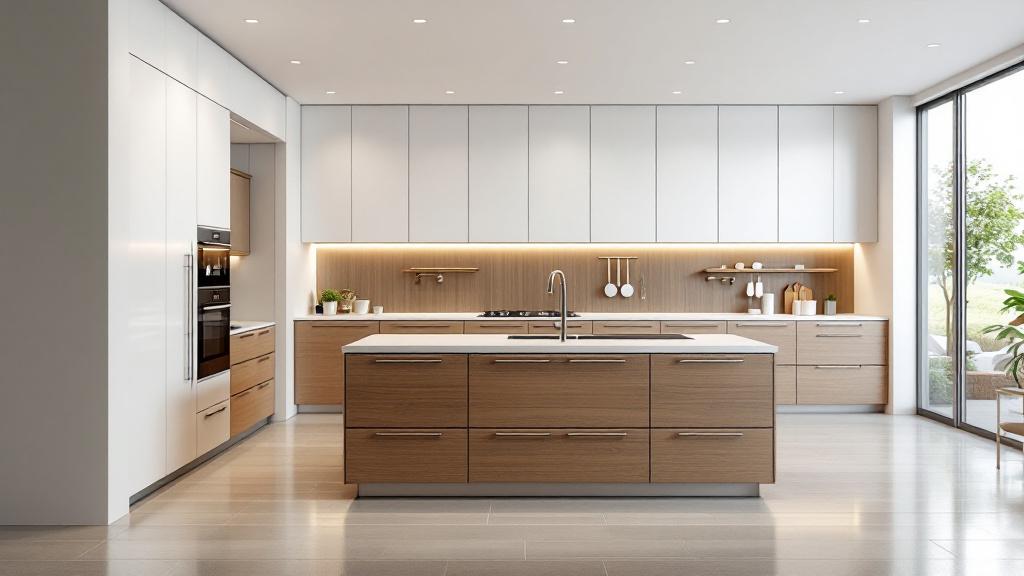
The carcass of a kitchen cabinet performs a load-bearing function and often remains invisible. This makes it possible to apply optimised solutions in terms of materials, combining solid wood with wood-based boards.
Materials for carcasses
In professional woodworking, a combined approach is often used for carcasses:
- Fronts and visible sides: Solid wood (glued panel).
- Concealed elements (internal sides, shelves, bottoms, back panels):
- Plywood: A multi-layer material of glued veneer. It has high strength and stability at minimal thickness. Ideal for shelves bearing a high load.
- Particleboard/MFC (melamine-faced particleboard): Used for internal elements where economy and abrasion resistancematter. It is important to use particleboard with a low formaldehyde emission class (E0 or E1) and to be sure to edge-band all edges with moisture-resistant edging (PVC, ABS) to prevent moisture ingress.
- MDF (medium-density fibreboard): Ideal for back panels or bottoms, where good moisture resistance and a smooth surface for subsequent finishing (if the elements are visible) are required.
Carcass assembly technology
The reliability of a carcass is determined not only by the material but also by the joining technology.
- Dowel joint with adhesive reinforcement: The most reliable way of joining elements made of wood-based boards or solid wood. It provides high rigidity and durability of the construction, unlike simple joints using confirmat screws.
- Back panel: It must not simply be nailed on but inserted into a groove around the entire perimeter of the carcass. This significantly strengthens the construction, preventing its diagonal racking and ensuring correct geometry.
- Plinth waterproofing: The lower part of the carcass (the plinth) is most vulnerable. It is recommended to use moisture-resistant plywood or treated larch, and to mount the plinth on adjustable plastic feetin order to isolate the wood from contact with possible moisture on the floor.
Finishing materials: protection and decorative treatment
Finishing is not only about giving furniture the right colour and sheen but also about the functional protection of the wood from the aggressive kitchen environment.
Primers and sealers
The first and most important stage is priming. The primer performs several functions:
- Adhesion: Provides a strong bond between the finish and the wood.
- Sealing: Prevents the release of resins (especially from softwoods) and tannins (from oak), which can form stains on light coatings. For oak, when bleaching or applying a light finish, it is necessary to use special insulating primers to block the tannin.
- Levelling: Fills the pores, making the surface perfectly smooth before applying enamel or lacquer.
Lacquers: a reliable film
For kitchen fronts, polyurethane or acrylic lacquers.
- are used. Polyurethane lacquers: Are distinguished by high hardness, wear resistance and resistance to household chemicals, grease and moisture. They create a strong, durable film.
- Acrylic lacquers: More environmentally friendly (water-based), with less odour, but they can be slightly less resistant to mechanical damage than polyurethane ones.
Lacquers can have different degrees of sheen (gloss, semi-gloss, matt, super-matt). In the kitchen environment, matt finishes are popular, since they conceal small scratches and are less prone to fingerprints. A professional coating is applied in several coats (at least 3–4) with intermediate sanding to achieve perfect smoothness and thickness of the protective layer.
Oils and waxes: natural protection
Oil and wax coatings preserve the natural look of the wood, emphasise its texture and create a “breathable” coating.
- Oil: Penetrates deep, strengthening the fibres from within and providing good protection against moisture.
- Wax: Creates a thin, pleasant-to-the-touch film that additionally protects against dirt and moisture.
For kitchens it is recommended to use hardwax oil — a combination that provides good water resistance while preserving the natural look. This finish is ideal for textured fronts (for example, brushed oak) and worktops.
Painting (enamel)
Painting (coating with enamel) makes it possible to realise any colour solution.
- Technology: Requires careful surface preparation (sanding and insulating primer). The enamel is applied with a spray gun in several coats. The use of polyurethane enamels ensures high strength of the coating and resistance to fading.
- Effects: Various decorative effects can be created:
- Patinating: Applying a contrasting enamel to the relief of the front (milling) with subsequent partial removal, which gives the furniture an ageing effect.
- Craquelure: Creating decorative cracks on the surface.
Technological features for the kitchen environment: humidity and temperature
The kitchen is a room with constantly changing conditions, which requires a special approach to the wood and the construction. Moisture resistance and heat resistance are priorities.
Managing humidity
Wood is a hygroscopic material, meaning it absorbs and releases moisture from the surrounding environment. To minimise this process it is necessary to:
- Optimal drying: The wood must be dried to its service moisture content (6–8%) before machining begins.
- Complete sealing: All surfaces of the wooden elements, including the edges and invisible sides, must be covered with a protective finish. This slows down the process of moisture exchange with the air, preventing uneven swelling and warping.
- Protection in the sink area: The internal surfaces of the cabinets under the sink must be treated with additional waterproofing (for example, moisture-resistant lacquer or special water-repellent impregnations), since this is the area of maximum risk of leaks.
Protection from temperature
High temperatures, especially in the area of the hob and oven, can cause drying out and cracking of the wood, as well as damage to the lacquer coating.
- Thermal insulation: Between the body of the oven and the wooden front (especially if it is a tall unit integrating appliances) a ventilation chamber must be provided and, where necessary, a heat-insulating gasket to reduce direct thermal impact.
- Quality coatings: The use of heat-resistant lacquers and enamels that do not lose their properties when heated.
Design and ergonomics: compatibility with hardware
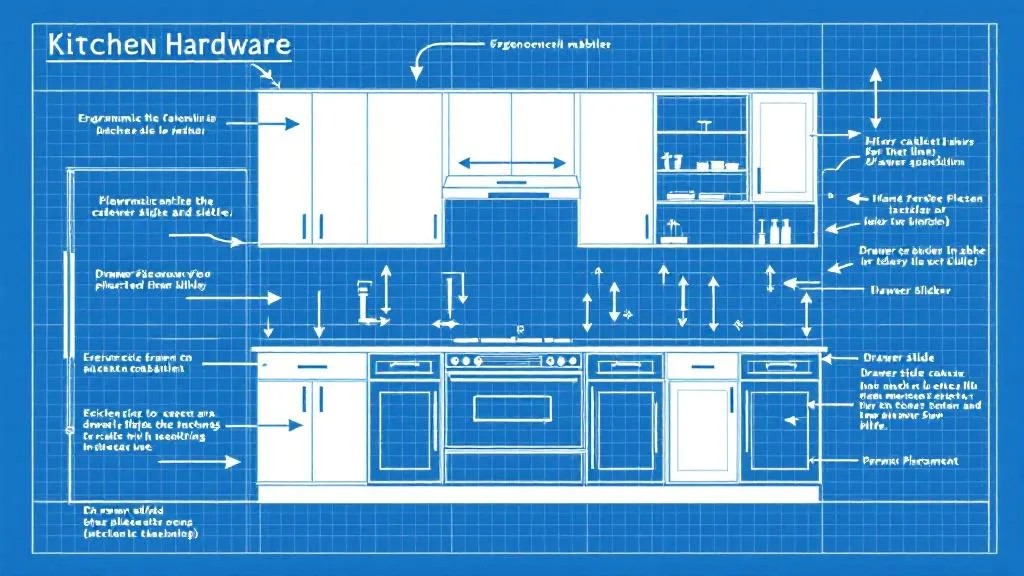
Wooden kitchen furniture, despite its classic aesthetics, must be functional and ergonomic, which is achieved through sound design and the use of modern hardware.
Integrating the hardware
Wood is a material that holds fasteners well but requires precision in machining.
- Hinge holes: The milling of holes for furniture hinges (cups) must be done on high-precision machines to avoid cracking the wood.
- Drawer runners: Choosing quality concealed runners (full-extension, with soft-close) ensures quiet and smooth operation. Internal drawers (tray systems) must be made of a stable material (for example, plywood or glued ash) to withstand a significant load.
- Fixing handles: To prevent damage to the front when tightening the fasteners for handles, especially on soft species, one should use special washers or not tighten the fasteners too hard.
Internal fit-out
Organising the internal space requires the use of materials that are resistant to abrasion and easy to care for.
- Shelves: Can be made of melamine-faced particleboard (for ease of cleaning) or of solid wood (for aesthetics and strength). If a shelf is of solid wood, its lacquering or oiling is recommended for protection.
- Cargo systems and “magic corners”: The use of metal pull-out systems requires precise marking and strong fixing to a carcass made of a stable material.
Joining technologies: reliability and durability of the construction
The quality of wooden furniture is to a large extent determined by the strength of its joints. In the kitchen, where the furniture experiences regular loads, the adhesive and mechanical joints must be flawless.
Joinery adhesive joints
For making wooden furniture, only moisture-resistant adhesives (classes D3 and D4) are used.
- Mortise-and-tenon: Used for joining frame fronts, rails and surrounds. This is the classic, most reliable joinery joint, providing a large gluing area and high resistance to twisting.
- Dovetail: An aesthetically attractive and very strong joint, often used for the corners of drawers. It prevents the sides from pulling out and provides everlasting strength.
- Finger joint (mini finger joint): Used for splicing lamellae to length in the production of a glued panel.
Mechanical joints
In addition to adhesive, mechanical fasteners are used to allow disassembly and provide additional strength:
- Cam locks (eccentric): Used for joining carcass parts (for example, in base or wall cabinets) where the ability to disassemble is required. They require precise drilling.
- Dowels: Used in combination with adhesive for precise positioning of parts and reinforcement of joints.
Professional woodworking combines these methods, using adhesive for permanent strength and mechanical fasteners for rigidity and ease of assembly/disassembly.
Care and restoration: ensuring durability
Wooden furniture made in compliance with all technologies will serve for decades, but it requires proper care and the possibility of restoration.
Proper care
- Cleaning: Use mild, neutral cleaning agents, avoiding abrasive powders and aggressive solvents that could damage the finish (lacquer or oil).
- Moisture: Do not leave puddles of water on the surface, especially on the edges and around the cut-outs.
- Protection from heat: Use trivets for hot items.
Restoration technology
One of the main advantages of wooden furniture is its repairability.
- Damage to lacquer/enamel: Small scratches on a lacquered surface can be removed by polishing. Deeper damage requires local sanding and reapplication of lacquer or enamel.
- Damage to oil: Furniture coated with oil is the easiest to restore. It is enough to sand the damaged area with fine sandpaper and re-impregnate it with oil, after which it “blends” with the rest of the surface.
- Dents: Shallow dents can be dealt with by the steaming method (using a damp cloth and an iron), after which sanding and re-finishing are carried out.
The possibility of re-sanding and repainting wooden fronts makes it possible to completely refresh the look of a kitchen after many years of use, which makes wooden furniture a truly long-term investment.
Environmental friendliness and safety: caring for health
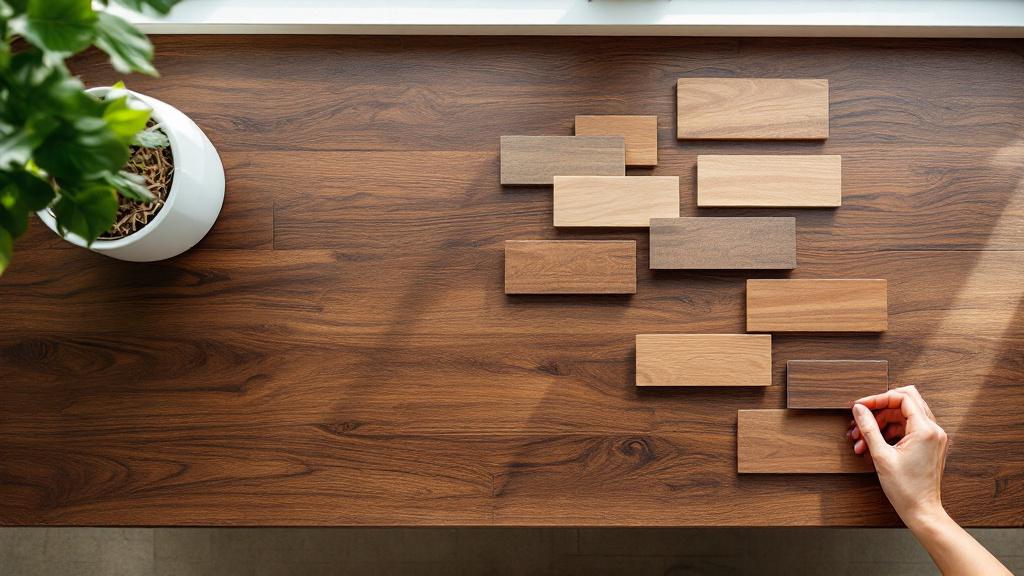
Choosing natural wood for the kitchen is a decision driven not only by aesthetics but also by concern for health. It is important to ensure that all the accompanying materials meet high safety standards.
Quality control of the raw material
- Wood certification: Using wood harvested in accordance with the principles of responsible forestry (for example, with an FSC certificate).
- Environmental friendliness of adhesives: For gluing panels and carcasses, adhesives are used that do not release harmful substances during use. The formaldehyde emission class must be no higher than E1, and ideally E0 (minimal emission).
Choosing the finishing materials
The final coatings, which are in contact with the air and food, must be as safe as possible:
- Water-based lacquers and paints: Preference is given to lacquers and enamels with a low content of volatile organic compounds (VOCs), especially for internal surfaces.
- Natural oils and waxes: Many oils used for worktops have safety certificates permitting contact with food products (food grade). This ensures complete safety for work surfaces.
Financial planning and long-term value
Making kitchen furniture from solid wood or a glued panel is not a budget solution, but its long-term value and low cost of ownership make it financially justified.
Pricing factors
The cost of a wooden kitchen is made up of the following key components:
- Wood species: Hard, rare and imported species (oak, ash, exotics) are more expensive than soft ones (pine, birch).
- Manufacturing technology: Fronts of full-lamella panel are more expensive than finger-jointed ones. Frame fronts with hand carving are more expensive than flat ones.
- Finish: Multi-layer enamel painting or patinating is more expensive than simple lacquer or oil coating, because of the complexity of the process and the cost of the materials.
- Hardware: The use of high-quality runners and hinges with soft-close (for example, from leading European manufacturers) makes up a significant part of the estimate.
Calculating the long-term benefit
Investment in a wooden kitchen pays off thanks to its durability and repairability.
- Service life: With proper care and professional processing, a wooden kitchen lasts 25–50 years and more, whereas furniture made of less expensive sheet materials (MDF, particleboard) may require replacement as soon as 10–15 years.
- Liquidity: Furniture of solid wood or glued panel retains a high market value and is an advantage when selling a property.
- The possibility of renewal: The ability to simply repaint or re-sand the fronts makes it possible to completely change the look of a kitchen without replacing the set.
Correctly chosen materials and technologies in the field of woodworking guarantee that your wooden kitchen furniture will become not just an item of the interior but a true family heirloomthat will delight you with its beauty and functionality for many years.