Panel saws for wood: why you need them and how they boost efficiency
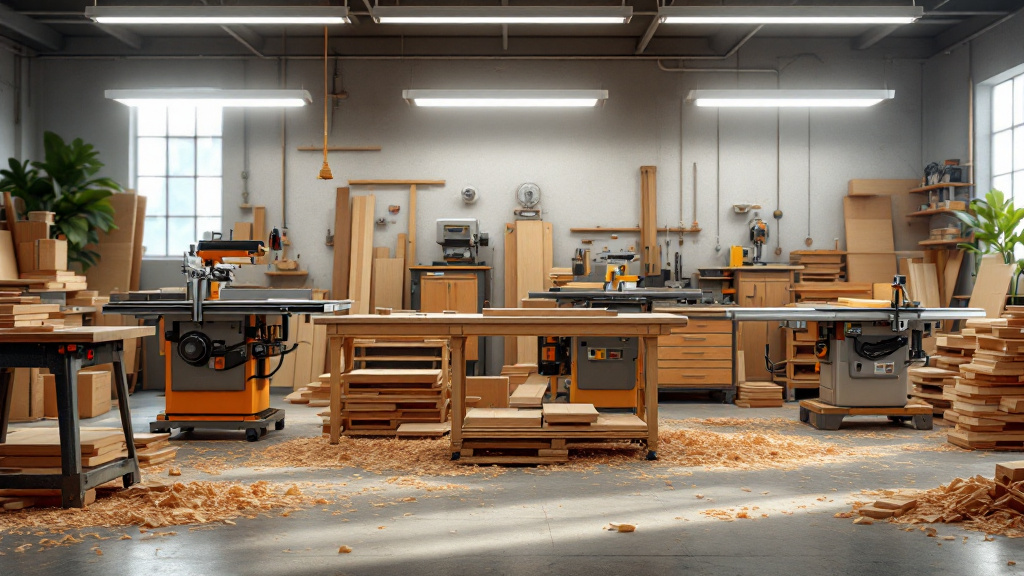
In woodworking, precision and productivity are decisive. How neatly and how quickly the material is cut affects not only the appearance of the finished product but the entire economics of production. One of the key elements that guarantees a high standard of work with wood and panel materials is the panel saw. This equipment is not just an upgraded circular saw but a sophisticated machine that has become the gold standard in the furniture industry and in carpentry workshops. Let us take a detailed look at what these machines are, what they are designed for, and how adopting them can radically transform production processes.
What a panel saw is and its main purpose
A panel saw is specialized equipment designed for precise rip, cross and angle cutting of sheet materials such as particleboard, MFC, MDF, plywood and edge-glued panel, as well as solid wood. The main distinguishing feature of such a machine is its sliding carriage, on which the sheet to be cut is placed and secured. This carriage travels along high-precision guides, feeding the material into the saw unit. This design ensures perfect cut geometry, high dimensional accuracy and the complete absence of chipping, which is especially critical when working with laminated or veneered surfaces.
The machine’s main task is to perform a finish cut. This means that after processing, the part needs no additional edge finishing and is fully ready for the next stage, for example edge banding. The saw unit usually consists of two elements: the main blade and the scoring blade. The scoring blade rotates against the feed direction of the main blade and makes a shallow preliminary cut on the underside of the sheet. This prevents chips and cracks in the laminated coating as the teeth of the main blade exit. This approach guarantees a flawless edge quality on both sides of the part.
The use of panel saws is not limited to furniture manufacturing. They are indispensable for making doors, window frames, interior elements, exhibition stands, retail fixtures and any other products requiring high-precision cutting of sheet materials. The ability to make cuts at various angles significantly expands the equipment’s functionality, allowing complex geometric shapes and non-standard products to be created. In essence, this machine is the starting point for most production cycles in modern woodworking.
It is important to understand that achieving this level of accuracy and cut cleanliness with a hand tool or on an ordinary circular saw table is practically impossible, especially in series production. Trying to save money at this stage leads to more rejects, the need for additional sanding and fitting of parts, which ultimately slows down the whole process and increases the cost of the product. Introducing a panel saw, on the other hand, standardizes cut quality and takes it to a fundamentally new level, minimizing the human factor.
Design features and operating principle
The heart of any panel saw is the saw unit, mounted on a massive frame that dampens vibrations and ensures stable operation. As already mentioned, the unit consists of the main and scoring blades. The main blade has a large diameter and is responsible for the primary cut of the material. The scoring blade, of smaller diameter, is installed ahead of the main one, and its task is to make a preliminary incision that prevents chipping as the main blade exits on the underside of a laminated panel. Both blades have independent drives and precise adjustments for height and tilt angle, which lets the equipment be set up for materials of various thicknesses and for making bevel cuts.
The key element that gave the machine its name is the sliding carriage. It is a long, wide table that moves along steel or aluminum guides. There are several types of carriages:
- Ball-bearing carriages: Movement occurs along cylindrical steel guides using ball bearings. This design provides smooth, easy travel without requiring significant physical effort from the operator. It is sensitive to dust and chips getting in, so it requires regular cleaning.
- Roller carriages: Here the carriage moves along prismatic steel guides by means of rollers. This system is considered more reliable and durable; it is less susceptible to contamination and can withstand heavier loads, which matters when working with heavy full-size sheets of particleboard or MDF.
The carriage carries a cross-cut (angle) fence with fold-down stops. This fence lets you position the workpiece precisely for the required size and make cuts at a given angle. Rip cutting is done using a parallel fence, which is set at a specified distance from the saw blade and locked. Modern machines are equipped with digital indicators or electronic fence-positioning systems, which minimize error and speed up reconfiguration.
The workflow looks like this: the operator places the sheet of material on the carriage and the base table, presses it against the cross-cut or rip fence, and secures it with an eccentric clamp. Then they switch on the saw unit and smoothly move the carriage with the material through the cutting zone. Because the workpiece is securely fixed and moves in a strictly straight line while the saw unit is stationary, perfect accuracy and repeatability of dimensions are achieved. This principle differs radically from working on a circular saw table, where the operator has to push the sheet along the fence by hand, which inevitably leads to micro-shifts and loss of accuracy.
Boosting production efficiency: speed and precision
Introducing a panel saw into a production line has a direct and measurable impact on its efficiency. The first and most obvious advantage is a significant increase in cutting speed. Compared with manual methods or less specialized equipment, a panel saw allows large volumes of material to be processed in less time. The operator does not need to spend time on repeated measuring and marking of the sheet: it is enough to set the fences to the required size once, and then a whole batch of identical parts can be cut at the highest speed.
The second key factor is accuracy. Modern machines provide fence positioning accuracy down to tenths of a millimeter. This means all parts in a batch will have absolutely identical dimensions. Such geometric consistency is critically important for the subsequent production stages. For example, when assembling cabinet furniture, even minimal deviations in part dimensions lead to skewed carcasses, gaps and a generally untidy look. Precise cutting guarantees a perfect fit of all elements, which simplifies and speeds up assembly and improves the quality of the final product.
The third aspect is the quality of the cut itself. Thanks to the scoring-blade system, the edges of the parts come out perfectly clean, without chips or fraying. This completely eliminates the need for additional edge-processing operations before edge banding. It saves not only time but resources too: no extra tools, abrasives or labor for finishing parts are required. A quality edge is also the key to reliable bonding of PVC or ABS edging, which directly affects the durability and appearance of the furniture.
And finally, one must not forget about optimizing material use. Precise cutting minimizes waste. Software for creating cutting maps, combined with the machine’s capabilities, allows parts to be arranged optimally on the sheet, reducing the amount of offcuts. Even at the scale of a small production operation this translates into substantial savings on the purchase of panel materials. Thus, an investment in a panel saw pays off not only through increased productivity but also through direct savings on raw materials and a reduced reject rate.
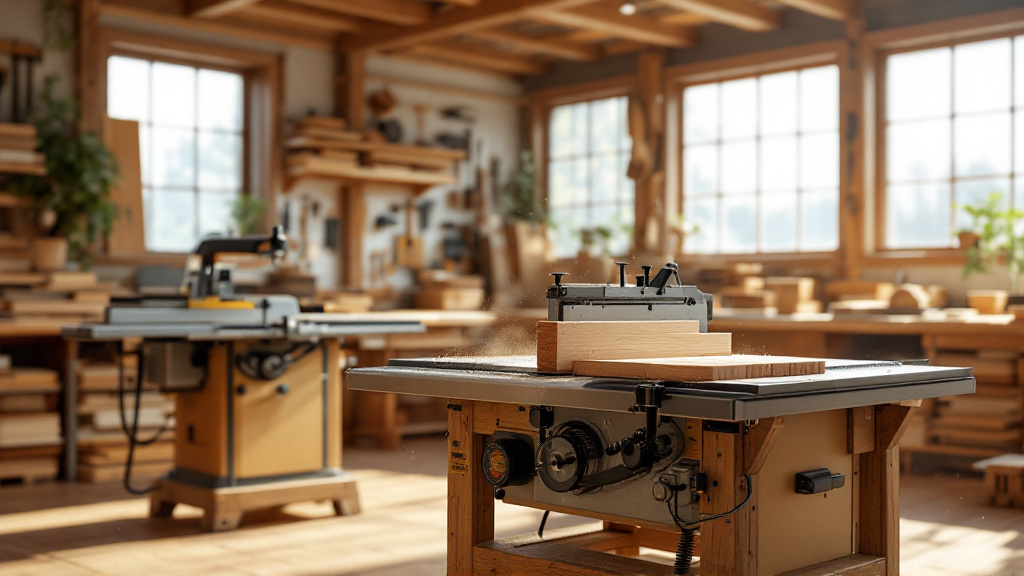
Types of panel saws
The market offers a wide choice of panel saws, which can be broadly classified by several parameters. The main distinction is by load level and productivity, which is directly linked to the scale of the production they are intended for.
1. Light-series machines (hobby / entry level): These machines are intended for small carpentry workshops or for individual use. They have a relatively short carriage (up to 2200 mm), a lower motor power (2-3 kW) and a simpler design. Such models are excellent for irregular work and for cutting small volumes of material. They are not designed for an eight-hour shift or for working with heavy full-size sheets, but they are an excellent starting solution for beginning furniture makers or joiners.
2. Mid-series machines (professional): This is the most common category, the workhorse for most furniture shops and small and medium-sized woodworking businesses. The carriage length of such machines is usually 2800 to 3200 mm, which allows comfortable work with standard particleboard sheets (2750×1830 mm or 2800×2070 mm). The main motor power ranges from 4 to 5.5 kW. They have a stiffer frame, a reliable carriage design (most often a roller type) and are rated for daily single-shift or two-shift operation.
3. Heavy-series machines (industrial): These units are intended for large furniture factories and enterprises with high production throughput. They feature maximum power (from 7.5 kW and up), a very massive and rigid construction, a carriage length up to 3800-4200 mm and a high degree of automation. Such machines are often fitted with servo drives for automatic positioning of the parallel and cross-cut fences, electronic displays showing the saw blade tilt angle and other options that minimize reconfiguration time and reduce the influence of the human factor. They are capable of running three shifts, cutting hundreds of sheets of material per day.
In addition, machines can be distinguished by the type of saw unit. Most models can tilt the saw blade in a range from 90 to 45 degrees, which is necessary for making parts with bevelled edges. There are also CNC machines, where the entire cutting process (positioning of the fences, raising and tilting of the blade) is controlled by a computer program. This is already a higher level of automation, approaching that of cutting centers. The choice of a specific machine type always depends on the current and future tasks of the production operation, planned volumes and budget.
The role of the scoring unit in cut quality
As we have already briefly mentioned, the presence of a scoring unit is one of the fundamental features of a panel saw, and it is precisely what ensures the highest cut quality on laminated and veneered materials. Let us look at its role in more detail. Laminated particleboard (MFC) and MDF have a hard but brittle decorative coating. When the teeth of the main blade, rotating in the feed direction, exit the material on the underside, they do not cut but rather chip away particles of this brittle coating. As a result, unsightly chips form along the entire length of the cut.
The scoring blade solves this problem in an ingeniously simple way. It is mounted ahead of the main blade and rotates in the opposite direction: against the feed direction of the material. Its teeth enter the material from the top (relative to their rotation) and make a shallow but perfectly clean cut in the lower layer of laminate. The depth of this cut is slightly greater than the height of a main blade tooth. Thus, by the time the teeth of the main blade reach this spot, there is nothing left to chip away: the decorative layer has already been neatly scored.
Setting up the scoring unit is a responsible operation that directly determines quality. Three main parameters must be set:
- Raising height: The scoring blade should cut only the decorative layer and a small part of the panel’s core. Too deep a cut is a pointless waste of blade life and an extra load on the motor. An insufficient cut will not do its job, and chips will still appear.
- Axial offset (centering): The scoring blade must lie in the same plane as the main blade. If there is an offset to the right or left, then on one side of the main cut an uncut “step” will remain, while on the other side a groove from the scoring blade will be visible.
- Kerf width: Scoring blades are often of a two-piece design (two parts with spacer rings), which allows the kerf width to be adjusted. It should be a few tenths of a millimeter wider than the kerf of the main blade. This guarantees that the teeth of the main blade pass exactly inside the cut made by the scoring blade without touching its edges.
A properly set-up scoring unit is the guarantee of parts that look professional and require no additional processing. This is especially important for the visible parts of furniture: fronts, worktops, open shelves. The absence of chips not only improves the aesthetics but also increases the moisture resistance of the part edges, since the edging sits on a perfectly even surface with no microcracks through which moisture could penetrate. Therefore, when choosing a machine, it is important to pay attention to the convenience and accuracy of the scoring unit’s adjustment mechanisms in particular.
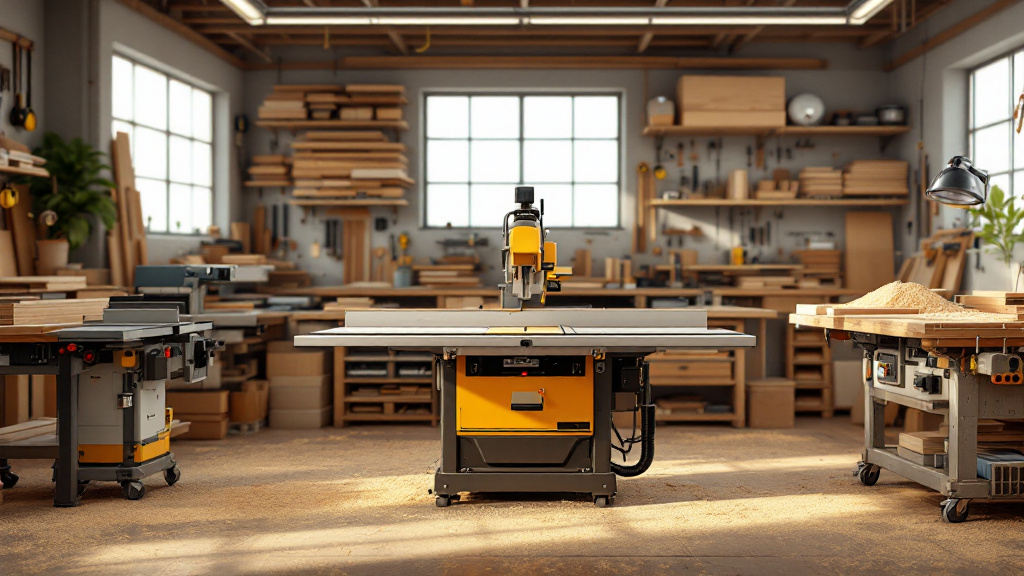
Key technical specifications when choosing a machine
Choosing a panel saw is a serious investment decision that will affect the shop’s work for years to come. To make the right choice, you need to carefully analyze a number of key technical specifications and match them to the needs of your production.
1. Cutting length (carriage travel): This is one of the most important parameters. It determines the maximum length of a part that can be cut in a single pass. To work with standard particleboard sheets (for example, 2800×2070 mm) you need a carriage with a travel of at least 3000 mm, and preferably 3200 mm. This will allow you not only to cut the sheet lengthwise but also to perform a “base trimming” operation: squaring the edge of the sheet to obtain a perfect 90-degree angle before further cutting. A short carriage (up to 2500 mm) will seriously limit your options when working with full-size panels.
2. Maximum cutting width at the parallel fence: This parameter shows the maximum distance to which the rip fence can be moved away from the saw blade. The standard value for most machines is 1250-1300 mm. This is enough to cut off half of a standard sheet or any other required width. If you plan to work with wider sheets, it is worth considering models with an increased cutting width.
3. Main saw motor power: Productivity depends directly on power. For cutting 16-18 mm MFC on a single shift, a 4-5 kW motor is sufficient. If you plan to work with thicker materials, a stack of panels (several sheets in one pass) or solid hardwood, you should choose a machine with a motor of 5.5-7.5 kW and above. A lack of power will lead to the blade losing speed under load, the motor overheating and the cut quality deteriorating.
4. Carriage and guide design: As already mentioned, there are ball-bearing and roller systems. Roller carriages on prismatic steel guides are considered more reliable, more durable and less demanding to maintain in a dusty production environment. They better withstand the weight of heavy panels and provide stable accuracy for many years. Pay attention to the width and rigidity of the carriage itself: the more massive it is, the better it resists bending loads.
5. Machine weight and frame construction: The weight of the equipment is an indirect but very important indicator of its reliability. A heavy, cast or welded frame made of thick metal effectively dampens the vibrations generated by the saw unit. The machine’s stability is the key to cutting accuracy. Lightweight machines can “wander” when working with massive workpieces, which inevitably affects the geometry of the parts.
6. Saw unit tilt angle: A standard feature is the ability to tilt the blade up to 45 degrees. This is necessary for making parts with bevelled edges, for example when assembling corner constructions or products with complex design. It is important to note the convenience and accuracy of the tilt mechanism. On more expensive models the angle is shown on a digital display, which eliminates setup errors.
Analyzing these parameters in the context of your production tasks will let you select equipment that will not merely perform its function but become an effective tool for growing your business.
Safety at work: the basics
A panel saw, like any industrial equipment with rotating cutting elements, is a source of heightened danger. Neglecting safety rules can lead to serious injuries. Therefore, staff training and strict control over compliance with these rules is a top priority for the production manager.
The first and main rule is to always use all the standard protective devices. These include the protective hood (dust extraction guard) over the saw blade. It is not only part of the dust-removal system but also prevents accidental contact of the hands with the rotating blade and protects the operator from flying offcuts or broken blade teeth. Removing this guard is strictly prohibited. Many machines also have a riving knife installed behind the main blade. Its task is to prevent the saw blade from being pinched in the cut, which could cause kickback of the workpiece.
The second important rule is proper fixing of the workpiece. Before starting to cut, the sheet of material must be securely pressed against the fences and fixed with an eccentric clamp. Trying to hold the workpiece by hand alone, especially with small parts, is a direct path to injury. The carriage must move smoothly, without jerks. You must not pull the carriage towards you during the cut. The cutting process must be fully completed, and only after that can the carriage be returned to its starting position.
The third aspect is work clothing and personal protective equipment. The operator must work in workwear that has no hanging elements that could catch on the moving parts of the machine. Safety glasses are mandatory to prevent fine chips and dust from getting into the eyes. It is also recommended to use hearing protection (ear muffs or ear plugs), since a running machine generates a high level of noise. Working in gloves on a panel saw is generally prohibited, since a glove can be dragged onto the saw blade along with the hand.
Here are a few key points every operator must know:
- Never leave a running machine unattended.
- Before changing saw blades or carrying out maintenance, completely disconnect the machine from the power supply.
- Keep the workplace clean, promptly removing offcuts and chips that could cause a fall or hinder free movement.
- Do not try to remove offcuts from the cutting zone while the blade is running. Use a special push stick for this.
- Before starting work, always check that the machine and protective devices are in good order and that the saw blades are sharp.
Observing these seemingly simple rules will help avoid accidents at work and ensure long, safe operation of expensive equipment. Safety must always come first.
Maintenance and care of the machine for long-lasting operation
For a panel saw to serve for a long time while retaining its accuracy and productivity, it requires regular and competent maintenance. Care of the equipment is not a one-off event but a set of daily, weekly and monthly procedures that must be carried out by the operator or a dedicated service team.
Daily maintenance includes, above all, cleaning the machine of dust and chips. Special attention should be paid to the carriage guides. If it is a ball-bearing system, the guides must be carefully wiped and, if necessary, lubricated according to the manufacturer’s instructions. Contamination of the guides leads to a stiff carriage movement, the appearance of play and, as a result, loss of cut accuracy. It is also necessary to clean the motor ventilation openings to prevent overheating.
Weekly maintenance involves deeper cleaning. It is necessary to blow out the internal cavities of the machine, the saw unit and the adjustment mechanisms with compressed air. You should also check the tension of the drive belts. A slack belt can slip, which leads to loss of power and a drop in blade speed under load. An over-tensioned belt creates excessive load on the bearings of the motor and the saw arbor, which leads to their premature wear.
Periodically, in accordance with the manufacturer’s schedule, it is necessary to inspect and align the machine. This includes checking the perpendicularity of the cross-cut fence relative to the cut line, the parallelism of the rip fence to the saw blade, and the alignment of the main and scoring blades. Even on the highest-quality machines these settings can drift due to vibrations and constant loads. Timely checking and correction will avoid producing rejects. Precise measuring instruments are used for checking: engineer’s squares and dial indicators.
The dust extraction system requires special attention. Effective dust removal is not only the key to a clean workplace and the operator’s health but also an important factor for the machine’s proper operation. Clogged hoses or an ineffective dust collector cause chips to accumulate inside the machine, interfering with the mechanisms. It is necessary to regularly check and clean the filters of the extraction unit and to monitor the integrity of the hoses. Proper and timely care is the best investment in the uninterrupted and accurate operation of your equipment.
Choosing saw blades: from material to result
Even the most expensive and precise panel saw cannot deliver a quality cut without a correctly selected and well-sharpened saw blade. The saw blade is the cutting tool, and the cleanliness of the edge, the cutting speed and the service life until the next sharpening depend directly on its characteristics. The choice of blade depends on many factors, primarily on the material being processed.
For cutting laminated panels (MFC, MDF), blades with a large number of teeth are used (Z=80, 96 or even 108 for 300 mm diameter blades). The tooth grind on such blades is usually TCG (triple-chip and straight). The alternation of a trapezoidal tooth, which makes a rough cut, and a straight tooth, which cleans up the edges, ensures a perfectly clean cut without chipping. The tooth hook angle is usually negative or close to zero, which makes the cut “softer” and prevents tear-out of the laminate.
For working with solid wood, blades with fewer teeth are used (Z=48, 60). Ripping solid wood produces coarse chips, and large gullets between the teeth are needed for effective chip removal. Blades with closely spaced teeth in such conditions will quickly clog with chips and overheat. The grind for rip cutting is a straight or bevelled tooth. For crosscutting solid wood, where a clean end-grain surface without fuzz is important, blades with a large number of teeth and an alternate top bevel (ATB) grind are used.
Scoring blades also come in different types. The most common are two-piece (conical) blades consisting of two parts. By adjusting the distance between them with spacer rings, you can precisely match the kerf width to the main blade. There are also solid scoring blades with a trapezoidal tooth shape.
Besides the number and shape of the teeth, other parameters are also important:
- Blade diameter and bore: They must strictly match the specifications for your machine.
- Blade body thickness and kerf width: A thicker body provides greater rigidity and stability of the blade, which has a positive effect on accuracy.
- Presence of expansion and noise-reduction slots: These slots in the blade body prevent it from warping when heated and reduce the noise level during operation.
- Material of the carbide tips: The quality of the carbide the teeth are made of determines the blade’s service life and its ability to retain sharpness.
Saving money on saw blades means devaluing the machine’s capabilities. A good blade not only ensures quality but also lasts longer, withstanding a greater number of re-sharpenings. And, of course, do not forget about timely sharpening. A dull blade does not cut but “rubs” the material, which leads to overheating, burn marks on the wood, chipping on the laminate and an increased load on the machine’s motor.
Conclusion: an investment in quality and productivity
To sum up, we can say with confidence that a panel saw is not just one of the machines on the shop floor but a fundamental element for any modern production connected with woodworking and furniture manufacturing. Adopting it is not an expense but a strategic investment that pays off through a whole range of factors.
First, it is a leap in product quality. Perfectly straight cuts, precise part geometry and the absence of chips on decorative surfaces are the standard that lets you turn out competitive products and win customers’ trust. Second, it is a dramatic increase in productivity. Cutting speed on a panel saw is many times faster than any manual or semi-mechanized methods, which allows large order volumes to be completed in tight timeframes. Third, it is direct material savings through minimizing waste and reducing rejects.
The choice of a specific machine model should be based on a thorough analysis of the production’s needs: planned volumes, types of materials processed and, of course, budget. But even an entry-level professional machine can transform the work of a small workshop. The main thing is to understand that this equipment requires a competent approach: the right choice, timely maintenance, the use of quality cutting tools and, of course, strict adherence to safety rules.
By investing in a quality panel saw, a company invests in its future, laying a solid foundation for the stable output of high-quality products, the optimization of production processes and, consequently, for the growth and prosperity of its business in today’s market.