Technologies for Combining Wood and Plastic to Create Original Products

In the world of woodworking, the pursuit of perfection and the search for new ways to extend a material’s possibilities have always been valued. Wood is a material with unique aesthetics and warmth, yet it has certain limitations related to moisture, biological decay and wear. Plastic, in turn, offers high resistance, durability and moulding flexibility. The combination of these two seemingly opposite materials opens up fundamentally new horizons in the creation of original, functional and durable products.
As a company deeply immersed in the processes of woodworking and manufacturing, we see the symbiosis of wood and plastic not merely as a trend but as a strategic direction of development. It allows us to offer clients products that inherit the natural beauty of wood while possessing performance characteristics unattainable for solid wood alone. It is a combinatorics in which each component enhances the best qualities of the other while offsetting its weak points. In this article we take a detailed look at the key technologies that allow us to effectively integrate wood and polymers to create high-quality and original products. We focus on processes that will change your view of the possibilities of wood raw material.
Wood-Plastic Composites (WPC): Extrusion and Moulding
Wood-plastic composites, known as WPC (Wood-Plastic Composites), represent one of the most large-scale and technologically advanced ways of combining wood and plastic. The essence of the technology lies in mixing fine wood flour (usually from 50% to 70% by mass) with thermoplastic polymers such as polyethylene (PE), polypropylene (PP) or polyvinyl chloride (PVC). The resulting mixture, or compound, is then processed by extrusion or injection moulding.
This method makes it possible to create a material that does not rot, is not affected by insects and has high moisture resistance, while retaining the appearance and tactile feel close to natural wood. WPC products are widely used in items requiring increased wear resistance and durability, such as decking boards, facade panels, fencing and garden furniture. It is a solution for those cases where the aesthetics of wood must be combined with the resistance of a synthetic material to a harsh outdoor environment.
1. Preparation of raw materials and mixing
The key stage in WPC production is the thorough preparation of the initial components. The wood flour must be cleaned and, critically important, dried to a very low moisture level, as a rule less than 1–1.5%. High wood moisture during subsequent thermal processing in the extruder can lead to the formation of pores, an uneven structure and a deterioration of the mechanical properties of the final product. Control of the wood-flour fraction is also important: the finer the particles, the more homogeneous and smooth the composite will be.
The polymer base (granules) must also be dry. Then the wood flour, polymer and various functional additives are mixed in special high-speed mixers. The additives play a decisive role: coupling agents (compatibilisers) improve the adhesion between the hydrophilic wood and the hydrophobic plastic, UV stabilisers protect against fading in sunlight, antioxidants prevent the degradation of the polymer, and colourants give the product the desired shade. Mixing often takes place in two stages: “hot” for homogenisation and “cold” for cooling the mixture before feeding it to extrusion.
2. The profile extrusion process
Extrusion is the main method of forming WPC products such as boards, beams and linear profiles. The prepared and cooled compound is fed into an extruder — a machine with one or two rotating screws. Inside the extruder the material melts through heating and friction, turning into a viscous, homogeneous mass. The screws push the molten composite through a forming die (die head) — a metal tool that sets the final cross-section of the profile.
A key feature of WPC extrusion is that the processing temperature must be high enough to melt the polymer but not so high as to cause the thermal decomposition of the wood. This requires precise control of the temperature profile along the entire length of the extruder. The forming die also has special channels for the even distribution of the material flow and is often equipped with a cooling system to prevent deformation of the profile as it exits.
3. Calibration, cooling and cutting
After exiting the die, the still-soft WPC profile enters a calibration table. In this device, most often using vacuum and water cooling, the profile acquires precise geometric dimensions and finally hardens. Vacuum calibration helps to prevent deformation and shrinkage of the material, ensuring its perfect geometry. Cooling must be gradual and controlled in order to avoid internal stresses that can lead to warping or cracks in the finished product.
After cooling, the profile moves to the pulling devicesthat ensure the even movement of the material. The final stage is the cutting of the finished profile into lengths of a set size using high-precision saws. Modern WPC lines often also include a stage of finishing treatment, for example brushing (drawing with metal brushes) to give the surface a texture imitating the grain of natural wood. This process not only improves the appearance but also makes the surface less slippery.
Injection Moulding: Creating Complex Parts
Unlike extrusion, which is used to obtain elongated profiles, injection moulding is used to manufacture complex, three-dimensional WPC products with high precision and repeatability. This method is ideal for small-sized components, fittings, connecting elements, as well as for designer furniture and decorative elements.
Injection moulding makes maximum use of plastic’s ability to take on any given shape, while the wood flour gives the product a natural look and improves certain mechanical characteristics, for example rigidity. This process opens up possibilities for creating unique, ergonomic shapes that would be impossible or extremely expensive to obtain from solid wood or traditional wood boards.
1. Equipment and process principles
For WPC injection moulding, standard injection moulding machines (IMM)are used, adapted for working with composite materials. The main difference lies in the need to account for the abrasiveness of the wood flour, which can cause increased wear of the IMM’s screws and barrels. Special, more wear-resistant components are therefore used.
How the IMM works: the prepared granulated WPC compound is loaded into the hopper. Inside the barrel, the screw melts, homogenises and accumulates the molten material. Then, under high pressure (hundreds or even thousands of atmospheres), the molten composite is injected into a mould (injection mould). The mould, made of high-strength steel, has a cavity that precisely replicates the shape of the future product. After injection, the material cools and hardens inside the mould, after which the finished product is removed.
2. Features of moulds and flowability
The design of a mould for WPC moulding requires particular attention. Firstly, it is necessary to account for significant shrinkage, which can be greater than that of pure plastic due to the presence of the wood filler. This requires compensating the dimensions when designing the mould cavity. Secondly, the wood flour worsens the flowability of the melt, making it more viscous compared with pure polymer.
To ensure the complete filling of a complex shape, it is necessary to optimise the arrangement of the gates (injection channels) and the vents (air-outlet channels). A low injection speed helps to avoid surface defects such as “flow marks” or visible distortions. It is also important to ensure adequate temperature control of the mould, since uneven cooling can lead to internal stresses and deformation of the product.
3. Applications and advantages
WPC injection moulding makes it possible to create parts that combine the strength of plastic and the aesthetics of wood. Examples include:
- Fittings and fasteners: Plugs, brackets, handles with a wood texture.
- Garden equipment and furniture: Seats, armrests, complex connecting elements where resistance to weather and ergonomics are important.
- Decorative elements: Grilles, ornaments, interior elements with a precise imitation of wood carving.
The main advantage of the method is the possibility of the large-scale production of complex, strong and stable products that require no additional protective treatment and can be used in conditions of high humidity and temperature fluctuations, where traditional wooden parts would quickly fail.
Stabilising Wood with Polymers: Deep Impregnation
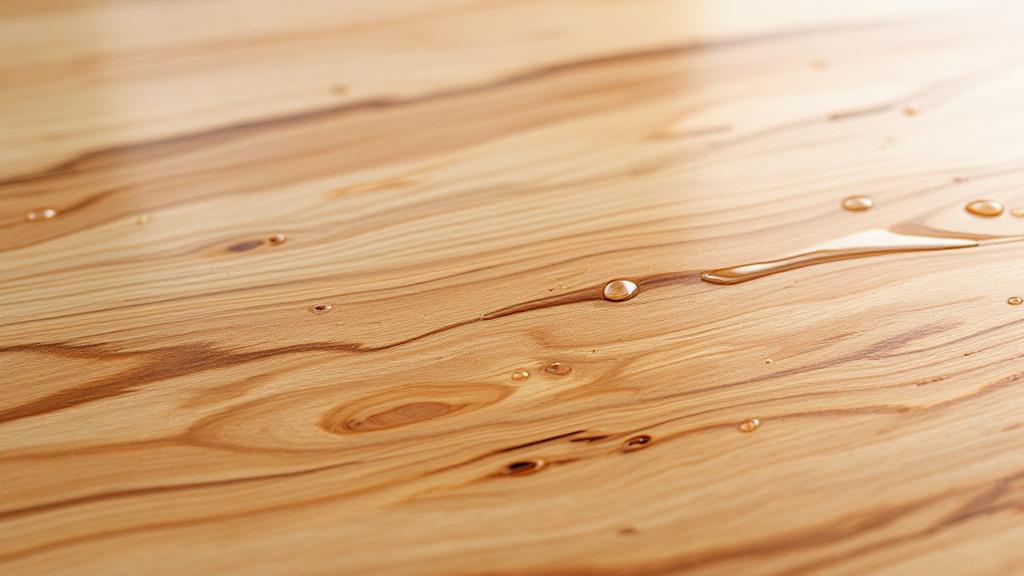
Wood stabilisation is the process of the deep modification of solid wood by impregnating it with liquid polymer resins (monomers), followed by their polymerisation (hardening) inside the cell walls and cavities of the wood. The result is a material that is a hybrid: it is still natural wood, but with radically improved properties.
This technology is used to create high-class, exclusive products such as knife handles, gun-finishing elements, jewellery, decorative panels and other small-sized items where the following are critically important: dimensional stability, hardness and resistance to moisture. Stabilised wood has stunning wear resistance while retaining a unique, vivid grain pattern.
1. The impregnation process
The stabilisation process begins with the thorough drying of the wooden blank. Impregnation is carried out in a vacuum chamber. The blank is fully immersed in a container of liquid monomer, most often acrylic resins such as Anacrol-90 or other thermosetting polymers that can be coloured with special dyes.
A deep vacuumis then created in the chamber. This is necessary in order to remove air and moisture from the pores and cells of the wood. Under low pressure, the residual air “boils” and escapes from the pores. After holding under vacuum, the pressure in the chamber is raised to atmospheric, and then an overpressure is created (up to 4–5 atmospheres). Under this high pressure the polymer resin is forced deep into the structure of the wood, filling all the voids. The “vacuum–pressure” cycle is often repeated several times to achieve the most complete impregnation.
2. Polymerisation and curing
After impregnation, the polymer-impregnated blank is removed and moves to the polymerisation (curing) stage. Polymerisation is a chemical process in which the liquid monomer turns into a solid, stable polymer. For most acrylic resins this process is triggered by thermal treatment.
The blanks are placed in a drying cabinet or oven and heated to the temperature needed to initiate the reaction (for example, about 90–100 degrees). The heat acts as a catalyst. The polymer hardens inside the wood, firmly binding the fibres and filling all the pores and microcracks. This gives the material exceptional density and hardness.
3. The Result and Processing of Stabilised Wood
The result of stabilisation is a material that:
- Does not absorb moisture: This makes it ideal for use in conditions of sharp humidity fluctuations, preventing swelling and cracking.
- Exceptionally hard: The hardened polymer increases the surface hardness, making the material resistant to scratches and abrasion.
- Stable: The phenomenon of wood “movement” (changes in dimensions with changes in moisture) is eliminated, which is critically important for precision products.
Processing stabilised wood requires the use of carbide tools, since the material is significantly harder than ordinary wood. However, it lends itself excellently to sanding and polishing, revealing the depth and unique grain pattern, which is often enhanced by the dyes added to the resin. A finish coating is usually not required, since the polymer is already inside, providing protection.
Cladding Wood Boards with Plastics: HPL and Lamination
Cladding wood materials with plastics is a technology aimed at improving the performance characteristics of the surface, while the substrate (for example, MDF, particleboard, plywood) is made of wood raw material. This technique is widely used in furniture manufacturing, the production of worktops, retail equipment and interior fittings.
The use of high-quality plastics such as High-Pressure Laminate (HPL) or decorative films based on thermosetting resins (the laminationprocess) makes it possible to create a product that combines the structural strength of the wood substrate with the exceptional wear resistance and hygiene of the plastic coating. It is a compromise between cost, strength and aesthetics.
1. HPL Board Cladding Technology
HPL plastic is a sheet material produced by pressing layers of kraft paper impregnated with thermosetting resins (phenolic for the base and melamine for the decorative layer) at very high pressure (from 5 MPa and above) and temperature (about 150 degrees Celsius). The resulting HPL sheet has incredible hardness and resistance to scratches, impacts, high temperatures and household chemicals.
The process of cladding (laminating) a wood board with HPL consists of gluing the plastic to the substrate. This is done using specialised press machines and high-strength, often polyurethane or contact adhesives. The glue line must be as thin and even as possible, and the pressing pressure sufficient to ensure full contact and reliable adhesion across the entire area. The result is a material that retains the ease of processing and installation of the wood board but with a surface suitable for the most demanding operating conditions, for example in a professional kitchen or a public space.
2. Lamination (CPL and melamine film)
Lamination (or direct pressing) is a more economical and faster method of cladding, most often used for particleboard and MDF (producing MFC and laminated MDF). In this process a decorative paper, impregnated with a thermosetting resin (usually melamine), is applied to the prepared wood board.
The entire “package” undergoes brief exposure to high temperature and pressure in a press. Under the action of heat, the resin melts, impregnates the paper and, most importantly, chemically bonds with the surface of the wood board. As a result, the resin hardens, forming a strong, seamless and wear-resistant surface layer. This process differs from cladding (film bonding), where the film is glued on. In lamination, a chemical polymerisation of the resin takes place, which essentially becomes part of the surface.
3. Application in products
Wood-and-plastic cladding technologies have an extremely wide application in the manufacture of products:
- Worktops and work surfaces: HPL is ideal for kitchen and laboratory tables thanks to its resistance to moisture and aggressive environments.
- Furniture fronts: MFC and clad MDF are used for cabinet furniture, combining strength and a wide choice of decors (imitation of various wood species, stone, plain colours).
- Retail and office equipment: Requires high wear resistance, which is provided by plastic coatings.
This approach allows us to offer products with the best ratio of price, durability and external appeal. At the same time, a wood substrate is used, which retains the necessary structural rigidity and a relatively low weight.
Combining Solid Wood with Cast Plastic

This approach is one of the most creative and complex, since it requires the precise interaction of two materials with entirely different properties: natural solid wood and liquid polymer. The basic idea is to use plastic, most often epoxy or polyester resin, to fill natural defects, voids, cracks or specially created cavities in the wood.
The result is unique products in which the plastic does not merely coat but is embedded into the structure of the wood, forming visually striking contrasts, “rivers”, “lakes” or transparent inserts. This makes it possible to turn, for example, a slab (a thick section of wood) with natural defects into an exclusive piece of furniture — tables, bar counters, decorative panels.
1. The “Resin River” Technique
The most popular example of this method is the “river” technique in worktops. First, a carefully prepared, dried wood slab (most often with uneven, live edges) is placed in a sealed formwork (mould). A space is left between the two halves of the slab or along their edges.
This space is poured with epoxy resin. The resin is pre-mixed with a hardener and, if necessary, with dyes (pigments) or pearlescent additives to create an effect of depth and colour. Owing to its low viscosity, the epoxy resin penetrates the pores of the wood at the contact boundary. The pouring process can be multi-layered to prevent overheating and cracking of the resin. After full curing, which can take from several days to a week, the worktop is removed, processed (milling, sanding) and polished.
2. Filling defects and cracks
A less large-scale but no less important aspect is the use of resins for the repair and stabilisation of wood. Natural wood, especially valuable species, often has natural cracks, knots or voids. Instead of rejecting such material, it can be refined by pouring the defects with clear or coloured epoxy resin.
This not only increases the strength and stability of the wood, preventing further cracking, but also gives the product a distinctive, designer look. A clear pour allows the internal structure of the wood to be seen, while a coloured one creates a bright accent that emphasises the uniqueness of the natural flaw. This technique requires very thorough preparation: the defects must be cleaned, degreased and, if necessary, sealed on the reverse side so that the resin does not leak out.
3. Advantages and subtleties of processing
The combination of solid wood and cast resin yields products with a unique, artistic design. It is unlike mass-produced items and is prized for its exclusivity. Key advantages:
- Visual effect: The combination of the organics of wood and glossy, often coloured, plastic.
- Functionality: The resin creates a perfectly even, wear-resistant surface.
- Use of secondary raw material: It allows the use of slabs and boards with defects that would otherwise be unusable.
Processing such products requires particular care: resin and wood have different hardness and react differently to heat during sanding. It is necessary to use methods that rule out overheating the resin, as this can lead to its clouding or the formation of microcracks. Finishing the resin to a mirror gloss gives the product a finished, premium look.
Inserting Plastic Elements into Wooden Parts
The technology of mechanically embedding ready-made plastic elements into solid wood or wood boards is a classic but constantly improving way of combining materials. In this case the plastic acts as a functional or decorative component that is impossible or impractical to make from wood.
These may be structural parts, such as fastening and adjustment systems, or decorative elements — inlays, protective edges, LED diffusers. The method requires high precision in woodworking to create perfect grooves and sockets for the plastic inserts, ensuring a tight fit without gaps.
1. Decorative and functional inserts
Plastic can be used for decorative inlay in wooden surfaces. Using high-precision CNC machines, grooves of complex shape are milled in the solid wood and then filled with plastic elements made by laser cutting or moulding. This makes it possible to create durable patterns, logos or lettering that contrast with the texture of the wood.
In functional terms, plastic inserts are often used in places where increased wear resistance or elasticityis required. Examples include:
- Protective edge banding (edges) made of PVC or ABS plastic on wood boards (particleboard, MDF), which protect against chipping, moisture and mechanical damage.
- Guides and sliding elements in drawers or sliding systems, made of wear-resistant polyamide or PTFE.
- Fastening elements for knock-down furniture, moulded from strong plastic that ensures repeated use without damage.
2. Precision of milling and fastening
A key aspect of this technology is the precision of the fit. The milling of grooves and sockets must be carried out on modern computer-controlled (CNC) equipment in order to ensure the geometric identity of the seat and the plastic insert. Minimal tolerances (tenths of a millimetre) are critically important for ensuring a tight, invisible fit.
The fastening of a plastic element to wood can be carried out in several ways:
- Adhesive joint: The use of specialised adhesives (for example, polyurethane or epoxy) for a strong and durable joint.
- Mechanical fastening: The use of fasteners, dovetail grooves or tongue-and-groove systems moulded directly into the plastic part.
- Press-fitting (thermal fixing): The plastic element is slightly larger than the groove and is installed with an interference fit, sometimes using thermal action to temporarily expand the plastic.
3. Integration of lighting and electronics
A modern trend is the integration of lighting (LED backlighting) into wooden products, for example into furniture or wall panels. For this, a groove is milled in the wood, and a special light-diffusing plastic profile (most often made of polycarbonate or acrylic) is inserted into it, with an LED strip placed inside.
The plastic here performs two important functions: it is an aesthetic diffuser of light, providing an even glow, and a protective housing for the electronics, insulating them from the wood and moisture. Such a combination makes it possible to create products that are not only functional and beautiful but also meet modern requirements for design and comfort.
Modifying the Wood Surface with Plastic Varnishes and Primers
One of the most widespread ways of combining wood and polymers, which is often not perceived as “combining”, is the use of high-tech paint and varnish materials based on polymers. These materials do not merely coat but form a strong, protective polymer coating that in its properties largely surpasses traditional oil or wax finishes.
The use of polyurethane, acrylic or polyester varnishes and primers is the standard in the manufacture of high-quality furniture, parquet and other products requiring increased wear resistance. In effect, this is the formation of an extremely thin yet extremely strong plastic layer on the surface of the wood.
1. Polyurethane and acrylic systems
Polyurethane varnishes (PU varnishes) are the benchmark of strength in the woodworking industry. They are two-component compounds in which the main component (resin) is mixed with a hardener (isocyanate). After polymerisation, an exceptionally hard, elastic film resistant to chemicals and abrasion forms on the surface. These varnishes are indispensable for coatings subjected to intensive wear, for example worktops, floors and kitchen fronts.
Acrylic varnishes are systems often cured by ultraviolet (UV) radiation. The advantage of UV-cured varnishes is that polymerisation occurs instantly as the product passes through a UV dryer. This makes it possible to significantly speed up the production process and immediately package or continue processing the product. Acrylic coatings provide excellent transparency, do not yellow over time and have good hardness.
2. Priming and pore sealing
To achieve a perfect surface before applying the finish varnish, polymer primingis often used. The primer not only ensures adhesion between the wood and the varnish but also performs the most important function of pore sealing and grain raising. In the case of large-pored species, such as ash or oak, special pore fillers are used — thick polymer compounds that completely close the pores of the wood.
This is especially relevant for achieving a mirror gloss. Any unfilled pore or dent on the surface will show up as a defect after polishing. Polymer-based primers, applied by spraying and then sanded, create a perfectly even base, allowing the finish varnish to form an absolutely smooth, strong polymer film.
3. Advantages of thin-film coatings
The key advantage of using polymer varnishes:
- Wear resistance: Incomparable with natural oils and waxes; the coating withstands mechanical impact and frequent cleaning.
- Chemical resistance: Protection against stains, solvents and household chemicals.
- Moisture insulation: Effectively prevents the penetration of moisture, reducing the risk of warping and swelling of the wood substrate.
- Aesthetics: The possibility of achieving both a deep matt and a high-gloss coating.
Correct application and the choice of polymer system is the final and critically important stage that determines the durability and appearance of the wooden product. It is a technology that brings the protective properties of the synthetic world to a natural material.
Using Recycled Plastic in Combination with Wood
A topical and socially responsible approach in woodworking is the integration of recycled plastic into production processes. This not only helps to reduce waste and lessen the burden on the environment but also opens up new economic opportunities, using recycled materials to create innovative composite and hybrid products.
Recycled polymers such as PE, PP, PVC and even some types of PET can be cleaned, granulated and used as a polymer matrix for WPC or to create functional elements that are then joined to wood. This approach requires particular attention to quality control of the initial plastic raw material.
1. Application in WPC based on recycled materials
The most direct way of using recycled plastic is to include it in the composition of Wood-Plastic Composites. Recycled polyethylene (PE) and polypropylene (PP) from packaging, bottles and films are an excellent base for WPC profiles.
The process remains the same: the cleaned and crushed plastic is mixed with wood flour and functional additives. However, unlike primary raw material, recycled plastic can have a wider range of molecular weight and contaminants. This requires more thorough pre-processing (washing, drying, homogenisation) and the adaptation of the extrusion process parameters. The inclusion of recycled materials makes it possible to reduce the cost of the final product and position it as a “green”, sustainable solution.
2. Hybrid constructions with recycled plastic
In addition to composites, recycled plastic is used to manufacture ready-made structural elementsthat are then attached to a wood base. For example, legs, supports or frames for garden furniture can be moulded from recycled PE or PP. These plastic elements provide:
- Insulation: They prevent direct contact of the wooden parts with damp ground.
- Durability: They are not subject to rot and corrosion.
- Lightness: A comparatively low weight compared with metal counterparts.
The wooden parts (seats, backs, worktops) can be made of solid wood or WPC and joined to the plastic frame. Such a hybrid construction makes maximum use of the advantages of each material, ensuring strength and durability in outdoor conditions.
3. Environmental and economic aspect
The use of recycled plastic is not merely a technological choice but also a strategic positioning of the company. It demonstrates a commitment to the principles of the circular economy and sustainable production.
- Cost reduction: Recycled material usually has a lower purchase price, which has a positive effect on the cost price.
- Product uniqueness: Labelling a product as containing recycled materials can become an important competitive advantage on the market.
- Social responsibility: Participation in the recycling of plastic waste has a significant social resonance and positively affects the brand’s image.
To ensure stable quality, it is important to carry out regular incoming inspection of raw materials and to adapt formulations to compensate for possible differences in the properties of the plastic.
The Co-Extrusion Technique: Multi-Layer WPC Profiles
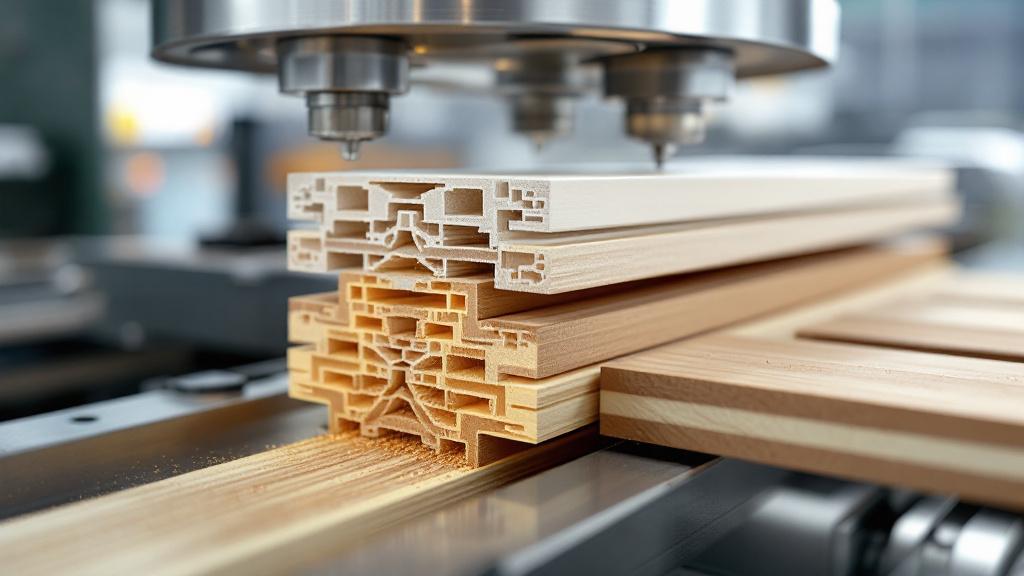
Co-extrusion is an advanced technology in WPC production that makes it possible to create multi-layer profiles with different properties in each layer. Unlike traditional single-layer extrusion, co-extrusion uses two or more extruders that feed different material compositions through one common forming die.
This makes it possible to optimise the characteristics of the product by placing more expensive or specialised components only where they are needed, for example on the surface. The result is profiles that combine the strength and economy of the core with the high resistance and aesthetics of the outer layer.
1. Structure of a co-extruded profile
A typical co-extruded WPC profile consists of two main layers:
- The core (base): Makes up the bulk of the profile and is often made of a standard, more economical WPC compound. It provides the necessary structural strength, rigidity and minimal shrinkage. The core may use a higher percentage of wood flour or a less expensive polymer, including recycled material.
- The outer layer (capping): This is a thin but highly effective layer of a specialised polymer that completely covers the core. The outer layer often contains a high concentration of UV stabilisers, antioxidants and durable colourants. Sometimes it may even be pure, high-quality plastic (for example, PVC or Acrylonitrile Styrene Acrylate, ASA) containing no wood flour.
2. Advantages of co-extrusion
Co-extrusion is the technological answer to the shortcomings of the first generation of WPC, which could fade over time or be susceptible to mould in conditions of high humidity. The main advantages of multi-layer profiles:
- Maximum UV resistance: The outer layer, enriched with stabilisers, practically does not fade and retains its colour for decades.
- High moisture and stain resistance: A dense, often seamless plastic layer prevents the absorption of water, oil, wine and other contaminants.
- Aesthetic flexibility: The outer layer makes it possible to imitate expensive wood species with high precision, as well as to create unique textures, for example 3D embossing with a deep pattern that cannot be produced on ordinary WPC.
- Economy: The use of cheaper raw material for the bulk of the profile.
3. The co-extrusion forming process
The co-extrusion process requires more complex equipment than traditional extrusion. A second (or third) extruder and a special co-extrusion dieare needed. This die has complex channels that combine the melt flows from the different extruders immediately before the exit. The flows are joined in such a way that the melt of the outer layer completely envelops the melt of the core.
It is critically important to ensure perfect adhesion between the layers. This is achieved through precise control of temperature and pressure, and sometimes with the help of a special bonding layer (adhesive compound) that is also fed through a separate extruder. Co-extruded profiles, such as decking boards, are the pinnacle of WPC technology, offering a combination of natural aesthetics and practically unlimited durability.
Milling and Composite Assembly
Not all combination technologies require complex chemical or thermomechanical processes such as extrusion or moulding. Efficiency is often achieved through precise machining and the skilful composite assembly of ready-made wooden and plastic elements. This technology is especially important for unique, small-batch and designer products.
The essence is to make maximum use of the strengths of each material, joining them by means of precision grooves, connectors and adhesives. Modern CNC equipment makes it possible to perform the most complex milling in wood, which is ideally suited for installing standard or custom plastic parts.
1. High-precision CNC milling of wood
A key role here is played by CNC milling machines (computer numerical control). They are capable of creating grooves, pockets, sockets and holes in wooden blanks with the precision needed for a tight fit of plastic components. Examples of application:
- Milling a channel for installing a PVC seal profile in wooden window frames.
- Creating recesses of complex shape for embedding polycarbonate or acrylic protective screens.
- Material removal for installing ready-made plastic fitting elements such as latches, hinges or guides.
CNC processing makes it possible not only to precisely maintain the geometry but also to ensure perfectly smooth groove walls, which is critically important for the quality of the glue line or the tightness of the mechanical interference fit.
2. Assembly and fastening technologies
The assembly of combined products requires the choice of the optimal fastening method, taking into account the difference in thermal expansion and hardness of the materials:
- Adhesive joints: For reliable fixing, specialised adhesives are used. For example, polyurethane, epoxy or cyanoacrylate adhesives are excellent for joining wood to most plastics (except polyolefins such as PE and PP, which require surface activation). They create a strong, often water-resistant joint.
- Mechanical fastening with compensation: When using self-tapping screws or bolts in combination with plastic, it is necessary to provide for compensation of thermal expansion. Plastic expands and contracts significantly more than wood. This can be implemented through the use of oval holes in the plastic part (instead of round ones) or spring washers.
- Tongue-and-groove systems and latches: Plastic parts can be moulded or cut with integrated latches or tongue-and-groove elements that engage with matching grooves milled in the wood. This ensures fast, strong and often invisible assembly.
3. Application in products
Composite assembly makes it possible to create products with better characteristics than their fully wooden or fully plastic counterparts:
- Window and door profiles: A wooden frame (thermal insulation, aesthetics) combined with plastic overlays and seals (moisture resistance, tightness).
- Unique furniture: Wooden fronts and body, complemented by wear-resistant plastic inserts in the corners, on the ends or in places of intensive contact.
- Toys and souvenirs: A combination of natural wood with coloured, smooth and safe plastic elements.
This technology is a manifestation of the engineering approach, where the choice of material for each part of the product is determined by its functional necessity.
3D Printing and Prototyping in Woodworking
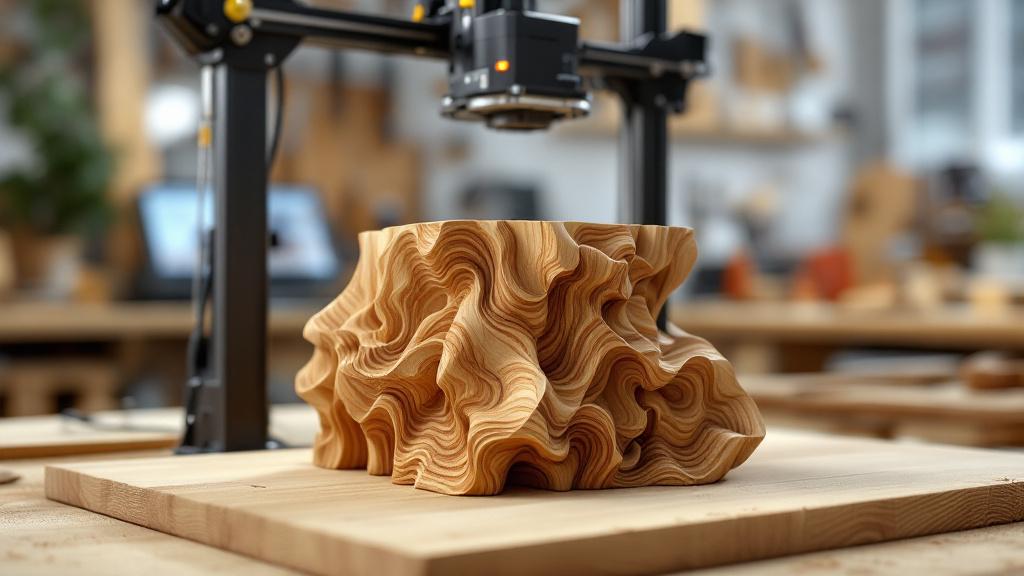
An innovative and rapidly developing direction is the use of 3D printing to create plastic elements intended for integration into wooden products. 3D printing (additive manufacturing) makes it possible to produce parts of the most complex geometry that would be impossible or extremely expensive with traditional moulding or machining.
In the context of woodworking, 3D printing is used for prototyping, the manufacture of unique fittings, hidden connecting elements and designer inserts. This opens the way to the full customisation and personalisation of products.
1. Manufacturing customised fittings
Using 3D printing, individualised plastic fittings can be made quickly and inexpensively from strong polymers such as PLA, ABS, PETG or nylon:
- Hidden fasteners: The manufacture of non-standard brackets that precisely match the geometry of the wooden product and remain completely invisible after assembly.
- Unique handles and inserts: The creation of handles, legs or decorative elements with a signature style or complex ornamentation.
- Prototypes: The rapid creation of functional models of plastic parts to assess their compatibility with the wooden structure before launch into mass production.
This approach allows us to offer clients an absolutely unique product in which even the smallest details are designed for the specific project.
2. 3D printing with wood-filled plastics
On the 3D printing market there are special composite filaments (plastic threads) with the addition of wood fibre (Wood-Filled PLA or Wood-Polymer Composites). Although this is technically not the combination of solid wood with plastic, it is the creation of a part that:
- Has the texture and smell of wood: Printed products look and even smell like wood.
- Lends itself to post-processing: They can be sanded, painted and even stained, like natural wood.
Such printed elements can be used as decorative overlays or small parts in combination with solid wood, creating a visually and tactilely harmonious hybrid.
3. Tooling and jigs
3D printing is indispensable for the manufacture of production tooling and toolkits for woodworking itself. These may be:
- Templates and jigs: The manufacture of plastic guides and templates for the precise manual or semi-automatic milling of complex grooves in wooden blanks.
- Protective elements: Specialised clamps, press attachments that protect soft wood species from damage during machining.
- Mould prototypes: The creation of moulds for casting epoxy resin or other plastics, which makes it possible to quickly test design solutions.
In this context, 3D printing is a tool that increases the precision, speed and flexibility of the woodworking process, allowing us to integrate traditional materials with modern polymers more effectively.
Prospects and Environmental Aspects of Combining
The combination of wood and plastic is not merely a set of technological techniques; it is a strategic view of the industry’s future. New materials and methods are constantly being developed that promise even more efficient and sustainable hybrid solutions. Owing to their complementary properties, wood and polymers will play a key role in creating durable and aesthetically appealing products.
We see that demand for products combining the natural beauty of wood with the operational reliability of plastic will only grow. This is driven by the need to create products resistant to climate change, high humidity and intensive use.
1. Innovative materials and binders
Development is proceeding along the path of creating more advanced compatibilisers and adhesion promoters — substances that ensure the perfect bonding of wood fibres with the polymer matrix. This will make it possible to increase the wood content in WPC, making the composite more “natural” and reducing its dependence on petroleum-based raw material.
Another promising direction is biocomposites, where traditional thermoplastic polymers are replaced by biopolymers (for example, polylactic acid, PLA) or polymers from plant-based raw materials. Such materials, when combined with wood flour, make it possible to create products that are not only durable but also fully biodegradable or compostable, which is the next level of environmental responsibility.
2. Sustainability and environmental responsibility
From the standpoint of sustainability, combining materials offers significant advantages:
- Extending service life: Products made of WPC or stabilised wood last significantly longer than untreated solid wood, which reduces the need for frequent replacement and, accordingly, for the felling of new timber.
- Use of waste: WPC technologies make it possible to efficiently use woodworking waste (sawdust, shavings, wood flour), turning it from a problem into a valuable resource.
- Recycling: WPC products made on the basis of thermoplastics (PE, PP) can, at the end of their service life, be recycled into new composite material, which is part of a closed-loop production cycle.
Thus, wood-plastic composites and hybrids, with a responsible approach, are one of the most environmentally sound solutions in the modern industry.
3. Conclusions on the technological combination
Technologies for combining wood and plastic allow us, as a manufacturer, to offer our clients products that meet the most stringent requirements:
- Functionality: Resistance to moisture, mould and insects (WPC, stabilised wood).
- Aesthetics: Preservation of the unique pattern and warmth of wood (stabilisation, epoxy pours, decorative cladding).
- Durability: An ultra-strong surface layer and shape stability (co-extrusion, PU varnishes, HPL).
The combinatorics of materials is a key tool for creating original, reliable and cost-effective products in modern woodworking.